
Uncategorized
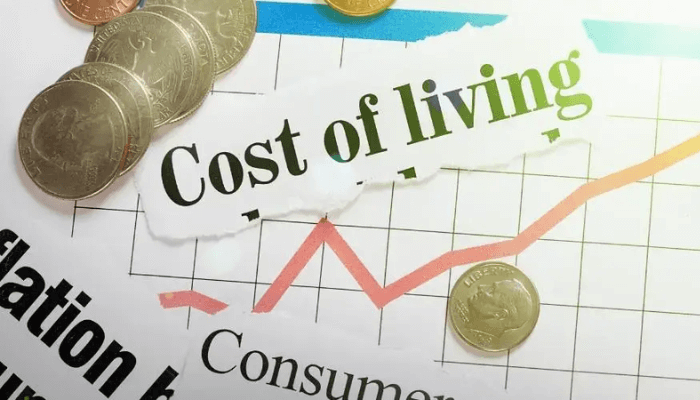
High cost of living: New minimum wage now inevitable, says Keyamo

***Says N70,000 minimum wage no longer adequate
*** Admits high cost of living has eroded workers purchasing power
*** Calls for FG, Labour meeting over new wages
By Sam Otuonye
Minister of Aviation and Aerospace Development, Festus Keyamo, SAN, has called on the federal government to interface with the Nigeria Labour Congress (NLC) and Trade Union Congress (TUC) to agree on a new minimum wage to confront the lingering hardship in the country.
Keyamo, a former minister of state for Labour and Employment said the current N70,000 national minimum wage is no longer inadequate to meet the economic pressures confronting Nigerian workers.
The minister,who made the declaration when he spoke at the 2026 National Pre-Retirement Summit organised by XEM Consultants Limited, said the rising cost of living had eroded the purchasing power of workers, adding that there is an urgent need for an upward review of wages in the country.
Keyamo also accused some state governments and other agencies of treating their workers poorly, alleging that they ignore priorities like workers welfare, while senior officials approve large sums for international trips.
He said, “I will have none of it. Without these workers, we will not have a country,” he said.
“It’s not the machines or everything that you [have]; it’s the human factor. Without that, no machine will move.”
The minister stressed that national development depended on prioritising the welfare of workers, describing the human factor as central to productivity and effective public service.
He argued that issues affecting workers’ welfare and productivity should receive priority over bureaucratic considerations, urging ministers and heads of government agencies to make workers’ interests a priority.
Earlier in his remarks, President of the Nigeria Labour Congress (NLC), Comrade Joe Ajaero, called on the Federal Government to use increased oil revenues to cushion workers and other Nigerians from the impact of rising fuel prices.
Ajaero noted that the recent increase in international oil prices had created additional revenue for oil-producing countries and urged the government to deploy part of the gains to support citizens facing higher transportation and food costs.
“As one of the oil-producing countries, they are making trillions because of the problem in the Strait of Hormuz. You can see that oil was pegged at maybe $70 or whatever dollars. It’s $100, so they are making an extra $30 or $40.
“Now, can’t you use this money to embark on some interventionary measures like other countries where this is affected, so that we’ll now be alive till the time when they will say minimum wage?”
The NLC president emphasised that minimum wage negotiations should focus on workers’ real purchasing power rather than nominal figures, taking into account inflation, fuel prices, food costs and other economic factors, saying that a nominally high wage could lose its value if the prices of basic commodities rose sharply.
“Assuming one naira is equal to $1, I would advise Nigerian workers to remain at ₦70,000 because that would be big money for them, but you can see that you can equally get one million naira and a bag of rice is ₦500,000, so what of that? What happens?
“Unless you index it either based on cost of living index or inflation, immediately inflation goes like this, automatically it will adjust to this, as it is affecting pension, so it affects salaries; and those are some of the things that will enable us to agree on something.”
On minimum pension, the NLC president said it should be negotiated alongside the minimum wage because workers and pensioners were both affected by prevailing economic conditions.
He explained that the next minimum-wage review was expected around March or April, stressing the need for an urgent government discussion with Labour over a new minimum wage
According to him, labour’s immediate concern was how workers could cope with the current economic pressures before the next review.
“This minimum wage is supposed to expire March–April, so the conversation ought to start early. That’s a three-year cycle,” he said.
“But now we are more concerned on ‘give us this day’ — how to survive today before that time. Because these policies of the fuel going up, jumping up, and the Nigerian government is making a whole lot of money from it.”
Ajaero also questioned the effectiveness of government measures designed to reduce transportation and energy costs, including the Compressed Natural Gas (CNG) programme.
“Are we even producing enough in terms of food, reliance on food? Now, between that time and now, the most troublesome problem for a worker, which happened to be transportation — the CNG policy, did it work? Where and where can you refill your tank? How many vehicles have been converted to CNG? How many electric vehicles are on the road?” he queried
He advised further that controlling factors such as inflation, transportation costs, food prices and currency pressures would make it easier for workers to cope with prevailing economic conditions.
The Chief Executive Officer of XEM Consultants Ltd. and convener of the summit, Dr. Eugenia Ndukwe, said the event was designed to equip senior professionals with strategies and skills for a productive and fulfilling retirement.

…say focus should be on energy justice
By Sam Otuonye
As energy experts gathered in Abuja on Thursday, September 24, 2026, to participate in the 2026 Annual Conference of Association of Energy Correspondents Abuja FCT (AECAF), one of the major consensus was that fossil fuel would not disappear at the emergence of energy transiting to gas, solar, electric, water, and wind.
They argued that no level of transition could extinct crude oil exploration, exploitation, and production, at least, not in the near future, highlighting that the focus of the entire emerging energy ecosystem should bother on the World achieving energy justice, such that every aspect of the mix enjoys global support and advancement.
“Crude oil is not going anywhere. You can’t compare electric, water energy, to what fossil fuel is doing,” opined Dr Billy Gillis-Harry, President, Petroleum Products Retail Owners Association (PETROAN).
Aligning, Executive Director, Green Growth Africa, Dr Adedoyin Adeleke, stated that energy transition is not an event but a process, noting that the couch of ‘Energy Transition’ is not entirely appropriate, rather, ‘Just Energy’, where the energy mix is encouraged and protected.
“Energy transition is not an event but a process. Just Energy should be the name, not Energy Transition, where justice is enshrined in the energy administration, allowing the mix to develop sustainably and differently,” Adeleke postulated.
Gillis-Harry also noted that the Nigeria oil and gas industry was not transparent, a situation, he claimed has kept petrol price high.
“Oil and gas industry is not transparent. That is why we are paying much per litre of petrol,” Harry declared.
Further more, Nigerian Upstream Petroleum Regulatory Commission (NUPRC) used the forum to urge energy journalists to look beyond announcements and hold the industry accountable for turning approved investments into actual production, as officials reported that the country’s crude output has stayed above its OPEC quota for four straight months.
Oritsemeyiwa Eyesan, Commission Chief, represented by Joseph Ogunsola, Director Surface Development, said the Commission has approved Field Development Plans worth more than $57 billion since 2024, with 22 offshore projects planned between 2026 and 2030 carrying an estimated $30 billion to $50 billion in further investment. But she stressed that approvals alone mean little without execution.
“The priority now is execution. Approvals and investment commitments are important, but their real value is realised when projects move and new volumes come onstream.”
She put Nigeria’s proved and probable reserves at 37.01 billion barrels of oil and condensate and 215.19 trillion cubic feet of gas as of January 1, 2026, and framed regulatory predictability, decarbonisation planning and gas commercialisation as the levers the Commission is using to keep Nigerian assets competitive against global capital.
Also, speaking on the AECAF Conference theme: “Sustaining Oil and Gas Investment in Nigeria Amid Energy Transition,” Minister of State for Petroleum Resources (Gas), Ekperikpe Ekpo, said the government’s priority is proving to investors that policy will be consistently implemented, not just legislated.
He pointed to the Petroleum Industry Act (PIA) 2021 as a foundation, but cautioned that “legislation alone is not sufficient” without follow-through on project delivery.
Represented by his Senior Technical Adviser, Abel NSA, Ekpo described gas infrastructure projects such as the AKK and OB3 pipelines as central to shifting Nigeria’s gas sector from an export-first model toward greater domestic use in power, manufacturing, fertiliser and transport.
He also called on energy correspondents to help build investor confidence by reporting “with accuracy, professionalism and a strong appreciation of the opportunities and challenges facing the sector.”
Also, the Midstream and Downstream Gas Infrastructure Fund (MDGIF) disclosed that it leveraged ₦671 billion in public funds to attract ₦1.6 trillion in private investment for Nigeria’s midstream and downstream gas infrastructure, supporting 31 projects and 205 infrastructure assets nationwide.
The fund said the projects, when fully operational, are expected to supply about 475 million standard cubic feet (scf) of gas daily to the domestic market.
MDGIF Executive Director, Oluwole Adama, represented by the Director of Strategy, Research and Deal Origination, Engr. Elvis Duruji, Adama said the achievement reflects MDGIF’s core mandate of deploying public funds to reduce investment risks and attract private capital into the sector.
Delivering a keynote address titled, “Derisking Domestic Gas Infrastructure – The Missing Link to Private Investment, explained that MDGIF was created as a catalytic institution rather than a passive funding agency, with the responsibility of making commercially difficult but strategically important gas projects financially viable.
He said that the Fund is a public fund, “and we see platforms like this as an opportunity to come and give account.”
According to him, the fund has already mobilised private investment worth about 2.4 times its own contribution, demonstrating the effectiveness of its risk-sharing model.
“As we speak, MDGIF has used its own fund to mobilize 2.4X of the private counterparties. We’ve been able to use the fund we have to reduce investment barriers, attracting more private investors to partner with MDGIF, and this is the success story,” he stated.
Adama said the projects in the fund’s portfolio could increase Nigeria’s domestic gas supply by about 25 per cent if fully completed, based on the country’s current domestic production of about 1.9 billion scf per day.
“As of today, if all the projects, about 30 partnership projects and 205 ongoing infrastructure assets, are completed, they will deliver about 475 million scf of gas per day into the domestic market,” he said.
He identified high financing costs, inadequate infrastructure, regulatory uncertainty, and technical and commercial risks as the major obstacles discouraging investment in the country’s midstream gas sector.
On gas flare commercialisation, Adama disclosed that MDGIF had partnered four flare-out awardees, whose projects are expected to monetise 444 million scf of gas daily that would otherwise be flared, while eliminating about 2,845 metric tonnes of emissions every day.
He further revealed that the fund has partnered 30 unincorporated joint ventures and one incorporated equipment leasing company, covering 20 Compressed Natural Gas (CNG) mother stations, more than 80 CNG daughter stations, as well as 75 additional daughter stations through the leasing company.
Among MDGIF’s flagship interventions, Adama highlighted the 5 million scf mini-LNG plant being developed by Topline Limited in Delta State, describing it as Nigeria’s first indigenous mini-LNG project.
He said the project had spent three years searching for financing before MDGIF’s equity investment unlocked an InfraCredit guarantee, paving the way for its completion.
“That particular project had gone around looking for funds for three years but couldn’t secure any. After partnering with MDGIF, the facility is now expected to be commissioned within the next two to three months,” he added.
Other projects supported by the fund include CNG infrastructure across 20 universities, Ibile Oil and Gas in Lagos and Rolling Energy in Abuja.
Duruji said MDGIF’s long-term objective is to absorb part of the early risks associated with gas projects, making them bankable and more attractive to lenders and private investors.
“The missing link is vulnerability. MDGIF’s catalytic role is to price and absorb part of the early risk, turning uncertainty into bankability, bankability into private investment, and investment into operating gas infrastructure,” he said.
Earlier, in his welcome address, AECAF chairman, John Ofikhenua traced two decades of shocks to Nigerian oil and gas investment, from the U.S. shale boom to COVID-19 and the more recent divestment pressure tied to net-zero commitments.
He argued that global crises, including the Russia-Ukraine war and the U.S.-Israel-Iran conflict affecting the Strait of Hormuz, have driven renewed interest in Nigerian crude and gas even as transition rhetoric persists.
Ofikhenua said the conversation among major economies has increasingly moved from “energy transition” to “energy mix,” and pointed to strong investor demand for the Dangote Petroleum Refinery and Petrochemicals IPO and NUPRC’s licensing rounds as evidence that sentiment toward Nigerian hydrocarbons is turning.
By Sam Otuonye
The Minister of Finance and Coordinating Minister of the Economy, Taiwo Oyedele, has called on the international community to scale up the availability of affordable capital to finance infrastructure and development across Africa.
Oyedele made the call while addressing the United Nations Dialogue on Solutions to Climate Finance on the margins of the 81st Session of the United Nations General Assembly (UNGA) in New York.
He said Africa’s development ambitions, particularly its energy needs, continue to be constrained by high financing costs, currency risks and limited access to affordable long-term capital.
The Minister explained that despite Africa’s relatively low contribution to global carbon emissions, the continent continues to face what he described as a “prejudice premium” and “narrative cost” in its efforts to mobilise financing for critical infrastructure.
He also identified currency risk and what he termed “stereotype tax” as additional burdens confronting African countries as they seek to raise capital for critical energy and other development assets.
Oyedele therefore called for a strategic shift in the approach to climate finance, with simpler access to affordable capital for developing countries and financing arrangements that better reflect their development realities.
He also urged the international community to scale up investment in gas and other transition energy sources, particularly in Africa, to expand access to reliable and affordable energy and help address global energy poverty.
According to him, greater investment in Africa’s energy sector would also help diversify global energy supply and reduce concentration risks, particularly amid disruptions affecting the Gulf region.
The Minister stressed that Africa’s energy transition must take account of the continent’s significant energy-access deficit, noting the need for greater investment to enable countries to meet their development needs while pursuing a practical transition to cleaner energy sources.
For Nigeria, Oyedele said the immediate priority was to structure and implement policies and programmes that would reduce poverty, expand economic opportunities and accelerate the distribution of shared prosperity.
He said achieving these objectives would require stronger international cooperation and a financing framework that enables developing countries to mobilise the capital required to invest in infrastructure and improve the lives of their people.
By Sam Otuonye
The Minister of Finance and Coordinating Minister of the Economy, Taiwo Oyedele, has called on the international community to scale up the availability of affordable capital to finance infrastructure and development across Africa.
Oyedele made the call while addressing the United Nations Dialogue on Solutions to Climate Finance on the margins of the 81st Session of the United Nations General Assembly (UNGA) in New York.
He said Africa’s development ambitions, particularly its energy needs, continue to be constrained by high financing costs, currency risks and limited access to affordable long-term capital.
The Minister explained that despite Africa’s relatively low contribution to global carbon emissions, the continent continues to face what he described as a “prejudice premium” and “narrative cost” in its efforts to mobilise financing for critical infrastructure.
He also identified currency risk and what he termed “stereotype tax” as additional burdens confronting African countries as they seek to raise capital for critical energy and other development assets.
Oyedele therefore called for a strategic shift in the approach to climate finance, with simpler access to affordable capital for developing countries and financing arrangements that better reflect their development realities.
He also urged the international community to scale up investment in gas and other transition energy sources, particularly in Africa, to expand access to reliable and affordable energy and help address global energy poverty.
According to him, greater investment in Africa’s energy sector would also help diversify global energy supply and reduce concentration risks, particularly amid disruptions affecting the Gulf region.
The Minister stressed that Africa’s energy transition must take account of the continent’s significant energy-access deficit, noting the need for greater investment to enable countries to meet their development needs while pursuing a practical transition to cleaner energy sources.
For Nigeria, Oyedele said the immediate priority was to structure and implement policies and programmes that would reduce poverty, expand economic opportunities and accelerate the distribution of shared prosperity.
He said achieving these objectives would require stronger international cooperation and a financing framework that enables developing countries to mobilise the capital required to invest in infrastructure and improve the lives of their people.
-
General News3 days ago
JOHESU demands: MHWUN puts FG on notice over fresh action
-

 Politics3 weeks ago
You have demonstrated diligence, loyalty, statesmanship in leadership, Ekechi salutes Shetimma at 60
-
 Politics1 week ago
2027: ASAF backs APC governors, rejects rainbow coalition
-

 Politics1 month ago
2027: Advertising experts raise concerns over irregular regulation of sector
-
FCT News1 month ago
2027: Hasana-Moneme pledges skills, empowerment, credit access for FCT women
-
General News2 months ago
2027: Dame Princess Esom-Nwafor Orizu confirmed as APC flagbearer for Nnewi North /South /Ekwusigo Federal Constituency as INEC releases names of candidates
-
Uncategorized3 months ago
Rescue of Oyo schoolchilden: Tinubu commends security agencies, says action breakthrough in fight against criminality
-
General News1 month ago
Chi-Jenco CEO, Jude Orji loses mother