
Politics
2027: Advertising experts raise concerns over irregular regulation of sector


Ahead of the 2027 general elections, advertising experts have raised concerns over what they described as irregular regulation policies across the states
This is even as they called for urgent harmonisation of Nigeria’s regulatory frameworks governing outdoor advertising in the country
The practitioners warned that overlapping and conflicting requirements could undermine investment, fair competition and professional practice in the industry.
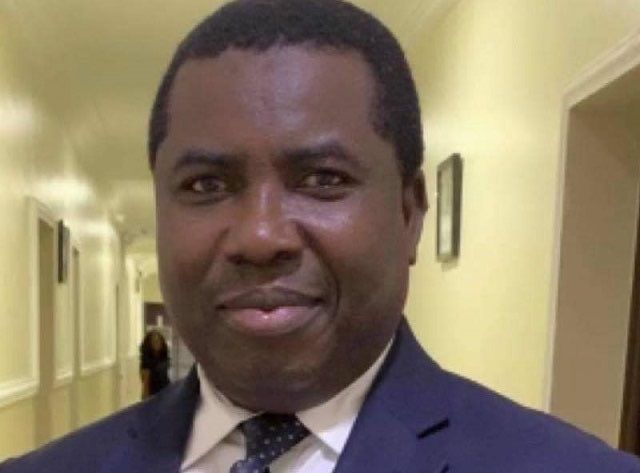
Advertising expert, TOE Ekechi, who made the call during the 41st Annual General Meeting of the Out -of – Home Advertising Association of Nigeria (OAAN) in Abeokuta, Ogun state warned that indiscriminate imposition of advertising fees across the states wound hinder the growth of the sector, as well as affect the delivery of it’s contents
Ekechi made the call while delivering a keynote address at the 41st Annual General Meeting of the Out-of-Home Advertising Association of Nigeria (OAAN) in Abeokuta, Ogun State.
Speaking on the topic, “Out-of-Home Advertising Association of Nigeria in Political Campaign Season: Policies, Politics and Fair Practice,” the advertising guru said outdoor advertising practitioners often operate within a complex regulatory environment involving different authorities, permits, fees and enforcement requirements.
It would be recalled that several state governments have recently imposed intimidating fees for placement of political campaign adverts across the states, including billboards, posters
According to him, “regulatory responsibilities should be clearly defined to prevent duplication, conflicting directives and unnecessary financial burdens on practitioners.”
He stressed that political campaign periods make the issue even more critical because increased demand for advertising spaces can expose operators to multiple regulatory demands within a short period.
Ekechi also warned against selective enforcement, insisting that rules governing political advertising must be transparent and applied uniformly to all parties and candidates.
«“If one candidate is denied access because of a regulatory restriction, that same restriction must apply to others in comparable circumstances,” he stated.»
He urged OAAN to engage government and regulatory agencies in developing a more coordinated framework that would provide clarity on permits, fees, approvals, enforcement, advertising rights and compliance responsibilities.
Ekechi maintained that predictable regulation would encourage investment and strengthen the capacity of outdoor advertising companies to plan for long-term growth.
He further called on OAAN to strengthen self-regulation and ensure that practitioners uphold professional standards while advocating reforms within the regulatory system.
He maintained that a properly harmonised regulatory framework would benefit not only outdoor advertising practitioners but also government, political parties, advertisers and the wider economy.

By Our Reporter
The Independent National Electoral Commission (INEC) has removed artificial intelligence-generated photographs uploaded to the national voters’ register and flagged officials implicated in the practice across 10 states for disciplinary action.
INEC National Commissioner, Mohammed Haruna, disclosed this on Wednesday during a webinar organised by the PUNCH Media Foundation, titled ‘AI, Misinformation and Nigeria’s 2027 Elections: Safeguarding the Truth, Protecting the Vote’.
Haruna, who is also Chairman of the commission’s Information and Voter Education Committee, described the development as a major challenge, noting that the commission had already taken down AI-generated photographs identified on the voters’ register.
He, however, acknowledged that INEC faced limitations in preventing members of the public from manipulating or enhancing their photographs before uploading them during voter registration.
The commissioner said the commission had also identified cases involving its own personnel and was taking steps to address the violations.
“We have already seen one of the challenges, which is that a lot of AI-generated photographs were posted onto the voters’ register, which, as we have said, we have had to take down,” he said.
Haruna explained that while it might be difficult for the commission to prevent members of the public from manipulating their photographs before submission, it had greater control over violations involving its officials.
“But the ones involving our own staff, where it is our own staff that did so, that one is within our control. We are in the process of addressing it. They have been flagged,” he said.
He disclosed that the commission had obtained the names of the officials involved across about 10 states, adding that they would face disciplinary action.
“We have their names across about 10 states, and obviously, they are going to face disciplinary action,” he added.
On INEC’s preparedness to regulate the use of artificial intelligence in the electoral process ahead of the 2027 general elections, Haruna said the commission had developed an AI policy but was working to finalise it.
He noted that the rapid evolution of artificial intelligence had created regulatory challenges for countries across the world, including advanced democracies.
According to him, the evolving nature of the technology has made it difficult for governments to establish comprehensive and specific regulatory frameworks.
“As you know very well, it is new territory out there. Even the most advanced countries don’t have what you might call concrete, specific policies about AI because these things are evolving,” he said.
Haruna, however, said INEC had developed ideas on how it intended to deploy and regulate the technology, assuring that the policy would soon be finalised and made available to the media.
“But we have at least some ideas of what we want to do and how we want to use that. We have that policy. Very soon, we will concretise it, and we will be able to share it with the media,” he said.
General News
Yunusa Tanko dumps Peter Obi, Obidient Movement, appointed SDP presidential campaign coordinator
Yunusa Tanko
By Our Reporter
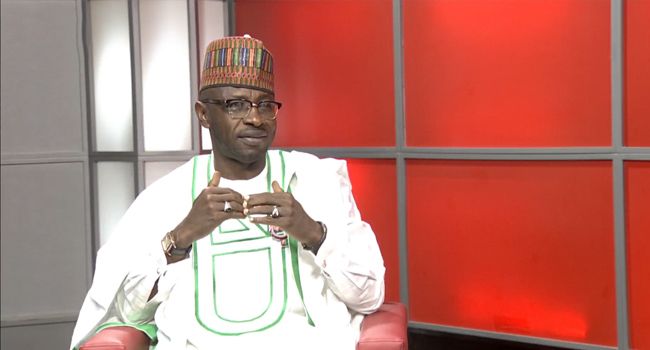
The Social Democratic Party (SDP) has appointed Yunusa Tanko, former coordinator of the Obidient Movement, as national coordinator of its presidential campaign council for the 2027 elections.
The SDP unveiled Tanko as its national presidential coordinator on Wednesday during the inauguration of the party’s campaign council in Abuja.
Mark Adebayo, chief media and communication advisor of the Adebayo/Bugaje presidential campaign council, also confirmed Tanko’s appointment to TheCable.
Speaking at the event, Tanko pledged to work with Adewale Adebayo, the SDP presidential candidate, and Usman Bugaje, his running mate, to secure victory in the 2027 elections.
“The SDP is a left-wing political party. For those of you who do not know, we represent the interests of the downtrodden. The SDP represents those people that you neglect on the streets. So, that makes this particular party people-oriented,” he said.
Tanko said he resigned as political adviser (north) to Peter Obi, presidential candidate of the Nigeria Democratic Congress (NDC), on October 30.
He said his resignation followed his appointment to the leadership of the National Consultative Front (NCFront) after the death of Ghali Na’Abba, the group’s former co-chairman and ex-speaker of the House of Representatives.
Tanko said he had reached out to Obi and Seriake Dickson, national leader of the NDC, whom he commended for their support when he served as coordinator of the Obidient Movement.
He pledged to work with the NCFront leadership and Adebayo, saying his relationship with Adebayo dates back to 2023, and added that they share a commitment to building a better Nigeria.
“In advancing our political mission to a new Nigeria that works for all, I pledge to remain consistent and committed to our unwavering belief in good governance, justice, equity, national loyalty and dedication and unwavering commitment to new Nigeria from where it is to a better and prosperous Nigeria,” he said.
Obi appointed Tanko as national coordinator of the Obidient Movement in September 2024, following a consensus to zone the position to the north.
Tanko served as Obi’s presidential campaign spokesman during the 2023 elections when the former Anambra governor contested under the Labour Party (LP) platform.
Tanko was the Northern People’s Congress (NPC) presidential candidate in 2019 and the party’s national chairman in 2023.
Nafiu Balas
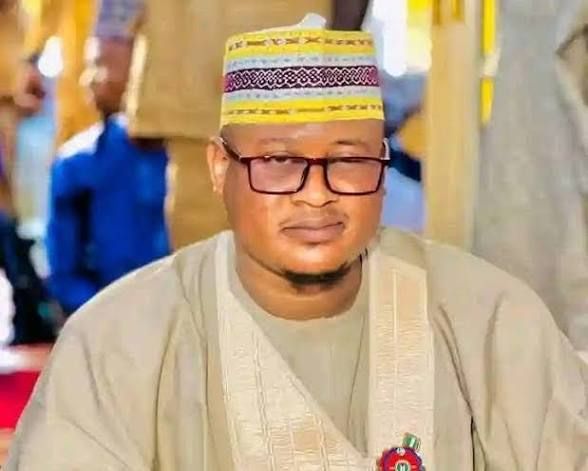
A Federal High Court in Abuja has rejected a resignation letter allegedly signed by Nafiu Bala, former Deputy National Chairman of the African Democratic Congress (ADC), ruling that it was not genuine evidence that he voluntarily relinquished his position.
In a judgment delivered on November 5, 2026, Justice Peter Lifu held that the signature on the disputed letter was materially different from Bala’s signatures on other documents submitted before the court.
According to TheCable, the judgment declared the David Mark-led caretaker committee of the ADC illegal and invalidated decisions taken by the committee, including the nomination of former Vice-President Atiku Abubakar as the party’s presidential candidate for the 2027 general election.
Bala had approached the court to challenge the emergence of former Senate President David Mark and former Osun State Governor Rauf Aregbesola as national chairman and national secretary of the ADC, respectively, following the party’s 99th National Executive Committee (NEC) meeting held on July 29, 2025, after the resignation of former national chairman, Ralph Nwosu.
The plaintiff told the court that he was elected Deputy National Chairman on October 12, 2022, for a four-year tenure expected to expire on October 11, 2026.
He argued that he remained the only elected member of the party’s National Working Committee (NWC) who had not resigned following the departure of other members.
Bala contended that vacancies created by the resignations could only be filled through democratic elections by delegates, as required by the party’s constitution, the 1999 Constitution and the Electoral Act 2022.
He alleged that Mark, Aregbesola and 49 other individuals were arbitrarily appointed and ratified as members of the NWC at the July 29 meeting without an election.
READ ALSO: INEC yet to receive court order on ADC, Tinubu – Amupitan
The plaintiff also challenged the validity of the notice convening the meeting, arguing that it failed to include the required agenda and names of members of the convention or meeting committee.
He further accused the Independent National Electoral Commission (INEC) of failing in its statutory responsibilities by attending the meeting, issuing a report and subsequently recognising the new leadership.
Bala specifically disputed the authenticity of a resignation letter dated May 17, 2025, tendered by the ADC as Exhibit ADC 1, alongside a forwarding letter identified as Exhibit ADC 2.
He maintained that the signatures on both documents were not his, describing the disputed signature as a forged and poor imitation of his authentic signature.
Defendants’ position
The ADC and other defendants opposed the suit, arguing that Bala voluntarily resigned as deputy national chairman in a letter dated May 17, 2025, and consequently lacked the legal standing to challenge subsequent decisions of the party.
They maintained that the party’s constitution vested the NEC with delegated powers to dissolve the NWC, waive certain membership requirements and appoint or elect national officers between national conventions.
The defendants said NEC resolutions of March 27 and May 15, 2025, alongside notices issued to INEC ahead of the July 29 meeting, provided the basis for dissolving the existing NWC and constituting a new leadership.
They insisted that the 99th NEC meeting was validly convened, monitored by INEC and subsequently recognised by the commission.
The defendants also argued that the dispute concerned the internal affairs of a political party and was therefore not justiciable.
They challenged Bala’s locus standi, contending that he had voluntarily resigned and failed to exhaust the party’s internal dispute-resolution mechanisms.
Aregbesola, the third defendant, additionally challenged Bala’s proof of membership, alleging that he had failed to renew his membership for more than six months.
He also filed a counter-claim seeking declaratory reliefs and N850 million in costs.
In resolving the dispute over the resignation letter, Justice Lifu held that the certification of a document did not, by itself, establish that the person named in it actually signed it.
The judge said he compared the signature on the disputed resignation letter with those appearing on Bala’s witness statements on oath and found material differences.
He held: “The fact that a document is certified, however, does not, by that fact alone, settle a genuine dispute as to whether the person named in it actually signed it.”
The judge further stated: “Upon a close examination and comparison of these signatures in line with the decisions of the courts earlier provided, I find that they are materially different and cannot reasonably be regarded as one and the same signature.”
He consequently rejected Exhibit ADC 1 as reliable proof that Bala voluntarily resigned from his position as deputy national chairman.
“Accordingly, Exhibit ADC 1 is hereby held not to constitute a valid or established resignation letter of the Plaintiff, and the Defendants cannot rely on it to establish that he relinquished his office before the events giving rise to this suit. I so hold,” Lifu ruled.
On the emergence of the new party leadership, the judge held that the defendants failed to establish that the process complied with the mandatory requirement for democratic elections under Section 82(3) of the Electoral Act 2022.
He said there was no satisfactory evidence that party members or duly elected delegates were given the opportunity to participate in an election and vote for candidates of their choice.
The judge stressed that INEC’s receipt of notice and monitoring of the meeting could not substitute for proof of a democratic election.
“The fact that INEC received notice of the meeting and monitored its proceedings does not fill this evidential gap. Notice to the Commission and democratic election are separate requirements, and proof of the former is not proof of the latter,” he said.
Lifu further held that the general powers vested in the NEC under the ADC constitution could not override constitutional and statutory requirements for electing members of a political party’s executive or governing body.
He ruled that the emergence of Mark and Aregbesola as national officers at the July 29, 2025 meeting had not been shown to satisfy the requirements of the law.
The court consequently granted Bala’s substantive reliefs, declared the relevant actions and decisions arising from the meeting null and void, and restrained INEC from recognising or dealing with Mark, Aregbesola and the members of the NWC they represented as officers of the party.
-

 General News1 month ago
Rivers 2027: We are not part of Rainbow Coalition – APC Legacy Group slams Wike, Fubara meeting
-

 Politics2 months ago
2027: ASAF backs APC governors, rejects rainbow coalition
-
General News2 months ago
JOHESU demands: MHWUN puts FG on notice over fresh action
-

 Politics2 months ago
You have demonstrated diligence, loyalty, statesmanship in leadership, Ekechi salutes Shetimma at 60
-
FCT News3 months ago
2027: Hasana-Moneme pledges skills, empowerment, credit access for FCT women
-
General News3 months ago
2027: Dame Princess Esom-Nwafor Orizu confirmed as APC flagbearer for Nnewi North /South /Ekwusigo Federal Constituency as INEC releases names of candidates
-
Uncategorized4 months ago
Rescue of Oyo schoolchilden: Tinubu commends security agencies, says action breakthrough in fight against criminality
-
General News4 weeks ago
Senator Mandiya slipped, died in Abuja bathroom, corpse discovered after 3 days, says Sen Ningi