
General News
Rivers 2027: We are not part of Rainbow Coalition – APC Legacy Group slams Wike, Fubara meeting

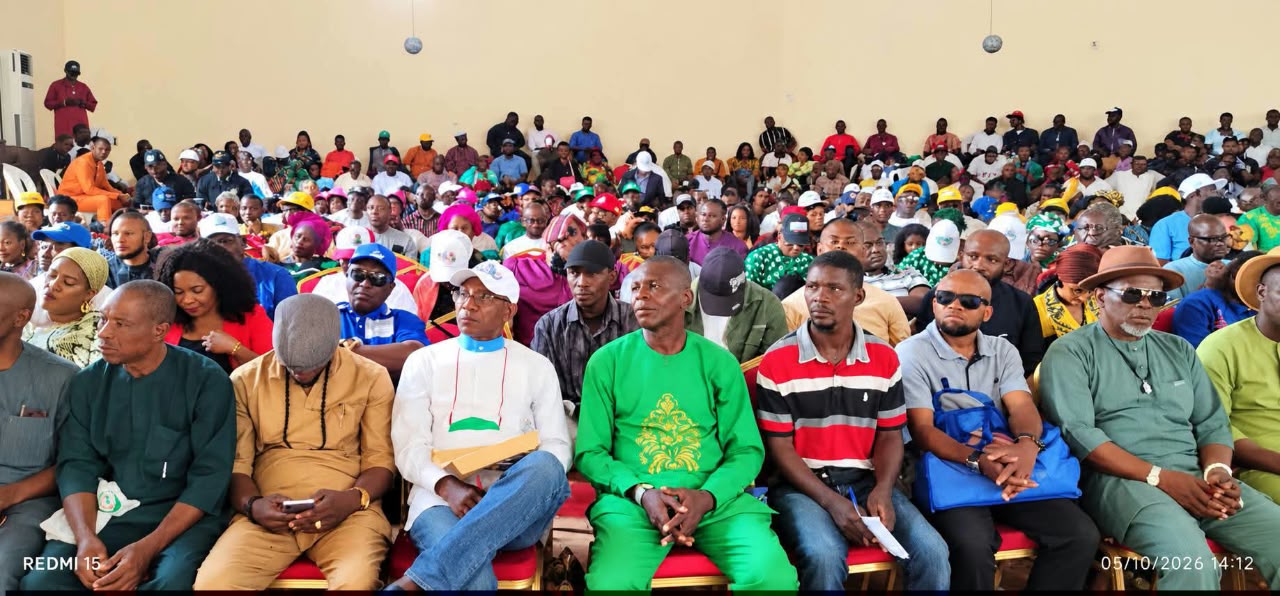
Ahead of the 2027 general election in Rivers state, the members of the All Progressives Congress (APC) Legacy Group in the state have distanced themselves out of the Nyesom Wike led Rainbow Coalition
The group in a statement issued on Friday by it’s coordinator, Ambassador Fubara Dagogo said the foundation members of the APC in Rivers state have remained intact and will soon take a position ahead of the polls
The legacy group, which comprises members of the defunct Action Congress of Nigeria (ACN), Congress for Progressives Change (CPC), All Nigeria Peoples Party (ANPP) and others who merged in 2013 to form the now ruling APC, regretted that new entrants into the legacy party have made frantic efforts to push them out of the party and take control
The group described a recent meeting held by the Rainbow coalition, led by former governor Nyesom Wike, and the Simplefied Movement, under the leadership of the state governor, Siminalaiyi Fubara as an indication that there are ground main ves to finally push them away, warning that it has remained intact and ready to prove a point with the upcoming election
The legacy group slammed the Rainbow coalition for ignoring them in the distribution of tickets and political offices in the state, despite their strong grassroots support, adding that it was the group that held the Rivets APC intact before they joined and hijacked the party
It warned that it would not abandon the now ruling party, which they said was built by them from the scratch, when they were then seen as people who were fraternizing with their enemies
According to the group, “We are not going to work with the Rainbow coalition in Rivers state, we remain the real owners of the APC in the state, and our grassroots support remains intact. We have continued to keep our support, despite the efforts of the intruders into our party, and we will use the 2027 election to as usual, prove our strength
”As members of the legacy group, we paid a huge price, building the APC in Rivers state, and we aren’t ready to give up now. We nurtured this now ruling party, when these later day converts treated us with scorn, accusing us of romancing with those they referred to as enemies of the state. Now they have taken over and we are being relegated to the background. This we are determined to resist, using our supporters in the upcoming election
”We urge our teeming supporters across the state to remain calm, despite any form of provocation, very soon, the legacy group will make a policy statement ahead of the upcoming polls”
The group reminded the people of Rivers state that it is their votes that would determine who governs and represents them, urging them to seize the opportunity of the ongoing distribution of Permanent Voters Card (PVC), to prepare themselves ready to elect their leaders
It noted further that the group has paid it’s price in the Rivets state APC, adding that the legacy members of the party are determined to take back the party
”As foundation members of the APC in Rivers state, this party belongs to us, we built it and we are determined to take back our party. We have held series of meetings and have jointly agreed that the legacy group will make a statement in the 2027 general election. Our support has not yielded to any pressure and we are determined to take a position that would reshape the polls and return the group to it’s ownership position in the state,” the group assured
The group however emphasised that it would not abandon the APC , which they suffered so much to build from the scratch in the state, but insisted that the group has relaunched itself to take it back

By Chukwudi Ebele
An Anambra High Court sitting at Nnewi and Presided over by Hon. Justice B.A. Ogbuli, has sacked Dr. Gregory Nwokaha from parading himself as the Oluoha (traditional ruler) of Mbosi. Ihiala Local Government Area.
The court also declared that the Oluoha stool of Mbosi is rotational among the three quarters of Mbosi and not a hereditary right of any quarters or village in Mbosi community
The judge further declared that, “I declare that it is the turn of Ihiteoha quarters of Mbosi comprising, Ubahinnaka, Ogwugwuekwe, Umuezike and Agunnaga villages to present the next Oluoha (traditional ruler) of Mbosi.
“The 1st defendant (Dr.Gregory Nwokaha) is hereby restrained from parading himself as Igwe Oluoha-elect or Igwe Oluoha of Mbosi on the basis of the purported election/selection made by Ichie Peter Okafor and Mr Cyril Mbachu respectively, (1st set of defendants), on 27/04/2023”.
However no cost was awarded to both the plaintiffs and defendants by the Presiding judge.
The judge handed down the judgment after hearing the submissions of counsels to the paintiffs/defendants and citing some legal authorities to back up his judgment.
Smart Obi Esq was for the plaintiffs, A.C. Obiajulu Esq (with C.M. Obijagwam Esq) for the 1st -4th defendants and A.C. Anaenugwu Esq. SAN (with N.D. Nnodum Esq and P.C. Afuba Esq), for the 5th and 6th defendants.
Recall that the 2nd set of defendants in the suit, Ozo Augustine Onyekwere and Mr Aloysius Eze, (for themselves and on behalf of members of Umueze village. Isu-Mbosi quarters. Mbosi), during the hearing of the suit, told the court that the Oluoha stool of Mbosi was hereditary and not rotational and only people of Umueze (descendants of Dara Ezenyi) are enthroned Oluoha of Mbosi.
They averred also that one late Okwereogu from Mkpo Ehihe village Mbosi, was never an Oluoha but a tax collector who was convicted in 1917 by the customary court Oguga Ihiala, over alleged misappropriation of tax collected by him and extortion.
The Presiding judge while reacting to the said imprisonment of Okwereogu in his judgment said. “No doubt. Okwereogu might have been a warrant chief and imprisoned by the government but that did not make him any less a traditional ruler of Mbosi.
“In exhibit D23, at the last page, he was referred to as ‘Head Chief’, who was imprisoned for extortion in April 1917,” the judge recalled.
The plaintiffs in the suit included, Chief P. C. Adione, Mr. Titus Afumire (for themselves and on behalf of members of Ubahinnaka village, Ihite quarters, Mbosi, Ihiala local Government Area),
Other plaintiffs were, Ichie Christopher Muoka Obijekwu, Mr Celestine Nwachukwu (for themselves and on behalf of members of Ogwugwuekwe village. Ihiteoha quarters. Mbosi. Ihiala Local Govt Area), Ichie Simon Udegbe and sir G.O.C. Obiwulu(for themselves and on behalf of members of Agwunnagu village. Ihiteoha quarters, Mbosi Ihiala local govt Area).
Fielding questions from newsmen outside the court hall shortly after the judge delivered his judgment, an indigene of Mbosi, Okeke Nwachukwu, said it was an abomination for the descendants of Okwereogu to organise remembrance ceremony for Okwereogu, having been a convict over criminal act.
“They can’t deceive the people of Mbosi and entire Ihiala people with their remembrance ceremony distraction because we know their history,” Okeke alleged.
By Our Reporter with agency report
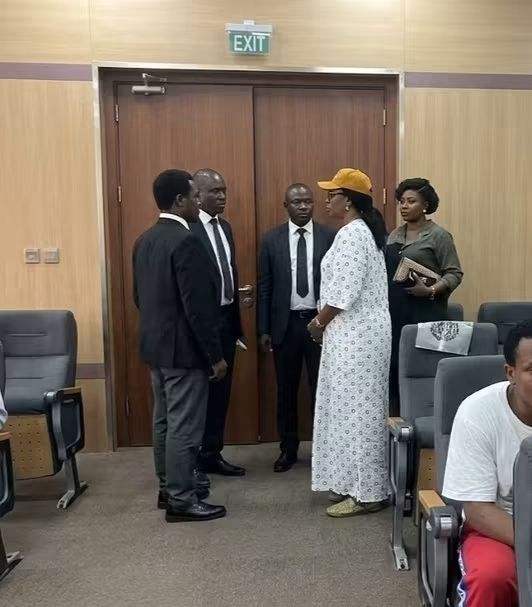
Nollywood actress Doris Ogala on Friday apologised to a Federal High Court in Lagos after kneeling before the judge over her conduct during an earlier court sitting.
Despite her apology, the actress was returned to the Kirikiri Correctional Centre after Justice Akintayo Aluko adjourned ruling on her bail application until November 6, 2026.
Ogala, who is facing charges bordering on alleged cyberstalking, cyberbullying and attempted extortion involving Pastor Chris Okafor, expressed regret over her behaviour during Wednesday’s proceedings and assured the court that she would not repeat it.
Appearing before Justice Aluko, the actress pleaded for forgiveness, saying her detention was an experience she had never anticipated.
She said, “I am very sorry, my Lord. I apologise for my bad behaviour. I have never been to prison before and I wasn’t expecting that I would do that.
“I regret my actions and I apologise to my Lord. I tender my apologies wholeheartedly. Sorry, this will never happen again going forward.”
Her apology came after the judge criticised her conduct at the previous sitting, when she was allegedly heard shouting and singing inside the courtroom, forcing the court to suspend proceedings.
Justice Aluko said the disruption prevented the court from attending to more than seven other cases scheduled for hearing that day.
The judge disclosed that he had considered committing Ogala for contempt but decided against taking that step, despite describing her conduct as deserving of punishment.
He said, “She should have been given some form of imprisonment, right, on that day, but I kept my cool and I rose.”
The judge further observed that the actress could have faced at least two months’ imprisonment for obstructing court proceedings.
Expressing his displeasure, Aluko said, “Why do you have to start shouting and start singing in the open court? You conducted yourself in a manner that forced the court to rise. That’s what you did, and it’s already recorded.”
He also questioned why the defence lawyer failed to address the incident and explain his client’s behaviour before proceeding with arguments on the bail application.
The judge recalled that he had directed an accelerated hearing of the bail request and made arrangements for it to be considered within 48 hours.
He said he was disappointed that the courtroom disruption occurred despite the court’s efforts to expedite the matter.
Ogala’s lawyer, Marshal Abubakar, also apologised on behalf of his client, describing the incident as unfortunate and assuring the court that such behaviour was not typical of her.
Abubakar said he had known the actress for some time and was surprised by her conduct.
Following the apologies, the court heard arguments from both the defence and prosecution on the bail application.
Abubakar urged the court to grant his client bail, arguing that the prosecution had, through its counter-affidavit, indicated willingness to release her subject to certain conditions.
He maintained that the prosecution’s position suggested it was not opposed to bail but was concerned about the terms under which the actress would be released.
The defence lawyer argued that once the prosecution acknowledged that a defendant could be admitted to bail, the court should exercise its discretion by imposing reasonable conditions.
He urged the judge to avoid conditions that could unnecessarily restrict Ogala’s liberty, citing relevant judicial authorities and legal provisions to support his position.
However, the prosecution counsel, Tolulope Mokolu, asked the court to impose stringent bail conditions, citing concerns about the actress’s social media activities.
Mokolu argued that Ogala’s continued use of social media could expose witnesses to undue influence and interfere with the administration of justice.
Although acknowledging her constitutional rights to freedom of speech and expression, the prosecution maintained that those rights were not absolute.
It therefore urged the court to restrict her access to witnesses and their addresses and prohibit social media publications capable of influencing witnesses or compromising the proceedings.
The prosecution also requested appropriate sanctions should the actress violate any of the proposed bail conditions.
After listening to both parties, Justice Aluko fixed November 6, 2026, for ruling on the bail application. Ogala was subsequently returned to the Kirikiri Correctional Centre pending the court’s decision.
The actress was arraigned on Wednesday by the Office of the Attorney-General of the Federation on three counts bordering on alleged cyberbullying, cyberstalking and attempted extortion involving Pastor Okafor.
According to the prosecution, the alleged offences were committed between September 2024 and March 2026.
Mokolu told the court that Ogala allegedly shared nude and intimate photographs of Okafor on her social media accounts without his consent, exposing him to embarrassment, emotional distress and reputational damage.
The actress, however, pleaded not guilty to the charges.
Meanwhile, Abubakar has indicated plans to petition the Attorney-General of the Federation and Minister of Justice, Lateef Fagbemi, seeking the withdrawal of the charges against his client.
The lawyer, who spoke after Friday’s proceedings, described the case as a private dispute arising from a failed relationship and argued that the criminal prosecution violated Ogala’s fundamental rights.
He said, “I strongly believe that the arrest of Doris Ogala, the investigation as far as this matter is concerned, and the subsequent filing of charges against her are an affront to her fundamental rights.
“The subject matter that led to this entire transaction in this matter was purely a matter between a boyfriend and a girlfriend. Where former lovers fell apart, and one of the lovers felt cheated, and she reacted through the platform that she has.”
He argued that the government should not ordinarily intervene in private disagreements of that nature, insisting that citizens had the right to express their grievances.
He said, “As far as I am concerned, these are private issues and private matters that the state ordinarily should not involve itself with. Nigerians have a fundamental right to express their grievances and express themselves in manners that they deem fit and appropriate.
“The idea of criminalising free speech in this country has been contemptuous. We will never shy away from condemning the idea behind having a law that seeks to, or has, a chilling effect on Nigerians as it relates to how they should express themselves in a democracy.”
Abubakar further argued that individuals who believed their reputations had been damaged by defamatory statements should seek remedies through civil litigation rather than criminal prosecution.
He maintained that democratic societies must accommodate criticism and dissent, even when such expressions are considered offensive.
“Democracy accepts dissent. Democracy accepts even vulgar abuses where a person feels strongly defamed by the utterances of a person who has exercised his right under the law as it relates to their fundamental rights to express themselves.
“The natural remedy for such a person is to file a civil matter under the tort of defamation. If I feel strongly defamed by the utterances of a particular person, what I naturally would want to do is to go to court, where my integrity and reputation can be put on the line,” he said.
The lawyer also condemned the use of law enforcement agencies to arrest individuals over alleged insults or criticism, arguing that such practices were inconsistent with democratic principles.
He called for the removal of provisions of the Cybercrimes Act which, in his view, criminalise freedom of expression.
Recalling legal challenges instituted in 2022 against provisions of the Cybercrimes Act 2015, particularly Section 24, Abubakar said two separate court judgments had declared aspects of the provision unconstitutional for violating freedom of expression and the African Charter on Human and Peoples’ Rights.
He noted that the National Assembly subsequently amended the Act in 2024 to address concerns over the criminalisation of free speech.
However, he alleged that security agencies had continued to enforce the law without adequately taking the amendments into account.
The lawyer further accused some influential individuals and public officials of deploying law enforcement agencies to intimidate critics, warning that such actions threatened democratic freedoms.
He said, “Today, when you insult somebody who is a man of means, or you insult a government official who has done something very bad, the same government official will simply approach the police and give them money to arrest and detain such an individual. In a democracy, this should never be.”
Asked whether he would formally challenge the prosecution, Abubakar said he planned to write directly to the Attorney-General, urging him to intervene and discontinue the case.
He said, “It is also my honest belief that this matter should be discontinued and the charges withdrawn. In that regard, I will be filing an application to the Minister of Justice and the Attorney-General to withdraw this charge because it ought not to have been filed in the first place.”
He added that the move would be pursued in the interest of justice, maintaining that the disagreement should not have resulted in criminal charges against a Nigerian citizen.
(PUNCH)
Business and Economy
Obasanjo criticises Tinubu frequent borrowing patterns, says debt worse than leprosy
By Our Reporter
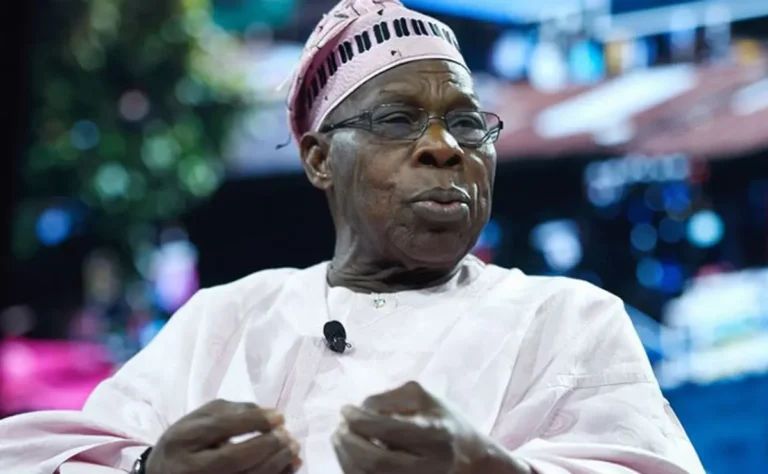
Former President Olusegun Obasanjo has criticised President Bola Tinubu’s position on government borrowing, describing as “absolute nonsense” the president’s assertion that borrowing should not be regarded as a negative practice.
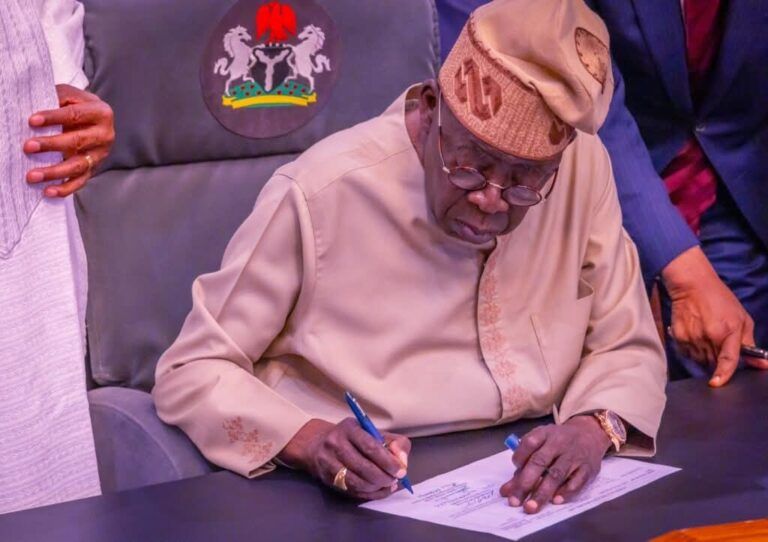
Obasanjo made his position known on Friday in Abeokuta, Ogun State, while speaking at the Ajibosin Platform, a public forum themed “Leveraging Artificial Intelligence to solve grassroots problems and accelerate National Development.”
In April, Tinubu defended his administration’s decision to continue borrowing when necessary, arguing that loans were not inherently bad if the government worked hard to repay them.
The president made the remarks at the State House during a meeting with Plateau State leaders led by Governor Caleb Mutfwang and the All Progressives Congress (APC) National Chairman, Nentawe Yilwatda.
“If we have to borrow, we borrow. Borrowing is not leprosy, we just have to work hard to be able to pay for it,” the president had said.
However, responding to the president’s position, Obasanjo argued that the consequences of excessive borrowing were more damaging than those associated with leprosy, particularly because public debt could affect several generations.
The former president said: “And for anybody to say debt is no leprosy, is absolute nonsense. Debt is worse than leprosy. Because leprosy destroys only one person. Debt destroys generations.”
Obasanjo also expressed concern over Nigeria’s economic performance, particularly the sharp depreciation of the naira against the United States dollar over the years.
To illustrate the extent of the currency’s decline, he recalled the exchange rate when he established his farm nearly five decades ago.
“When I started my farm, 47 years ago, naira to the dollar was one naira to $1.85. Forty-seven years ago. What has Nigeria done in 47 years that we now have 1,500 naira to the dollar? What have we done?” he asked.
He further questioned the knowledge and decision-making capacity of the country’s political leaders, demanding to know what they understood about governance and how such knowledge could translate into better living conditions for Nigerians.
“What do our leaders know? And what do they not know? And from what they know, what can they do for us?” he asked.
The former president also faulted Nigeria’s reliance on international financial institutions, particularly the World Bank and the International Monetary Fund (IMF), arguing that their economic prescriptions might not adequately reflect the country’s peculiar needs and development challenges.
He maintained that the institutions were established before Nigeria gained independence and questioned their suitability in determining the country’s economic direction.
Recalling Nigeria’s agricultural policies, Obasanjo said the country was discouraged from providing certain forms of support to farmers despite similar interventions being available to agricultural producers in developed economies.
“World Bank and IMF were not designed for us. They were not built by us. They were built before we became independent. And that’s the people who would determine what we do,” he said.
Obasanjo also cautioned against the unquestioning adoption of economic policies recommended by foreign-trained experts, stressing the need for policymakers to consider Nigeria’s peculiar economic conditions when making decisions.
-
General News1 month ago
JOHESU demands: MHWUN puts FG on notice over fresh action
-
 Politics1 month ago
2027: ASAF backs APC governors, rejects rainbow coalition
-

 Politics2 months ago
You have demonstrated diligence, loyalty, statesmanship in leadership, Ekechi salutes Shetimma at 60
-

 Politics3 months ago
2027: Advertising experts raise concerns over irregular regulation of sector
-
FCT News3 months ago
2027: Hasana-Moneme pledges skills, empowerment, credit access for FCT women
-
General News3 months ago
2027: Dame Princess Esom-Nwafor Orizu confirmed as APC flagbearer for Nnewi North /South /Ekwusigo Federal Constituency as INEC releases names of candidates
-
Uncategorized4 months ago
Rescue of Oyo schoolchilden: Tinubu commends security agencies, says action breakthrough in fight against criminality
-
General News2 months ago
Chi-Jenco CEO, Jude Orji loses mother