
General News
Umahi pinpoints impacts of Tinubu’s legacy projects, says President transforming Nigeria

By Chidera Orji
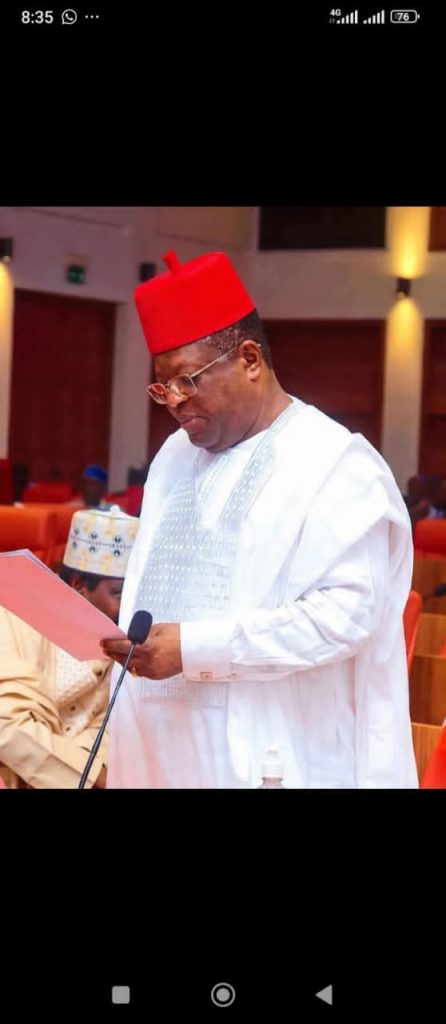
The Honourable Minister of Works, Engr. David Umahi, CON, FNSE, FNATE, has highlighted the progress and transformative impact of the major infrastructure projects being executed by the President Bola Ahmed Tinubu-led Administration, describing them as strategic investments aimed at reshaping Nigeria’s transportation network, strengthening national connectivity and stimulating economic growth.
A press release from.Mohammed A. Ahmed, Director, Information and Public Relations in the ministry quoted Umahi to have disclosed this on Wednesday, 7 October 2026, in Abuja, during a Press Conference, where he updated on the Tinubu Administration’s four Legacy Road Projects, ongoing federal road interventions, completed projects, procurement processes, and the Ministry’s efforts to ensure value for money in the development of infrastructure.
The Minister identified the four legacy projects as the Lagos-Calabar Coastal Highway, Sokoto-Badagry Superhighway, Calabar-Ebonyi-Abuja Highway (the Trans-Saharan Route/North-South connectivity corridor, and the Dualisation of Akwanga-Jos-Bauchi-Gombe-Biu-Maiduguri Road.
According to him, the projects were conceived as strategic national infrastructure to connect all six (6) geopolitical zones, facilitate the movement of people and goods, open up economic opportunities, and strengthen Nigeria’s long-term development.
Giving an update on the Lagos-Calabar Coastal Highway, Umahi disclosed that Section 1, covering 47 kilometres, has been completed, while significant progress has also been recorded on Section 2, covering approximately 55 kilometres.
He explained that pavement works on Section 2 were nearing completion, while major flyovers, overpasses and underpasses were being constructed to address complex traffic, environmental and engineering challenges along the corridor.
The Minister said some parts of the alignment had to be redesigned to accommodate existing and planned rail, road and industrial infrastructure, particularly around the Dangote Refinery and Lekki Deep Seaport axis. He stressed that the objective was to develop an integrated transportation system rather than an isolated road project. On the Ondo State axis, Umahi explained that the alignment was redesigned in some locations because of difficult terrain, deep pits and challenging subsoil conditions. He said the redesign was aimed at ensuring durability, safety and cost-effectiveness, with substantial filling and ground improvement works ongoing in some areas.
The Minister further disclosed that President Tinubu had directed that the continuation of the Lagos-Calabar Coastal Highway be aligned with the existing East-West Road in parts of the Niger Delta area.
He described the decision as a strategic engineering intervention that would address the increasing impact of flooding and climate change on the vital infrastructure. According to him, critical sections of the East-West Road would be raised to accommodate present and anticipated flood levels and ensure the continued functionality of the strategic route.
Umahi also dwelled on the importance of the Construction of the Benin City Bypass and other sections of the littoral corridor in reducing congestion and improving movement across the South-South zone.
On the Sokoto-Badagry Superhighway, the Minister said the project was designed to establish a major economic corridor linking Ilelah in Sokoto State with Badagry in Lagos State. He noted that various sections of the highway were at different stages of construction, with significant progress recorded across the Sokoto, Kebbi, Oyo, Ogun and Badagry axes, while those of Niger and Kwara States are commencing soon.
Umahi said the strategic importance of the project is beyond road construction, noting that the corridor would unlock agricultural, industrial, tourism and other economic opportunities. He added that the Federal Government was exploring opportunities for complementary investments, including agriculture, housing, tourism and other economic activities along the major infrastructure corridors.
Speaking on the third legacy project, the ancient Trans-Saharan Route, Engr. Umahi explained that it was designed to strengthen connectivity between the coastal axis and the northern parts of the country, thereby facilitating the movement of people, goods and services across the South-South, South East and North Central geopolitical zones.
He disclosed that substantial progress had been recorded on the initial sections, while additional sections had been approved to make the corridor more economically viable and attractive to potential financiers.
On the fourth legacy project, the Minister said the Akwanga-Jos-Bauchi-Gombe-Biu-Maiduguri single carriageway is being expanded as a major northern connectivity route. He explained that the scope had been extended to cover an additional spur from Jos to Ibi in Taraba State, with design and procurement processes ongoing.
Responding to questions from journalists on the number of completed projects, the Minister listed several major road and bridge projects completed or ready for commissioning across the country. Among the projects, he mentioned Section I of the Lagos-Calabar Coastal Highway, the Kwanar Danja-Hadejia Road, the Kaduna-Pambeguwa Road, the Lafia Bypass, the Bodo-Bonny Road with Bridges along the Opobo Channel, among many others.
He also listed the completed first lot of the Lagos-Calabar Coastal Highway, the Gombe-Potiskum rehabilitation project, sections of the Azare road linking Jigawa and Bauchi, the five-span Ampoha Bridge, the 23-kilometre, 23-span flyover project at Ekpoma-Benin axis, and a three-span, 75-metre dualised bridge structure.
Umahi further disclosed that several sections of the Lagos-Badagry and Lagos-Ibadan, Lagos-Shagamu-Ore corridors had been completed, while other sections were at advanced stages of completion.
He assured journalists that the Ministry was updating its compendium of completed and ongoing projects. “We have quite a lot of projects. We have completed projects and we have ongoing projects. We are updating the compendium and it will be made available on the Ministry’s website and circulated to the public,” he assured.
The Minister reiterated the Federal Ministry of Works’ increasing adoption of concrete pavement on major highways, saying the need for greater durability and reduced maintenance costs is driving the policy.
According to him, the Ministry is developing infrastructure that would serve Nigerians for several decades and provide better value for public resources. He reiterated that concrete pavement provides longer durability guarantees, when properly designed and constructed, compared with the recurring maintenance challenges associated with conventional asphalt pavement.
Addressing questions concerning the procurement process for the Lagos-Calabar Coastal Highway, Umahi explained that the Ministry followed an applicable procurement framework. He said the special procurement approach was necessitated by the unique engineering requirements of constructing a major highway through a difficult coastal terrain.
According to him, the Ministry identified the need for a contractor with a proven track record in executing similar coastal infrastructure and subsequently made a recommendation to the Bureau of Public Procurement (BPP). He disclosed that the BPP reviewed the recommendation and gave its clearance, while the Federal Executive Council remained the final approving authority.
Umahi said the Ministry subjected the contractor’s bid to scrutiny by comparing proposed rates with prevailing market prices for materials and other inputs. He stressed that both indigenous and expatriate contractors were subjected to the same pricing and evaluation principles.
“We put everybody on the same platform. We sent the proposals to the Bureau of Public Procurement. They reviewed it and where they felt that the rates went beyond their expected maxima, they called our attention to it, and we reviewed the rates accordingly,” he explained.
The Minister also disclosed that substantial progress had been recorded on the Outstanding Sections of the Abuja-Kaduna-Zaria-Kano Expressway, with all the sections completed except the Jere-Kaduna portion advancing steadily. He revealed that the Ministry is installing solar-powered lighting along the 375-kilometre Expressway to improve night visibility, thereby enhancing safety and security. He also said that the improved condition of the highway, alongside security interventions, was contributing to safer and more efficient movement along the corridor.
The Minister disclosed that the Ministry had commenced an “Operation Rescue” on the Benin-Asaba Expressway following challenges associated with the road and its existing concession arrangement. He said the Federal Government had intervened to restore mobility, while plans were being developed for a comprehensive reconstruction of the entire alignment, using continuously reinforced concrete pavement (CRCP). He stressed that Nigerians should not continue to suffer because of unresolved contractual or concession-related issues.
The Minister, particularly, highlighted the Federal Government’s increased infrastructure investment in the South East, saying the Tinubu Administration had demonstrated a clear commitment to reintegrating the hitherto neglected zone into the national infrastructure development programme. He said several major road projects had either been approved, commenced, or completed by the present administration.
Umahi, who is from the zone, said it might not have the highest number of federal projects compared with other geopolitical zones, but it was no longer being left behind.
“We can’t continue to live in denial. What we have been crying for is being given. The people of the South East are being fully reintegrated into the national infrastructure development plan,” he emphasised.
He cited the completion of the Second Niger Bridge, the rehabilitation of the 1st Niger Bridge, ongoing construction of major Bypasses and other federal road projects in the zone as evidence of the administration’s commitment.
The Minister maintained that infrastructure development should be viewed from the perspective of national integration rather than regional politics. He stated that the Federal Government’s infrastructure agenda was intended to ensure that every part of Nigeria benefited from strategic investments in roads, bridges and other transportation infrastructure.
On the Tax-Credit Scheme’s projects inherited from the previous administrations, Umahi explained that the Federal Government had taken proactive measures to address them, especially where private-sector partners were no longer able to sustain previously approved financing arrangements.
He warned contractors, who had received mobilisation or project funds but failed to deploy the funds on the work that the Ministry would take appropriate steps to recover such funds. He stressed that accountability, performance and value for money remained central to the Ministry’s project execution strategy.
The Minister also addressed the ongoing intervention on the First Niger Bridge, explaining that measures were being introduced to improve traffic management and protect the structural integrity of the bridge. He said the Ministry was installing appropriate traffic management infrastructure, CCTV cameras and other security measures at its Asaba and Onitsha ends. According to Umahi, the measures were necessary because bridges are designed primarily for dynamic as opposed to static loads, explaining that prolonged traffic gridlock can create additional structural and safety challenges. He said remedial works, repainting and other maintenance activities were also being undertaken to ensure the long-term usage of the structure.
Umahi further explained that the Federal Government’s road development strategy included environmental considerations, such as the planting of trees along major highways and the installation of solar-powered street lighting. He said the initiative would help improve visibility and the environment, provide shade, and contribute to the reduction of harmful emissions along major transport corridors.
The Minister also linked infrastructure development to the broader economic reforms of the Renewed Hope Agenda of the Tinubu Administration, saying improved roads and connectivity would support agricultural production, industrialisation, trade, commerce, tourism and investment. He maintained that the Federal Government’s infrastructure investments were part of a broader strategy to move economic growth from the macroeconomic level to the grassroots.
On the financing of the major legacy projects, Umahi assured Nigerians that the Federal Government had put mechanisms in place to ensure that the projects are adequately funded to completion.
He revealed that significant portions of the projects had been funded, while loan-financing arrangements were being implemented for the remaining components.
He noted that the administration was determined not to embark on projects without ensuring that there was a credible financing mechanism for their completion.
“We don’t start what we will not finish. And we will not finish what we have not started,” he stated.
The Minister reaffirmed the commitment of the Ministry to completing inherited projects, while simultaneously delivering new strategic infrastructure under the Tinubu Administration. He said the legacy projects were not merely road construction schemes but long-term investments designed to transform Nigeria’s economic landscape, improve connectivity, strengthen national integration and security, and create opportunities for millions of Nigerians.
In his closing remarks, the Director Overseeing the Office of the Permanent Secretary (DOOPS), Mohammed Aminu Ahmed, FCNA, expressed appreciation to the Minister, members of the media, and all participants for attending. He commended the media for its continued partnership with the Ministry in informing Nigerians about government infrastructure projects and encouraged it to continue to provide constructive criticism on the Ministry’s activities.


By Our Reporter with agency report
The United States Citizenship and Immigration Services (USCIS) has listed11 categories of foreign applicants who are exempt from paying the filing fee when submitting Form I-485, the Application to Register Permanent Residence or Adjust Status, commonly known as a green card application.
For most applicants aged 14 and above, according to a report by MSN, a Microsoft web portal, the standard fee is $1,440 (approximately N1,994,400) for paper filing and 1,390 dollars (approximately N1,925,150) for online filing.
However, according to the U.S.CIS fee schedule published in Form G-1055, specific groups are entirely exempt from the charge.
The following applicants pay 0 dollar when filing Form I-485:
Applicants who served honourably on active duty in the US armed forces and are filing under INA section 101(a)(27)(K), also known as the Six and Six programme. This exemption does not cover non-military derivative spouses or children.
Refugees, or those who were paroled as refugees, filing under INA section 207.
Applicants in deportation, exclusion, or removal proceedings before an immigration judge, where the court waives the application fee.
Persons seeking or granted Special Immigrant Juvenile classification.
U nonimmigrants seeking adjustment of status under INA section 245(m) as victims of qualifying criminal activity.
T nonimmigrants seeking adjustment of status under INA section 245(l) as human trafficking victims.
Persons seeking or granted special immigrant visa or status as an Afghan or Iraqi translator or interpreter; an Iraqi national employed by or on behalf of the U.S. government; an Afghan national employed by or on behalf of the U.S. government or the International Security Assistance Force (ISAF); or a derivative beneficiary of one of the above.
Afghan diplomats or immediate family members who held valid A or G status on 14 July 2021, filing under Section 13 of Pub. L. 85-316.
Persons seeking adjustment of status as an abused spouse or child under the Cuban Adjustment Act (CAA).
Persons seeking adjustment of status as an abused spouse or child under the Haitian Refugee Immigration Fairness Act (HRIFA).
Persons seeking immigrant classification as a Violence Against Women Act (VAWA) self-petitioner, including derivatives.
Beyond the 11 categories that automatically qualify for an exemption, U.S.CIS says certain other applicants may qualify for a fee waiver by submitting Form I-912.
This is separate from the automatic exemptions. Applicants must formally request the waiver, and USCIS considers whether they meet the eligibility requirements.
The existence of these exemptions does not mean that all foreign applicants qualify for free green card applications.
Most applicants must still pay the applicable Form I-485 filing fee unless they meet an exemption or receive an approved fee waiver. (MSN/NAN).
By Our Reporter
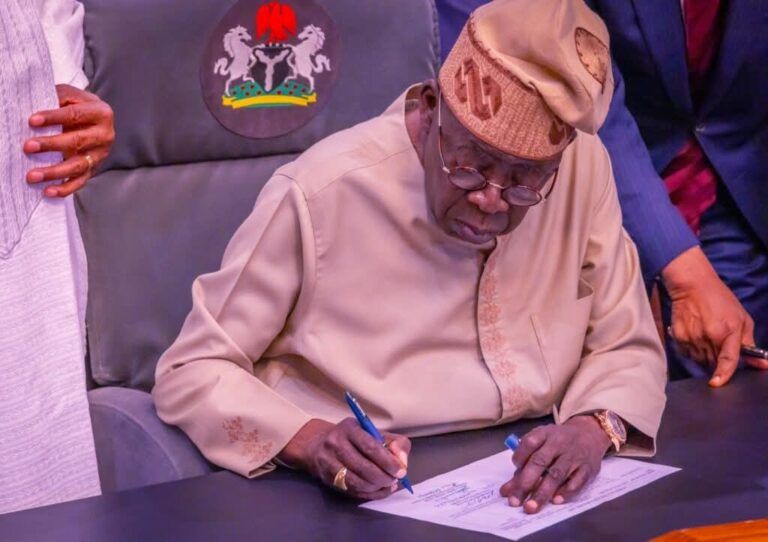
President Bola Tinubu has approved the establishment of the University of Public
Relations and Leadership, the first specialised institution in Nigeria
dedicated to advancing public relations education, research, professional development and leadership training.
Tinubu announced the approval in a speech delivered by Vice President Kashim Shettima at the 13th World Public Relations Forum 2026 in Abuja.
He also described it as a forward-looking investment in human capital and the future of the communication profession.
The President also said it would provide an opportunity to develop a new generation of communication leaders equipped to respond to the demands of a rapidly changing global environment.
“An important outcome of hosting this forum is our determination to establish a lasting institutional legacy for the public relations profession,” Tinubu, who was represented by Vice President Kashim Shettima, said.
“In this regard, I am pleased to formally approve and support the establishment of the University of Public Relations and Leadership.”
He urged investors to explore Nigeria’s rich cultural heritage, tourism assets and the ingenuity of the Nigerian people.
“Naija no go carry last! Nigeria is a country of enormous possibilities. We are a nation of diverse cultures, talents and ideas, with a youthful population, a dynamic private sector and a strong determination to build a more prosperous future,” he added
General News
Nigeria fFrst Lady, Ebonyi Governor’s wife reaffirm continuous commitment in girl-child menstrual hygiene
By Uzorigwe Gloria
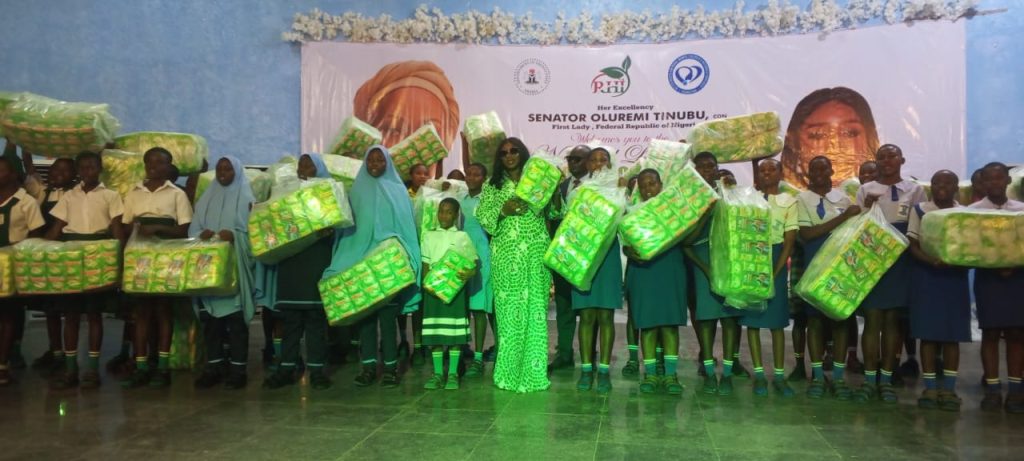
The wife of the president of Nigeria, Senator Oluremi Tinubu represented by the wife of Ebonyi State Governor, Chief Mrs Marymaudline Uzoamaka Ogbonna Nwifuru has launched National Flow with Confidence at banquet hall, Government House, Abakaliki on Wednesday, the 18th day of 2027.
National Flow with Confidence comes with a donation of 370,000 disposable sanitary pads to school girls across the country and Ebonyi state, with the theme: Empowering School Girls through Menstrual Health.
The first lady of Ebonyi state disclosed that she was only representing the first lady of Nigeria, noting that President’s wife had demonstrated much commitment to put smiles in the life of every Nigerian.
Mrs Nwifuru said that Nigeria first lady had touched multiple lives here in Ebonyi state and across the federation through her own office.
“She send us an erant everytime and said, go to your state and gift to your people. She had supported my office a lot and through her she had remembered Ebonyi women, children and youths. Nwifuru speaks.”
Mrs Tinibu has vowed that every girl child in the country must see her monthly flow with confidence by padding themselves very well, because the girl child needed to pad well, adding that been a girl child is the greatest thing because girl child is important and powerful in the society.
She encouraged the girl child because they are the treasure of their families, adviced them to package themselves during menstruation and make impact in Nirtness during their menses.
It was in olden days that girl child menstruate without proper packaging, but today we are in modern society, let’s pads well, she said.
In her address, the wife of the Chief of Staff to Ebonyi state governor who also the team leader of BERWO Foundation Prof. Mrs Nkechi Echiegu, commended the first lady and thanked her for the good works she has been doing for the people of the state more especially the girl child.
Prof. Mrs Nkechi Echiegu said that over ten thousand (10,000) pads were shared this year by the mother of the state, Chief Mrs Marymaudline Uzoamaka Ogbonna Nwifuru across schools in 13 LGA of the state.
Ebonyi women, children and youths appreciate the first lady because of her generosity activities towards the state and they will keep making you proud prof. Mrs Echiegu said.
In appreciation, one of the students Miss Alinna Rebecca, who is a student of Divine Flourish Modern Secondary School Abakaliki , thanked the wife of the president represented by the first lady of the state on behalf of beneficiaries,.
She said that it’s an opportunity for her to be in the presence of the state governor’s wife and speak with her.
She promised continueous hygiene as in their menstrual cycles.
-
 General News1 month ago
Rivers 2027: We are not part of Rainbow Coalition – APC Legacy Group slams Wike, Fubara meeting
-
 Politics2 months ago
2027: ASAF backs APC governors, rejects rainbow coalition
-
General News2 months ago
JOHESU demands: MHWUN puts FG on notice over fresh action
-

 Politics2 months ago
You have demonstrated diligence, loyalty, statesmanship in leadership, Ekechi salutes Shetimma at 60
-

 Politics3 months ago
2027: Advertising experts raise concerns over irregular regulation of sector
-
FCT News3 months ago
2027: Hasana-Moneme pledges skills, empowerment, credit access for FCT women
-
General News4 months ago
2027: Dame Princess Esom-Nwafor Orizu confirmed as APC flagbearer for Nnewi North /South /Ekwusigo Federal Constituency as INEC releases names of candidates
-
General News1 month ago
Senator Mandiya slipped, died in Abuja bathroom, corpse discovered after 3 days, says Sen Ningi