
General News
Four assemblies say yes, to state police Bill, await others

Nkem Okereh
The Houses of Assembly in Osun, Edo, Oyo and Rivers have endorsed the proposed constitutional amendment seeking to establish state police across Nigeria.
The resolution followed transmission by the National Assembly of the Constitution of the Federal Republic of Nigeria, 1999 (Sixth Alteration) Bill, 2026, to the 36 State Houses of Assembly for consideration.
The bill seeks to amend the 1999 Constitution to create a legal and institutional framework for the establishment and operation of state police.
The Clerk to the National Assembly, Kamoru Ogunlana, formally transmitted the bill to state legislatures on September 16, 2026.
The process is pursuant to Section 9 of the 1999 Constitution, which prescribes the procedure for altering the Constitution.
Under the provision, an amendment passed by the National Assembly requires approval, by resolution, of not less than two-thirds of all state Houses of Assembly before proceeding to the President for assent.
With 36 state legislatures, the required threshold is 24 Houses.
The leadership has adopted a 30-day administrative timeframe to encourage Houses to consider the proposal and communicate positions within an orderly period.
First to kick-start the process was Osun State, followed by Edo, Rivers and Oyo.
During plenary on September 22, 2026, the Majority Leader of Osun House, Babajide Kofoworola, moved a motion for approval, seconded by Mr Tajudeen Adeyemi, representing Ifelodun Constituency. They said the measure would strengthen security arrangements in the state.
Upon adoption, Speaker Rt. Hon. Egbedu directed that approved amendments and resolutions of Osun House be forwarded to the National Assembly for further consideration.
The Assembly also dissolved into committee of the whole to consider the Osun State Park Management System Bill 2026, and agreed to incorporate approved changes after reviewing corrections.
In Edo, the House unanimously approved the amendment bill.
Leading the debate, Majority Leader, Hon. Osezua Sunday Ojezelle, highlighted its significance and urged lawmakers to support passage.
Member representing Akoko-Edo II, Donald Okogbe, said the proposed state police could create employment.
Charity Aiguobaehian, representing Ovia North-East I, said the initiative could strengthen security at the community level.
Richard Edosa, representing Oredo I, advocated the establishment of an Edo State Police Commission as part of the framework.
Kingsley Ugabi, representing Etsako East, and Maria Edeko, representing Esan North-East II, also supported the bill, saying it could improve peace and security.
Ojezelle moved a motion for passage, seconded by Minority Leader Natasha Osawaru. The motion was carried.
Speaker Yekini Idaiye described the bill as important and directed the Clerk to prepare and transmit clean copies of the concurrence resolution to the National Assembly.
Rivers lawmakers endorsed proposal on Monday, September 27.
Presenting the bill to the House, Speaker Martins Amaewhule said it seeks to create a constitutional pathway for the establishment of State Police Services, subject to the Constitution and to an Act of the National Assembly prescribing national minimum policing standards.
According to him, the bill establishes constitutional guardrails covering civilian control, human rights, national minimum standards, independent police service commissions, intergovernmental cooperation, criminal information systems, firearms control, and exceptional federal intervention in cases of breakdown, serious incapacity, national security threat, or “egregious abuse.
All 25 members voted in support by show of hands.
“Anything that needs to be done towards ensuring that our people are properly protected, so that people can move freely, stay in their homes, go about their normal businesses without fear or hindrance by anybody or group of persons, will continue to be our top priority,” the Speaker said.
Oyo State House of Assembly acted on Tuesday, September 29, at plenary presided over by Speaker Adebo Ogundoyin, after clause-by-clause consideration.
According to Ogundoyin, passage would have significant legislative implications for the Oyo Assembly, particularly the need to develop a comprehensive State Police Law to translate the constitutional framework into an effective operational institution.
He disclosed that the proposed amendment would restructure Nigeria’s policing architecture by providing for a Federal Police Service alongside State Police Services.
He stated that the bill would empower each state to establish its own Police Service through legislation by the State House of Assembly, while defining the respective responsibilities of federal and state police authorities.
Ogundoyin noted that State Police would be responsible for enforcement of state laws, public safety and order, prevention and detection of offences, protection of life and property and other local policing functions prescribed by state law.
He said the proposed framework would also establish State Police Service Commissions with responsibilities covering appointment, promotion, transfer, discipline, oversight, complaints and accountability.
He said the bill provides for a State Commander of Police to head each State Police Service, to be appointed by the Governor on recommendation of the National Police Council and subject to confirmation by the State House of Assembly.
He also highlighted provisions empowering the National Assembly to prescribe minimum policing standards for both federal and state services.
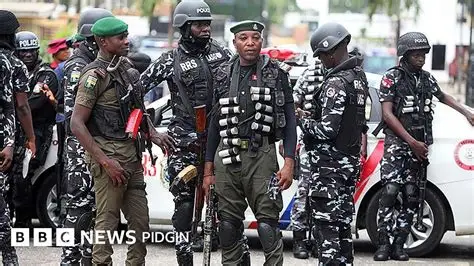
The push for state police has intensified amid persistent security challenges and concerns over the capacity of the centrally controlled Nigeria Police Force to respond effectively to threats across vast territory.
Supporters argue state-controlled police could bring policing closer to communities, improve local intelligence and enable quicker responses to threats peculiar to individual states.
The proposal, however, involves significant constitutional and institutional questions, including structure of command, operational safeguards, funding, accountability and protection of personnel from political interference. The current framework provides for the Nigeria Police Force as a federal institution, with policing largely controlled from the centre.
The proposed amendment seeks to create a constitutional basis for states to establish and operate their own police formations alongside existing federal structures.
It has also received backing from President Bola Tinubu, with the administration advancing broader reforms aimed at restructuring policing and improving internal security.
A Presidential Working Group on National Policing Bill was subsequently inaugurated to work on a framework for implementing the proposed structure. Chairman of the working group, Femi Gbajabiamila, had said reform was intended to bring policing closer to Nigerians, while establishing safeguards to make the system more effective and trusted.
The outcome of ongoing votes by 36 Houses of Assembly will determine whether the constitutional process for establishing state police secures required nationwide legislative support.

By Our Reporter
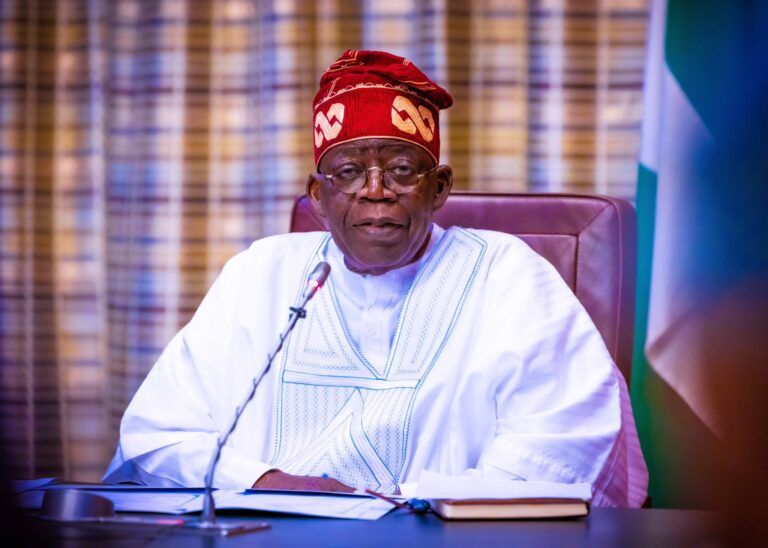
President Bola Ahmed Tinubu has directed the Nigerian Air Force, NAF, to immediately investigate the cause of the military aircraft crash in the Igbokoda area of Ondo State.
Recall that a total of 32 people were killed after a Nigerian Air Force helicopter crashed in Igbokoda, the headquarters of Ilaje Local Government Area of Ondo State.
The aircraft was reportedly on a routine mission from Benin to Lagos when it crashed in the Igbokoda area.
The President’s directive was contained in a statement issued by his Special Adviser on Information and Strategy, Bayo Onanuga, on Monday.
Tinubu extended his deepest condolences to the families of the 25 passengers and seven crew members involved in the crash, as well as the Chief of the Air Staff, Air Marshal Sunday Kelvin Aneke, and officers, airmen and airwomen of the Nigerian Air Force.
“This is a painful moment for our Armed Forces and for the entire nation. Our Air Force personnel put their lives on the line every day to secure Nigeria. Their sacrifice will never be forgotten,” Tinubu said.
“The Chief of Air Staff has briefed me, and I have directed the Nigerian Air Force to immediately commence a thorough investigation into the cause of the crash to prevent future occurrences.
“I commend the Nigerian Air Force for activating an immediate search and rescue operation following the accident.
“I pray for the repose of the souls of the gallant officers and for Almighty God to grant their families and the Nigerian Air Force the fortitude to bear the unfortunate loss.”
The President also commended the swift response of first responders and the Ondo State Government at the crash site.
“I also commend the swift response of first responders and the Ondo State Government at the crash site,” Tinubu said.
By Our Reporter
The Independent National Electoral Commission (INEC) says more than 103 million Nigerians are now on the national register of voters ahead of the 2027 elections.
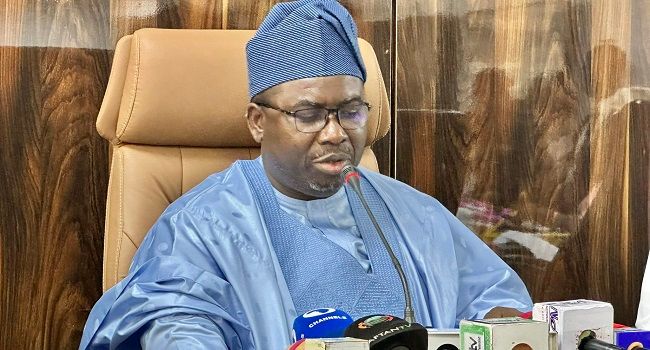
INEC Chairman, Prof. Joash Amupitan, announced this on Monday at a strategic workshop for media executives in Abuja.
The workshop, themed ‘Strengthening democracy through partnership among editors, civil society and electoral institutions’, was organised by INEC in collaboration with Development Alternatives Incorporated (DAI) and the Nigerian Guild of Editors (NGE).
Amupitan said the commission’s three-phase continuous voter registration (CVR) exercise attracted more than 10.6 million new applicants.
He said the public display of the preliminary register of voters for claims and objections had been completed, while the final automated biometric identification system (ABIS) cleanup of the register had also been concluded.
The INEC chairman said the commission would commence nationwide collection of permanent voter cards (PVCs) on October 9.
He urged eligible citizens who participated in the registration exercise to collect their cards and ensure they are ready to participate in the 2027 elections.
Amupitan said INEC was also committed to continuously improving the bimodal voter accreditation system (BVAS) and the INEC Result Viewing Portal (IReV) to strengthen the credibility and transparency of elections.
“The ultimate arbiter of electoral integrity is public trust,” he said.
He called for stronger collaboration among INEC, media organisations, civil society groups and other stakeholders ahead of the 2027 elections.
Amupitan said the commission was prepared to listen to editorial concerns, address operational challenges and provide timely information to prevent misinformation from filling communication gaps.
He said INEC would provide editors with direct access to verify field incidents, logistical developments and security reports in real time.
The chairman also proposed a sustained editorial feedback mechanism between INEC and the NGE to review the commission’s operational progress and address emerging challenges throughout the 2027 election cycle.
Amupitan said stronger engagement with the media would help ensure that accurate information reaches voters, particularly during periods when electoral activities generate heightened public interest.
Rudolf Elbling, team leader at DAI, said credible elections depended not only on effective electoral administration but also on professional, ethical and fact-based journalism.
Elbling identified electoral integrity, election technology, the security of journalists and voters, and information disorder as some of the major challenges confronting the media ahead of the 2027 elections.
He said journalists had an important role to play in providing voters with accurate information and holding electoral institutions and other stakeholders accountable.
The workshop brought together electoral officials, editors, civil society representatives and other stakeholders to strengthen cooperation and improve public communication ahead of the 2027 elections.

By Sam Otuonye
The Federal Competition and Consumer Protection Commission (FCCPC) has proposed new rules that would subject businesses using artificial intelligence, machine learning and automated technologies for marketing to additional regulatory requirements with tougher penalties.
Under the draft Sales Promotion Regulations, 2026, businesses using AI for sales promotions, marketing communications or consumer engagement directed at or accessible to Nigerian consumers would be required to register with the Commission.
The proposed framework also introduced tough financial penalties for breaches, with corporate entities facing fines of up to N100 million or 1% of their previous year’s turnover, whichever is greater.
The draft creates a dedicated framework for what it describes as “Artificial Intelligence and Automated Marketing”, reflecting the growing use of AI tools in advertising, customer engagement and digital promotions.
Under the proposal, businesses that deploy, operate or use AI, machine learning systems or automated technologies for promotions, marketing communications or consumer engagement would have to register the use with the FCCPC.
The draft further proposes that AI-generated or automated marketing content must be clearly identifiable as such. It also specifically addressed emerging marketing tools including AI chatbots, virtual influencers and automated messaging systems.
The proposed rules stated that their use in marketing must be transparent and must not involve manipulation, misinformation or exploitation of consumer data or behavioural tendencies. Businesses would also be required to allow consumers to opt out of automated or AI driven marketing communications.
Beyond the AI provisions, the draft proposed a major increase in the financial consequences for businesses that breach the proposed Sales Promotion Regulations.
According to the proposed regulation, a natural person who contravenes the regulations could face a fine of up to N50 million.
For a corporate entity, the proposed penalty is up to N100 million or 1% of the company’s previous year’s turnover, whichever is greater.
“A body corporate, shall be liable to an administrative penalty not exceeding NGN100,000,000.00 (One Hundred Million Naira) or 1% of its turnover in the previous year, whichever is greater.
“Each director of an undertaking referred to in Regulations 61.2(b) is liable to be proceeded against as specified under Regulations 61.2(a). Such sanction may include disqualification as a director for a period not exceeding five (5) years,” the FCCPC stated in the draft regulation.
The draft also proposed additional penalties of up to N10 million for specific breaches, including failure to award a promised prize or failure to comply with the terms of a promotion. A person who makes a false statement in an application or undertaking could also face a penalty of up to N10 million under the proposal.
Under the draft, an undertaking using AI generated content or automated promotional systems would be responsible and accountable for representations, messages and claims produced or communicated by those systems.
The rules would also impose liability where an AI system or automated tool produces misleading, discriminatory or harmful promotional outcomes.
The proposed rules state that their use in marketing must be transparent and must not involve manipulation, misinformation or exploitation of consumer data or behavioural tendencies.
Businesses would also be required to allow consumers to opt out of automated or AI driven marketing communications.
Beyond the AI provisions, the draft proposes a major increase in the financial consequences for businesses that breach the proposed Sales Promotion Regulations.
According to the proposed regulation, a natural person who contravenes the regulations could face a fine of up to N50 million.
-
General News2 weeks ago
JOHESU demands: MHWUN puts FG on notice over fresh action
-

 Politics4 weeks ago
You have demonstrated diligence, loyalty, statesmanship in leadership, Ekechi salutes Shetimma at 60
-

 Politics3 weeks ago
2027: ASAF backs APC governors, rejects rainbow coalition
-

 Politics2 months ago
2027: Advertising experts raise concerns over irregular regulation of sector
-
FCT News2 months ago
2027: Hasana-Moneme pledges skills, empowerment, credit access for FCT women
-
General News2 months ago
2027: Dame Princess Esom-Nwafor Orizu confirmed as APC flagbearer for Nnewi North /South /Ekwusigo Federal Constituency as INEC releases names of candidates
-
Uncategorized3 months ago
Rescue of Oyo schoolchilden: Tinubu commends security agencies, says action breakthrough in fight against criminality
-
General News1 month ago
Chi-Jenco CEO, Jude Orji loses mother