
General News
Absence of vaccine manufacturing delaying NAFDAC attainment of WHO Maturity Level 4 – DG


Abubakar Umar
The Director General of the National Agency for Food and Drug Administration and Control NAFDAC, Prof. Mojisola Adeyeye has solicited the support of international partners in contributing to the establishment of vaccines manufacturing facilities in Nigeria.
The DG NAFDAC made the call at the 8th Nigeria Pharma Manufacturers’ Expo jointly organised in Lagos by the Pharmaceutical Manufacturing Group of the Manufacturers Association of Nigeria (PMG-MAN) and PGE Expo PVT Limited, where she acknowledged the continued support of international partners in the agency’s trajectory in attaining Maturity Level 3.
Prof Adeyeye told the array of international organisations with remarkable footprints in the healthcare space medicare around the world that their contributions would be immensely appreciated in the fill and finish modular vaccine manufacturing in Nigeria.
Sayo Akintola, Media Consultant to NAFDAC in a statement on Sunday said Prof. Adeyeye highlighted nine functions and requirements to be met before the Agency become fully benchmarked for medicines and vaccines.
She said that the agency had only been benchmarked in eight, leaving out the last one, which is Lot Release for vaccines.
‘We want to call on our international partners that have been of tremendous help. Without them we wouldn’t have been here. I want to challenge them to contribute, to fill and finish Modular Vaccine manufacturing so that we can get our Vaccine Lot Release,’ she reiterated, adding that Nigeria has all it takes for the attainment aside from the local vaccines manufacturing.
‘To get Lot Release -Maturity Level 4, we have figured it out in a way we have estimated. It’s not going to cost too much. We will share that with you. Because we cannot afford to go back to where we used to be,’ she said.
She recalled with nostalgia that NAFDAC used to manufacture vaccine, adding that ‘It’s high time we went back to vaccine manufacturing.’
She commended President Bola Ahmed Tinubu for his game changing Executive Order 2024 which brought life to NAFDAC’s persistent clamour for incentives for the local pharma manufacturers who had been operating under harsh economic conditions over the years.
‘I understand the stress our manufacturers are going through. Our manufacturers are patriots because they could have given up. I was championing incentives for the manufacturers until President Tinubu came on board with the Executive Order of 2024,’ she said, adding that ‘nobody heard of us outside the regulatory and manufacturing industry and the gain that we have attained from regulatory and industry were not brought to the surface until the President came up with the Executive Order’
She maintained that both the Coordinating Minister of Health and Social Welfare and his Minister of State for Health at that time also bought into the rationale that we needed to give incentives, noting that that was partly how the initiative of unlocking the value chain came up.
‘It has been a journey,’ she said, adding that she started with Good Manufacturing Practice Roadmap when NAFDAC inspectors went around the country for eight months for GMP compliance audit of over 165 companies. The initiative was funded by the USAID and executed by the United States Pharmacopeia.
‘We started the journey of not just the industry making products but making quality products because this is intricately tied to the way the patient’s positive health outcomes during treatment. There would not be treatment failure.’
This was during routine GMP inspection not during the roadmap
‘Where has it taken us – 2021 -2025, We went into our data matrix, and we realised that we had decreased import of products under ‘5 plus 5’ and the Ceiling Initiative by 70 per cent because our manufacturers took up the challenge and came up with “yes we can.”
She said the manufacturers were prepared to ensure that the health of our citizenry is top priority and their standing in the international market with quality products is enhanced.
Prof Adeyeye noted that this was made possible because NAFDAC kept improving the competence of NAFDAC staff, stating that ‘you cannot give what you don’t have.’
She added that these efforts had earned the agency recognition by international institutions. ‘We became a member of International Medical Device Forum in 2023. Our Lab in Yaba became WHO Pre-qualified in September 2023.’
She explained that WHO doesn’t give Maturity Level 3 as a one-off crown kind-of-thing. Rather, she said they come back and re-benchmarked the Agency to make sure that NAFDAC has remained strong, consistent and resilient. She said NAFDAC became the first agency in Sub Saharan Africa to be re-benchmarked successfully the first time.
‘All this is because of our industry. It’s because of our citizens, she said, adding that NAFDAC is one of the 194 regulatory agencies across the world, and the Agency is judged alike irrespective of size or economic status of the country.’
The Chaiman of PMG-MAN, Mr Oluwatosin Jolayemi said the gathering is the only platform for complete pharma manufacturing expo in Central and West Africa, bringing together manufacturers, regulators, investors, development partners and other critical stakeholders to showcase industry capabilities, forge partnerships and shape the future of the industry.
Mr. Jolayemi, who also doubles as the Managing Director/ CEO of Daily Need limited, commended Prof Adeyeye for her steadfastness towards ensuring that the industry moves in the direction of international best practices in quality and GMP compliance.
He noted with delight that NAFDAC’s policies are beginning to change the ecosystem, stressing that the gains must be sustained.
He, however, called for an extension of the presidential executive order for another two years at the expiration in March 2027 on the premise that journey towards Medicine Security and Pharma Sovereignty is not a short-term intervention, adding that it requires policy consistency, investment, capability development and a predictable operating environment.
A total of 132 participating companies from the U.S. China, Argentina, Egypt, India, Rwanda, Austria, UAE, France, Germany, Indonesia and Nigeria amongst others took part in the two – day expo.

By Our Reporter
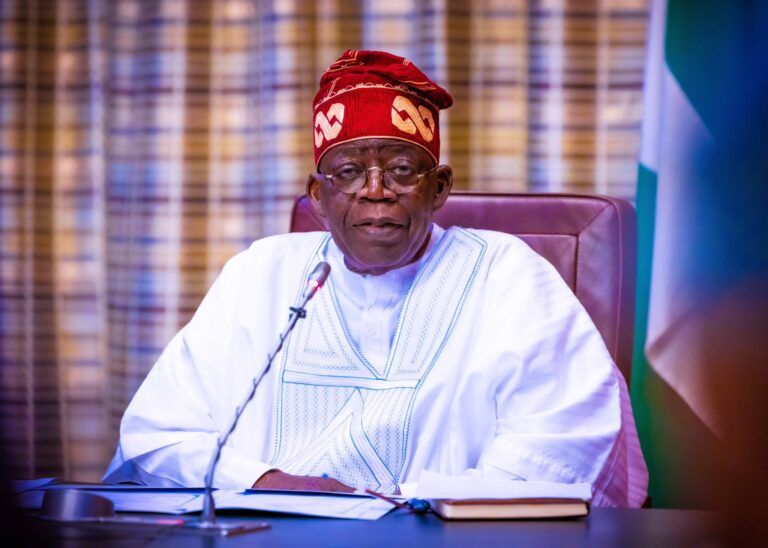
President Bola Ahmed Tinubu has directed the Nigerian Air Force, NAF, to immediately investigate the cause of the military aircraft crash in the Igbokoda area of Ondo State.
Recall that a total of 32 people were killed after a Nigerian Air Force helicopter crashed in Igbokoda, the headquarters of Ilaje Local Government Area of Ondo State.
The aircraft was reportedly on a routine mission from Benin to Lagos when it crashed in the Igbokoda area.
The President’s directive was contained in a statement issued by his Special Adviser on Information and Strategy, Bayo Onanuga, on Monday.
Tinubu extended his deepest condolences to the families of the 25 passengers and seven crew members involved in the crash, as well as the Chief of the Air Staff, Air Marshal Sunday Kelvin Aneke, and officers, airmen and airwomen of the Nigerian Air Force.
“This is a painful moment for our Armed Forces and for the entire nation. Our Air Force personnel put their lives on the line every day to secure Nigeria. Their sacrifice will never be forgotten,” Tinubu said.
“The Chief of Air Staff has briefed me, and I have directed the Nigerian Air Force to immediately commence a thorough investigation into the cause of the crash to prevent future occurrences.
“I commend the Nigerian Air Force for activating an immediate search and rescue operation following the accident.
“I pray for the repose of the souls of the gallant officers and for Almighty God to grant their families and the Nigerian Air Force the fortitude to bear the unfortunate loss.”
The President also commended the swift response of first responders and the Ondo State Government at the crash site.
“I also commend the swift response of first responders and the Ondo State Government at the crash site,” Tinubu said.
By Our Reporter
The Independent National Electoral Commission (INEC) says more than 103 million Nigerians are now on the national register of voters ahead of the 2027 elections.
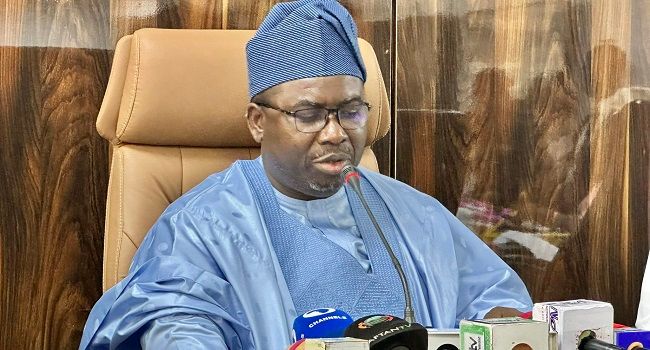
INEC Chairman, Prof. Joash Amupitan, announced this on Monday at a strategic workshop for media executives in Abuja.
The workshop, themed ‘Strengthening democracy through partnership among editors, civil society and electoral institutions’, was organised by INEC in collaboration with Development Alternatives Incorporated (DAI) and the Nigerian Guild of Editors (NGE).
Amupitan said the commission’s three-phase continuous voter registration (CVR) exercise attracted more than 10.6 million new applicants.
He said the public display of the preliminary register of voters for claims and objections had been completed, while the final automated biometric identification system (ABIS) cleanup of the register had also been concluded.
The INEC chairman said the commission would commence nationwide collection of permanent voter cards (PVCs) on October 9.
He urged eligible citizens who participated in the registration exercise to collect their cards and ensure they are ready to participate in the 2027 elections.
Amupitan said INEC was also committed to continuously improving the bimodal voter accreditation system (BVAS) and the INEC Result Viewing Portal (IReV) to strengthen the credibility and transparency of elections.
“The ultimate arbiter of electoral integrity is public trust,” he said.
He called for stronger collaboration among INEC, media organisations, civil society groups and other stakeholders ahead of the 2027 elections.
Amupitan said the commission was prepared to listen to editorial concerns, address operational challenges and provide timely information to prevent misinformation from filling communication gaps.
He said INEC would provide editors with direct access to verify field incidents, logistical developments and security reports in real time.
The chairman also proposed a sustained editorial feedback mechanism between INEC and the NGE to review the commission’s operational progress and address emerging challenges throughout the 2027 election cycle.
Amupitan said stronger engagement with the media would help ensure that accurate information reaches voters, particularly during periods when electoral activities generate heightened public interest.
Rudolf Elbling, team leader at DAI, said credible elections depended not only on effective electoral administration but also on professional, ethical and fact-based journalism.
Elbling identified electoral integrity, election technology, the security of journalists and voters, and information disorder as some of the major challenges confronting the media ahead of the 2027 elections.
He said journalists had an important role to play in providing voters with accurate information and holding electoral institutions and other stakeholders accountable.
The workshop brought together electoral officials, editors, civil society representatives and other stakeholders to strengthen cooperation and improve public communication ahead of the 2027 elections.

By Sam Otuonye
The Federal Competition and Consumer Protection Commission (FCCPC) has proposed new rules that would subject businesses using artificial intelligence, machine learning and automated technologies for marketing to additional regulatory requirements with tougher penalties.
Under the draft Sales Promotion Regulations, 2026, businesses using AI for sales promotions, marketing communications or consumer engagement directed at or accessible to Nigerian consumers would be required to register with the Commission.
The proposed framework also introduced tough financial penalties for breaches, with corporate entities facing fines of up to N100 million or 1% of their previous year’s turnover, whichever is greater.
The draft creates a dedicated framework for what it describes as “Artificial Intelligence and Automated Marketing”, reflecting the growing use of AI tools in advertising, customer engagement and digital promotions.
Under the proposal, businesses that deploy, operate or use AI, machine learning systems or automated technologies for promotions, marketing communications or consumer engagement would have to register the use with the FCCPC.
The draft further proposes that AI-generated or automated marketing content must be clearly identifiable as such. It also specifically addressed emerging marketing tools including AI chatbots, virtual influencers and automated messaging systems.
The proposed rules stated that their use in marketing must be transparent and must not involve manipulation, misinformation or exploitation of consumer data or behavioural tendencies. Businesses would also be required to allow consumers to opt out of automated or AI driven marketing communications.
Beyond the AI provisions, the draft proposed a major increase in the financial consequences for businesses that breach the proposed Sales Promotion Regulations.
According to the proposed regulation, a natural person who contravenes the regulations could face a fine of up to N50 million.
For a corporate entity, the proposed penalty is up to N100 million or 1% of the company’s previous year’s turnover, whichever is greater.
“A body corporate, shall be liable to an administrative penalty not exceeding NGN100,000,000.00 (One Hundred Million Naira) or 1% of its turnover in the previous year, whichever is greater.
“Each director of an undertaking referred to in Regulations 61.2(b) is liable to be proceeded against as specified under Regulations 61.2(a). Such sanction may include disqualification as a director for a period not exceeding five (5) years,” the FCCPC stated in the draft regulation.
The draft also proposed additional penalties of up to N10 million for specific breaches, including failure to award a promised prize or failure to comply with the terms of a promotion. A person who makes a false statement in an application or undertaking could also face a penalty of up to N10 million under the proposal.
Under the draft, an undertaking using AI generated content or automated promotional systems would be responsible and accountable for representations, messages and claims produced or communicated by those systems.
The rules would also impose liability where an AI system or automated tool produces misleading, discriminatory or harmful promotional outcomes.
The proposed rules state that their use in marketing must be transparent and must not involve manipulation, misinformation or exploitation of consumer data or behavioural tendencies.
Businesses would also be required to allow consumers to opt out of automated or AI driven marketing communications.
Beyond the AI provisions, the draft proposes a major increase in the financial consequences for businesses that breach the proposed Sales Promotion Regulations.
According to the proposed regulation, a natural person who contravenes the regulations could face a fine of up to N50 million.
-
General News2 weeks ago
JOHESU demands: MHWUN puts FG on notice over fresh action
-

 Politics4 weeks ago
You have demonstrated diligence, loyalty, statesmanship in leadership, Ekechi salutes Shetimma at 60
-

 Politics3 weeks ago
2027: ASAF backs APC governors, rejects rainbow coalition
-

 Politics2 months ago
2027: Advertising experts raise concerns over irregular regulation of sector
-
FCT News2 months ago
2027: Hasana-Moneme pledges skills, empowerment, credit access for FCT women
-
General News2 months ago
2027: Dame Princess Esom-Nwafor Orizu confirmed as APC flagbearer for Nnewi North /South /Ekwusigo Federal Constituency as INEC releases names of candidates
-
Uncategorized3 months ago
Rescue of Oyo schoolchilden: Tinubu commends security agencies, says action breakthrough in fight against criminality
-
General News1 month ago
Chi-Jenco CEO, Jude Orji loses mother