
Main cover
FG announces petrol discount at NNPC stations for next 30 days

***Pegs price at N1,350 per liter
…Says subsidy added N15.8trn to federation account in two years
*** It’s election package, Atiku taunts FG
By Sam Otuonye
The Federal Government says it is offering a discount on petrol sold by the Nigerian National Petroleum Company Limited (NNPCL) for the next 30 days.
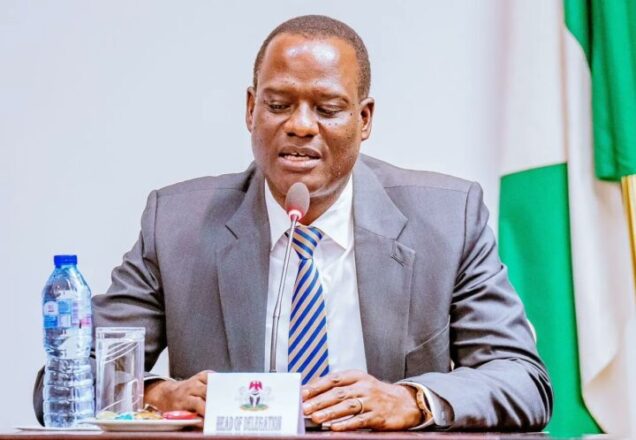
This was made known by the Minister of Finance and Coordinating Minister of the Economy, Taiwo Oyedele, at a press briefing on fuel prices and subsidy questions on Thursday, October 8, 2026, in Abuja.
The minister emphasized that the discount is not a subsidy, but an arrangement by the government to sell the petrol at cost.
Oyedele said, “We are offering a discount on petrol dispensed by NNPC limited for the next 30 days in the first instance with priority for public transporters nationwide. So, it’s not a subsidy, government is just saying we sell to you at cost.”
The Minister explained that the high fuel prices is caused by a global shock, felt by every country in the world without exception, owing to the conflict in the Gulf in the last eight months.
He noted that by mid-September, shipping through the Strait of Hormuz was running 13 percent of its pre-war level, with Brent crude trading at over 100 dollars a barrel, almost 50 percent higher than before the war.
According to him the squeeze was sharpest in refined products, with diesel exports from the Middle East and Russia down 75 percent from a year ago. On the other hand, Oyedele said crude tanker rates from West Africa reached record highs in September as the world scrambled for supply outside the Gulf.
Our petrol is already far cheaper than in most neighbouring countries.Widen that gap, and Nigerian taxpayers would be subsidising motorists across our borders, as we did for years. Cheaper fuel would also raise consumption at home, at a time when global supply is tight. Excess consumption any where means higher prices everywhere, and that comes back to us as imported inflation.
Unfortunately, the International Energy Agency expects the pressure on refined products to last for months.
No country has been spared, he added.
On fuel subsidy Oyedele criticized those promising and calling for the removal of fuel subsidy
“In recent weeks,there has been debate about proposals to return to fuel subsidy,including one described as a “production subsidy” for local refining. We do not question the motives of those who propose it. We agree on the problem. Where we differ is on the remedy.
He argued that a subsidy does not lower the cost of fuel but only changes how it is paid, and when, noting that Nigerians have paid that bill before, in scarcity, in inflation and in a collapsing currency.
“However it is described, a subsidy must be financed through salaries and pensions not paid on time, through higher taxes, or through the printing of money. Each of these has done great harm before. Short-term relief bought with long-term fragility is the most expensive money a government can spend.”
The Minister said that without the removal of subsidy, Nigeria would have witnessed a worse situation in the face of the conflict, stating that the impact of higher crude prices is mixed, as it supports the budget and Federation revenue, even as production is below forecast, and legacy crude commitments from the subsidy era absorb much of the gain.
“Its government suspended fuel duties to hold prices down.When that relief ran out this month, pump prices rose by about 24 percent in a single adjustment. Relief that cannot be sustained does not remove the pain. It postpones it, and then delivers it all at once, often with greater force.
“Our own numbers tell the same story. Before the conflict, with crude near 70 dollars a barrel, petrol sold for about 830 naira a litre.Today it averages about 1,400 naira.That increase was caused by a global conflict in which we had no say.
“Ironically, without the removal of subsidy, the impact would have been far greater. For Nigeria, the impact of higher crude prices is mixed. It supports the budget and Federation revenue. But production is below forecast, and legacy crude commitments from the subsidy era absorb much of the gain. At the same time, households and businesses face higher fuel, transport and logistics costs, and the burden falls hardest on the most vulnerable.”
He further justified the subsidy removal as he noted that in the face of the months of the conflict supply has been sustained which makes affordability easy.
“Yet there is one thing Nigerians have not faced through these months:queues. Fuel has remained available in every state. In a crisis of this kind, availability is the first form of affordability.”
Also counting the gains of subsidy removal Oyedele said it released N15.8 trillion to the Federation Account between June 2023 and December 2025. Of that, N10.4 trillion went to states and local governments.
“In May 2023, 27 states could not reliably pay salaries.Today, none is in that position. At the federal level, about two-thirds of the savings combined with additional independent revenue and borrowing were utilised on spending that went directly to average Nigerians, through higher wages, infrastructure, electricitysubsidyandsocialtransfers.Thebalance went to stabilising the economy, mainly by way of higher cost of servicing debt as interest rates went up to tame rising inflation.
“Return subsidy and the sequence is familiar. Weaker revenue invites a sovereign credit downgrade, as the rating agencies have already signalled. That would put at risk the upgrades we have recently earned, including our first from S&P in fourteen years.”
“It’s election package,” Atiku taunts FG
Former Vice-President Atiku Abubakar has described the federal governments 30 days petrol price reduction as a careful package by president Bola Tinubu’d to target the Nigerian voters ahead of the 2027 general election
Atiku in a statement issued Thursday by the Director of Strategic Communication of the ADC Presidential Campaign Council, Phrank Shaibu, condemned the proposal, describing it as a desperate, temporary gesture that cannot repair the damage caused by the crushing cost of fuel.
Atiku further decried what he described as the Tinubu administration’s attempt to dangle a fuel subsidy, adding that it was reckless, disgraceful and scandalous.
“Now, as the election draws closer, President Tinubu is dangling a temporary discount at the very epicentre of the cost-of-living crisis that has tormented households and businesses.”
“Atiku totally rejects this calendar-scheduled, election-laced subsidy package. Nigerians are not fools to be offered a month of discounted fuel after years of punishing prices and then expected to forget the hardship when the discount expires. This is shameless and heartless.
“What happens on Day 31? Nigerians wake up to the same brutal prices, the same punishing transport fares and the same rising cost of food. The government cannot manufacture relief for one month and expect Nigerians to applaud while the hardship remains,” he said.
He noted that the offer is limited to NNPC stations, while the government has yet to state how much motorists will save per litre or guarantee that any savings for transport operators will be passed on to passengers through lower fares.
The former Vice President said the administration’s sudden reversal on this sensitive social welfare issue was itself an admission of guilt over the hardship Nigerians have endured. It also exposed the weakness of the government’s repeated claims that meaningful relief was impossible.
“This volte-face proves that the production-support proposal I have advanced is workable, achievable and not complicated. The Tinubu government and its spin doctors have tried to make it sound impossible, yet they are now reaching for a temporary subsidy-style intervention because the pain has become impossible to ignore.
“Nigerians need lasting relief, not a countdown to the return of hardship. Tinubu’s government cannot spend years telling Nigerians to endure, then offer 30 days of relief and call it a solution,” he said.

*** We paid N6m each in dollars to secure release of 20 victims – Mother
*** As Security agencies lay claim to rescue of kidnapped victims
By Udoka Immaculate
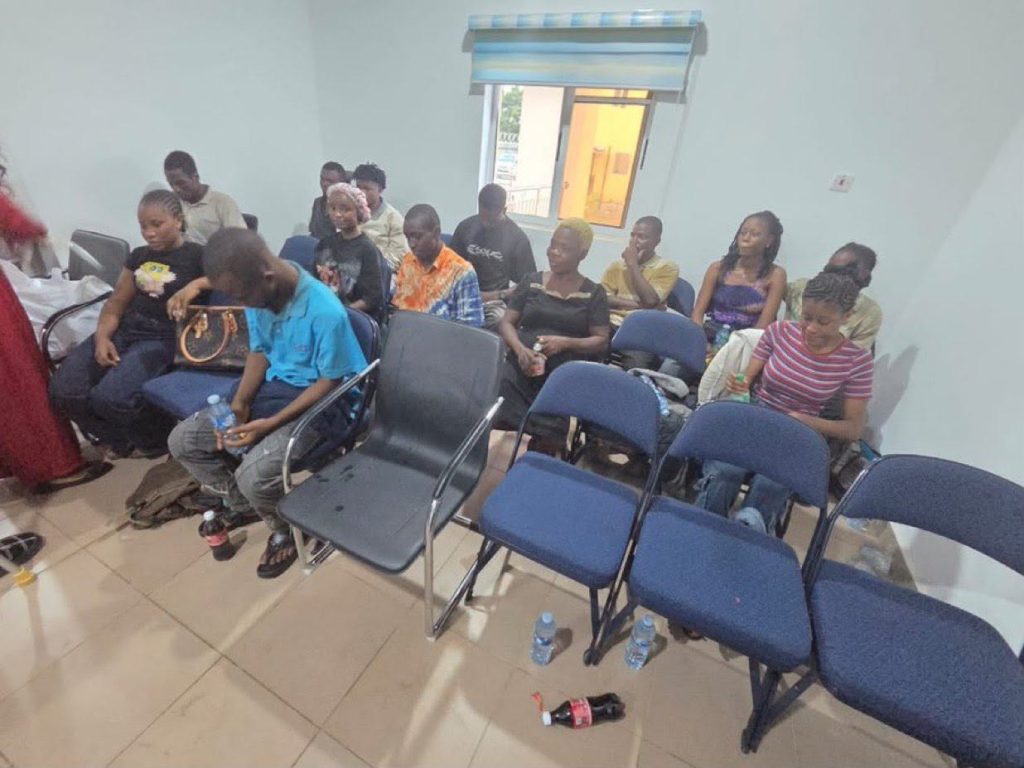
There are conflicting reports both from emanating from parests of the victims of NYSC members who were kidnapped in Imo State and from from.the security agencies, who who made possible for the release of the corps members from the hands of the abductors in Imo state, with one of the parents of 20 corps members claiming that they paid about N120 million in total ransom to secure their release, the mother of one of the victims has disclosed.
Recall the prospective corps members were abducted on October 1 after gunmen attacked two 18-seater buses travelling from Ibadan, Oyo State, along the Owerri-Onitsha expressway.
They were freed seven days after they were abducted along the Owerri-Onitsha road in Umunoha, Imo State.
Though the details of the rescue operation were unavailable at the initial time but the Force Public Relations Officer, CSP Anietie Iniedu, confirmed the release of the corps members in a statement on Wednesday, with security sources claiming that hostages were reportedly rescued by a joint team of the Nigeria Police Force, Army, Department of State Services and other security agencies.
But one of the parents of the victims, who is based in Ibadan, Oyo State, said her family paid N6 million in dollar equivalent to the abductors for the release of her son, one of the graduates travelling to NYSC orientation camps in Abia and Akwa Ibom states.
She made the disclosure in an interview with News Central TV, saying the kidnappers initially demanded N50 million for each of the 20 victims before reducing the amount to N6 million per person.
According to her, the abductors first established contact with the families and allowed the victims to speak with their relatives as proof that they were still alive.
“The terrorists first demanded N50 million. They gave the abductees phone to confirm that they were alive. We now asked if the money is for all of them, they said no. The money is for each of them,” she said.
“It was later they agreed for us to pay N6 million and that was what we paid. We paid N6 million,” she said.
According to her, the abductors first established contact with the families and allowed the victims to speak with their relatives as proof that they were still alive.
“The terrorists first demanded N50 million. They gave the abductees phone to confirm that they were alive. We now asked if the money is for all of them, they said no. The money is for each of them,” she said
The mother said the families initially offered N500,000 but the kidnappers rejected the amount and threatened to kill the victims.
“It was later they agreed for us to pay N6 million and that was what we paid. We paid N6 million,” she said.
She said the affected parents in Ibadan subsequently met to work out arrangements for raising the ransom and transporting it to Imo State.
“We called a meeting of the parents of the victims in Ibadan. And we agreed to pay the money into our account and convert it to dollars when taking it to Imo. And that was what we did,” she said.
The woman said the families later received confirmation that the abducted graduates had regained their freedom.
She added that her son’s brother was part of the team that travelled to Imo State to negotiate with the abductors alongside relatives of other victims.
“It is true that they have released them. We saw the video. His brother was among the people who were in the negotiating team. His brother confirmed the ransom payment and he went there with the parents of other victims,” she said.
Describing the ordeal as deeply traumatic, the mother said the abduction had affected her physically and emotionally.
“I have not been myself since the abduction. I cannot sleep and I have been purging. I am not sad because of the money; I am sad because of my child. No money can’t buy a child,” she said.
The victims were reportedly travelling in two buses when gunmen intercepted them along the Owerri-Onitsha Road in the Umunoha area of Mbaitoli Local Government Area of Imo State.
The incident triggered widespread concern among the victims’ families, particularly after the kidnappers reportedly demanded N50 million for each victim, amounting to N1 billion, and gave the families 24 hours to raise the money.
In the aftermath, the parents sought intervention from traditional and security authorities. They visited the Olubadan of Ibadanland, Oba Rashidi Ladoja, in Ibadan, alongside the Oyo State Commissioner of Police, Olugbenga Abimbola, and the Aseyin of Iseyinland, Oba Sefiu Adeyeri.
The parents said they could not raise the N1 billion demanded and appealed for help to secure the safe return of their children.
The kidnappers were subsequently reported to have lowered the ransom demand to about N5 million per victim.
Relatives also alleged that some of the victims, including female abductees, were subjected to physical assault while the families were being pressured to pay.
The Imo State Police Command later announced that security operatives had identified the suspected location where the victims were being held through drone surveillance.
Police, however, said the rescue operation had been delayed after intelligence reports indicated that improvised explosive devices (IEDs) had been planted around the area.
According to the police, bulldozers, armoured personnel carriers and other operational equipment were being deployed to gain access to the location and facilitate a safe rescue operation.
The Inspector-General of Police, Olatunji Disu, also deployed the Deputy Inspector-General of Police in charge of Operations, Shehu Nadada, to coordinate the search-and-rescue efforts in Imo State.
Although authorities confirmed the release of the victims, details of how they were freed, including whether any ransom was paid, had not been publicly disclosed.
The account provided by the victim’s mother therefore offers details of the negotiations between the families and the abductors, including the alleged payment of ransom in dollars.
The incident has renewed concerns over the safety of prospective corps members travelling to orientation camps and the financial and emotional pressure kidnapping places on victims’ families.
.
.
General News
Independence Anniversary: Workers expect wage increase, reduction in petrol price, others, says Union
***Reaffirms Sept. 30 ultimatum, strike threat
By Sam Otuonye
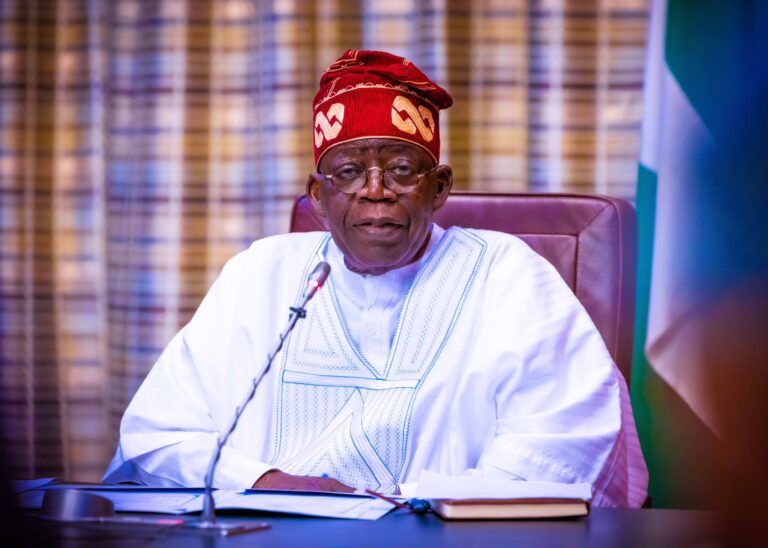
As President Bola Tinubu gets set to address Nigerians on Thursday, October 1, to commemorate the country’s 66th year of Independence, the Nigerian public servants have listed wage increase and reduction in the price of Premium Motor Spirit ( PMS), otherwise known as petrol as the things expected to dominate the speech and make them renege on their earlier threat of embarking on a strike action.
Nigerian public servants under the aegis of Joint National Public Service Negotiating Council (JNPSNC), which made the declaration in a statement on Tuesday, reaffirmed their September 30, 2026 ultimatum to the federal government over the rising cost of petrol as well as their demand for a wage award and the commencement of negotiations for a new national minimum wage.
The workers union, which issued a three-day warning strike notice to the Federal Government, beginning October 2, said they would have no other option than to commence their warned strike action, if the government fails to slash the price of petrol, announce a wage award and introduce other measures to cushion the crushing hardship in the country.
The statement, which listed members of the JNPSNC to include the Nigerian Civil Service Union (NCSU); Medical and Health Workers Union (M&HWU); Association of Senior Civil Servants of Nigeria (ASCSN); and National Association of Nigerian Nurses and Midwives (NANNM), Amalgamated Union of Public Corporations, Civil Service Technical and Recreational Employees (AUPCTRE); Nigeria Union of Public Service, Reportorial, Secretarial, Data Processors and Allied Workers (NUPSRAW); National Union of Printing, Publishing and Paper Products Workers (NUPPPPROW); and National Union of Agriculture and Allied Employees (NUAAE), said it had mobilised public servants across the country for a three-day warning strike if the Federal Government failed to address the issues raised in its letter to President Bola Tinubu before the deadline.
The union in its statement, signed by the National Secretary of the JNPSNC and General Secretary of the Nigeria Civil Service Union, Olowoyo Gbenga, noted that it had earlier written to President Bola Tinubu on September 21, demanding that the price of petrol be slashed to N500, the immediate announcement of a wage award and the beginning of negotiations for not less than N500,000 minimum wage from 2027, among others.
The statement warned that if the president fails to address the unions demands during the Independence anniversary speech, “public servants nationwide would commence a three-day warning strike beginning October 2, 2026”, stressing that the concerns of Nigerian workers should no longer be ignored.
According to the statement, “the three critical issues requiring urgent attention are as follows: reduction of fuel price to N500 per litre. The Federal Government should take urgent steps to bring down the price of Premium Motor Spirit (PMS) to N500 per litre.
“This can be achieved through the provision of an intervention fund to address landing costs and support oil and gas operators.
“It is equally important for the Federal Government to ensure the sale of crude oil to the Dangote Refinery and operators of modular refineries at appropriate terms in order to facilitate increased domestic refining and help bring down the price of petroleum products.
“The current price of PMS, ranging from N1,450 to N2,000 and, in some locations outside major communities and cities, as high as N2,500 per litre, is unacceptable to Nigerian workers.
“The Council maintains that the economic hardship occasioned by the high cost of fuel is placing the survival of Nigerian workers, their dependants and the general populace under severe pressure, making it increasingly difficult for Nigerians to live normal and dignified lives.
Continuing, the union demanded that “the federal government should urgently approve a wage award for Nigerian workers to cushion the effects of the prevailing harsh economic conditions being experienced by workers, their dependants, and vulnerable Nigerians.
“The Council believes that urgent action on this demand will further enable public servants to consolidate their loyalty, commitment and productivity within the public service ecosystem.
“The Federal Government should urgently establish a tripartite committee to commence and facilitate negotiations for the new National Minimum Wage expected to become due in 2027.
“The Nigerian workers’ demand for the immediate constitution of the committee is informed by the need to avoid any administrative or procedural delay that could affect the implementation of the new National Minimum Wage once it is eventually negotiated and passed into law by the National Assembly.
“Consequently, the Council states that failure by the Federal Government to take the necessary steps to address these issues on or before 30th September 2026 will leave Nigerian workers with no option but to commence a three-day warning strike, with effect from Friday, 2nd October 2026, to press home their demands.
“It is imperative to state clearly that the Independence Day address of the president of the Federal Republic of Nigeria should adequately address these critical issues.
“Failure to address the concerns raised by the Council, will attract the displeasure of Nigerian workers and their dependants, as well as other vulnerable Nigerians who continue to bear the brunt of the prevailing economic hardship,” the union warned
From Lawrence Davids (Lagos)
President Bola Tinubu returned to the country, Tuesday evening, after a four- week working vacation in Europe, declaring himself healthy, sound and ready to go.
The President arrived at the Presidential Wing of the Murtala Muhammed International Airport, Ikeja, where he was received by Lagos State Governor Babajide Sanwo-Olu and other dignitaries.
Responding to journalists about his health condition, the President said he remained fit and prepared to continue his duties.
“Rumours will always be emanate from politics. I am hale and strong. I am ready to work. The fact remains that I am here, healthy, sound and ready to go,” Tinubu said.
Tinubu had left Abuja on August 30 for the working vacation, spending one week in London before travelling to Paris, where he spent additional one three weeks.
According to a statement issued on Tuesday by the President’s Special Adviser on Information and Strategy, Bayo Onanuga, Tinubu departed Paris for Lagos, where he is expected to hold strategic meetings with political leaders and associates.
“While in Lagos, President Tinubu will also hold strategic meetings with political leaders and associates over several days in preparation for the 2027 elections,” the statement read.
The Presidency said Tinubu chose to travel to Lagos first to honour the memory of the late Chief MKO Abiola, winner of the June 1993 presidential election and a prominent figure in Nigeria’s democratic struggle.
“On October 1, Independence Day, the President would attend the premiere of a movie honouring Abiola at the Wole Soyinka National Theatre, Iganmu, Lagos,” the statement added.
The President had departed Nigeria on August 30 for London before travelling to Paris, with the Presidency describing the trip as a working vacation. He later extended his stay by a few days before returning to Nigeria on Tuesday.
The President is expected to remain in Lagos for the 66th Independence Anniversary celebrations.
He is scheduled to attend official engagements in the state, including activities marking Nigeria’s independence on October 1, before returning to Abuja.
-
General News2 weeks ago
JOHESU demands: MHWUN puts FG on notice over fresh action
-
 Politics3 weeks ago
2027: ASAF backs APC governors, rejects rainbow coalition
-

 Politics1 month ago
You have demonstrated diligence, loyalty, statesmanship in leadership, Ekechi salutes Shetimma at 60
-

 Politics2 months ago
2027: Advertising experts raise concerns over irregular regulation of sector
-
FCT News2 months ago
2027: Hasana-Moneme pledges skills, empowerment, credit access for FCT women
-
General News2 months ago
2027: Dame Princess Esom-Nwafor Orizu confirmed as APC flagbearer for Nnewi North /South /Ekwusigo Federal Constituency as INEC releases names of candidates
-
Uncategorized3 months ago
Rescue of Oyo schoolchilden: Tinubu commends security agencies, says action breakthrough in fight against criminality
-
General News2 months ago
Chi-Jenco CEO, Jude Orji loses mother