
Main cover
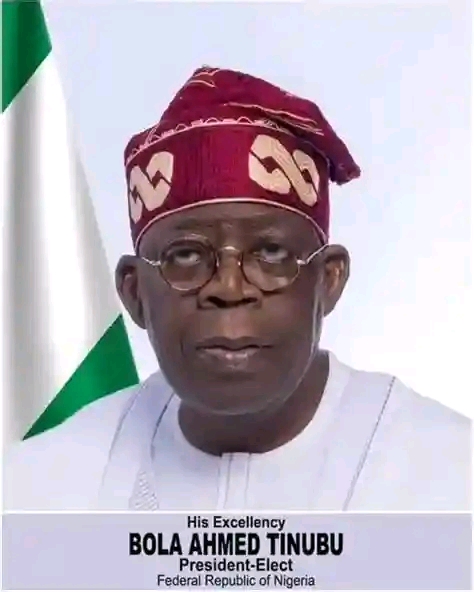
FG, opposition bicker as US report slams Nigeria’s fiscal transparency

***US says Nigeria failed fiscal transparency test in 2025
***Says government revenue, expenditure must tally with enacted budget
***FG committed to strengthening fiscal transparency, accountability and public financial management – presidency
By Sam Otuonye
Former Vice president of Nigeria and the presidential candidate of the African Democratic Congress (ADC) in the 2027 general election, Atiku Abubakar, has expressed his dissatisfaction with what he described as lack of transparency in the handling and f the county’s fiscal policies by the federal government
Atiku, who raised the concerns while reacting to the recent report by the United States of America (USA) which listed Nigeria as one of 67 countries that failed it’s fiscal integrity test, said he has been vindicated by the recent report which highlighted concerns over fiscal transparency in Nigeria, with specific reference to the federal government’s failure to disclose revenues and expenditures.
Recall that Atiku has continually raised concerns and criticisms over federal government’s financial policies, especially with the 2026 approved appropriation budget, where the former vice president has identified and queried alleged insertion of several fictitious figures and projects running into billions of Naira by both the federal government and national assembly
The US report, which was released on Thursday by the Department of States, said Nigeria failed to meet the government’s minimum fiscal transparency requirements in 2025.
The US findings further categorised Nigeria as among the 14 out of the 67 country that are not making any significant progress towards addressing the deficiencies identified during the review period.
The report assessed Nigeria and 138 other governments, including the Palestinian Authority, for the period January 1 to December 31, 2025
The US department of state said its assessment included whether governments make key fiscal information available to the public, including budget documents, debt obligations, audit reports, natural resource contracts and public procurement information.
Accordingly to the report, “Fiscal transparency is a critical element of effective public financial management, helps build market confidence, and underpins economic sustainability
“Transparency fosters greater government accountability by providing a window into government budgets, helping citizens hold their leadership accountable and facilitating better public debate,” the report noted
The report noted that the assessment requires governments to make their executive budget proposals, enacted budgets and end-of-year reports widely and easily accessible within specified periods.
“Budget documents, including the executive budget proposal, enacted budget, and end-of-year report, should be widely and easily accessible to the public
“Information on government debt obligations, including from state-owned enterprises, should also be publicly available on a public-facing website and updated at least annually
“Publicly available budget documents should provide a substantially full picture of a government’s planned expenditures and revenue, including natural resource revenues,” the US report added.
The report emphasised that such documents should include expenditure broken down by ministry and revenue broken down by source and type, as well as allocations to and earnings from state-owned enterprises.
The US report emphasised that government revenue and expenditure should correspond to the enacted budget, while significant deviations should be explained and publicly disclosed
“Budget documents and related data are considered reliable if the information contained therein is credible, meaning actual government revenues and expenditures correspond to the enacted budget
“The basic parameters of concessions and contracts should be made publicly available after the decision,” the report further stated
The report however cautioned that the fiscal transparency assessment should not be interpreted as a corruption ranking.
“A finding that a government ‘does not meet the minimum fiscal transparency requirements’ does not necessarily mean there is significant corruption in the government,” the department added.
“Similarly, a finding that a government ‘meets the minimum fiscal transparency requirements’ does not necessarily reflect a low level of corruption,” it explained
Atiku has consistently called out the Bola Tinubu-led administration for its failure to uphold the basic standards of fiscal transparency, accountability, and disclosure required in a modern democracy.
The former vice president in a statement issued by his media office on Thursday, said the “damming” US report aligns with his concerns about discrepancies between Nigeria’s approved budget and the actual revenues and expenditures recorded during implementation.
“This is precisely what Atiku Abubakar has been saying for years: that Nigerians are being kept in the dark about how public resources are generated and spent.
“Atiku had maintained that without full disclosure of how public funds are earned and spent, Nigeria cannot attract investment, fight corruption, or build public trust.
“Transparency is not a slogan. It is the foundation of good governance,” he had said in one of his several interventions on the issue.
“This report confirms what we have been saying that Nigerians deserve to know where every kobo is coming from and where it is being spent. They are our resources and not the resources of President Bola Tinubu and his family and friends,” the statement said.
The former Vice President stressed that fiscal transparency is a key benchmark for investors, donor agencies, and credit rating firms, reminding that our economy also relies heavily on foreign investment and multilateral support to fund infrastructure and social programmes.
He reiterated that publishing detailed, timely data on revenue from oil, taxes, and borrowing, and on how that money is spent is critical to restoring confidence amid rising debt and inflation.
Meanwhile, the Presidency has responded to a US assessment that Nigeria failed to meet minimum fiscal transparency requirements, stating that the findings should be viewed as an external benchmark rather than a complete assessment of the country’s fiscal governance.
Special Adviser to the President on Media, Sunday Dare, said the Federal Government remains committed to strengthening fiscal transparency, accountability and public financial management.
His response followed the release of the 2026 Fiscal Transparency Report by the US Department of State, which classified Nigeria among 67 governments that failed to meet the minimum requirements during the 2025 review period.
The report identified weaknesses in Nigeria’s budget disclosure, revenue and expenditure reporting, audit independence and public procurement transparency, while also acknowledging progress in the public availability of budget documents and debt obligations.
Dare said the government takes the findings seriously but argued that the assessment should be properly contextualised.
“Fiscal transparency, accountability and effective public financial management remain important priorities of the Federal Government, and Nigeria continues to implement reforms aimed at strengthening the management, reporting and disclosure of public resources.
“The U.S. Fiscal Transparency Report is a specific assessment against the Department of State’s minimum fiscal-transparency requirements, particularly the public disclosure of national budget information, government contracts and natural-resource licenses.
“It should therefore not be interpreted as a comprehensive assessment of all fiscal and public financial management reforms currently underway in Nigeria.
“The appropriate response, therefore, is neither to dismiss the findings nor to portray them as a complete characterization of Nigeria’s fiscal governance.”
Dare said the government has established mechanisms including the Open Treasury initiative, public budget documentation, debt disclosures and reforms to public procurement, while also strengthening digital procurement and other systems designed to improve the accessibility, reliability and timeliness of public financial information.
In its 2026 Fiscal Transparency Report released on Thursday, the US Department of State said Nigeria made no significant progress in addressing the deficiencies identified during the review period.
Nigeria made its enacted budget and end-of-year report widely and easily accessible to the public, including online, but did not publish its executive budget proposal within a reasonable period.
Information on government debt obligations, including major state-owned enterprise debt, was publicly available, but budget documents did not provide a substantially complete picture of government revenues and expenditures.
Actual government revenues and expenditures did not reasonably correspond to those contained in the enacted budget.
The Supreme Audit Institution did not meet international standards of independence or publish substantive reports, although it had access to the entire executed budget.
The latest assessment comes after concerns raised by the International Monetary Fund (IMF) over Nigeria’s fiscal reporting and financing arrangements.

***Four years not enough to solve decades of challenges – Tinubu
*** Says reforms didn’t weaken nation’s economy
*Atiku, CAN, others react
By Eze Nnadi
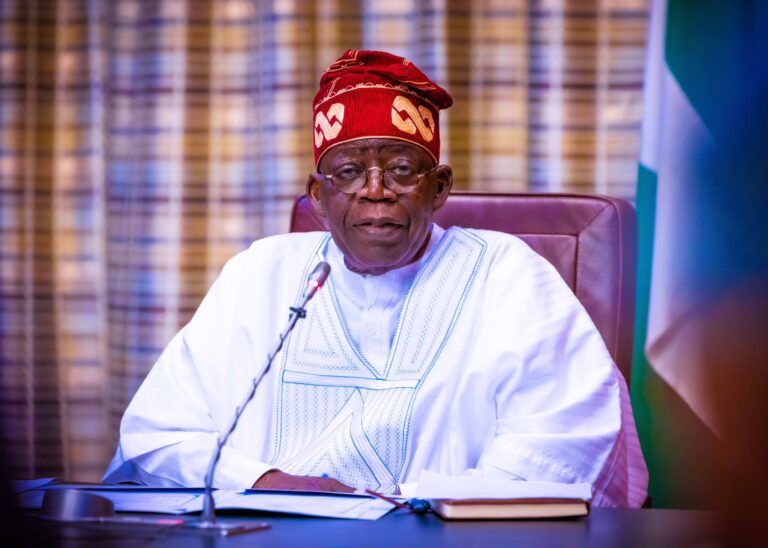
As Nigerians marked the country’s 66th independence anniversary in a very low key on October 1, President Bola Tinubu has declared that the numerous challenges confronting the country cannot be solved in only four years of his administration.
The president said his administration cannot erase in four years the challenges that accumulated in Nigeria over several generations, even as he assured that he can change the country’s trajectory and build an economy that lifts people out of poverty.
Tinubu, who made the declaration during his Independence Day address to Nigerians on Thursday, admitted that millions of Nigerians still struggle with high cost of food, education, healthcare and transportation.
The address has however received different reactions from stakeholders, especially the political and religious class.
The president insisted that the nation’s difficulties predated his administration and the reforms he introduced, arguing that his reforms did no weaken the nation’s economy as being claimed in some quarters
This is as former vice president, and presidential candidate of the opposition African Democratic Congress, (ADC) Atiku Abubarkar slammed the president’s claim that reforms introduced by his administration have paved the way for stability and prosperity in the country.
Atiku in his anniversary statement, questioned the stability and prosperity claim of President Tinubu, even as he accused him of plunging the country deeper into poverty and hardship, in the last three and half years of his administration.
President Tinubu, in his independence anniversary address to the nation said, “We cannot erase in four years what accumulated over generations. But we can change its course.
“We can build an economy that steadily lifts people out of poverty while ensuring that those who remain vulnerable are not abandoned along the way.”
The president argued that the hardships faced by vulnerable Nigerians were the result of “decades of low productivity, inadequate infrastructure, insufficient opportunity and institutions that too often failed those who needed them most”.
He disclosed that his government is currently strengthening direct support for the poorest households and improving the National Social Register to ensure assistance reach people who genuinely need it.
The president cited the Nigerian Education Loan Fund (NELFund), as a means of helping children from low-income families access higher education despite their parents’ inability to afford fees.
He similarly listed CREDICORP as another of his administration’s measures towards providing working Nigerians with access to consumer credit for vehicles, solar systems, digital devices and other essential assets.
Tinubu assured that his administration would continue working with state and local governments to strengthen primary healthcare, basic education and other essential public services.
Atiku, who slammed Tinubu’s declaration that Nigeria has entered an “age of prosperity”, reminded him that millions of Nigerians are still struggling with food, transport, healthcare, education and insecurity.
He regretted that the three years of Tinubu’s administration had exposed millions of Nigerians to severe hardship and poverty, ranging from cost-of-living crisis, forcing families to skipping meals, delaying medical treatment and borrowing money to survive until payday.
“Today, Bola Tinubu told us that the ‘emergency treatment is over’ and the ‘age of prosperity’ has begun
“A President may announce a new chapter in a speech. He cannot announce food onto a family’s table or money into a worker’s pocket.
“Bola, where is this prosperity? he queried
He argued that while a slower increase in prices could indicate lower inflation, it did not restore the purchasing power families had already lost.
“Bola says inflation has fallen. A slower rise in prices does not restore what families have lost,” he said.
He also acknowledged growth and rising exports but said such indicators should ultimately translate into improved living conditions.
“Nigerian businesses deserve credit for what they have achieved. But growth must improve lives. It cannot be a certificate of success that government awards itself while citizens struggle to survive,” he said.
Atiku used the prices of petrol and basic food items to illustrate the pressure on households since Tinubu assumed office.
He said a ₦30,000 minimum wage in April 2023 could buy about 118 litres of petrol, while a ₦70,000 minimum wage now buys about 50 litres.
“The salary has more than doubled on paper; the petrol it can buy has fallen by more than half,” he said.
Atiku also said the average price of an egg rose from about ₦88 in April 2023 to ₦261 in the country
“These may look like small items in a government report. In a family home, they are breakfast. They are the money left for a child’s lunch,” he said.
“If 2023 was the illness, why does your ‘cure’ buy less fuel, fewer eggs and a smaller loaf of bread?”
The former vice president rejected the suggestion that Nigerians demanding relief from high petrol prices were simply calling for a return to fuel subsidy.
“No mother struggling to feed her children is asking for ‘morphine’. No worker spending his wages on transport is addicted to subsidy,” he said.
“They are asking what happened to the savings you promised and when your reforms will bring down the cost of living.”
Atiku said his administration, if elected, would introduce a capped and budgeted production subsidy tied to verified fuel refined in Nigeria.
He said the scheme would include fuel produced by modular refineries but would exclude imported petrol.
“The benefit must reach consumers through lower pump prices,” he said.
According to Atiku, the costs of the programme would be published, while payments would be independently audited. He also said government waste would be cut to help fund the scheme.
“The principle is simple: produce here, refine here, create jobs here and pay less here,” he said.
“If Bola disagrees, he should answer the proposal on its merits. Calling relief an addiction will not lower the price of petrol.”
“A student loan does not make education affordable when fees are rising,” Atiku said.
***Prosperity yet to reach Nigerian homes — CAN
In its message, the Christian Association of Nigeria, CAN, said the president’s prosperity claims is yet to reflect on the the suffering Nigerians, as poverty and hardship have persisted.
CAN therefore urged the government to ensure that its promise of prosperity translates into cheaper food, lower transport and energy costs, jobs for young people and safer communities.
CAN President , Archbishop Daniel Okoh advised in his independent anniversary statement that government must not rely on the macros economic figures to claim stability noting that the real question should be whether families can afford the basics, young people can find decent work and people can go about their businesses without fear.
The Christian body however welcomed the shift from economic reforms to a focus on prosperity, but stressed that Nigerians must feel the impact in their daily lives.
“We welcome the shift from an era of economic reforms to an era of prosperity. But the true test of progress is not in statistics alone. It is whether families can afford food, young people can find decent work, communities can live in safety and every child has a fair opportunity to build a future,” he said.
CAN urged the government to make lower food, transport and energy costs a measurable priority, saying Nigerians who had endured years of economic pressure deserved to see relief in their daily lives.
The association also called for stronger support for vulnerable families, education, healthcare and affordable credit, with safeguards against diversion of funds.
“Support for vulnerable families, education, healthcare and affordable credit should be strengthened, transparently administered and protected from diversion,” CAN said.
CAN further argued that there could be no meaningful prosperity if Nigerians were unable to farm, trade or travel without fear.
“There can be no meaningful prosperity where citizens cannot farm, trade, travel or sleep peacefully because of fear,” the association said.
General News
Independence Anniversary: Workers expect wage increase, reduction in petrol price, others, says Union
***Reaffirms Sept. 30 ultimatum, strike threat
By Sam Otuonye
As President Bola Tinubu gets set to address Nigerians on Thursday, October 1, to commemorate the country’s 66th year of Independence, the Nigerian public servants have listed wage increase and reduction in the price of Premium Motor Spirit ( PMS), otherwise known as petrol as the things expected to dominate the speech and make them renege on their earlier threat of embarking on a strike action.
Nigerian public servants under the aegis of Joint National Public Service Negotiating Council (JNPSNC), which made the declaration in a statement on Tuesday, reaffirmed their September 30, 2026 ultimatum to the federal government over the rising cost of petrol as well as their demand for a wage award and the commencement of negotiations for a new national minimum wage.
The workers union, which issued a three-day warning strike notice to the Federal Government, beginning October 2, said they would have no other option than to commence their warned strike action, if the government fails to slash the price of petrol, announce a wage award and introduce other measures to cushion the crushing hardship in the country.
The statement, which listed members of the JNPSNC to include the Nigerian Civil Service Union (NCSU); Medical and Health Workers Union (M&HWU); Association of Senior Civil Servants of Nigeria (ASCSN); and National Association of Nigerian Nurses and Midwives (NANNM), Amalgamated Union of Public Corporations, Civil Service Technical and Recreational Employees (AUPCTRE); Nigeria Union of Public Service, Reportorial, Secretarial, Data Processors and Allied Workers (NUPSRAW); National Union of Printing, Publishing and Paper Products Workers (NUPPPPROW); and National Union of Agriculture and Allied Employees (NUAAE), said it had mobilised public servants across the country for a three-day warning strike if the Federal Government failed to address the issues raised in its letter to President Bola Tinubu before the deadline.
The union in its statement, signed by the National Secretary of the JNPSNC and General Secretary of the Nigeria Civil Service Union, Olowoyo Gbenga, noted that it had earlier written to President Bola Tinubu on September 21, demanding that the price of petrol be slashed to N500, the immediate announcement of a wage award and the beginning of negotiations for not less than N500,000 minimum wage from 2027, among others.
The statement warned that if the president fails to address the unions demands during the Independence anniversary speech, “public servants nationwide would commence a three-day warning strike beginning October 2, 2026”, stressing that the concerns of Nigerian workers should no longer be ignored.
According to the statement, “the three critical issues requiring urgent attention are as follows: reduction of fuel price to N500 per litre. The Federal Government should take urgent steps to bring down the price of Premium Motor Spirit (PMS) to N500 per litre.
“This can be achieved through the provision of an intervention fund to address landing costs and support oil and gas operators.
“It is equally important for the Federal Government to ensure the sale of crude oil to the Dangote Refinery and operators of modular refineries at appropriate terms in order to facilitate increased domestic refining and help bring down the price of petroleum products.
“The current price of PMS, ranging from N1,450 to N2,000 and, in some locations outside major communities and cities, as high as N2,500 per litre, is unacceptable to Nigerian workers.
“The Council maintains that the economic hardship occasioned by the high cost of fuel is placing the survival of Nigerian workers, their dependants and the general populace under severe pressure, making it increasingly difficult for Nigerians to live normal and dignified lives.
Continuing, the union demanded that “the federal government should urgently approve a wage award for Nigerian workers to cushion the effects of the prevailing harsh economic conditions being experienced by workers, their dependants, and vulnerable Nigerians.
“The Council believes that urgent action on this demand will further enable public servants to consolidate their loyalty, commitment and productivity within the public service ecosystem.
“The Federal Government should urgently establish a tripartite committee to commence and facilitate negotiations for the new National Minimum Wage expected to become due in 2027.
“The Nigerian workers’ demand for the immediate constitution of the committee is informed by the need to avoid any administrative or procedural delay that could affect the implementation of the new National Minimum Wage once it is eventually negotiated and passed into law by the National Assembly.
“Consequently, the Council states that failure by the Federal Government to take the necessary steps to address these issues on or before 30th September 2026 will leave Nigerian workers with no option but to commence a three-day warning strike, with effect from Friday, 2nd October 2026, to press home their demands.
“It is imperative to state clearly that the Independence Day address of the president of the Federal Republic of Nigeria should adequately address these critical issues.
“Failure to address the concerns raised by the Council, will attract the displeasure of Nigerian workers and their dependants, as well as other vulnerable Nigerians who continue to bear the brunt of the prevailing economic hardship,” the union warned
From Lawrence Davids (Lagos)
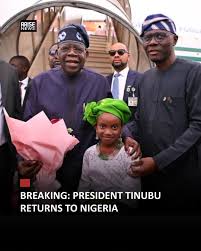
President Bola Tinubu returned to the country, Tuesday evening, after a four- week working vacation in Europe, declaring himself healthy, sound and ready to go.
The President arrived at the Presidential Wing of the Murtala Muhammed International Airport, Ikeja, where he was received by Lagos State Governor Babajide Sanwo-Olu and other dignitaries.
Responding to journalists about his health condition, the President said he remained fit and prepared to continue his duties.
“Rumours will always be emanate from politics. I am hale and strong. I am ready to work. The fact remains that I am here, healthy, sound and ready to go,” Tinubu said.
Tinubu had left Abuja on August 30 for the working vacation, spending one week in London before travelling to Paris, where he spent additional one three weeks.
According to a statement issued on Tuesday by the President’s Special Adviser on Information and Strategy, Bayo Onanuga, Tinubu departed Paris for Lagos, where he is expected to hold strategic meetings with political leaders and associates.
“While in Lagos, President Tinubu will also hold strategic meetings with political leaders and associates over several days in preparation for the 2027 elections,” the statement read.
The Presidency said Tinubu chose to travel to Lagos first to honour the memory of the late Chief MKO Abiola, winner of the June 1993 presidential election and a prominent figure in Nigeria’s democratic struggle.
“On October 1, Independence Day, the President would attend the premiere of a movie honouring Abiola at the Wole Soyinka National Theatre, Iganmu, Lagos,” the statement added.
The President had departed Nigeria on August 30 for London before travelling to Paris, with the Presidency describing the trip as a working vacation. He later extended his stay by a few days before returning to Nigeria on Tuesday.
The President is expected to remain in Lagos for the 66th Independence Anniversary celebrations.
He is scheduled to attend official engagements in the state, including activities marking Nigeria’s independence on October 1, before returning to Abuja.
-
General News1 week ago
JOHESU demands: MHWUN puts FG on notice over fresh action
-

 Politics4 weeks ago
You have demonstrated diligence, loyalty, statesmanship in leadership, Ekechi salutes Shetimma at 60
-
 Politics2 weeks ago
2027: ASAF backs APC governors, rejects rainbow coalition
-

 Politics2 months ago
2027: Advertising experts raise concerns over irregular regulation of sector
-
FCT News2 months ago
2027: Hasana-Moneme pledges skills, empowerment, credit access for FCT women
-
General News2 months ago
2027: Dame Princess Esom-Nwafor Orizu confirmed as APC flagbearer for Nnewi North /South /Ekwusigo Federal Constituency as INEC releases names of candidates
-
Uncategorized3 months ago
Rescue of Oyo schoolchilden: Tinubu commends security agencies, says action breakthrough in fight against criminality
-
General News1 month ago
Chi-Jenco CEO, Jude Orji loses mother