
General News
CSOs raise alarm over foreign influence, urge NASS to review policies affecting children

Tella Onah
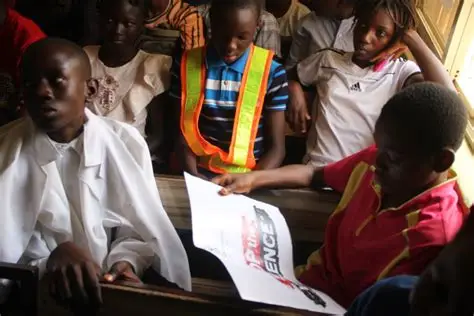
Civil society organisations in Nigeria have raised concerns over alleged growing foreign influence in policies and programmes affecting children in the country, urging the National Assembly to scrutinise relevant legislation, educational frameworks and government policies.
The organisations, led by the Centre for African Policy Research and Advisory (CAFPRA), made the call Thursday in Abuja during a media engagement on children, family values, education and public policy.
CAFPRA Executive Director, Dr. Segun Adebayo, said African governments must ensure that policies adopted in their countries reflect their own social and cultural realities.
“We are dedicated to policies of the land, to be sure that the policies of government in Africa are consistent with the realities of Africa,” Adebayo said.
He urged lawmakers to examine the broader policy frameworks, funding sources, partnerships and educational materials shaping programmes targeted at children and young people.
Adebayo also called for meaningful participation by parents, educators, civil society organisations, child-rights advocates and community leaders in decisions concerning children.
The organisation said concepts contained in some international frameworks relating to children’s education, reproductive health, personal autonomy and gender should be carefully examined before being incorporated into Nigerian laws, policies or educational materials.
Human rights lawyer and public affairs analyst, Sonnie Ekwowusi, said public opinion was increasingly becoming decisive in determining whether controversial policies eventually receive legislative approval.
“Public opinion change is currently where they are going, because if public opinion does not change, it will never be passed as a law,” Ekwowusi said.
Policy researcher and media personality, Gold Boms, said CAFPRA was examining proposed legislation and government policies to determine whether they aligned with Nigeria’s social environment.
“We are making sure that all the bills being passed, we are looking at them and saying, look, this is not aligned with our social reality,” Boms said.
The organisations also demanded greater transparency in the development, funding and implementation of programmes affecting children, while urging government agencies and development partners to disclose their objectives, funding sources and implementation arrangements.
A representative of CYFPRA, Chris Yama said the issue required wider public attention because of its implications for families and future generations, particularly in relation to comprehensive sexuality education.
“It is a very important conversation. It is on a topic that affects your children and your grandchildren,” Yama said.
Child-rights advocate with InnerCity Missions for Children, Jane Chukwu, said policies must address the realities of poverty, family breakdown, inadequate education and weak child protection.
“We are a solution-based organisation. We don’t theorise about child protection,” she said, adding that her organisation was establishing a free school in Abuja for vulnerable children.
CAFPRA said it had written to the Presidency and National Assembly leadership and planned further engagements with relevant legislative committees.
Adebayo also disclosed that the organisation would present an African Charter on Family Values and Sovereignty to the National Assembly, while urging the media to investigate the origins, funding and implementation of programmes affecting Nigerian children.

General News
Panel recommends dismissal of NSCDC commandant, other officers, compensates victims’ families

By Our Reporter
The Chairman of the Independent Investigative Committee on the death of some Niger miners in the state, Jonathan Kure, has recommended that one point four billion be paid to the families of 33 victims and 44 survivors.
Speaking in Abuja while presenting the report of the committee on Tuesday, Kure said the deaths were avoidable as the victims, including 14 minors, were held in inhuman conditions.
The committee also recommended summary dismissal of the state commandant of the Niger State Command of the Nigeria Security and Civil Defence Corps and all other officers who were directly involved in the detention and eventual death of the miners.
The committee equally recommended institutional reforms for the Nigeria Security and Civil Defence Corps in order to strengthen the leadership of the corps.
The Minister of Interior, Olubunmi Tunji-Ojo, who received the report, promised to implement the recommendations of the committee in order to ensure justice for all affected persons.
Tunji-Ojo also directed the commandant of the Corps to immediately suspend all officers who cleaned up the detention centre in order to destroy evidence.
By Our Reporter with agency report
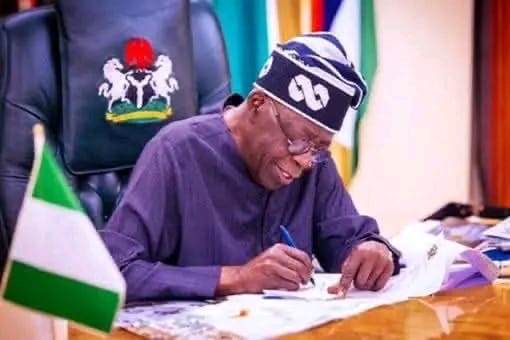
President Bola Tinubu has sought the approval of the Senate for a 2026–2027 supplementary external borrowing plan of $20.52 billion dollars and 1.05 billion euros.
Tinubu’s request is contained in a letter addressed to Senate President Godswill Akpabio and read at plenary on Tuesday.
Tinubu said the proposed borrowing plan would be utilised on critical sectors of the economy, including infrastructure, agriculture, healthcare, education, water supply, security, employment generation and financial management reforms.
He said the funds would help address the country’s infrastructure deficit and bridge the financing gap required to implement critical development projects.
The president said that the projects and programmes under the plan were selected following technical and economic evaluations, with consideration on its anticipated contributions to Nigeria’s socioeconomic development.
“These initiatives aim to generate employment, promote skill acquisition, foster entrepreneurship, reduce poverty and enhance food security, all of which improve the livelihood of the Nigerian child,” he said.
Tinubu said most of the projects and programmes would be implemented across 36 states and the Federal Capital Territory. (FCT).
He said substantial investment in infrastructure remained necessary to support economic growth and address longstanding development challenges.
“In light of the need for significant infrastructure investment in the country and the vast financial resources needed to address this gap.
“It has become essential to pursue prudent external borrowings to close the financing shortfall,” the President said.
He said the funds would primarily be channelled into critical infrastructure projects, particularly in the power, transportation and healthcare sectors.
Tinubu urged the Senate to give the borrowing plan urgent consideration, adding that approval would enable the government to meet its obligations to Nigerians through timely disbursements and effective project implementation.
Senate President Godswill Akpabio, in his remarks, said that the borrowing plan had been previously featured in the approved borrowing plan of the federal government.
He thereafter referred the request to the Senate Committee on Local and Foreign Debts for further legislative inputs with collaboration from the Committees on Appropriations and Finance.
“The borrowing plan is attached, but of course, this was even earlier approved in our budget, and also the external borrowing plan was approved as far back as 2025 to 2027,” Akpabio said. (NAN)

England captain Harry Kane has been crowned the 2026 men’s Ballon d’Or winner, beating Lamine Yamal and Kylian Mbappé to claim the prestigious individual award.
Kane received the award at the Palladium Theatre in London, United Kingdom, on Monday, becoming the first English player to win the men’s Ballon d’Or since Michael Owen in 2001.

The 33-year-old striker enjoyed a remarkable 2025/26 season, scoring 73 goals for club and country. His goals played a key role in helping Bayern Munich secure the German Bundesliga title and reach the semi-finals of the UEFA Champions League.

Kane also captained England at the 2026 FIFA World Cup in North America, where the Three Lions finished with a bronze medal.
Meanwhile, Barcelona and Spain legend Alexia Putellas won the women’s Ballon d’Or for the third time, joining fellow Spaniard Aitana Bonmatí as the only players to have achieved the feat.
Putellas’ latest triumph further underlines her status as one of the most decorated players in women’s football.
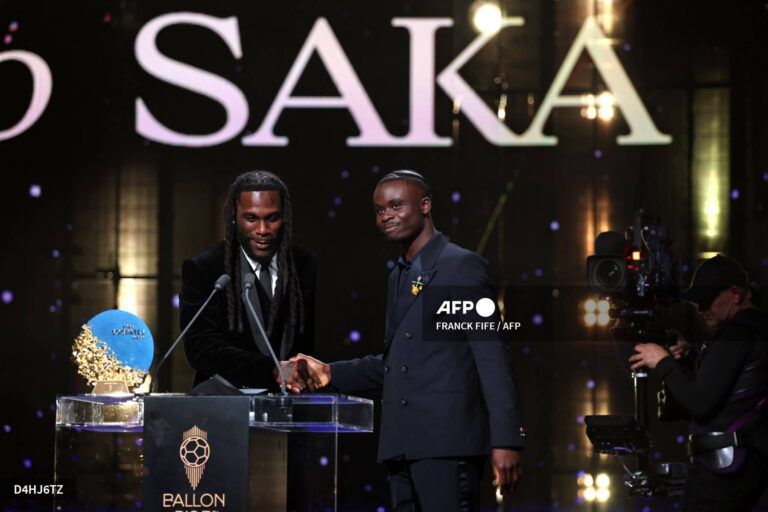
Earlier in the ceremony, Arsenal and England forward Bukayo Saka received the Socrates Trophy in recognition of his humanitarian and charitable activities.

Saka was honoured for his charity work, which has supported surgeries for children in Nigeria and other African countries.
Full List of 2026 Ballon d’Or Winners
1- Men’s Ballon d’Or: Harry Kane
2- Women’s Ballon d’Or: Alexia Putellas
3- Best Young Talent of the Year: Lamine Yamal and Vicky López
4- Best Goalkeeper Trophy: Cata Coll and Unai Simón
5- Women’s Best Striker of the Year: Charlyn Corral
-6- Men’s Best Striker of the Year: Harry Kane
7- Best Men’s Coach: Luis de la Fuente
8- Best Women’s Coach: Pere Romeu
9+ Men’s Best Club: Paris Saint-Germain
10+ Women’s Club of the Year: FC Barcelona
11- Socrates Trophy: Bukayo Saka
-
 General News3 weeks ago
Rivers 2027: We are not part of Rainbow Coalition – APC Legacy Group slams Wike, Fubara meeting
-
General News1 month ago
JOHESU demands: MHWUN puts FG on notice over fresh action
-

 Politics1 month ago
2027: ASAF backs APC governors, rejects rainbow coalition
-

 Politics2 months ago
You have demonstrated diligence, loyalty, statesmanship in leadership, Ekechi salutes Shetimma at 60
-

 Politics2 months ago
2027: Advertising experts raise concerns over irregular regulation of sector
-
FCT News2 months ago
2027: Hasana-Moneme pledges skills, empowerment, credit access for FCT women
-
General News3 months ago
2027: Dame Princess Esom-Nwafor Orizu confirmed as APC flagbearer for Nnewi North /South /Ekwusigo Federal Constituency as INEC releases names of candidates
-
Uncategorized4 months ago
Rescue of Oyo schoolchilden: Tinubu commends security agencies, says action breakthrough in fight against criminality