
General News
Provide fiscal, legal implications of your proposed fuel subsidy policy, FG replies Atiku

Nkem Okereh
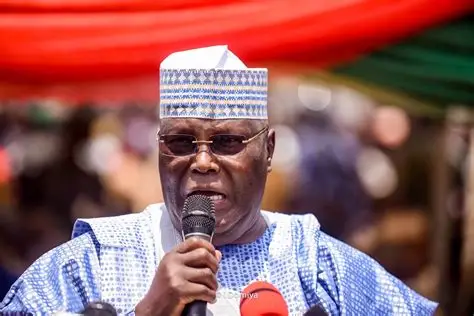
The Presidency in a swift response to Atiku’s subsidy policy proposal asked the ADC presidential candidate to present Nigerians with the full fiscal and legal implications of his proposal to restore fuel subsidy.
Dissecting Atiku’s economic plans should he be elected as President by January next year, the Presidency said his proposal depicts political desperation.
The Federal Government in a statement yesterday by Bayo Onanuga, Special Adviser to the President (Information and Strategy), faulted Atiku for to announce a more creative and ingenious alternative to the programme being executed by the Tinubu administration.
“Atiku Abubakar behaved like a man from an archaic past who least comprehends the present economic dynamics and suggested that he would restore the much-abused, wasteful, pillaged, corruption-ridden fuel subsidy regime, which the Petroleum Industry Act made illegal from the end of June, 2023.
“Even though he used to believe that the subsidy regime must be eliminated, a point he canvassed in the run-up to his defeat in the 2023 election, he has now opportunistically recanted the major plank of his economic doctrine and turned a renegade.
“It is not difficult to explain why Atiku has latched onto the abandoned subsidy regime, five months to the election. Desperate for power, he needed to make a promise that he knew, if he were candid with our people, does not make fiscal sense, is retrogressive, and is against the genuine interest of the people.
“But before his suggestion hoodwinks the people, we must quickly subject the promise to a serious examination, especially in the context of Nigeria’s present economic and petroleum realities,” said the Presidency.
Atiku was told that Nigerians deserve to understand what the proposed restoration of subsidy would actually mean, how it would be funded, and whether it is compatible with the legal and structural changes that have taken place in the petroleum sector.
Clearing what it termed as ambiguities about the so-called subsidy, the Presidency said “It is not some money sitting in the treasury to be disbursed to offer cheap fuel to Nigerians. It is the massive discount the NNPC offered the Nigerian government: selling fuel it bought at N100 at N50 at the pump, leading to under-recovery of costs and massive losses.
“Somewhere in the NNPC books are still trillions of Naira in subsidy costs that the Nigerian government has not paid. Contrary to Atiku’s claim in his interview, no N30 trillion subsidy windfall or savings exists anywhere except in his imagination.
“The petrol subsidy regime that Nigerians knew before May 2023 was dismantled as part of the country’s petroleum-sector reforms. The Petroleum Industry Act established a new framework for the downstream petroleum market. It removed the subsidy, as was previously done for diesel, kerosene and aviation fuel, ending a system that had placed a substantial and often unpredictable burden on public finances.
“The PIA scheduled the subsidy removal by the end of June 2023. President Tinubu only accelerated it by weeks to stop further bleeding before the due date.
“Restoring the old arrangement therefore cannot simply be presented as a matter of announcing that government will once again pay part of the cost of petrol. It would require a clear legal, fiscal and administrative framework, including identifying the source of the funds and determining how such a policy would be implemented under the present petroleum-market structure.
“More importantly, Nigeria’s petroleum landscape has changed significantly since May 2023. For many years, the country relied heavily on imported petrol, with the government bearing the consequences of the gap between the regulated pump price and the cost of supplying the product.
“Today, the emergence of substantial domestic refining capacity has fundamentally altered that equation. The Dangote Refinery has become a major source of locally refined petrol. Indeed, the Dangote Refinery would not have kick-started production for local consumption were the subsidy regime operative. This is an important point that Atiku deceptively ignored.”
The government further said that Atiku’s proposal portends a reversal of current local production, and it will spell bankruptcy for smaller local refineries like Aradel’s, causing attendant job losses and a loss of foreign exchange.
Reeling out the gains of subsidy removal by the Tinubu administration, the Presidency said “the sector is now market-driven, Nigeria now exports refined products to Europe, Asia, and the United States, restoring national pride. This development is a sharp contrast to when Obasanjo and Atiku were in power: Nigeria’s largest import, costing about $10 billion, was refined products!. President Tinubu has flipped that to Nigeria’s advantage.
“The N15 trillion that would have been borrowed and spent on selling discounted petrol has now significantly gone into the coffers of the three tiers of government. Now all states are fiscally stable and can pay salaries regularly and embark on infrastructure projects. In July, the three tiers shared about N3 trillion, a record, from the federation account. That is a major achievement, since the abolition of petrol price discount and distortions in the foreign exchange regime.
“Nigeria is increasingly moving from a model in which scarce foreign exchange is used to import refined petrol to one in which crude oil, largely sold in Naira, can be processed domestically and supplied to the Nigerian market. That transition creates opportunities for greater energy security, foreign-exchange conservation, industrial development and ultimately a boost to employment generation.”
It added that the subsidy debate must therefore be grounded in the realities of today’s market rather than treated as though Nigeria’s petroleum sector has remained unchanged.

General News
Panel recommends dismissal of NSCDC commandant, other officers, compensates victims’ families

By Our Reporter
The Chairman of the Independent Investigative Committee on the death of some Niger miners in the state, Jonathan Kure, has recommended that one point four billion be paid to the families of 33 victims and 44 survivors.
Speaking in Abuja while presenting the report of the committee on Tuesday, Kure said the deaths were avoidable as the victims, including 14 minors, were held in inhuman conditions.
The committee also recommended summary dismissal of the state commandant of the Niger State Command of the Nigeria Security and Civil Defence Corps and all other officers who were directly involved in the detention and eventual death of the miners.
The committee equally recommended institutional reforms for the Nigeria Security and Civil Defence Corps in order to strengthen the leadership of the corps.
The Minister of Interior, Olubunmi Tunji-Ojo, who received the report, promised to implement the recommendations of the committee in order to ensure justice for all affected persons.
Tunji-Ojo also directed the commandant of the Corps to immediately suspend all officers who cleaned up the detention centre in order to destroy evidence.
By Our Reporter with agency report
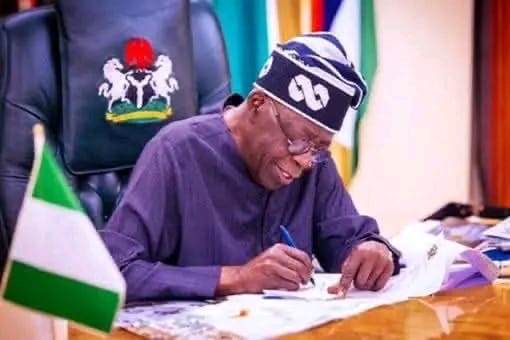
President Bola Tinubu has sought the approval of the Senate for a 2026–2027 supplementary external borrowing plan of $20.52 billion dollars and 1.05 billion euros.
Tinubu’s request is contained in a letter addressed to Senate President Godswill Akpabio and read at plenary on Tuesday.
Tinubu said the proposed borrowing plan would be utilised on critical sectors of the economy, including infrastructure, agriculture, healthcare, education, water supply, security, employment generation and financial management reforms.
He said the funds would help address the country’s infrastructure deficit and bridge the financing gap required to implement critical development projects.
The president said that the projects and programmes under the plan were selected following technical and economic evaluations, with consideration on its anticipated contributions to Nigeria’s socioeconomic development.
“These initiatives aim to generate employment, promote skill acquisition, foster entrepreneurship, reduce poverty and enhance food security, all of which improve the livelihood of the Nigerian child,” he said.
Tinubu said most of the projects and programmes would be implemented across 36 states and the Federal Capital Territory. (FCT).
He said substantial investment in infrastructure remained necessary to support economic growth and address longstanding development challenges.
“In light of the need for significant infrastructure investment in the country and the vast financial resources needed to address this gap.
“It has become essential to pursue prudent external borrowings to close the financing shortfall,” the President said.
He said the funds would primarily be channelled into critical infrastructure projects, particularly in the power, transportation and healthcare sectors.
Tinubu urged the Senate to give the borrowing plan urgent consideration, adding that approval would enable the government to meet its obligations to Nigerians through timely disbursements and effective project implementation.
Senate President Godswill Akpabio, in his remarks, said that the borrowing plan had been previously featured in the approved borrowing plan of the federal government.
He thereafter referred the request to the Senate Committee on Local and Foreign Debts for further legislative inputs with collaboration from the Committees on Appropriations and Finance.
“The borrowing plan is attached, but of course, this was even earlier approved in our budget, and also the external borrowing plan was approved as far back as 2025 to 2027,” Akpabio said. (NAN)

England captain Harry Kane has been crowned the 2026 men’s Ballon d’Or winner, beating Lamine Yamal and Kylian Mbappé to claim the prestigious individual award.
Kane received the award at the Palladium Theatre in London, United Kingdom, on Monday, becoming the first English player to win the men’s Ballon d’Or since Michael Owen in 2001.

The 33-year-old striker enjoyed a remarkable 2025/26 season, scoring 73 goals for club and country. His goals played a key role in helping Bayern Munich secure the German Bundesliga title and reach the semi-finals of the UEFA Champions League.
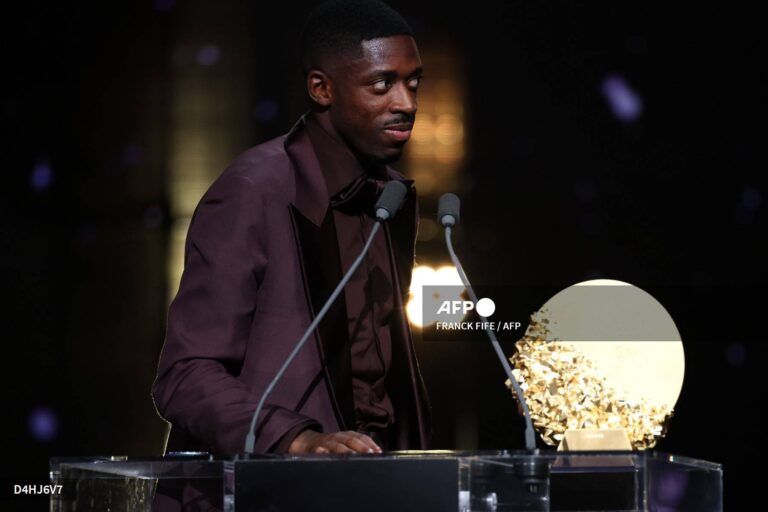
Kane also captained England at the 2026 FIFA World Cup in North America, where the Three Lions finished with a bronze medal.
Meanwhile, Barcelona and Spain legend Alexia Putellas won the women’s Ballon d’Or for the third time, joining fellow Spaniard Aitana Bonmatí as the only players to have achieved the feat.
Putellas’ latest triumph further underlines her status as one of the most decorated players in women’s football.
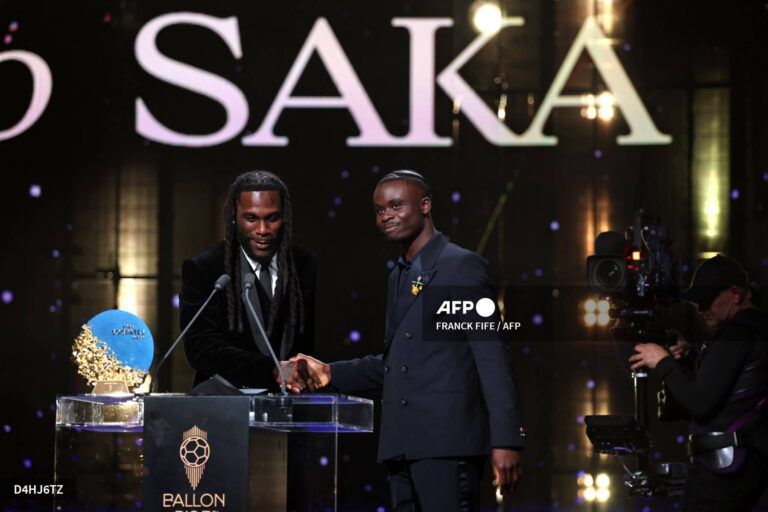
Earlier in the ceremony, Arsenal and England forward Bukayo Saka received the Socrates Trophy in recognition of his humanitarian and charitable activities.

Saka was honoured for his charity work, which has supported surgeries for children in Nigeria and other African countries.
Full List of 2026 Ballon d’Or Winners
1- Men’s Ballon d’Or: Harry Kane
2- Women’s Ballon d’Or: Alexia Putellas
3- Best Young Talent of the Year: Lamine Yamal and Vicky López
4- Best Goalkeeper Trophy: Cata Coll and Unai Simón
5- Women’s Best Striker of the Year: Charlyn Corral
-6- Men’s Best Striker of the Year: Harry Kane
7- Best Men’s Coach: Luis de la Fuente
8- Best Women’s Coach: Pere Romeu
9+ Men’s Best Club: Paris Saint-Germain
10+ Women’s Club of the Year: FC Barcelona
11- Socrates Trophy: Bukayo Saka
-
 General News3 weeks ago
Rivers 2027: We are not part of Rainbow Coalition – APC Legacy Group slams Wike, Fubara meeting
-
General News1 month ago
JOHESU demands: MHWUN puts FG on notice over fresh action
-
 Politics1 month ago
2027: ASAF backs APC governors, rejects rainbow coalition
-

 Politics2 months ago
You have demonstrated diligence, loyalty, statesmanship in leadership, Ekechi salutes Shetimma at 60
-

 Politics2 months ago
2027: Advertising experts raise concerns over irregular regulation of sector
-
FCT News2 months ago
2027: Hasana-Moneme pledges skills, empowerment, credit access for FCT women
-
General News3 months ago
2027: Dame Princess Esom-Nwafor Orizu confirmed as APC flagbearer for Nnewi North /South /Ekwusigo Federal Constituency as INEC releases names of candidates
-
Uncategorized4 months ago
Rescue of Oyo schoolchilden: Tinubu commends security agencies, says action breakthrough in fight against criminality