
General News
Atiku accuses Tinubu govt of applying double-standard on patrol subsidy policy

*** Clarifies position on proposal to restore petrol subsidy
By Chidera Orji
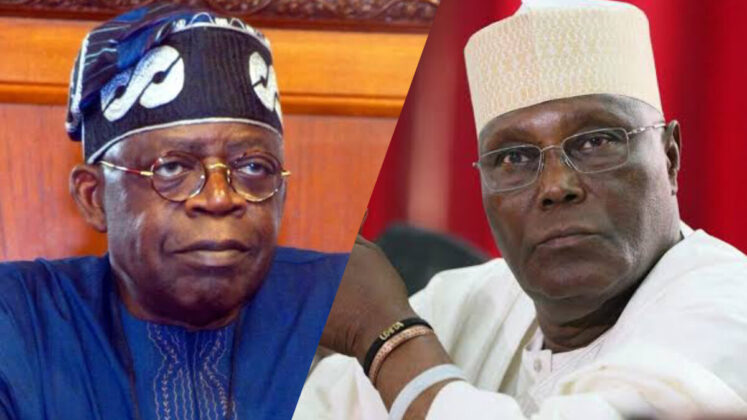
Former Vice-President Atiku Abubakar has accused the Federal Government of applying a double standard in its petrol subsidy policy, alleging that petroleum companies receive generous fiscal incentives while ordinary Nigerians continue to bear the burden of rising fuel prices.
Atiku, the African Democratic Congress (ADC) presidential candidate, made the allegation in a statement issued on Sunday by his Senior Special Assistant on Public Communication, Phrank Shaibu.
He questioned the government’s decision to abolish petrol subsidies while continuing to offer tax credits, concessions and other incentives to investors in the oil and gas sector.
According to Atiku, Nigerians were told that removing the subsidy was necessary to reform the economy, but the government allegedly takes a different approach when dealing with major oil investors.
“Nigerians were told there was no alternative and that enduring this pain was the necessary price of economic reform. But when major oil investors knock on Tinubu’s door, the sermon changes,” he said.
Atiku specifically cited the Federal Government’s deep offshore oil and gas incentives framework, which he said provides eligible projects with production tax credits of between $3 and $4.50 per barrel, with additional incentives capable of taking the total benefit to as much as $11.50 per barrel under certain conditions.
He therefore questioned why government intervention was considered undesirable when aimed at helping consumers but acceptable when it benefits investors.
“So, what exactly is Tinubu’s objection: government intervention itself, or government intervention for Nigerians?” Atiku asked.
Atiku Questions ‘Subsidy-Free’ Claim
The former vice-president also challenged the Federal Government’s claim that petrol subsidy had been completely eliminated.
He referred to the audited accounts of the Nigerian National Petroleum Company Limited (NNPCL), which, according to him, recorded about N4.84 trillion in energy-security expenses and related shortfalls in 2023 and approximately N7.13 trillion in 2024.
Atiku said NNPCL had attributed part of the expenditure to the gap between the exchange rate used to determine the regulated PMS ex-coastal price and the prevailing exchange rate when import obligations were settled.
He questioned why such huge public funds were still being spent to bridge pricing gaps if Nigerians were already paying market-driven petrol prices.
“So, where exactly did the subsidy go?” Atiku asked, arguing that changing the terminology to “under-recovery”, “shortfall” or “energy security” did not change the fact that public resources were being used to cover the difference between the economic cost of petrol and its selling price.
‘We’re Not Returning to the Old Subsidy Regime’
Atiku also clarified his position on his proposal to restore petrol subsidy if elected president in 2027.
He said his proposed intervention would not amount to a return to the previous open-ended and opaque subsidy system.
Instead, he said his administration would introduce a targeted and capped programme that would be transparently budgeted and independently audited, while linking the intervention to increased domestic production.
He also proposed measures aimed at expanding refining capacity, promoting competition and improving the purchasing power of households.
“You cannot subsidise capital and criminalise relief for citizens. You cannot offer cushions upstairs and call suffering downstairs reform,” Atiku said.
The ADC candidate further called for greater transparency surrounding tax credits, remissions and other incentives granted to petroleum companies.
He demanded disclosure of the beneficiaries of such incentives, the amount of government revenue forgone and the investments delivered in return.
Atiku also argued that Nigerian investors should have equal and transparent access to similar incentives.
He maintained that the success of economic reforms should ultimately be judged by whether they improve the living standards of Nigerians rather than by the level of hardship citizens are forced to endure.
His comments come days after he said he would restore petrol subsidy if elected president in 2027.
President Bola Tinubu has, however, criticised Atiku’s position, describing the former vice-president as “ignorant of governance and the economy.”

By Our Reporter
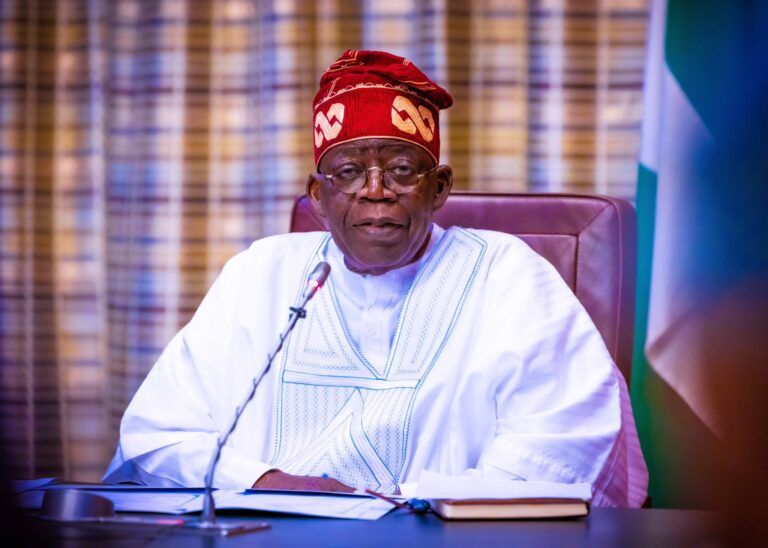
President Bola Ahmed Tinubu has directed the Nigerian Air Force, NAF, to immediately investigate the cause of the military aircraft crash in the Igbokoda area of Ondo State.
Recall that a total of 32 people were killed after a Nigerian Air Force helicopter crashed in Igbokoda, the headquarters of Ilaje Local Government Area of Ondo State.
The aircraft was reportedly on a routine mission from Benin to Lagos when it crashed in the Igbokoda area.
The President’s directive was contained in a statement issued by his Special Adviser on Information and Strategy, Bayo Onanuga, on Monday.
Tinubu extended his deepest condolences to the families of the 25 passengers and seven crew members involved in the crash, as well as the Chief of the Air Staff, Air Marshal Sunday Kelvin Aneke, and officers, airmen and airwomen of the Nigerian Air Force.
“This is a painful moment for our Armed Forces and for the entire nation. Our Air Force personnel put their lives on the line every day to secure Nigeria. Their sacrifice will never be forgotten,” Tinubu said.
“The Chief of Air Staff has briefed me, and I have directed the Nigerian Air Force to immediately commence a thorough investigation into the cause of the crash to prevent future occurrences.
“I commend the Nigerian Air Force for activating an immediate search and rescue operation following the accident.
“I pray for the repose of the souls of the gallant officers and for Almighty God to grant their families and the Nigerian Air Force the fortitude to bear the unfortunate loss.”
The President also commended the swift response of first responders and the Ondo State Government at the crash site.
“I also commend the swift response of first responders and the Ondo State Government at the crash site,” Tinubu said.
By Our Reporter
The Independent National Electoral Commission (INEC) says more than 103 million Nigerians are now on the national register of voters ahead of the 2027 elections.
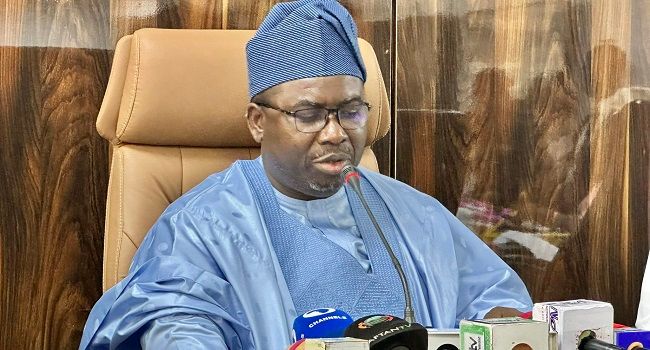
INEC Chairman, Prof. Joash Amupitan, announced this on Monday at a strategic workshop for media executives in Abuja.
The workshop, themed ‘Strengthening democracy through partnership among editors, civil society and electoral institutions’, was organised by INEC in collaboration with Development Alternatives Incorporated (DAI) and the Nigerian Guild of Editors (NGE).
Amupitan said the commission’s three-phase continuous voter registration (CVR) exercise attracted more than 10.6 million new applicants.
He said the public display of the preliminary register of voters for claims and objections had been completed, while the final automated biometric identification system (ABIS) cleanup of the register had also been concluded.
The INEC chairman said the commission would commence nationwide collection of permanent voter cards (PVCs) on October 9.
He urged eligible citizens who participated in the registration exercise to collect their cards and ensure they are ready to participate in the 2027 elections.
Amupitan said INEC was also committed to continuously improving the bimodal voter accreditation system (BVAS) and the INEC Result Viewing Portal (IReV) to strengthen the credibility and transparency of elections.
“The ultimate arbiter of electoral integrity is public trust,” he said.
He called for stronger collaboration among INEC, media organisations, civil society groups and other stakeholders ahead of the 2027 elections.
Amupitan said the commission was prepared to listen to editorial concerns, address operational challenges and provide timely information to prevent misinformation from filling communication gaps.
He said INEC would provide editors with direct access to verify field incidents, logistical developments and security reports in real time.
The chairman also proposed a sustained editorial feedback mechanism between INEC and the NGE to review the commission’s operational progress and address emerging challenges throughout the 2027 election cycle.
Amupitan said stronger engagement with the media would help ensure that accurate information reaches voters, particularly during periods when electoral activities generate heightened public interest.
Rudolf Elbling, team leader at DAI, said credible elections depended not only on effective electoral administration but also on professional, ethical and fact-based journalism.
Elbling identified electoral integrity, election technology, the security of journalists and voters, and information disorder as some of the major challenges confronting the media ahead of the 2027 elections.
He said journalists had an important role to play in providing voters with accurate information and holding electoral institutions and other stakeholders accountable.
The workshop brought together electoral officials, editors, civil society representatives and other stakeholders to strengthen cooperation and improve public communication ahead of the 2027 elections.

By Sam Otuonye
The Federal Competition and Consumer Protection Commission (FCCPC) has proposed new rules that would subject businesses using artificial intelligence, machine learning and automated technologies for marketing to additional regulatory requirements with tougher penalties.
Under the draft Sales Promotion Regulations, 2026, businesses using AI for sales promotions, marketing communications or consumer engagement directed at or accessible to Nigerian consumers would be required to register with the Commission.
The proposed framework also introduced tough financial penalties for breaches, with corporate entities facing fines of up to N100 million or 1% of their previous year’s turnover, whichever is greater.
The draft creates a dedicated framework for what it describes as “Artificial Intelligence and Automated Marketing”, reflecting the growing use of AI tools in advertising, customer engagement and digital promotions.
Under the proposal, businesses that deploy, operate or use AI, machine learning systems or automated technologies for promotions, marketing communications or consumer engagement would have to register the use with the FCCPC.
The draft further proposes that AI-generated or automated marketing content must be clearly identifiable as such. It also specifically addressed emerging marketing tools including AI chatbots, virtual influencers and automated messaging systems.
The proposed rules stated that their use in marketing must be transparent and must not involve manipulation, misinformation or exploitation of consumer data or behavioural tendencies. Businesses would also be required to allow consumers to opt out of automated or AI driven marketing communications.
Beyond the AI provisions, the draft proposed a major increase in the financial consequences for businesses that breach the proposed Sales Promotion Regulations.
According to the proposed regulation, a natural person who contravenes the regulations could face a fine of up to N50 million.
For a corporate entity, the proposed penalty is up to N100 million or 1% of the company’s previous year’s turnover, whichever is greater.
“A body corporate, shall be liable to an administrative penalty not exceeding NGN100,000,000.00 (One Hundred Million Naira) or 1% of its turnover in the previous year, whichever is greater.
“Each director of an undertaking referred to in Regulations 61.2(b) is liable to be proceeded against as specified under Regulations 61.2(a). Such sanction may include disqualification as a director for a period not exceeding five (5) years,” the FCCPC stated in the draft regulation.
The draft also proposed additional penalties of up to N10 million for specific breaches, including failure to award a promised prize or failure to comply with the terms of a promotion. A person who makes a false statement in an application or undertaking could also face a penalty of up to N10 million under the proposal.
Under the draft, an undertaking using AI generated content or automated promotional systems would be responsible and accountable for representations, messages and claims produced or communicated by those systems.
The rules would also impose liability where an AI system or automated tool produces misleading, discriminatory or harmful promotional outcomes.
The proposed rules state that their use in marketing must be transparent and must not involve manipulation, misinformation or exploitation of consumer data or behavioural tendencies.
Businesses would also be required to allow consumers to opt out of automated or AI driven marketing communications.
Beyond the AI provisions, the draft proposes a major increase in the financial consequences for businesses that breach the proposed Sales Promotion Regulations.
According to the proposed regulation, a natural person who contravenes the regulations could face a fine of up to N50 million.
-
General News2 weeks ago
JOHESU demands: MHWUN puts FG on notice over fresh action
-

 Politics4 weeks ago
You have demonstrated diligence, loyalty, statesmanship in leadership, Ekechi salutes Shetimma at 60
-
 Politics3 weeks ago
2027: ASAF backs APC governors, rejects rainbow coalition
-

 Politics2 months ago
2027: Advertising experts raise concerns over irregular regulation of sector
-
FCT News2 months ago
2027: Hasana-Moneme pledges skills, empowerment, credit access for FCT women
-
General News2 months ago
2027: Dame Princess Esom-Nwafor Orizu confirmed as APC flagbearer for Nnewi North /South /Ekwusigo Federal Constituency as INEC releases names of candidates
-
Uncategorized3 months ago
Rescue of Oyo schoolchilden: Tinubu commends security agencies, says action breakthrough in fight against criminality
-
General News1 month ago
Chi-Jenco CEO, Jude Orji loses mother