
General News
Rights activist advocates alternative dispute resolution in Niger Delta

Eddie Polo
A human rights activist, Chief Nengi James-Eriworio has described Alternative Dispute Resolution (ADR) as the surest pathway to peaceful coexistence, progress and prosperity in the Niger Delta region.
James-Eriworio made the advocacy in his recent article entitled “Alternative Dispute Resolution In A Changing World: A Pathway to Peace, Progress and Prosperity”.
The activist who is also the chairman of the Nigeria Institute of Chartered Arbitrators, Bayelsa state branch, and Officer of the Order of the Niger (OON), opined that the world needed application of ADR due to its constant changing at an unprecedented pace.
“Borders blur in business; technology reshapes how we connect and disagree; resources grow scarcer; and communities seek their rightful place in a new era.
“In the Niger Delta and across Nigeria, these shifts bring both opportunity and friction. Where change is constant, conflict is inevitable, but conflict need not mean crisis. For me, this is not merely professional conviction; it is a lifelong calling.
“Rooted in the cultural heritage of the Nembe and Ijaw people where dialogue, mediation, and restorative justice have long held communities together and shaped by decades of service as a peace advocate, community leader, and arbitrator, I have seen firsthand that justice thrives not in confrontation alone, but in conversation,” he posited.
The Nembe born social advocate, in the article, pointed out that ADR was no longer an alternative but an essential foundation for building a just, inclusive, and peaceful society in a changing world.
He said ADR, encompassing negotiation, mediation, conciliation, and arbitration, was not just an “outside the courts” dispute settlement measure but the original path to justice.
“I walk in the footsteps of my late father, Chief Eriworio Full James Gam-Dede, a custodian of oral history and custom, who taught that wisdom lies in bringing people together, not in setting them apart.
“Today, as the Chairman of the Nigeria Institute of Chartered Arbitrators, Bayelsa State Chapter and through my work with the Institute of Chartered Mediators and Conciliators (ICMC), the Society for Peace Studies and Practice (SPSP), and the National Think Tank Group, I see these ancient values finding fresh, formal expression.
“ADR bridges the best of our heritage with the demands of the modern age,” he stated”
He theorized that negotiation was the honest exchange of interests, describing mediation as guided dialogue toward mutual respect while conciliation was to heal rifts while finding solutions,
explaining that arbitration was the fair and binding decisions by trusted experts in conflict resolution.
While reiterating that the ADR had become indispensable in today’s society, James-Eriworio described it as the speed that sustained communities.
“Litigation can stretch into years even decades. In the Niger Delta, where resource disputes, land claims, and development agreements demand urgent attention, delay is not just inconvenience, it is injustice.
“Through the Nengi James Foundation and our advocacy work, we have seen how ADR delivers timely resolutions, preserving trust and keeping development moving.
“A judge may decide who “wins,” but ADR determines whether neighbours, partners, and communities can continue to live and work together.
“As a Patron and Mentor to groups across Bayelsa State and beyond, and as UN-POLAC Ambassador of Peace, I champion processes that heal rather than deepen division. True peace is not silence, it is sustainable reconciliation.
“ADR adapts, drawing on specialised expertise, respecting cultural context, and benefiting from international enforceability through conventions like the New York Convention. Whether in resource management, corporate relations, or community rights, ADR meets complexity with creativity.
“As a graduate of Public Administration from the University of Port Harcourt, media commentator, and advocate for true federalism, I believe our systems must reflect who we are.
“ADR honours indigenous wisdom alongside modern law, ensuring solutions are not just legally correct, but socially accepted and enduring,” said.
Going forward, he stated “The changing world demands we evolve too. Online Dispute Resolution now brings justice closer to remote and underserved communities. ADR is expanding into critical frontiers I have long championed.”
He noted that he had been balancing development with ecological stewardship, through his work with the Nigeria Environmental Society (NES)
and ensuring inclusive dialogue between investors, governments, and local people
The peace advocate also said he believed in uman capacity building, empowering the next generation of peacebuilders through the Talent Search and Advancement Initiative.
He said as former chairman of the Civil Liberties Organisations in Bayelsa State, he promoted public accountability and civil liberties and fostered constructive state-citizen engagement.
Lamenting that many still view ADR as “lesser justice,” he called on fellow advocates to educate and demonstrate its power, craving that standards and training must be raised across all practice areas.
“Mediated settlements need stronger, more consistent enforcement. Women, youths, rural communities must be genuinely heard, not just present .These are not merely technical issues, they are moral imperatives. ADR must serve all, not just the few.
“I am a custodian of Ijaw – Niger Delta culture, a recipient of the Officer of the Order of the Niger (OON), a widower, and a father. My life’s work in writing, in arbitration, in peace advocacy converges on one truth:
“In a changing world, the strongest societies are not those with the most laws, but those with the most dialogue.
“ADR is more than a method of resolving disputes. It is a philosophy of dignity, inclusion, and enduring peace. It turns conflict from a threat into an opportunity to understand, to respect, and to build together.
“Let us champion it. Let us practise it. And let us teach it so that our children inherit not just a world free of conflict, but a world bound by justice.
“The best resolution is not one where one side wins but one where both sides stand stronger,” he concluded.

By Our Reporter
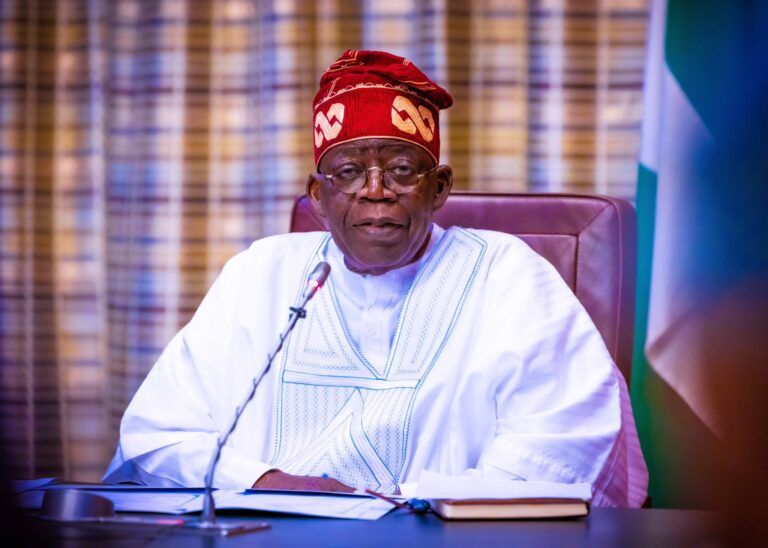
President Bola Ahmed Tinubu has directed the Nigerian Air Force, NAF, to immediately investigate the cause of the military aircraft crash in the Igbokoda area of Ondo State.
Recall that a total of 32 people were killed after a Nigerian Air Force helicopter crashed in Igbokoda, the headquarters of Ilaje Local Government Area of Ondo State.
The aircraft was reportedly on a routine mission from Benin to Lagos when it crashed in the Igbokoda area.
The President’s directive was contained in a statement issued by his Special Adviser on Information and Strategy, Bayo Onanuga, on Monday.
Tinubu extended his deepest condolences to the families of the 25 passengers and seven crew members involved in the crash, as well as the Chief of the Air Staff, Air Marshal Sunday Kelvin Aneke, and officers, airmen and airwomen of the Nigerian Air Force.
“This is a painful moment for our Armed Forces and for the entire nation. Our Air Force personnel put their lives on the line every day to secure Nigeria. Their sacrifice will never be forgotten,” Tinubu said.
“The Chief of Air Staff has briefed me, and I have directed the Nigerian Air Force to immediately commence a thorough investigation into the cause of the crash to prevent future occurrences.
“I commend the Nigerian Air Force for activating an immediate search and rescue operation following the accident.
“I pray for the repose of the souls of the gallant officers and for Almighty God to grant their families and the Nigerian Air Force the fortitude to bear the unfortunate loss.”
The President also commended the swift response of first responders and the Ondo State Government at the crash site.
“I also commend the swift response of first responders and the Ondo State Government at the crash site,” Tinubu said.
By Our Reporter
The Independent National Electoral Commission (INEC) says more than 103 million Nigerians are now on the national register of voters ahead of the 2027 elections.
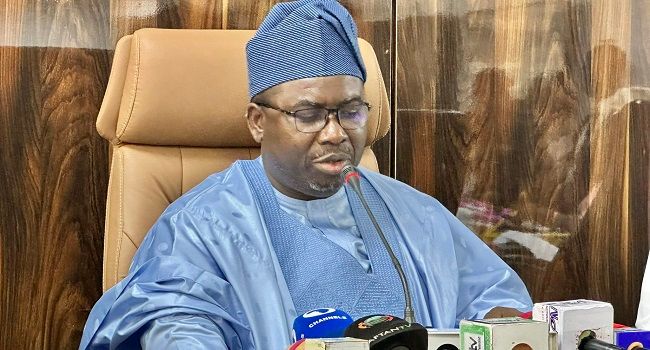
INEC Chairman, Prof. Joash Amupitan, announced this on Monday at a strategic workshop for media executives in Abuja.
The workshop, themed ‘Strengthening democracy through partnership among editors, civil society and electoral institutions’, was organised by INEC in collaboration with Development Alternatives Incorporated (DAI) and the Nigerian Guild of Editors (NGE).
Amupitan said the commission’s three-phase continuous voter registration (CVR) exercise attracted more than 10.6 million new applicants.
He said the public display of the preliminary register of voters for claims and objections had been completed, while the final automated biometric identification system (ABIS) cleanup of the register had also been concluded.
The INEC chairman said the commission would commence nationwide collection of permanent voter cards (PVCs) on October 9.
He urged eligible citizens who participated in the registration exercise to collect their cards and ensure they are ready to participate in the 2027 elections.
Amupitan said INEC was also committed to continuously improving the bimodal voter accreditation system (BVAS) and the INEC Result Viewing Portal (IReV) to strengthen the credibility and transparency of elections.
“The ultimate arbiter of electoral integrity is public trust,” he said.
He called for stronger collaboration among INEC, media organisations, civil society groups and other stakeholders ahead of the 2027 elections.
Amupitan said the commission was prepared to listen to editorial concerns, address operational challenges and provide timely information to prevent misinformation from filling communication gaps.
He said INEC would provide editors with direct access to verify field incidents, logistical developments and security reports in real time.
The chairman also proposed a sustained editorial feedback mechanism between INEC and the NGE to review the commission’s operational progress and address emerging challenges throughout the 2027 election cycle.
Amupitan said stronger engagement with the media would help ensure that accurate information reaches voters, particularly during periods when electoral activities generate heightened public interest.
Rudolf Elbling, team leader at DAI, said credible elections depended not only on effective electoral administration but also on professional, ethical and fact-based journalism.
Elbling identified electoral integrity, election technology, the security of journalists and voters, and information disorder as some of the major challenges confronting the media ahead of the 2027 elections.
He said journalists had an important role to play in providing voters with accurate information and holding electoral institutions and other stakeholders accountable.
The workshop brought together electoral officials, editors, civil society representatives and other stakeholders to strengthen cooperation and improve public communication ahead of the 2027 elections.

By Sam Otuonye
The Federal Competition and Consumer Protection Commission (FCCPC) has proposed new rules that would subject businesses using artificial intelligence, machine learning and automated technologies for marketing to additional regulatory requirements with tougher penalties.
Under the draft Sales Promotion Regulations, 2026, businesses using AI for sales promotions, marketing communications or consumer engagement directed at or accessible to Nigerian consumers would be required to register with the Commission.
The proposed framework also introduced tough financial penalties for breaches, with corporate entities facing fines of up to N100 million or 1% of their previous year’s turnover, whichever is greater.
The draft creates a dedicated framework for what it describes as “Artificial Intelligence and Automated Marketing”, reflecting the growing use of AI tools in advertising, customer engagement and digital promotions.
Under the proposal, businesses that deploy, operate or use AI, machine learning systems or automated technologies for promotions, marketing communications or consumer engagement would have to register the use with the FCCPC.
The draft further proposes that AI-generated or automated marketing content must be clearly identifiable as such. It also specifically addressed emerging marketing tools including AI chatbots, virtual influencers and automated messaging systems.
The proposed rules stated that their use in marketing must be transparent and must not involve manipulation, misinformation or exploitation of consumer data or behavioural tendencies. Businesses would also be required to allow consumers to opt out of automated or AI driven marketing communications.
Beyond the AI provisions, the draft proposed a major increase in the financial consequences for businesses that breach the proposed Sales Promotion Regulations.
According to the proposed regulation, a natural person who contravenes the regulations could face a fine of up to N50 million.
For a corporate entity, the proposed penalty is up to N100 million or 1% of the company’s previous year’s turnover, whichever is greater.
“A body corporate, shall be liable to an administrative penalty not exceeding NGN100,000,000.00 (One Hundred Million Naira) or 1% of its turnover in the previous year, whichever is greater.
“Each director of an undertaking referred to in Regulations 61.2(b) is liable to be proceeded against as specified under Regulations 61.2(a). Such sanction may include disqualification as a director for a period not exceeding five (5) years,” the FCCPC stated in the draft regulation.
The draft also proposed additional penalties of up to N10 million for specific breaches, including failure to award a promised prize or failure to comply with the terms of a promotion. A person who makes a false statement in an application or undertaking could also face a penalty of up to N10 million under the proposal.
Under the draft, an undertaking using AI generated content or automated promotional systems would be responsible and accountable for representations, messages and claims produced or communicated by those systems.
The rules would also impose liability where an AI system or automated tool produces misleading, discriminatory or harmful promotional outcomes.
The proposed rules state that their use in marketing must be transparent and must not involve manipulation, misinformation or exploitation of consumer data or behavioural tendencies.
Businesses would also be required to allow consumers to opt out of automated or AI driven marketing communications.
Beyond the AI provisions, the draft proposes a major increase in the financial consequences for businesses that breach the proposed Sales Promotion Regulations.
According to the proposed regulation, a natural person who contravenes the regulations could face a fine of up to N50 million.
-
General News2 weeks ago
JOHESU demands: MHWUN puts FG on notice over fresh action
-

 Politics4 weeks ago
You have demonstrated diligence, loyalty, statesmanship in leadership, Ekechi salutes Shetimma at 60
-

 Politics3 weeks ago
2027: ASAF backs APC governors, rejects rainbow coalition
-

 Politics2 months ago
2027: Advertising experts raise concerns over irregular regulation of sector
-
FCT News2 months ago
2027: Hasana-Moneme pledges skills, empowerment, credit access for FCT women
-
General News2 months ago
2027: Dame Princess Esom-Nwafor Orizu confirmed as APC flagbearer for Nnewi North /South /Ekwusigo Federal Constituency as INEC releases names of candidates
-
Uncategorized3 months ago
Rescue of Oyo schoolchilden: Tinubu commends security agencies, says action breakthrough in fight against criminality
-
General News1 month ago
Chi-Jenco CEO, Jude Orji loses mother