
General News
N52,500 minimum pension applies only to eligible FG retirees – PenOp


Our Reporter
The Pension Operators Association of Nigeria (PenOp) has clarified that the N52,500 Minimum Pension Guarantee unveiled by the National Pension Commission (PenCom) only applies to eligible Federal Government retirees under the Contributory Pension Scheme (CPS).
Mrs Adeola Oyegbade, Head, Media, Brands and Communications at PenOp, made the clarification at the association’s 2026 Annual Media Retreat held virtually on Tuesday.
The retreat has its theme as “Telling the Pension Story: The Journey So Far”.
Oyegbade emphasised that the initiative did not cover all public and private sector retirees.
She explained that eligible beneficiaries would receive the minimum pension automatically, subject to the applicable conditions, without having to apply separately.
“The N52,500 Minimum Pension Guarantee applies to eligible Federal Government retirees under the contributory pension scheme and not available to all public and private sector retirees,” she said.
Clarifying further on programmed withdrawal, Oyegbade explained that retirees’ monthly payments were determined using an actuarial table and the amount accumulated in their retirement savings accounts.
She said retirees in the private sector would continue to receive benefits based on the amount accumulated in their Retirement Savings Accounts (RSAs).
She advised workers to make additional voluntary contributions (AVCs) or invest in other financial instruments to improve their income after retirement.
According to her, the statutory contributions by employers and employees may not be sufficient to sustain the standard of living workers enjoyed during active service.
“Your pension is for when you retire, but the kind of life you want to live after retirement requires additional planning,” she said.
Also speaking, Mrs Anthonia Ifeanyi-Okoro, Chief Executive Officer of PenOp, said pension operators were intensifying efforts to expand coverage among informal sector workers.
She said this would be done through the Personal Pension Plan, in collaboration with the National Pension Commission (PenCom), trade associations and technology partners.
She noted that the initiative would include engagements with market associations, domestic workers, drivers and other informal sector groups to encourage pension participation.
On data recapture, Ifeanyi-Okoro said Pension Fund Administrators had organised roadshows, webinars and physical engagements with employers to encourage contributors to update their records.
She attributed the slow response partly to the absence of penalties for delays as she urged RSA holders to complete the exercise to facilitate access to their pension benefits.


Some rural farmers in Kwaya Kusar Local Government Area of Borno have lamented herders’ attack on their farmlands while seeking urgent government support.
Alhaji Hassan Musa, Chairman, All Farmers Association of Nigeria (AFAN), Kwaya Kusar chapter, appealed in an interview with the News Agency of Nigeria (NAN) in Kwaya Kusar town on Tuesday.
Musa described the attack as both “devastating and heartbreaking” in view of its impact on farmers from the affected communities.
He stated that the attacks were recorded in four different areas around Kwaya Kusar community, such as Debana, Lida, Deman and Maiba, affecting over 50 farmers, including himself.
He said that the attacks were particularly painful in view of the poor harvest that accompanied the 2026 cropping season due to the poor rainfall experienced during the rainy season.
According to him, the attacks started in November, resulting in the affected farmers losing several hectares of beans, maize, rice and sorghum just before harvest.
The chairman said that, with the level of damage, if nothing was done, many of the affected farmers would face severe hunger and “that’s why I am calling on the government to support us.
“One cannot cultivate his farmlands and tend to the farms for four to five months only for his crops to be eaten within hours, close to harvest.
“One of our members was shot with an arrow, but he survived, and we thank God that no life was lost; but the level of damage on our farm is something that should be compensated.
“Many farmers were abandoning the vocation because of the high cost of inputs, low support, climate change and herders’ attacks; these must be addressed to boost food security,” he said.
Musa said that the attack would have spread to more farmlands but for the quick intervention of the Kwaya Kusar Local Government Council Chairman, Mr Dahiru Mamma, who deployed the vigilantes that eventually chased the herders away.
He called on government at all levels to strengthen security around farmlands, especially during harvest, to prevent the destruction of farmlands, which he said could have a serious impact on food security. (NAN)
Our Reporter
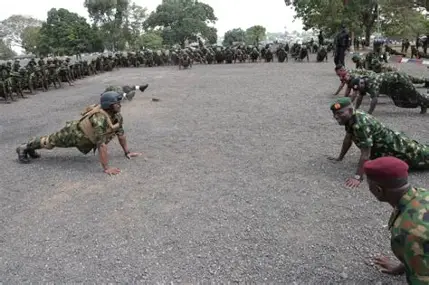
The Nigerian Army has restated commitment to deployment of efficient military arsenals and personnel training to combat terrorism and emerging security threats in the country.
The Chief of Army Staff, Lt.-Gen. Waidi Shaibu, stated this on Tuesday during the grand finale of the Operation Mungu Bugu held at Shafan-Duguri village in Alkaleri Local Government Area of Bauchi State.
The theme of the exercise is: “Building a Professional, Resilient. and Combat-Ready Force through Realistic Training.”
Shaibu said that the exercise underscored the conviction that the effectiveness of any fighting force was determined by the quality of its training, personnel competence and ability to translate acquired skills into decisive operational outcomes.
He said that the culmination of the exercise reinforced commitment toward building a professional, adaptable, combat-ready and resilient army capable of decisively discharging its constitutional responsibilities within a joint and multi-agency environment.
The exercise, he said, occupied an important place in the Nigerian Army’s training architecture, designed to provide a practical platform for validating the knowledge, skills and operational concepts imparted to personnel in training institutions.
“Beyond testing individual proficiency, the exercise enables us to assess the effectiveness of command and control, tactical decision-making, teamwork and the coordinated combat capabilities under realistic field employment conditions.
“Through this process, we seek to bridge the gap between institutional training and the practical realities of military operations, thereby ensuring that personnel graduating from our training institutions are better prepared for the responsibilities awaiting them in the field,” he said.
Shaibu said that the army was conducting the exercise at Alkaleri in Bauchi State and Old Oyo National Park in Oyo, in view of its importance to national security.
He said that the army authorities would critically examine the capabilities and limitations identified throughout the exercise on equipment serviceability, communications effectiveness, logistics sustainability and the ability of the personnel to operate effectively under demanding conditions.
The army chief highlighted that the outcomes of the exercise would contribute directly to the broader transformation of the Nigerian Army.
“Specifically, we seek to improve the tactical proficiency and combat confidence of our personnel, strengthen combined arms coordination, enhance leadership and decision-making, validate training standards and identify capability gaps requiring urgent attention.
“We also intend to improve our capacity to plan and maintain operations, strengthen interoperability among participating arms and services, and generate practical lessons for refining doctrine and training curricula,” he
According to Shaibu, the Nigerian Army will continue to prioritise training programmes that challenge personnel intellectually, physically and tactically, while promoting adaptability, innovation and resilience.
He said that the army would continue to strengthen the capacity of its training institutions, improve instructional standards, and ensure that lessons from ongoing operations are systematically incorporated into training activities.
While commending President Bola Tinubu, Bauchi state government, army institutions, and host communities, Shaibu reiterated commitment to end terrorism, banditry and criminal activities in the country.
He also charged participating army institutions to undertake comprehensive reviews and ensure that the lessons identified were systematically documented and incorporated into subsequent training programmes.
“I urge you all to sustain the momentum and remain steadfast in our collective resolve to build a more professional, adaptable, combat-ready and resilient Nigerian Army.”
Also, Lt.-Gen. Faruk Yahaya (Rtd), former Chief of Army Staff, lauded the army leadership for the training exercise.
Yahaya highlighted that the strength of the military lies in training, resilience and professional development of the troops.
He urged the participants to translate the skills learnt into action, and called on institutions to invest in training programmes, integrate technologies and improve coordination to surmount security challenges.
Highlights of the event featured fire power demonstrations by infantry divisions and armoured corps of the Nigerian Army, as well as presentation of awards to serving and retired officers.
Musa Abdul
The National Boundary Commission (NBC) has reaffirmed its commitment to addressing transboundary challenges and strengthening cooperation with Nigeria’s neighbouring countries.
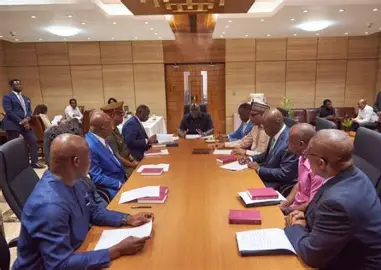
Director-General of the commission, Mr Adamu Adaji, gave the assurance when a delegation of the Integrated Border Stability Mechanism (IBSM) for West Africa visited him in Abuja on Tuesday.
He highlighted the strategic role of the commission in Nigeria’s border governance and emphasised its commitment to promoting peaceful, cooperative relations with neighbouring countries.
The director-general added that the commission was committed to working with relevant national and international partners to address challenges associated with border governance, security and peaceful coexistence among border communities.
Adaji expressed appreciation for the planned interventions of international partners in supporting Nigeria’s border governance efforts.
“The NBC plays a strategic role in defining boundaries and monitoring transboundary relations between Nigeria and her neighbours.
“The commission identifies potential areas of tension and possible conflict, facilitates equitable utilisation of transboundary resources and promotes cross-border cooperation.
“We are committed to promoting peaceful, cooperative relations with neighbouring countries to enhance progress, growth, security and development across the boundary,” he said.
Earlier, the IBSM Coordinator, Ms Sandra Crawford, commended the director-general for the warm reception and hospitality accorded the team.
Crawford, who led the delegation, explained that they were in Nigeria to engage relevant stakeholders involved in border governance, noting that the NBC was their first point of call.
She emphasised the delegation’s interest in cross-border cooperation, disclosing that the mechanism’s current focus was on land borders.
Crawford also expressed optimism about establishing a cordial and productive working relationship with the commission.
Nigeria joined the IBSM in September 2026, marking its participation in the multi-agency coordination framework designed to strengthen collaboration among international partners and national authorities in addressing border-related challenges.
The IBSM brings together the International Organisation for Migration, the United Nations Office on Drugs and Crime, the United Nations Office of Counter-Terrorism and International Criminal Police Organi ation (INTERPOL).
The mechanism seeks to strengthen strategic and operational coordination among international partners, donors and national authorities in support of integrated approaches to border stability, security and governance, in line with national priorities.
-
 General News1 month ago
Rivers 2027: We are not part of Rainbow Coalition – APC Legacy Group slams Wike, Fubara meeting
-
 Politics2 months ago
2027: ASAF backs APC governors, rejects rainbow coalition
-
General News2 months ago
JOHESU demands: MHWUN puts FG on notice over fresh action
-

 Politics2 months ago
You have demonstrated diligence, loyalty, statesmanship in leadership, Ekechi salutes Shetimma at 60
-

 Politics3 months ago
2027: Advertising experts raise concerns over irregular regulation of sector
-
FCT News3 months ago
2027: Hasana-Moneme pledges skills, empowerment, credit access for FCT women
-
General News4 months ago
2027: Dame Princess Esom-Nwafor Orizu confirmed as APC flagbearer for Nnewi North /South /Ekwusigo Federal Constituency as INEC releases names of candidates
-
General News1 month ago
Senator Mandiya slipped, died in Abuja bathroom, corpse discovered after 3 days, says Sen Ningi