
General News
Tinubu names ex-Zamfara gov, Abdulaziz Yari, as DG, others as members of 2027 Presidential Campaign Council

By Our Reporter
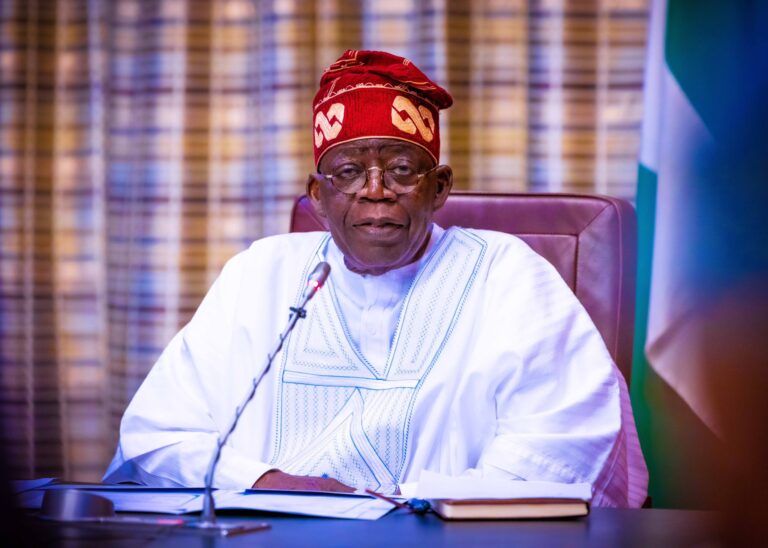
President Bola Tinubu has approved the composition of the All Progressives Congress Presidential Campaign Council for the 2027 general elections, with former Zamfara State Governor, Senator Abdulaziz Yari, appointed as Director-General.
Imo State Governor, Hope Uzodimma, was named Secretary of the campaign council.
The appointments were announced in a statement issued on Saturday by the Special Adviser to the President on Information and Strategy, Bayo Onanuga.
Under the structure, Tinubu will chair the council, while Vice President Kashim Shettima will serve as Vice-Chairman I. The APC National Chairman, Professor Nentawe Yilwatda, was designated Vice-Chairman II.
The party’s National Secretary, Senator Ajibola Basiru, and Hadiza Bala-Usman were appointed Deputy Secretary and Assistant Secretary respectively.
The council will be supported by a team of advisers comprising former APC National Chairman, Bisi Akande; veteran journalist and politician, Segun Osoba; former Imo State Governor, Senator Rochas Okorocha; former Nasarawa State Governor, Senator Abdullahi Adamu; and Senator Florence Ita-Giwa.
Senate President Godswill Akpabio, House of Representatives Speaker Tajudeen Abbas and Yobe State Governor Mai Mala Buni were assigned as Deputy Director-Generals overseeing the campaign in the southern and northern regions.
They will work alongside Senator Bamidele Opeyemi and Senator Jibril Barau.
Former Edo State Governor, Senator Adams Oshiomhole, was appointed Deputy Director-General in charge of mobilisation, while Tinubu’s Chief of Staff, Femi Gbajabiamila, will oversee administration as Deputy Director-General.
James Faleke, who was prominent in the APC’s 2022/2023 presidential campaign, has also returned to the campaign structure as Deputy Director-General for election planning, coordination and monitoring.
Faleke will coordinate with zonal directors appointed for the six geopolitical zones. They are Senator Olushola Adeyeye for the South-West, Dr Ngozi Olejeme for the South-South, Senator Uche Ekwunife for the South-East, Muntaqha Rabe for the North-West, Ahmed Muhammed Ketso for the North-Central and Senator Sani Danladi for the North-East.
Stella Okotete, Abdullahi Garba Ramat and Audu Maikori were appointed secretaries under the election planning directorate.
The legal directorate will be headed by Senior Advocate of Nigeria, Muiz Banire, with Liman Hassan and Babatunde Ogala serving as deputies.
The Minister of Information and National Orientation, Mohammed Idris, was appointed Coordinating Director for Media and Strategic Communication. He will work with Dele Alake, Bayo Onanuga and Lanre Issa-Onilu.
Tunde Rahman, Sunday Dare, Daniel Bwala and Felix Morka were named coordinating deputy directors in the directorate, while Abdulaziz Abdulaziz, Temitope Ajayi, Aderonke Arabirin and Frederick Nwabufo were appointed coordinating secretaries.
Segun Dada, who occupied the New Media directorate in the 2022 campaign, is returning as its Director, with Solomon Arowolo appointed Secretary.
The campaign council also named five spokespersons, led by Dele Alake. Others are Alwan Hassan, Ayobami Oyalowo, Kemi Asekun-Shittu and Adamu Fanda.
Tinubu urged members of the council to commit themselves fully to securing victory for the APC in the January 2027 elections.
He also directed the leaders of the various directorates to engage other party members who were not included in the formal list and encourage them to contribute to the campaign.
The statement read, “We have delivered on our campaign promises and set our country on a path of economic progress. We are definitely out of the dark tunnel and are now at the cusp of reaping the benefits of a prosperous economy that will benefit all Nigerians.
“As we march into the campaign season, we have many achievements to trumpet, let us confidently showcase our record and inspire hope in every corner of our nation. Let us soundly defeat all those forces who plan to take our country backwards.”


England captain Harry Kane has been crowned the 2026 men’s Ballon d’Or winner, beating Lamine Yamal and Kylian Mbappé to claim the prestigious individual award.
Kane received the award at the Palladium Theatre in London, United Kingdom, on Monday, becoming the first English player to win the men’s Ballon d’Or since Michael Owen in 2001.

The 33-year-old striker enjoyed a remarkable 2025/26 season, scoring 73 goals for club and country. His goals played a key role in helping Bayern Munich secure the German Bundesliga title and reach the semi-finals of the UEFA Champions League.

Kane also captained England at the 2026 FIFA World Cup in North America, where the Three Lions finished with a bronze medal.
Meanwhile, Barcelona and Spain legend Alexia Putellas won the women’s Ballon d’Or for the third time, joining fellow Spaniard Aitana Bonmatí as the only players to have achieved the feat.
Putellas’ latest triumph further underlines her status as one of the most decorated players in women’s football.
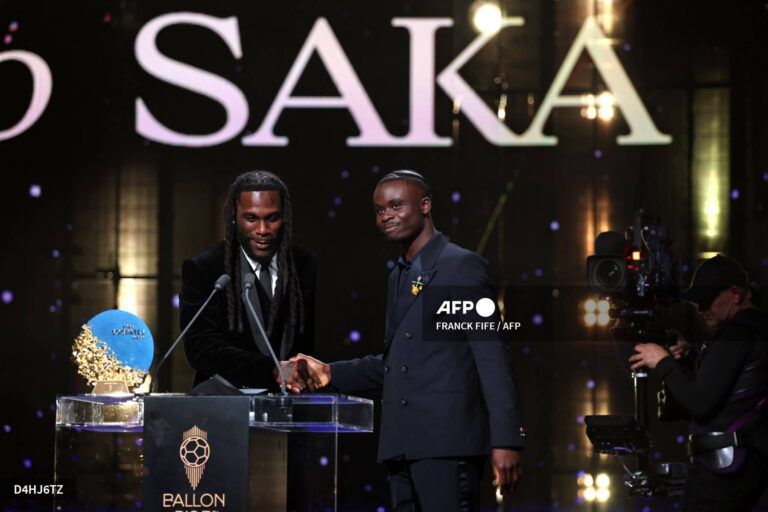
Earlier in the ceremony, Arsenal and England forward Bukayo Saka received the Socrates Trophy in recognition of his humanitarian and charitable activities.

Saka was honoured for his charity work, which has supported surgeries for children in Nigeria and other African countries.
Full List of 2026 Ballon d’Or Winners
1- Men’s Ballon d’Or: Harry Kane
2- Women’s Ballon d’Or: Alexia Putellas
3- Best Young Talent of the Year: Lamine Yamal and Vicky López
4- Best Goalkeeper Trophy: Cata Coll and Unai Simón
5- Women’s Best Striker of the Year: Charlyn Corral
-6- Men’s Best Striker of the Year: Harry Kane
7- Best Men’s Coach: Luis de la Fuente
8- Best Women’s Coach: Pere Romeu
9+ Men’s Best Club: Paris Saint-Germain
10+ Women’s Club of the Year: FC Barcelona
11- Socrates Trophy: Bukayo Saka
By Our Reporter with agency report
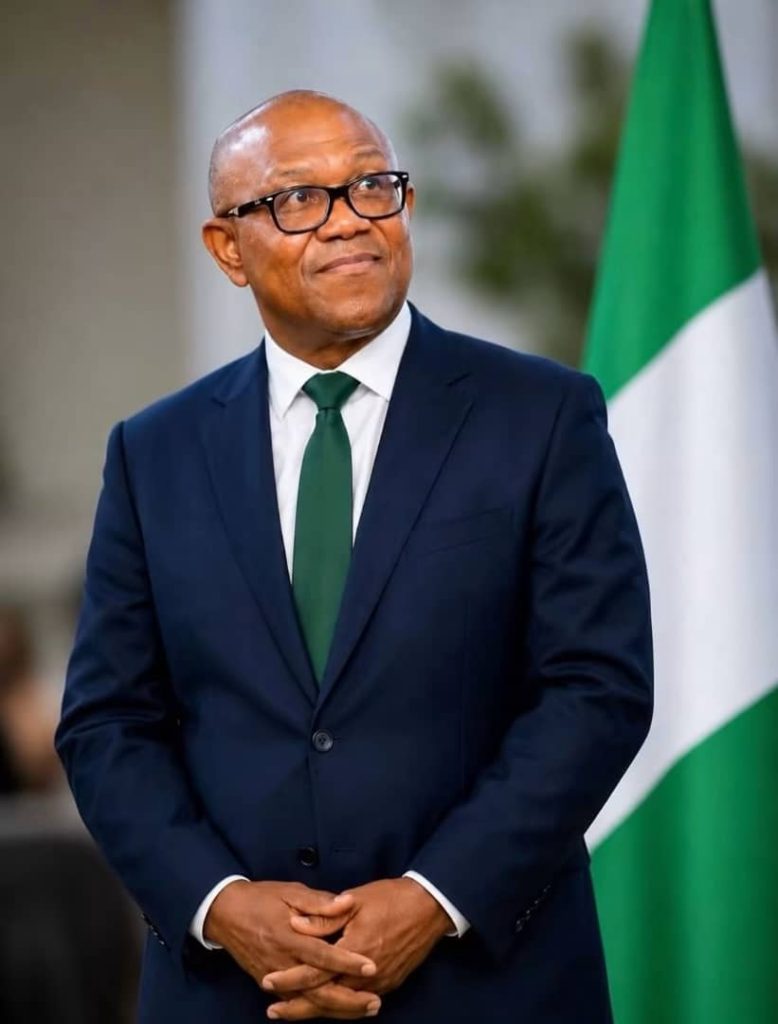
Peter Obi, presidential candidate of the Nigeria Democratic Congress (NDC), says President Bola Tinubu must leave office in 2027, accusing his administration of worsening Nigeria’s economic challenges.
Obi spoke in Abuja on Monday at the inauguration of the NDC’s national campaign council.
The former governor of Anambra said Nigeria is facing a crisis under Tinubu’s leadership, insisting that Nigerians are seeking a change of government.
“Tinubu has led this country into a crisis. Today, everything is collapsing. From our engagements across Nigeria, Nigerians are looking for new leadership, and we assure you that we will create that leadership,” Obi said.
“Today, President Tinubu has led us with a government that lacks competence, capacity, compassion and commitment to deal with Nigeria’s problems.
“Above all, President Tinubu does not have the energy and resolve required to lead Nigeria today, and he must go home.
“We need him to go home. Nigeria cannot be governed with the energy he has today. Nigeria needs a president who will be available and present.”
Obi also criticised the administration over poverty, unemployment, corruption and insecurity, saying the country had recorded poor results across key development indicators.
Obi faulted Tinubu for launching his re-election campaign under the All Progressives Congress (APC) without accounting for the funds borrowed by his administration and its achievements under the 2023, 2024 and 2025 budgets.
“In the past three years, President Tinubu has foisted a reign of corruption on Nigeria. He has made history as the president presiding over the highest number of poor people, according to recent reports,” he said.
“Just last Friday, President Tinubu launched his second general campaign rather than explain to Nigerians what he has used the billions he borrowed to do.
“Rather than explain what he has achieved with the 2023, 2024 and 2025 budgets, he chose to blame the opposition for creating poverty.
“Let me assure you: we will not lead a government of blame. The purpose of governance is to solve problems, not to blame people. I will not blame anybody. We will create that new Nigeria that is possible.
“We need a revolution that will turn this country around, and we are committed to that. The APC-led government under President Tinubu has failed Nigeria.
“We will start by fighting the most important problem crippling Nigeria today: corruption. We will ensure that we tackle corruption head-on in a manner nobody has tackled it before.”
Obi further cited Nigeria’s worsening position on global terrorism and hunger indices, as well as rising poverty levels, to argue that the country’s situation had deteriorated under Tinubu.
“There is no single indicator under Tinubu that has improved. When he came into office, our record on terrorism was better. Today, we are number four,” he said.
“When he came in, we were ranked 109th on the hunger list. Today, we are the 117th. When he came in, our poverty ranking was below 140. Today, we are above 140.
“I can go on and on. No single indicator is working, except hunger, and this is because of corruption.”
The inauguration was attended by Rabiu Musa Kwankwaso, the NDC vice-presidential candidate; Seriake Dickson, the party’s national leader; members of the national working committee; and other party leaders.
TheCable
By Our Reporter with agency report
Organised labour will decide its next course of action after a crucial meeting with the Federal Government on Tuesday (today), with the Nigeria Labour Congress and Trade Union Congress demanding concrete proposals on petrol prices, wage negotiations and other unresolved workers’ welfare issues amid the threat of nationwide industrial action.
The talks, which follow an earlier meeting that ended without an agreement, are expected to determine whether the government can address labour’s demands before the unions’ ultimatum expires.
The NLC and TUC are seeking a reduction in petrol prices to 2024 levels, tax relief for workers, immediate wage awards and the commencement of negotiations for a new minimum wage ahead of the government’s proposed June 2027 review.
Meanwhile, the Federal Parastatals and Private Sector Pensioners Association of Nigeria has urged the government to pay eligible retirees three months of outstanding fuel-subsidy palliatives totalling N75,000 and improve access to pensioners’ healthcare benefits.
The Nigeria Labour Congress said it expected the Federal Government to present concrete proposals on workers’ outstanding demands when both sides resume negotiations on Tuesday, following an earlier meeting that ended without agreement on petrol prices, wage negotiations and other unresolved public-sector labour issues.
The NLC Assistant Secretary-General, Chris Onyeka, confirmed to The PUNCH on Monday that the government had invited the union to the meeting. He said labour expected the government to respond to demands already submitted rather than reopen discussions without concrete proposals.
“We expect them to come with answers to our demands, so that the meeting will not be prolonged,” Onyeka said. “We don’t expect them to come and start asking us again, ‘What are your demands?’ The demands have already been tabled before them.”
A source within organised labour also confirmed the development to one of our correspondents on Monday, saying the government had requested more time to prepare for the meeting.
“The government pleaded for more time. So, we will be meeting with them tomorrow (today), and after that we will take our final decision,” the source said.
A Trade Union Congress official, who spoke to one of our correspondents on condition of anonymity, said the outcome of the meeting would determine labour’s next move.
“Whatever action we are going to take will rest on the outcome of tomorrow’s meeting,” the official said.
The Head of Press and Public Relations at the Federal Ministry of Labour, Ann Daniel, also confirmed the meeting, saying, “Yes; there will be a meeting tomorrow (today); if nothing changes.”
The meeting follows the October 22 negotiations, which ended without an agreement. The NLC said the government delegation arrived without the authority needed to negotiate substantively, leaving the talks without concrete commitments.
The government subsequently requested an adjournment to allow relevant ministers and heads of departments and agencies to attend the next session.
In a statement signed by the acting NLC General Secretary, Benson Upah, and the TUC Secretary-General, Nuhu Toro, the unions said the government delegation lacked the mandate to engage meaningfully with their demands.
“Regrettably, the government delegation came unprepared and without the necessary mandates to engage substantively on these issues. No concrete commitments were secured, and the outstanding issues remain unresolved,” the unions stated.
Organised labour said the government requested more time to ensure that the next meeting would be productive.
“The Honourable Minister requested adjournment of the meeting to Tuesday, 27th October 2026, to allow the government to make adequate arrangements for a productive session, including assembling all the relevant ministers and Heads of Departments and Agencies,” the statement read.
The outcome of Tuesday’s meeting could determine the next steps in the dispute. The NLC had directed its affiliates and state councils to prepare for possible nationwide action if the government failed to make meaningful progress.
The union said its relevant organs would decide on further action after assessing the outcome of the discussions.
The dispute goes beyond the timing of negotiations for a new national minimum wage. Labour is also demanding lower petrol prices, tax relief for workers, wage awards and the implementation of outstanding agreements affecting health-sector and other public-sector employees.
The NLC issued a two-week ultimatum on October 8, demanding that the Federal Government reduce petrol prices to the levels prevailing when the current minimum wage was signed into law in 2024, begin negotiations for a new minimum wage before the end of October, and resolve outstanding labour agreements. The ultimatum expired on October 22, the same day talks between the government and organised labour ended without a resolution.
The labour unions subsequently extended the deadline to October 27, warning that they could embark on nationwide action if the negotiations failed.
A major point of disagreement is when negotiations should begin to replace the N70,000 monthly minimum wage introduced in 2024.
The Federal Government maintains that the current wage is due for review on June 1, 2027, arguing that the National Minimum Wage Act, 2019, as amended in 2024, provides for a three-year review cycle.
In a letter dated October 12, the Minister of Labour and Employment, Dr Muhammad Dingyadi, described negotiations for another review barely two years into the implementation of the current wage as premature and potentially disruptive to industrial relations.
The NLC disagrees and wants preparations for a new wage review to begin immediately. In a letter dated October 13, the union’s president, Joe Ajaero, argued that the timetable under the original 2019 legislation remained relevant despite the 2024 amendment.
The union has called for the nomination of representatives and the inauguration of a National Minimum Wage Tripartite Committee comprising the government, organised labour and employers. It argues that starting the administrative process early would allow sufficient time for negotiations and prevent delays in implementing a new wage.
The current minimum wage followed negotiations in 2024 involving the Federal Government, organised labour and the organised private sector. President Bola Tinubu signed the legislation into law on July 29, 2024, raising the statutory minimum wage from N30,000 to N70,000 after prolonged negotiations.
The government has cited the 133 per cent increase as evidence of the adjustment granted to workers. Labour, however, argues that the gain has been eroded by the depreciation of the naira and rising costs of essential goods and services.
Ajaero has maintained that workers’ purchasing power has declined despite the higher minimum wage, leaving many struggling to afford transportation, food, housing, healthcare and education.
Petrol prices remain another major point of contention. Labour argues that higher fuel costs have increased transportation expenses and pushed up the prices of food and other essential goods, further eroding workers’ purchasing power.
The NLC wants petrol prices reduced to the levels prevailing when the N70,000 minimum wage was signed into law in 2024. It is also demanding the implementation of tax relief measures agreed with the government in 2023 and immediate wage awards to cushion workers against rising living costs.
Other unresolved issues include the implementation of the February 5, 2026, terms of settlement involving the Joint Health Sector Unions and the Assembly of Healthcare Professionals. Labour is also seeking action on demands raised by the Joint Public Service Negotiating Council, including issues relating to peculiar allowances, wage awards and hazard allowances.
The Federal Ministry of Labour said it was engaging relevant ministries, departments and agencies to address issues within the government’s remit.
Pensioners demand benefits
The Federal Parastatals and Private Sector Pensioners Association of Nigeria has urged the Federal Government to settle outstanding pension entitlements, including three months of the N25,000 monthly subsidy-removal palliative for eligible beneficiaries, amounting to N75,000.
The demands were contained in a communiqué issued after the association’s National Executive Council meeting in Abuja on October 22, 2026. It was signed by its President-General, Benjamin Maisamari Amako, and General Secretary, Franklin Erinle.
The association also called on the Pension Transitional Arrangement Directorate to clarify the implementation of pension harmonisation, which took effect in January 2026, and make the relevant government circular available to retirees.
It said the exercise should improve monthly benefits for eligible pensioners and urged the authorities to convene a stakeholders’ meeting to address complaints, improve communication and resolve outstanding cases.
FEPPPAN further urged PTAD to ensure that the planned relaunch of its ‘I Am Alive’ verification platform did not disrupt payments to elderly, sick or physically incapacitated pensioners. It called for clear guidelines, adequate assistance and safeguards to prevent eligible beneficiaries from being excluded.
While commending President Bola Tinubu for the timely payment of monthly pensions to retirees under the Defined Benefit Scheme, the association urged him to sustain the practice and ensure uninterrupted payments.
On healthcare, FEPPPAN called on PTAD and the National Health Insurance Authority to simplify enrolment in the Pensioner Health Insurance Scheme by providing assisted registration, accessible enrolment centres and support for retirees unable to travel because of age, illness or disability.
The association expressed concern that administrative and technological barriers could prevent eligible pensioners from registering for and accessing healthcare benefits.
It urged the authorities to identify eligible retirees who had yet to enrol and assist them in completing the process.
“No eligible pensioner should be denied access to the scheme because of difficulties with registration, verification or other administrative procedures,” the association said.
FEPPPAN also called for an effective complaints-resolution mechanism to address enrolment difficulties and other challenges retirees might encounter while seeking healthcare services.
It urged PTAD and other relevant authorities to provide clear, timely and accessible information on pension entitlements, verification procedures, healthcare enrolment, eligibility requirements and channels for resolving complaints.
The association said transparent and responsive pension administration was essential to protecting retirees’ welfare, dignity and financial security amid rising living costs.
It specifically called for assistance for elderly, sick and physically incapacitated pensioners who might struggle with verification, stressing that support mechanisms should prevent unnecessary hardship or disruption to pension payments.
The association underscored the importance of regular pension payments to the welfare and financial security of retired workers, particularly amid prevailing economic challenges.
It urged the President and relevant authorities to ensure that pensioners received their entitlements promptly and without interruption, and called for the “prompt and favourable consideration” of the resolutions contained in the communiqué.
PTAD administers pension liabilities for eligible federal public-sector retirees under the Defined Benefit Scheme. Its ‘I Am Alive’ platform is used to verify beneficiaries’ continued eligibility for pension payments.
PUNCH
-
 General News3 weeks ago
Rivers 2027: We are not part of Rainbow Coalition – APC Legacy Group slams Wike, Fubara meeting
-
General News1 month ago
JOHESU demands: MHWUN puts FG on notice over fresh action
-
 Politics1 month ago
2027: ASAF backs APC governors, rejects rainbow coalition
-

 Politics2 months ago
You have demonstrated diligence, loyalty, statesmanship in leadership, Ekechi salutes Shetimma at 60
-

 Politics2 months ago
2027: Advertising experts raise concerns over irregular regulation of sector
-
FCT News2 months ago
2027: Hasana-Moneme pledges skills, empowerment, credit access for FCT women
-
General News3 months ago
2027: Dame Princess Esom-Nwafor Orizu confirmed as APC flagbearer for Nnewi North /South /Ekwusigo Federal Constituency as INEC releases names of candidates
-
Uncategorized4 months ago
Rescue of Oyo schoolchilden: Tinubu commends security agencies, says action breakthrough in fight against criminality