
General News
Gov Oborevwori appeals to Tinubu, army to site 83 division headquarters in Delta


Gov. Sheriff Oborevwori of Delta on Tuesday appealed to President Bola Tinubu and the Nigerian Army to site headquarters of the newly created 83 Division in the state.
Oborevwori made the appeal when the committee from the Nigerian army headquarters on a stakeholders’ consultative meeting , visited him at the Government House, Asaba.
TheNred Agency of Nigeria (NAN) reports that the committee, led by the Chief of Army Standards and Evaluation, Maj.-Gen. Thompson Bobby Ugiagbe was in Delta as part of consultations on the realignment of Areas of Responsibility, arising from creation of the 83 division.
Oborevwori said that Delta is strategically positioned to host the division headquarters because of its central location among Delta, Edo and Bayelsa, as well as its concentration of critical national oil and gas assets.
According to him, locating the headquarters in Delta will enhance the army’s response time and improve the protection of strategic national assets across the South-South region.
“Delta is more central. Somebody coming from Edo will come through Delta, while somebody coming from Bayelsa to Edo will also pass through Delta.
“If the headquarters is located here, everybody can connect to the centre.”
The governor noted that Delta accounted for a significant proportion of Nigeria’s oil and gas production and has other strategic assets requiring adequate security protection.
He said the state also has three airports and four seaports, making it strategically suitable for the proposed formation.
“We have three airports in Asaba, Osubi and Escravos and we also have seaports in Warri, Burutu, Sapele and Koko. These are critical assets that require security,” he said.
Oborevwori appealed to the committee to recommend Delta as the headquarters location to the Chief of Army Staff and the President, adding that the state is prepared to support the establishment of the formation.
He said the state government is ready to provide land and temporary facilities and contribute financially toward the effective take-off of the new formations.
“This is not a passive appeal for the constitution of the division. It is a request for partnership from a state that understands what is at stake,” Oborevwori said.
He recalled that his administration had provided land and infrastructure support for military formations already established in the state, assuring that the government would continue to support the Nigerian army.
The governor also said Delta has a large pool of retired senior military officers, including several retired four-star generals.
He said locating the division headquarters in the state would also be a fitting recognition of their service to the nation.
Earlier, Ugiagbe conveyed the goodwill of the Chief of army staff and expressed appreciation to the governor and people of Delta for their support.
He explained that creation of the 83 division followed President Tinubu’s approval for expansion of the Nigerian army from eight to 12 divisions.
He said the new 83 division would have responsibility for Delta, Edo and Bayelsa.
Ugiagbe added that the restructuring would lead to the creation of additional military units to strengthen security coverage and prevent gaps in the existing arrangement.
According to him, Delta will retain the 63 Brigade headquarters in Asaba, three battalion in Warri, the 90 Amphibious Battalion and the 181 Battalion.
He disclosed that the state would also receive three additional units — the 246 Recce Battalion already established in Oleh, a new Field Artillery Regiment and an Air Defence Regiment.
Ugiagbe said the additional formations were necessitated by Delta’s strategic importance and the need to strengthen the army’s footprint across the state.
He explained that the army had proposed locating the Field Artillery Regiment close to the brigade headquarters, while the Air Defence Regiment is being proposed for Osubi because of its strategic importance and proximity to critical infrastructure, including the airport.
“The Air Defence Regiment provides a large coverage for critical assets like airports, refineries and other critical national infrastructure,” he said.
The army chief also sought the state government’s support for temporary facilities and land to enable the new formations to commence operations while permanent infrastructure is being developed.
He said the army would subsequently work with the state’s relevant agencies, including its mapping and geographical information authorities, to identify and properly document the land required for the new formations.
Ugiagbe said the army’s deployment strategy was aimed at ensuring geographical spread and reducing response time to security threats across the division’s area of responsibility.(NAN).

General News
State Police: Senate gives deadline for six states to return theirs after 30 states send approvals
By Our Reporter
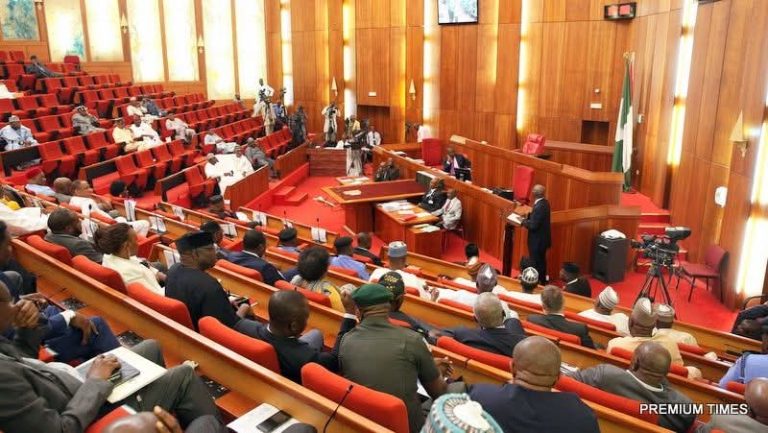
The National Assembly has received approvals from 30 State Houses of Assembly for the proposed constitutional amendment seeking the establishment of State Police Services, with the remaining six states expected to communicate their positions before Monday, the deadline given for the exercise.
The development means that the proposed amendment has already exceeded the constitutionally required two-thirds majority of the 36 State Houses of Assembly, representing 24 states, although the National Assembly is still awaiting the outstanding approvals before proceeding with the final stage of the constitutional amendment process.
The Senate Leader, Senator Opeyemi Bamidele, disclosed this on Wednesday during plenary, where he read out the names of the 30 states that had so far approved the bill, to provide clarity on the progress of the exercise.
Bamidele explained that the remaining six states had until next Monday to complete the process and communicate their resolutions to the National Assembly before the bill could proceed to President Bola Ahmed Tinubu for assent.
He said the National Assembly had fulfilled its constitutional responsibility by passing the bill and transmitting it to the 36 State Houses of Assembly for consideration and approval.
The 30 states that have approved the proposed amendment are Adamawa, Akwa Ibom, Anambra, Bauchi, Bayelsa, Borno, Delta, Ebonyi, Edo, Ekiti, Enugu, Gombe, Imo, Jigawa, Kaduna, Katsina, Kebbi, Kogi, Kwara, Lagos, Nasarawa, Ogun, Ondo, Osun, Plateau, Rivers, Sokoto, Taraba, Yobe and Zamfara.
Explaining the constitutional procedure for amending the 1999 Constitution, Bamidele identified three critical stages: passage by the National Assembly, approval by at least two-thirds of the State Houses of Assembly and presidential assent.
“Let me explain again, for the avoidance of doubt, three keywords are used in the Constitution of the Federal Republic of Nigeria 1999, as amended. The first word is passage, the second word is approval and the third word is assent,” he said.
According to him, while passage of the bill is the responsibility of the National Assembly, approval must be secured from at least 24 of the 36 State Houses of Assembly, after which the President is required to give assent to complete the constitutional amendment process.
He noted that the constitutional requirements were deliberately designed to ensure that amendments to the nation’s supreme law enjoyed broad support across the different levels of government.
“The reason the writers of our Constitution, our forefathers, put all these specific words is to ensure that no part of the Constitution of the Federal Republic of Nigeria can be easily amended without the buying in of all the critical stakeholders at all levels of governance,” Bamidele stated.
The Senate Leader expressed satisfaction that 30 states had already approved the proposed amendment, describing the development as an indication of the level of support the initiative had received from elected representatives across the country.
“Two things that need to be emphasised here is that we needed two-thirds of the states at the very least for this to pass, and already two-thirds will be 24. So, as of yet, we already got 30 states, showing the popularity of this bill among Nigerians through the elected representatives in the State Houses of Assembly,” he said.
He, however, stressed that the National Assembly was still expecting the remaining six states to communicate their approvals before the Monday deadline.
“We believe that the remaining six states will still get back to the National Assembly before next week Monday, which is the deadline,” he added.
Bamidele described the development as an important moment for Nigeria’s constitutional and democratic process, expressing optimism that the outstanding states would complete the exercise within the stipulated period.
“But so far, I want to say that this is a very happy development for our democracy and for the government and people of the Federal Republic of Nigeria,” he said.
Earlier, a notice from the Clerk to the National Assembly, Kamoru Ogunlana, had been read on the floor of the Senate by the Deputy President of the Senate, Senator Jibrin Barau, indicating that the National Assembly had received approvals from 29 State Houses of Assembly as of the close of business on Tuesday, November 3, 2026.
The notice stated that the leadership of the National Assembly was monitoring the submissions from the state legislatures as part of the constitutional amendment process.
The subsequent announcement by Bamidele brought the number of approving states to 30.
The proposed State Police amendment is aimed at decentralising Nigeria’s policing architecture by creating room for the establishment of police services at the state level, complementing the existing federal policing structure.
The proposed reform is expected to provide a constitutional framework for state governments to establish and manage their respective police services, subject to the safeguards and regulatory provisions to be contained in the amended Constitution.
The initiative has remained a major subject of national debate, particularly against the backdrop of persistent security challenges, including banditry, kidnapping, terrorism and other forms of criminality across different parts of the country.
With 30 states having already approved the amendment, the National Assembly is now awaiting the remaining six states to complete the required constitutional process before the bill is formally transmitted to President Tinubu for assent.
The President’s assent will constitute the final stage of the amendment process, after which the necessary legal and institutional arrangements for the establishment of State Police Services can proceed

A Federal High Court in Abuja has nullified the leadership of the African Democratic Congress (ADC) led by David Mark.
In a judgment delivered on Thursday, Peter Lifu, presiding judge, declared the Mark-led caretaker committee illegal, ruling in favour of Nafiu Bala Gombe, a former national deputy chairman (north-east) of the party.
Lifu also invalidated all decisions taken by the party’s caretaker committee, including the nomination of Atiku Abubakar as the ADC presidential candidate for the 2027 election.
Bala approached the court to challenge the process by which Mark and other members of the caretaker committee assumed control of the party after Ralph Nwosu, the former national chairman, resigned.
He argued that, following Nwosu’s resignation, he was constitutionally entitled to assume the party’s leadership.
The plaintiff asked the court to nullify all decisions taken by the Mark-led leadership and restrain Mark and Rauf Aregbesola from parading themselves as the party’s national chairman and national secretary, respectively.
He argued that their emergence violated the ADC constitution and provisions of the Electoral Act.
The suit, marked FHC/ABJ/CS/1819/2025, listed the ADC, Independent National Electoral Commission (INEC), Mark, Aregbesola and Nwosu as defendants.
In his judgment, Lifu upheld Bala’s claims and granted the reliefs sought, effectively invalidating the actions of the caretaker committee, including the process that produced Atiku as the party’s presidential candidate.
INEC had earlier published Atiku’s name as the ADC’s candidate for the January 16, 2027 presidential election. The former vice-president has also picked Rotimi Amaechi, former governor of Rivers, as his running mate.
Reacting to the ruling, Nkemakolam Ukandu, the ADC national welfare secretary, said the party would challenge the judgment at the appellate court.
… Decry marginalization, career stagnation/educational regulatory framework
By Uzo Ugwunze
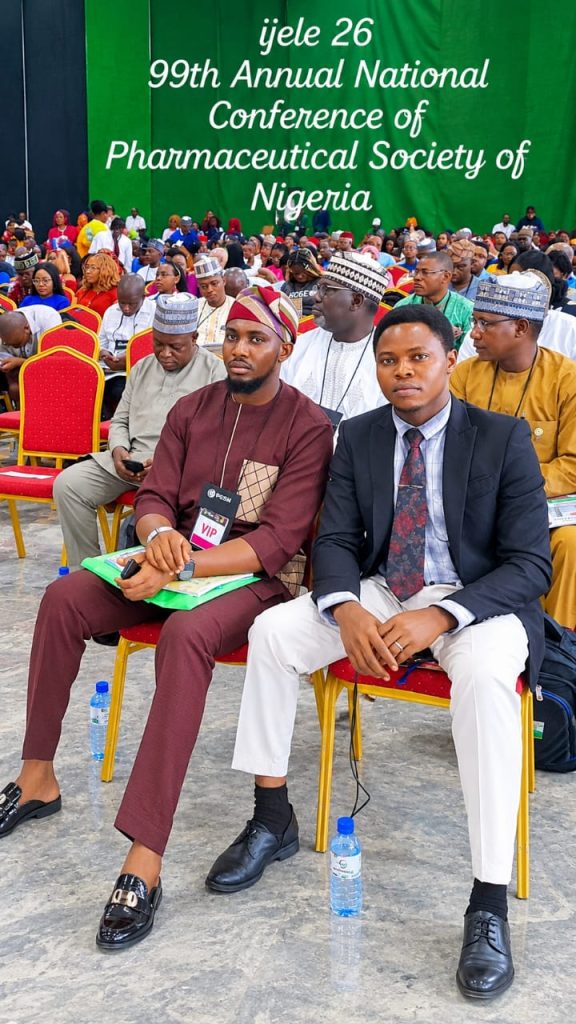
Pharmacy Technicians in Nigeria have called for stronger collaboration with the Pharmaceutical Society of Nigeria (PSN) to close professional borders, combat quackery and eliminate fake drugs across the country.
The National President of the Reformed Forum of Pharmacy Technicians in Nigeria (RFPTN), Pharm. Tech. Shagba Humphrey T., made the call while delivering an address at the ongoing 99th PSN Annual National Conference, IJELÉ ’26, in Awka, Anambra State, describing it as the first-ever official appearance and address of Pharmacy Technicians at the PSN conference.
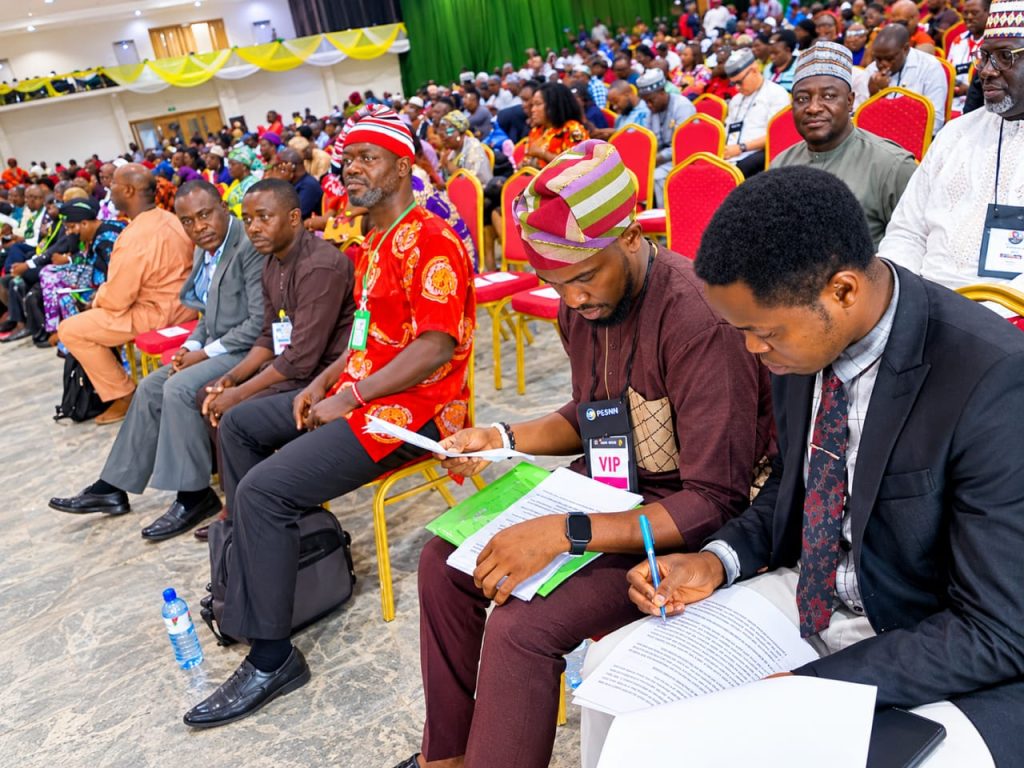
Shagba commended the PSN President, Pharm. Ibrahim Tanko Ayuba, for his visionary and inclusive leadership, noting that the partnership between both bodies has grown through sustained engagement, from the hosting of former PSN President, Pharm. Cyril Usifoh, at RFPTN’s first national conference to the invitation of the RFPTN leadership to PSN events in Abuja and Lagos.
However, he decried the decades-long career stagnation facing Pharmacy Technicians, who he said spend 30 to 35 years in service and retire with the same National Diploma they started with, unlike other health cadres who enjoy progression from ND to HND, PGD and Masters, and called for clear academic pathways under the Pharmacy Council of Nigeria (PCN) to restore dignity and productivity.
Shagba lamented that pharmacy practice in Nigeria has become dangerously porous, with doctors, lawyers, bankers, nurses and even SSCE holders operating Patent and Proprietary Medicine Vendors (PPMVs) and community outlets, while trained and PCN-certified Pharmacy Technicians are restricted, stressing that all pharmaceutical service points should be manned exclusively by pharmacists and certified technicians.
He said Pharmacy Technicians are ready to serve as the primary operational link in digital supply chain integrity, cold chain management and anti-counterfeiting, as well as frontline providers in hundreds of rural communities where they already deliver pharmaceutical care.
The RFPTN president listed the forum’s demands to include setting Pharmacy Technician qualification as the minimum legal baseline for dispensing medicines, integration of certified technicians into PCN inspection and enforcement teams for grassroots anti-quackery, deployment in Primary Health Care centres under task-shifting policies, and institutional synergy under the conference theme “One Health, One Pharmacy: Bridging Knowledge, Practice and Policy for National Impact.”
He concluded that Nigeria cannot achieve Universal Health Coverage, eliminate drug quackery or secure its pharmaceutical supply chain while leaving its primary mid-level technical workforce marginalized, pledging the commitment of Pharmacy Technicians to remain competent, ethical and disciplined pillars of pharmaceutical care.
Earlier in his welcome address, President of the Pharmaceutical Society of Nigeria (PSN), Pharm. Ibrahim Tanko Ayuba,
speaking under the theme, “One Health, One Pharmacy: Bridging Knowledge, Practice and Policy for National Impact,” said the conference reaffirms the profession’s commitment to responsive, evidence-based healthcare, noting that human, animal and environmental health are interconnected and require coordinated action across professions and sectors.
He emphasized the need to advance pharmacy practice through structured postgraduate training, clinical collaboration and recognition of the Consultant Pharmacist cadre, citing partnerships with WASPEN and the International Pharmacy Practice Residency Programme as vital steps to improving patient care and health system performance.
Ayuba also called for full implementation of the National Drug Distribution Guidelines and completion of Coordinated Wholesale Centres to fight counterfeit and substandard medicines, while urging stronger partnership with government, academia and industry ahead of the Society’s centenary in 2027 to build a more resilient, equitable and responsive health system.
-
 General News4 weeks ago
Rivers 2027: We are not part of Rainbow Coalition – APC Legacy Group slams Wike, Fubara meeting
-
General News1 month ago
JOHESU demands: MHWUN puts FG on notice over fresh action
-

 Politics2 months ago
2027: ASAF backs APC governors, rejects rainbow coalition
-

 Politics2 months ago
You have demonstrated diligence, loyalty, statesmanship in leadership, Ekechi salutes Shetimma at 60
-

 Politics3 months ago
2027: Advertising experts raise concerns over irregular regulation of sector
-
FCT News3 months ago
2027: Hasana-Moneme pledges skills, empowerment, credit access for FCT women
-
General News3 months ago
2027: Dame Princess Esom-Nwafor Orizu confirmed as APC flagbearer for Nnewi North /South /Ekwusigo Federal Constituency as INEC releases names of candidates
-
Uncategorized4 months ago
Rescue of Oyo schoolchilden: Tinubu commends security agencies, says action breakthrough in fight against criminality