
General News
Benue assembly to investigate Garnishee Orders against state, council accounts

Our Reporter
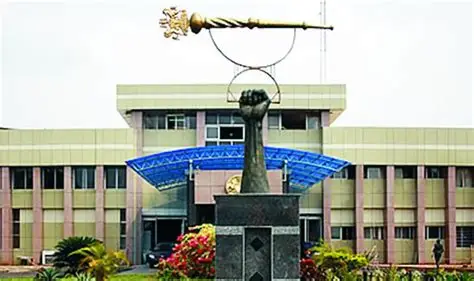
The Benue State House of Assembly has constituted an ad- hoc committee to investigate the increasing garnishee orders against the accounts of Benue state and Local Government government councils.
The House which took the decision during Thursday plenary session, followed a motion moved by the Majority Leader, Hon. Peter Ipusu, on Thursday, who raised concerns over the effect of garnishee orders on governance and development across the state.
The Katsina-Ala West representative, argued that government activities were funded through Federal Allocation Account Committee (FAAC), special allocations, Value Added Tax (VAT), Internally Generated Revenue (IGR), aid and grants, as well as transfers from the Consolidated Revenue Fund (CRF) to the Consolidated Development Fund (CDF).
He noted that such revenue sources were essential for financing recurrent and capital expenditure in line with approved budgets, and warned that indiscriminate garnishee orders could undermine the government’s ability to meet its financial obligations and execute development programmes.
Ipusu, the Majority leader, further alleged that some government officials might be conniving with contractors to obtain garnishee orders against government accounts, and described such a practice as unpatriotic and detrimental to effective administration at both state and local government levels.
Contributing to the debate, Dr Matthew Damkor, APC/Tiev State constituency, said that garnishee orders were affecting development, while Abu Umoro, APC/Apa, called for the invitation of the Director of Garnishee from the State Ministry of Justice and Public Order to come and explain the circumstances surrounding the orders.
Honorable Umoro expressed concern that there could be collusion to obtain government funds through garnishee proceedings, with Terna Shimawua, APC/Kyan, described the alleged practice as an act of sabotage.
However, William Ortyom of the PDP/Agasha State constituency, urged caution in attributing the development to conspiracy, arguing that government should honour its contractual obligations in order to minimize situations in which contractors were compelled to seek court orders for payment.
Contributing, Kennedy Angbo, APC/Otukpo-Akpa, called on the committee to conduct a thorough investigation to uncover suspicious dealings surrounding garnishee orders in the state.
He expressed concern about the monetary jurisdiction of lower courts in Benue, and noted that certain lower Courts in jurisdictions such as Lagos, Kaduna and the Federal Capital Territory had limits on the amount they could order through garnishee proceedings.
Ruling, the Speaker, Rt Honorable Alfred Emberga, directed the Ad-hoc committee to investigate the garnishee orders and determine the status of judgment debts against the state and local government councils.
He listed the Hon. Ipusu as Chairman, Umoro, Angbo, Damkor and Simon Gabo as members, with Mrs Wandoo Aondoana as Secretary, and
gave the committee 14 days within which to submit its findings.

General News
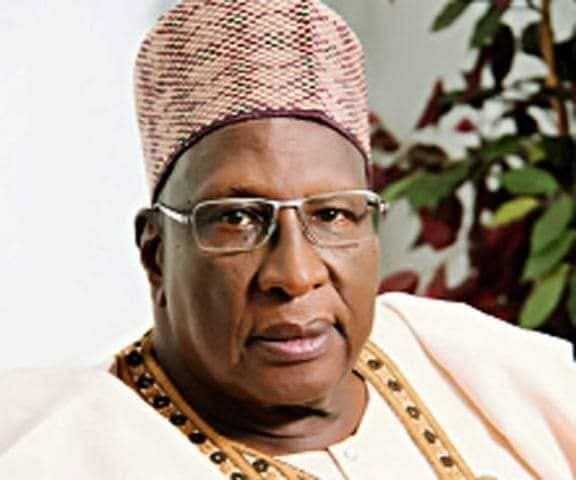
Breaking : Former PDP National Chairman Bamanga Tukur reportedly dies at 90 in Abuja. To be buried in Yola on Sunday September 13.
By Chidera Orji
The former PDP National Chairman of Peoples Democratic Party Bamanga Tukur has been reported dead . According to information reaching Disclosure News, Tukur died in Abuja, though the cause of his death was not mentioned,. He was 90 at the time of his death. The late Tukur will be buried in Yola, his home town on Sunday September 13.
Details to follow!

By Our Reporter
The Nigerian National Petroleum Company Retail Limited has commissioned its first technology-powered self-service smart filling station in Abuja, introducing 24-hour automated fuel dispensing and electric vehicle charging services.
The facility, located along Bill Clinton Drive, Airport Road, Abuja, marks a major shift in the company’s retail operations as it moves to transform conventional filling stations into technology-driven energy, mobility and lifestyle centres.
Speaking at the commissioning, the Executive Vice President, Downstream, NNPC Limited, Dr Mumuni Dagazau, said the facility reflected NNPC Retail’s commitment to innovation, convenience, operational efficiency and improved customer experience.
Dagazau commended the Nigeria Immigration Service for providing the land and supporting the partnership that facilitated the development of the facility.
The Managing Director of NNPC Retail, Mr Huub Stokman, said the smart station demonstrated the changes taking place in Nigeria’s downstream petroleum sector and the company’s efforts to respond to changing consumer expectations.
“The facility demonstrates the changes in Nigeria’s downstream industry and our commitment to meeting consumer expectations for quality, convenience, speed and reliable service,” Stokman said.
The 24-hour facility allows motorists to dispense fuel through a self-service system, enabling customers to complete transactions independently and select the exact quantity of fuel required.
Beyond fuel dispensing, the station has been equipped with electric vehicle charging points, an automated car wash, lubricant service bay and LPG dispensing facilities.
The company also said the facility would provide other lifestyle services, while plans are underway to expand its energy offerings to include Compressed Natural Gas.
The commissioning represents a new phase in NNPC Retail’s effort to modernise its retail network and develop filling stations into smart energy, mobility and lifestyle destinations.
The company said the initiative would support the delivery of a more convenient, technology-driven and customer-focused retail experience across Nigeria.
General News
Xenophobia attacks: Nigeria National Assembly bans South Africa visits, boycotts legislative events

By Our Reporter
The National Assembly has halted all official visits to South Africa and announced a boycott of legislative programmes organised or hosted by the country until further notice, following renewed reports of xenophobic attacks targeting Nigerians and other African nationals.
The decision was reached after consultations between the leadership of the Senate and the House of Representatives over reports of Nigerians being killed, injured and displaced, with some allegedly forced to abandon their businesses, investments, homes and other properties.
In a statement signed by the Clerk to the National Assembly, Kamoru Ogunlana, the leadership expressed serious concern over the situation, noting that repeated appeals by the Federal Government and other stakeholders for South African authorities to safeguard Nigerians and other foreign nationals and prosecute those responsible had failed to stop further incidents.
The National Assembly acknowledged measures already taken by the Federal Government, including efforts to assist Nigerians affected by the violence and facilitate the return of those wishing to leave South Africa.
Under the new resolution, all official trips to South Africa involving the National Assembly, its committees, lawmakers, officials and staff have been suspended.
The ban also extends to conferences, seminars, workshops, parliamentary meetings, legislative exchanges and other programmes organised or hosted by South African legislative authorities.
It further covers both physical attendance at such programmes in South Africa and participation through virtual or online platforms.
The Clerk has consequently been directed to communicate the resolution to senators, members of the House of Representatives, committees, departments, directorates, officials and staff to ensure full compliance.
According to the leadership, the suspension will remain in place until further notice and may be reviewed depending on developments.
The National Assembly’s decision is the latest in a series of measures taken by Nigeria in response to renewed hostility against African migrants in South Africa.
Nigeria commenced the evacuation of its citizens from South Africa in June following fresh reports of xenophobic attacks. The first batch of 258 Nigerians arrived in Lagos on June 11, with additional flights subsequently bringing more citizens back home.
By July 9, the number of Nigerians evacuated had reportedly reached about 1,000.
The Federal Government said Nigerians who voluntarily registered for evacuation, underwent screening and were cleared would be safely transported home.
The repatriation exercise continued in the following months. In August, 83 Nigerian returnees arrived in Lagos, followed by another 67 a week later.
Government agencies received the returnees for documentation, profiling and reunification with their families.
Beyond the evacuation exercise, Nigeria has continued to demand stronger action from South African authorities to end attacks against Nigerians.
In July, the Federal Government called on South Africa to take decisive steps against recurring xenophobic attacks. Nigeria’s Acting High Commissioner to South Africa also disclosed that the government had begun documenting businesses and properties abandoned by Nigerians who returned home, with a view to pursuing possible compensation.
President Bola Tinubu later took the matter to the African Union, seeking collective action and urging the continental body to place xenophobic and Afrophobic attacks in South Africa on the agenda of its 40th Ordinary Session scheduled for January 2027.
Vice President Kashim Shettima has equally condemned the mistreatment of Nigerians and other African nationals while maintaining that Nigeria remains committed to dialogue and peaceful engagement with South Africa.
The National Assembly, however, stressed that its latest action should not be interpreted as an attempt to damage the longstanding historical, diplomatic and people-to-people ties between Nigeria and South Africa.
Rather, it described the suspension as a firm expression of concern over the safety, dignity and welfare of Nigerians living and conducting legitimate businesses in South Africa.
The lawmakers called on the South African government to urgently take concrete steps to protect Nigerians and other African nationals, prevent further xenophobic attacks, investigate reported incidents, arrest suspected perpetrators and prosecute those found culpable under the law.
The National Assembly also urged state Houses of Assembly to take note of the resolution and consider similar measures where necessary.
It reaffirmed its commitment to protecting Nigerian citizens abroad and said it would continue monitoring developments surrounding the safety and welfare of Nigerians in South Africa.
-

 Politics6 days ago
You have demonstrated diligence, loyalty, statesmanship in leadership, Ekechi salutes Shetimma at 60
-

 Politics4 weeks ago
2027: Advertising experts raise concerns over irregular regulation of sector
-
FCT News4 weeks ago
2027: Hasana-Moneme pledges skills, empowerment, credit access for FCT women
-
General News1 month ago
2027: Dame Princess Esom-Nwafor Orizu confirmed as APC flagbearer for Nnewi North /South /Ekwusigo Federal Constituency as INEC releases names of candidates
-
Uncategorized2 months ago
Rescue of Oyo schoolchilden: Tinubu commends security agencies, says action breakthrough in fight against criminality
-
General News3 weeks ago
Chi-Jenco CEO, Jude Orji loses mother
-
Uncategorized2 months ago
PCC Anambra Commissioner pays courtesy visit to FRSC sector commander
-
Uncategorized2 months ago
INEC flags off Mega Continuous Voter Registration Centre, enrols 31,835 new voters