
General News
FG moves to decongest Lagos Ports, approves upgrade of Onne, Rivers, Delta, Calabar

Tella Onah
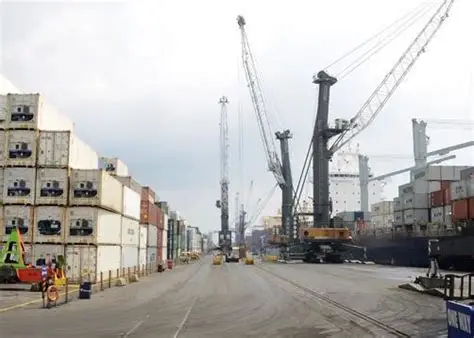
The Federal Government has approved the comprehensive modernisation and upgrade of Onne, Rivers, Delta and Calabar ports in a major shift aimed at decongesting Lagos ports and opening up alternative gateways for international trade.
Minister of Marine and Blue Economy, Adegboyega Oyetola, announced the approval on Sunday, describing it as a decisive step in the Federal Government’s programme to transform Nigeria’s maritime infrastructure.
The approval extends the port modernisation programme beyond Lagos, where the government had earlier approved the upgrade of Apapa and Tin Can Island ports, the nation’s dominant but overstretched gateways.
Oyetola said the expansion to the Eastern ports is designed to reduce the concentration of cargo traffic around Lagos while strengthening alternative ports capable of supporting international trade and regional economic growth.
“This approval marks another important step in our determination to transform Nigeria’s maritime infrastructure and unlock the enormous economic potential of our ports,” the minister said.
According to him, the upgrade will improve cargo handling, reduce vessel turnaround time, enhance regional connectivity and make the movement of goods more predictable and cost-effective for businesses.
The minister said President Bola Tinubu has made infrastructure renewal and economic diversification central to the Renewed Hope Agenda, with modern, efficient and competitive ports as critical enablers for trade, industry, investment and job creation.
“These ports have strategic roles to play in our trade, industrial and regional development, and we are determined to equip them to meet the demands of a growing economy,” he said.
Oyetola said the latest approval is part of a broader, comprehensive expansion of Nigeria’s maritime infrastructure which involves both modernising existing ports and facilitating new deep seaports.
The new deep seaports in the pipeline include Ibom Deep Seaport in Akwa Ibom State, Bakassi Deep Seaport in Cross River State, Agge Deep Seaport in Bayelsa State, Gateway Deep Seaport in Ogun State, Ondo Deep Seaport in Ondo State and Bonny Deep Seaport in Rivers State.
“Our approach is comprehensive. We are modernising existing ports while facilitating the development of new deep seaports. This will give Nigeria greater capacity to handle increasing volumes of trade, attract investment and position our country as a major maritime and logistics hub in Africa,” Oyetola explained.
He added that the government is working towards an integrated maritime and logistics system where ports, roads, rail and inland waterways work together for seamless cargo movement.
“Our ambition is to build a port system that is efficient, transparent and globally competitive. We want Nigerian businesses to spend less time and resources moving their goods, while creating an environment that encourages investment and supports job creation,” he said.
Lagos remains Nigeria’s dominant maritime gateway, but the concentration of cargo there has continued to put pressure on port infrastructure and the transport network linking the ports to other parts of the country.
Oyetola said the shift to the East is expected to distribute cargo handling more widely, strengthen economic activities in the Eastern and South-South corridors and give importers and exporters additional, viable routes.
He reaffirmed the Ministry’s commitment to work with state governments, terminal operators, investors, shipping companies and other stakeholders to ensure the projects translate into tangible gains for the marine and blue economy.
“Nigeria has the geography, market and maritime resources to become a leading maritime hub.
“Our responsibility is to provide the infrastructure, policies and enabling environment to turn that potential into sustainable economic value.
“This is what the Renewed Hope Agenda is about,” Oyetola added.

General News
Account for Nigeria’s N166.79trn debt before asking World Bank for $1.5bn loan, Atiku charges Tinubu
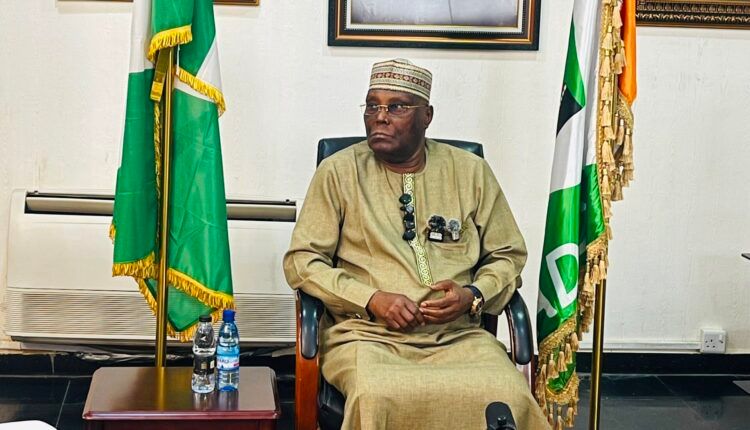
The African Democratic Congress, ADC, presidential candidate, Atiku Abubakar, on Monday, charged President Bola Tinubu to account for N166.79 trillion debt before borrowing $1.5 billion from the World Bank.
Atiku accused Tinubu of running a government that demands endless sacrifices from Nigerians while reaching endlessly for fresh loans.
In a statement issued by the Director of Strategic Communications of the ADC Presidential Campaign Council, Phrank Shaibu, Atiku said: “With public debt at N166.79 trillion, Tinubu is now seeking another $1.5 billion from the World Bank. The President must first account for the money already borrowed.”
Atiku said Tinubu’s record is an indictment of his economic stewardship, stressing that families are struggling to afford food, fuel and electricity, yet debt continues to climb.
“If Nigeria’s public debt were divided among everyone, each person’s share would be N716,822 today. Three years ago, it was N383,442. That is an 87 per cent increase.
“Tinubu has made today difficult and tomorrow more uncertain. He cannot keep loading debt onto the country and expect Nigerians to applaud programme titles. What has this government built? Who has benefited? Why should Nigerians trust him with another term in office?”
Atiku said the proposed $500 million facilities for climate resilience, social protection and early childhood development should address real needs.
He added: “But worthy programme names cannot stand in for a public account of how previous loans were spent or a clear plan for delivering measurable results.
“Before these loans are concluded, the government must publish the projects to be funded, the communities and citizens expected to benefit, the targets for each programme, the terms of borrowing and disbursement, and a timetable Nigerians can use to track delivery.
“Climate resilience must mean identifiable land restored, irrigation delivered and communities protected from flooding. Social protection must identify who receives support and when. Early childhood development must produce measurable gains in nutrition, healthcare and learning.”
Atiku also challenged the government to reconcile its appetite for borrowing with its repeated claims of higher revenue and savings from petrol subsidy removal.
“If more money is coming in, why does the debt keep climbing? If Nigerians have sacrificed so much, where are the results? A government cannot keep announcing savings, signing loans and asking the same struggling families to wait for relief,” the ex-Vice President said.
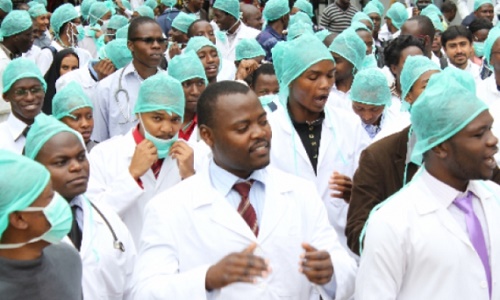
The National Association of Resident Doctors (NARD) has issued a two-week ultimatum to the federal government to resolve outstanding welfare and professional issues affecting its members.
At its 46th annual general meeting on Sunday in Calabar, Cross Rivers state, NARDS warned that failure to resolve outstanding issues could trigger industrial action.
According to the resolutions read by Ogar Emmanuel Idoko, its national president, NARD expressed concern over the slow pace of implementation of agreements reached between the association and the federal government.
The association said that prolonged delays had become unacceptable.
They demanded immediate action on outstanding issues relating to remuneration, career progression, professional allowances, excessive workload, manpower shortages and the general welfare of resident doctors.
It called for “the immediate implementation of agreements reached with the federal government, particularly those relating to improved conditions of service and professional development”.
“The government concluded the review of existing remuneration and professional salary structures for doctors, saying the current framework no longer adequately reflected prevailing economic realities,” the resolution reads.
The association demanded appropriate compensation for excess workload arising from manpower shortages in hospitals.
It noted that resident doctors are increasingly carrying additional responsibilities.
NARD called for standardised templates for compensation for excess workload and reliable data to justify payments to doctors performing duties beyond their normal responsibilities.
It expressed concern over attacks on health workers and called for the full implementation of policies and anti-assault measures designed to protect doctors and other medical personnel in hospitals.
It further raised concern over the continuing migration of doctors and other health professionals from Nigeria..
The association urged the federal ministry of health and social welfare to urgently address the factors responsible for the continued migration of medical professionals.
The association called on state governments to prioritise the welfare of doctors and other health workers employed by their respective institutions and ensure the implementation of relevant welfare policies.
Prof Amupitan
By Our Reporter
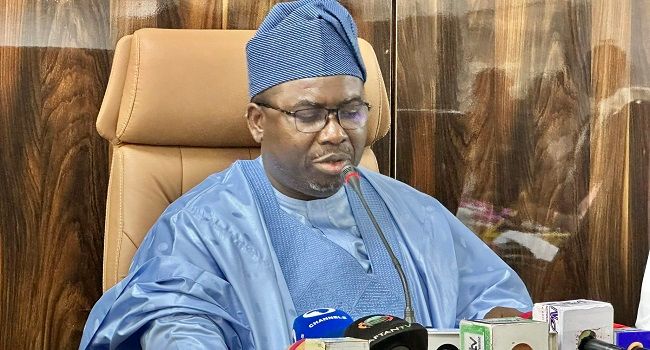
The Chairman of the Independent National Electoral Commission, Prof. Joash Amupitan, SAN, has assured Nigerians that the commission will remain neutral in the conduct of the 2027 general elections.
Amupitan said INEC had no preferred candidate or political party, stressing that its responsibility was to uphold the will of Nigerian voters.
He spoke during a visit to the Emir of Zazzau, Amb. Ahmed Nuhu Bamalli, in Zaria, Kaduna State, as part of the commission’s ongoing stakeholder engagement and preparations for the 2027 elections.
The visit was also linked to INEC’s zonal readiness assessment and planned interactive engagement with its staff as the commission intensifies preparations for the nationwide polls.
Amupitan described traditional institutions as important stakeholders in the electoral process, citing their influence and reach across communities.
He said elections were fundamentally about the relationship between citizens and those entrusted with public office, adding that public confidence was
According to the INEC chairman, the commission began preparations early because of the scale and complexity involved in conducting elections across Nigeria.
He said INEC had moved away from last-minute preparations and was already testing, auditing and strengthening its operational systems ahead of the 2027 polls.
Amupitan assured the Emir that the electoral body remained committed to neutrality, fairness and transparency.
“We have no candidates, we have no political party, we have no interest other than the sovereign will of the people of Nigeria,” he said.
The INEC chairman also urged traditional rulers to continue playing a role in promoting peaceful participation and responsible conduct ahead of the elections.
In a separate appeal during the visit, Amupitan said elections should not be treated as a do-or-die affair, urging political parties, candidates and their supporters to embrace peaceful and issue-based campaigns.
He also called on traditional institutions to discourage young people from being used for political violence and thuggery, while encouraging eligible citizens to participate actively in the electoral process.
Amupitan said INEC would continue engaging traditional rulers and other stakeholders as preparations for the 2027 general elections progress.
-
General News6 days ago
JOHESU demands: MHWUN puts FG on notice over fresh action
-

 Politics3 weeks ago
You have demonstrated diligence, loyalty, statesmanship in leadership, Ekechi salutes Shetimma at 60
-
 Politics2 weeks ago
2027: ASAF backs APC governors, rejects rainbow coalition
-

 Politics2 months ago
2027: Advertising experts raise concerns over irregular regulation of sector
-
FCT News1 month ago
2027: Hasana-Moneme pledges skills, empowerment, credit access for FCT women
-
General News2 months ago
2027: Dame Princess Esom-Nwafor Orizu confirmed as APC flagbearer for Nnewi North /South /Ekwusigo Federal Constituency as INEC releases names of candidates
-
Uncategorized3 months ago
Rescue of Oyo schoolchilden: Tinubu commends security agencies, says action breakthrough in fight against criminality
-
General News1 month ago
Chi-Jenco CEO, Jude Orji loses mother