
General News
2027: S’Court ruling throws Chinda, Pantami, Adamu, Obasanjo, others into uncertainty


By Chidera Orji with agency report
The Supreme Court’s affirmation of key provisions of the Electoral Act 2026 has triggered fresh questions over the eligibility of some politicians who changed political parties before securing tickets for the 2027 elections.
The ruling, delivered on Thursday, September 24, upheld the validity of sections 77 and 84 of the amended Electoral Act, provisions dealing principally with political party membership registers and the nomination of candidates through direct primaries or consensus.
The decision followed an appeal by the Independent National Electoral Commission (INEC) against an earlier judgement of the Court of Appeal, which had struck down parts of the provisions challenged by the Zenith Labour Party (ZLP).
The dispute originated at the Federal High Court, where ZLP had argued that sections 77(5), 77(6), 77(7) and 84(2) of the Electoral Act were inconsistent with the 1999 Constitution and amounted to interference in the internal affairs of political parties.
Justice Mohammed Umar of the Federal High Court dismissed the suit on May 5, 2026.
ZLP subsequently appealed to the Court of Appeal, Abuja Division, in suit number CA/ABJ/CV/750/2026. The appellate court, in its July 16 judgement, partly allowed the appeal and invalidated provisions relating to party membership registers and primaries.
INEC then proceeded to the Supreme Court, asking the apex court to reverse the decision.
A seven-member panel headed by Justice Adamu Jauro heard arguments from the parties before reserving judgement.
In its ruling on Thursday, however, the Supreme Court overturned the Court of Appeal decision and restored the judgement of the Federal High Court. It also awarded N2 million in costs against ZLP.
In two related matters involving the Social Democratic Party and the Youth Party, the apex court also dismissed the appeals against INEC. While the SDP matter was dismissed on its merit, the Youth Party’s appeal was struck out after the court upheld INEC’s preliminary objection.
The court held that the Youth Party’s appeal was incompetent because it was filed one day outside the stipulated period.
The ruling has since generated different interpretations across the political landscape, particularly over the status of politicians who left one political party after participating in its primary and subsequently secured nomination in another party.
Among those whose cases have attracted attention are former Inspector-General of Police Mohammed Adamu in Nasarawa, Professor Isa Pantami in Gombe, Kingsley Chinda in Rivers, Senator Shehu Buba Umar in Bauchi, Mohammed Nami in Niger and Senator Saliu Mustapha in Kwara.
Political actors in several states have already begun interpreting the judgement in relation to individual candidates, while legal practitioners have cautioned that the eventual effect may depend on the facts surrounding each case.
The governorship candidate of the Peoples Redemption Party in Bauchi State, Senator Shehu Buba Umar, has rejected suggestions that the Supreme Court decision could prevent him from participating in the 2027 election.
In a statement issued through his special adviser on media and communication, Comrade Sabo Mohammed, Buba said he had complied with the relevant electoral requirements.
Reacting to reports circulating on social media, the senator said: “My attention has been drawn to misleading publications, particularly on the social media regarding the judgement delivered by the Supreme Court on Thursday, September 24, 2026.”
Buba argued that the legal position established by the Supreme Court became applicable from September 24, while electoral activities concluded before that date were undertaken under the rules then in force.
He maintained that party membership registration, primaries and nomination processes already completed in accordance with the prevailing law should not subsequently be invalidated on a retrospective basis.
According to him, the principle of non-retroactivity remains important in determining how the judgement affects candidates and political parties that acted in accordance with the law before the ruling.
He insisted that he had met all the statutory conditions for his candidacy and therefore saw no reason for his governorship ambition to be questioned.
“Our ambition to clinch the governorship of Bauchi State remains firmly on course. By the special grace of the Almighty Allah (SWT), there is no going back,” he said
Buba also expressed confidence that INEC would provide further clarification on the practical implications of the judgement.
He urged his supporters and party members to remain calm, adding that his legal team was examining the judgement and would advise on its implications as the electoral process progresses.
He also pointed to INEC’s 2027 timetable, arguing that the electoral process had commenced before the September 24 ruling.
Nasarawa: Adamu supporters reject disqualification claims
The Supreme Court judgement has also divided political reactions in Nasarawa State, where supporters of former IGP Mohammed Abubakar Adamu and those backing APC governorship candidate Ahmed Aliyu Wadada have offered contrasting interpretations.
While Wadada’s supporters celebrated on social media, apparently on the assumption that Adamu’s earlier participation in the APC primary and subsequent movement to the SDP could affect his candidacy, Adamu’s camp dismissed the interpretation.
In a statement issued in Lafia, the director of digital media and strategic communications of the IGP Mohammed Abubakar Adamu Campaign Organisation, High Chief Otaru Douglas, said there was no reason for the candidate’s supporters to panic.
Douglas accused some APC elements of deliberately misrepresenting the judgement.
“For the avoidance of doubt, we wish to state categorically that the Supreme Court in SC/CR/495/2026 merely restored and validated the constitutionality of sections 77(5), (6), (7) and 84(2) of the Electoral Act, 2026 after the Court of Appeal had declared them unconstitutional,” he said.
He explained that section 77(5) deals with the membership register to be submitted to INEC before a party primary, while sections 77(6) and 77(7) prescribe the consequences of relying on an alternative register or failing to submit the register within the prescribed period.
He added that section 84(2) provides for direct primaries or consensus.
“The judgement is a general affirmation of INEC’s regulatory powers over party membership registers. It is not a judgement against the Social Democratic Party, nor against IGP Mohammed Abubakar Adamu (retd),” he added.
Douglas also disputed claims that the former police chief had been disqualified, arguing that no court had nullified the SDP membership register, the direct primary that produced Adamu or directed INEC to remove his name.
“The Certified True Copy of the judgement has not even been released, yet they are already manufacturing victory,” Douglas said.
He maintained that the SDP complied substantially with the Electoral Act and that its membership register was submitted in accordance with the law.
“Our nomination process followed section 84(2) strictly by direct primary monitored by INEC. To this end, the candidacy of IGP Adamu, CFR, is valid, lawful and remains on the ballot,” he said.
He urged supporters and party officials to remain focused and avoid distractions.
Kwara: PDP, ADC dismiss concerns over candidates
In Kwara State, the names of Senator Saliu Mustapha, Kolo Jiya and Saheed Popoola have featured prominently in discussions over the possible implications of the Supreme Court ruling.
The PDP state publicity secretary, Olusegun Olushola Adewara, said the party was not a party to the Supreme Court litigation and was not challenging INEC’s published list of candidates.
According to him, INEC had already published the PDP candidate list for public scrutiny.
Adewara said the authority to nominate candidates belonged to political parties, provided they complied with constitutional and electoral requirements.
He specifically dismissed concerns about Mustapha’s candidacy, explaining that the senator did not participate in the party’s earlier primary but became the candidate after the withdrawal of the initial nominee, Otukoko.
The PDP spokesman said new members who wished to participate in the party’s primaries were required to obtain waivers from the relevant party organs, adding that the requirement was met in the cases of Mustapha and Kolo Jiya.
He said the same procedure applied to two members of the Kwara State House of Assembly who defected to the PDP and subsequently obtained waivers before taking part in the party’s primaries.
Adewara argued that the waivers effectively enabled the beneficiaries to participate in the primaries as members of the party.
“Have you seen anybody from Kwara Central who participated in the senatorial primary challenging Saliu Mustapha in court?” he asked.
He described claims that Mustapha’s candidacy had been invalidated as political propaganda in the absence of a legal challenge from a participant in the primary.
The state chairman of the ADC, Babatunde Mohammed, similarly said the judgement would not affect the party’s candidates because, according to him, none of the new members who joined the party participated in its primaries.
Rivers: Questions raised over Chinda, Abiante
In Rivers State, attention has shifted to APC governorship candidate Kingsley Chinda and NDC senatorial candidate Awaji-Inombek Dagomie Abiante.
Chinda won the APC governorship primary on May 21, 2026, following Governor Siminalayi Fubara’s withdrawal from the contest.
Questions have now arisen over whether Chinda was already registered as an APC member or included in the party’s membership register before the primary.
His resignation from the PDP was formally announced on the floor of the National Assembly on June 2, 2026.
The development has prompted opposition supporters in the state to celebrate the Supreme Court decision, with some arguing that Chinda could be affected by the provisions restored by the apex court.
Abiante’s case has also attracted attention. The lawmaker, who represents Andoni-Opobo/Nkoro Federal Constituency in the House of Representatives, had earlier obtained an APC expression-of-interest form to contest the House of Representatives primary.
He was subsequently disqualified from participating in the APC primary before joining the NDC, where he secured the senatorial ticket for Rivers South-East.
Abiante had previously been associated with Governor Fubara and was among those who supported the governor’s earlier bid to seek re-election.
Adamawa: Abbo, Haske cases draw attention
In Adamawa, the state Labour Party chairman, Theman Jonah Kalpenge, said the Supreme Court ruling did not create a problem for the party’s governorship candidate, Senator Ishaku Abbo.
Speaking by telephone, Kalpenge said Abbo registered with the Labour Party in April 2026, before the party’s May 30 governorship primary.
The chairman therefore maintained that Abbo met the relevant requirements.
Abbo had previously been associated with the APC and ADC before eventually joining the Labour Party, where he secured its governorship ticket.
Questions have also been raised about the candidacy of Allied People’s Movement governorship candidate Abdulrahaman Bashir Haske.
Haske joined the APC in 2025 and participated in its May 2026 primary but did not secure the ticket. Following his disagreement with the process, he resigned from the party on August 20, 2026.
He joined the APM later in August, after the party’s previous candidate, Bello Babajo, stepped aside. Haske subsequently emerged as the party’s candidate through affirmation.
Babajo declined to comment when contacted, while a media consultant to Haske, identified as Mukhtar, also declined to discuss the matter.
Gombe: PDP studying implications of ruling
The PDP in Gombe State has said Professor Isa Ali Pantami remains eligible to contest the party’s governorship primary scheduled for September 29.
The party’s state publicity secretary, Abdulkadir Ahmed Dukku, said Pantami, Khamisu Ahmed Mailantarki and Usman Aliyu Garry had all been cleared to participate in the rescheduled exercise.
The development followed a Federal High Court judgement delivered in Gombe on September 24, which nullified the party’s earlier governorship primary conducted on May 26 and ordered a fresh exercise within one month.
Dukku said the party accepted the judgement and welcomed the aspect that recognised Pantami’s membership and entry into the PDP and his participation in the May primary.
“The judgement is presently receiving the attention of the party leadership and contestants. While the legal implications and directives contained in the judgement are being studied, we urge all members, supporters and stakeholders of our great party in Gombe State to remain calm, peaceful and united,” Dukku said.
He called on party members to avoid speculation and inflammatory comments while the leadership studies the legal implications of the ruling.
Ogun: Obasanjo’s camp says candidacy unaffected
In Ogun State, the Supreme Court decision has also generated questions about the candidacy of PDP Ogun Central senatorial candidate, Senator Iyabo Obasanjo.
Obasanjo left the APC on May 31, 2026, after losing the party’s governorship ticket to Senator Solomon Adeola.
She subsequently returned to the PDP on June 15 and was presented as the party’s candidate for Ogun Central two days later.
Her media aide, Dr Odun Agbalajobi, however, said the Supreme Court ruling did not affect her candidacy.
He noted that Obasanjo was not a party to the case decided by the Supreme Court and that the judgement did not specifically name her or issue an order barring her from contesting.
“It is therefore both mischievous and intellectually dishonest to transform a judgment in a dispute between INEC and a political party into a purported judicial pronouncement against a particular candidate who was neither a party to the suit nor the subject of the judgment,” he said.
Agbalajobi said a distinction should be made between the Supreme Court’s interpretation of general electoral provisions and an express judicial determination that a particular candidate was ineligible.
He maintained that no such determination had been made against Obasanjo in the September 24 ruling.
Yobe parties say candidates unaffected
Political parties in Yobe State have also played down concerns over the Supreme Court decision.
The PDP, ADC and APC said the ruling would not affect their candidates for the 2027 governorship and National Assembly elections.
A senior PDP leader, who spoke on condition of anonymity, said the party had two factions in the state, describing them as the Wike and Tanimu Turaki factions.
“In Yobe, the PDP is divided into two factions: the Wike faction and the Tanimu Turaki faction. At the moment, all the candidates produced by the Wike faction are already members of the party.
“As things stand, the electoral commission and the court recognised the Wike faction. This means that the PDP faction led by Tanimu Turaki has become mere spectators. They have not left the party but they do not have recognition from INEC or the court,” he said.
The Yobe ADC chairman, Umar Kalli Alhaji, also said the party’s candidates would not be affected by the judgement.
Lawyers, analysts offer varying interpretations
Legal and civic voices have urged political parties to study the full implications of the Supreme Court decision rather than assume that it automatically settles every question surrounding individual candidates.
The chairman of the Nigerian Bar Association, Kaduna Branch, Baba Lawal Aliyu, said the ruling had constitutional and electoral implications as parties prepared for the 2027 elections.
According to him, parties would need to pay close attention to the requirements governing membership registers, congresses, primaries and candidate nomination.
He warned that failure to comply with the relevant provisions could generate pre-election disputes, depending on the facts of individual cases.
Aliyu, however, said the judgement did not mean that all future electoral disputes had been settled. Rather, he said subsequent cases could centre on whether particular parties and candidates complied with the requirements of the Electoral Act.
He also stressed the importance of the detailed reasoning of the Supreme Court in determining the scope of the judgement.
The national publicity secretary of the Arewa Consultative Forum, Prof Muhammad Tukur Baba, said the judgement did not come as a surprise to him.
He said affected political parties and candidates would have to examine the ruling carefully and determine the legal options available to them.
Similarly, Islamic scholar and former Kaduna State government adviser, Sheikh Abdullahi Maraya, described the judgement as significant to the country’s electoral process.
Maraya said it reinforced INEC’s role in administering the relevant provisions of the Electoral Act and highlighted the need for political parties to comply with statutory requirements.
He also pointed to section 84(2), which recognises direct primaries or consensus as nomination methods under the Act.
Activist Samuel Yusuf cautioned against assuming that the ruling automatically disqualified politicians who had moved between political parties.
“Surrounding individual candidates, including politicians who move from one political party to another, will ultimately depend on the particular facts of each case and the applicable provisions of the law.”
“The judgement does not, by itself, establish that every politician who changes political parties will be ineligible to contest an election. Any such question would have to be considered in accordance with the electoral act, the circumstances of the individual case and any relevant judicial interpretation.
“The same applies to disputes arising from party primaries, congresses and membership registers. While the Supreme Court has settled the constitutional challenge to the relevant provisions, disagreements over their implementation could still result in further litigation.”
“For INEC, the ruling provides judicial confirmation of the legal basis for enforcing the provisions in question. For political parties, it places renewed emphasis on compliance with the statutory requirements governing their internal processes,’ he said.
(DAILY TRUST)

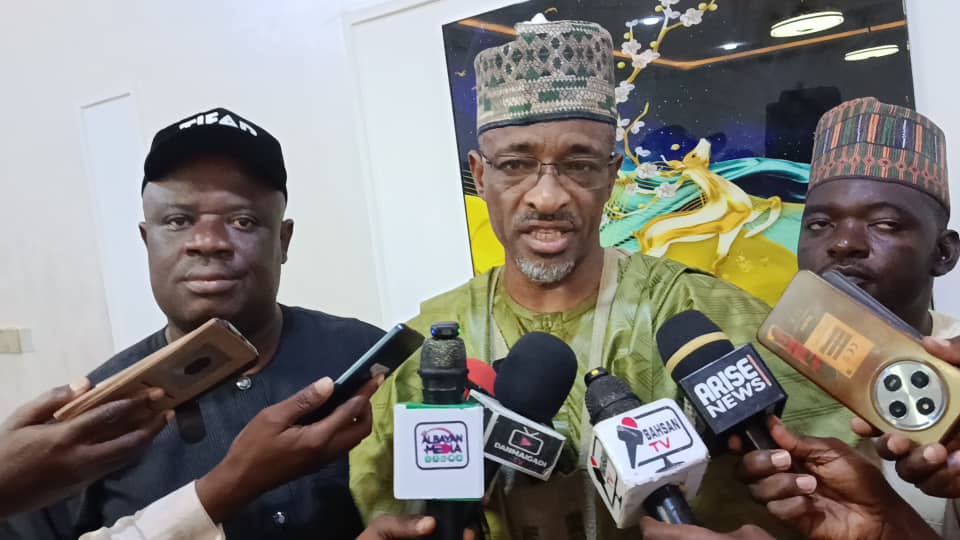
By Prosper Okoye
Hassan Umar Dangaladima has won the All Progressives Congress (APC) primary for Kaura Namoda and Birnin Magaji federal constituency in Zamfara State, securing 9,416 votes in an exercise preceded by security concerns and attacks on party members.
His opponent, Aminu Sani Jaji, polled 661 votes, according to the result announced by the party’s electoral committee.
The declaration was made by Mustapha Muhammed, acting chairman of the APC electoral committee from the party’s national headquarters, who served as the returning officer.
Muhammed said Umar met the party’s constitutional requirements and electoral guidelines, formally declaring him the winner of the primary.
The election took place against a backdrop of security concerns following attacks by suspected political thugs that reportedly left several APC members injured and vehicles damaged.
Security agencies subsequently intervened to restore order, allowing the voting exercise to continue.
Speaking to journalists after his victory, Umar thanked party members and constituents for their support, while acknowledging the role of security personnel and electoral officials in conducting the exercise.
He also called for reconciliation among party stakeholders, extending an olive branch to Jaji and urging supporters of both camps to unite ahead of the 2027 general elections.
Umar said unity within the party would be crucial to its prospects in the next general election.
General News
Geosciences Society explores benefits of GeoAI in remote sensing, climate challenges in Africa

By Chidera Orji
Participants at the 2026 IEEE Geoscience and Remote Sensing Society (GRSS) West Africa Summer School have stressed the need for government to embark on critical studies on how geospatial artificial intelligence (GeoAI), remote sensing and Earth observation can help address environmental and climate challenges in Africa.
They made the call at the end of a conference which took place at the Nigerian Institute for Oceanography and Marine Research (NIOMR) Lagos, from 31st October to 4th November, 2026.
The conference dubbed “Summer School”, drew participants from the NNPCL, NGC, Ministry of Environment, Housing, Computer Scientists, Engineers, among others.
They explored opportunities for learning, collaboration, innovation, and professional development, especially on the transformative potential of geospatial technologies, and remote sensing in addressing some of the most pressing environmental and climate challenges facing the West African region.
The gathering brought together industry professionals, researchers, and students with a shared commitment to advancing science and technology for humanity.
The key sponsors of the workshop was the IEEE Geoscience and Remote Sensing Society, drawing distinguished academics including Prof. Lizhe Wang, Prof. Saurabh Prasad, Dr. Anabella Ferral, Dr. Andongma Tende, Ms. Temitope Ajayi, Mr. Ifeanyi Ezealaji, Dr. Victor Okorondu, Dr. Samuel Dekolo, and Dr. Richmon Akwasi Nsiah who provided the knowledge to broaden the expertise, experiences, and insight of the participants.
The host institution, the Nigerian Institute for Oceanography and Marine Research (NIOMR), as well as industry partners, Geospatial Research Limited and Huawei Technologies Nigeria, provided support and facilities which made the training a huge success.
The General Chair of the event, Engr. Oto-Obong John Effiong, and Chair of the IEEE Nigeria Section, Prof. Ifeyinwa Achumba, spelt out the ground rules, encouraging participants to remain focused through the discussions.
Delivering the keynote address, Engr. Abdulhafis Gbolahan, FNSE, Permanent Secretary of the Lagos State Ministry of Housing, spoke vividly on how urban development and increasing heat exposure affect housing and environmental conditions in Lagos State, while Dr. Adongma Wanduku who the first technical lecture, “Fundamentals of Remote Sensing and Earth Observation”, introduced the paerticipants to the use of remotely sensed data in environmental monitoring, climate action, weather forecasting and disease control, and explained how these data can inform decisions.
Also, Mrs. Temitope Ajayi of the University of Basilicata, Italy, took the participants on an excursion on how her background in electronics and computer science in Nigeria and her participation in an academic programme sparked her interest in remote sensing.
Dr. Saurabh Prasad delivered a lecture “From Observation to Understanding: AI and Earth Observation”, explaining how artificial intelligence (AI) can help process and interpret remotely sensed data and turn observations into information that supports environmental decision-making.
Engr. Peter Magbo, Chair of the Local Organising Committee, briefed participants on travel and accommodation for the in-person sessions, while Engr. Sandra Nwokoye encouraged the participants to stay curious and apply what they learned to practical problems.
Ifeanyi Peter Ezealaji, one of the key resource persons, led a hands-on session on how QGIS, a geographic information system (GIS) used to analyse and visualise spatial data.
At the end of the academic sessions, participants practised acquiring and importing geospatial data into QGIS, merging datasets, cleaning records and removing unwanted data, clipping datasets to defined geographical boundaries, working with coordinate reference systems, as well as organising and processing spatial data for further analysis.
Equally lined up as part of the practical training, the participants embarked on a guided tour to the Nigerian Institute for Oceanography and Marine Research to secure hands-on knowledge on how its research and monitoring support the study and management of marine environments.
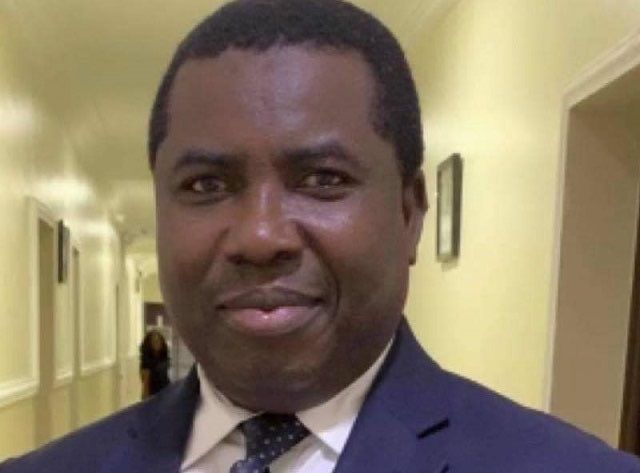
By Our Reporter
The Independent National Electoral Commission (INEC) has removed artificial intelligence-generated photographs uploaded to the national voters’ register and flagged officials implicated in the practice across 10 states for disciplinary action.
INEC National Commissioner, Mohammed Haruna, disclosed this on Wednesday during a webinar organised by the PUNCH Media Foundation, titled ‘AI, Misinformation and Nigeria’s 2027 Elections: Safeguarding the Truth, Protecting the Vote’.

Haruna, who is also Chairman of the commission’s Information and Voter Education Committee, described the development as a major challenge, noting that the commission had already taken down AI-generated photographs identified on the voters’ register.
He, however, acknowledged that INEC faced limitations in preventing members of the public from manipulating or enhancing their photographs before uploading them during voter registration.
The commissioner said the commission had also identified cases involving its own personnel and was taking steps to address the violations.
“We have already seen one of the challenges, which is that a lot of AI-generated photographs were posted onto the voters’ register, which, as we have said, we have had to take down,” he said.
Haruna explained that while it might be difficult for the commission to prevent members of the public from manipulating their photographs before submission, it had greater control over violations involving its officials.
“But the ones involving our own staff, where it is our own staff that did so, that one is within our control. We are in the process of addressing it. They have been flagged,” he said.
He disclosed that the commission had obtained the names of the officials involved across about 10 states, adding that they would face disciplinary action.
“We have their names across about 10 states, and obviously, they are going to face disciplinary action,” he added.
On INEC’s preparedness to regulate the use of artificial intelligence in the electoral process ahead of the 2027 general elections, Haruna said the commission had developed an AI policy but was working to finalise it.
He noted that the rapid evolution of artificial intelligence had created regulatory challenges for countries across the world, including advanced democracies.
According to him, the evolving nature of the technology has made it difficult for governments to establish comprehensive and specific regulatory frameworks.
“As you know very well, it is new territory out there. Even the most advanced countries don’t have what you might call concrete, specific policies about AI because these things are evolving,” he said.
Haruna, however, said INEC had developed ideas on how it intended to deploy and regulate the technology, assuring that the policy would soon be finalised and made available to the media.
“But we have at least some ideas of what we want to do and how we want to use that. We have that policy. Very soon, we will concretise it, and we will be able to share it with the media,” he said.
-
 General News1 month ago
Rivers 2027: We are not part of Rainbow Coalition – APC Legacy Group slams Wike, Fubara meeting
-

 Politics2 months ago
2027: ASAF backs APC governors, rejects rainbow coalition
-
General News2 months ago
JOHESU demands: MHWUN puts FG on notice over fresh action
-

 Politics2 months ago
You have demonstrated diligence, loyalty, statesmanship in leadership, Ekechi salutes Shetimma at 60
-

 Politics3 months ago
2027: Advertising experts raise concerns over irregular regulation of sector
-
FCT News3 months ago
2027: Hasana-Moneme pledges skills, empowerment, credit access for FCT women
-
General News3 months ago
2027: Dame Princess Esom-Nwafor Orizu confirmed as APC flagbearer for Nnewi North /South /Ekwusigo Federal Constituency as INEC releases names of candidates
-
Uncategorized4 months ago
Rescue of Oyo schoolchilden: Tinubu commends security agencies, says action breakthrough in fight against criminality