
General News
Court strikes out El-Rufai’s N120m rights enforcement suit against DSS, EFCC, ICPC, AGF

By Our Reporter
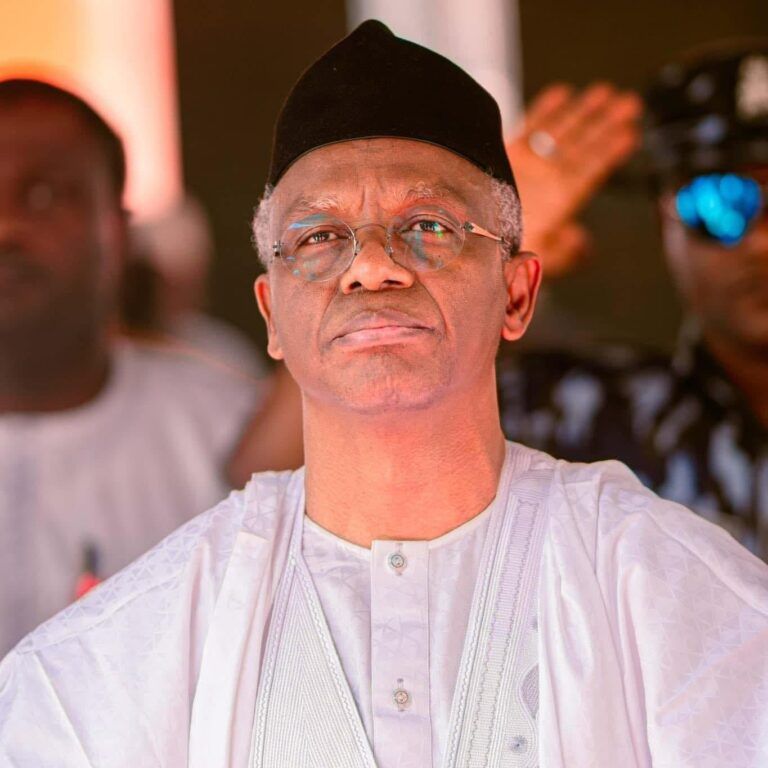
Justice Sylvanus Oriji of the High Court of the Federal Capital Territory, FCT, has dismissed a N120 million fundamental rights suit instituted by a former governor of Kaduna State, Nasir El-Rufai against the Department of the State Services, DSS, and three others.
Justice Oriji in a judgment on Monday threw away the suit for being without merit and substance.
The judge awarded N200,000 as cost to each of the respondents to be paid to them by the former governor.
The court held that the letters of invitation by two Federal Government agencies to El-Rufai to appear for investigation over allegations against him met constitutional requirement and did not in anyway constitute infringement on his fundamental rights.
Specifically, Justice Oriji said that both the Economic and Financial Crimes Commission, EFCC, and the Independent Corrupt Practices and other related offences Commission, ICPC, did not violate the applicant’s rights with the letters inviting him to shed light on issues raised against him.
On whether the attempt to arrest the applicant at the Nnamdi Azikiwe International Airport, Abuja, by the DSS (3rd respondent) violated his rights, the court upheld the security agency’s submission that it had statutory mandate to maintain watchlist action and arrest persons of interest.
The court further held that El-Rufai cannot use the court to stop the agencies from performing their duties.
Justice Oriji discountenanced El-Rufai’s argument that there was no warrant for his attempted arrest and ruled that the DSS had inherent powers of the police pursuant to SSS instrument and the NSA Act.
On whether the seizure of El-Rufai’s international passport by the DSS was a violation of his rights, the court held that it was satisfied that the seizure was lawful, and made pursuant to the powers of the DSS, and thus the applicant (El-Rufai) had failed to adduce evidence showing that the seizure was continuous, permanent and unlawful.
While dismissing the entire suit for lacking in merit, the court awarded N200,000 to each of the four respondents including the Attorney General of the Federation, AGF, and Minister of Justice.

General News
What happened to the $3bn received?’ — Makinde queries FG further over NLNG dividend row
Our Reporter
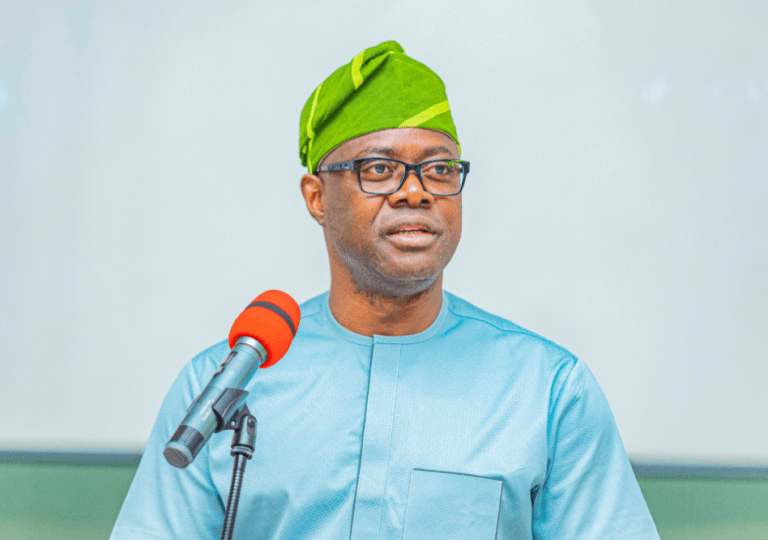
Seyi Makinde, governor of Oyo, has asked the President Bola Tinubu administration to explain how it disbursed the nearly $3 billion received as dividends from the Nigeria Liquefied Natural Gas Limited (NLNG) since 2023.
The governor was responding to the presidency’s rejection of his claim that the federal government was withholding NLNG dividends due to states and local governments, resulting in a shortfall of about N9 trillion.
NLNG produces and exports liquefied natural gas (LNG) and allied products.
The company is jointly owned by the Nigerian National Petroleum Company Limited (NNPCL), Shell, TotalEnergies and Eni.
Speaking at the 2027 Budget Stakeholders’ Consultative Engagement in Ibadan on Friday, Makinde had alleged that each state “was supposed to get N250 billion”.
In a statement on Sunday, Bayo Onanuga, special adviser to the president on information and strategy, described Makinde’s claim that the federal government is withholding the NLNG dividend windfall as false and urged the public to disregard it.
Onanuga said for the states’ share alone to reach N9 trillion, total NLNG dividends paid into the federation account would have to exceed N33.68 trillion (about $25 billion) in a single declaration.
He added that NLNG had never paid $25 billion in dividends into the federation account in one fell swoop.
According to Onanuga, NLNG paid approximately $21.5 billion in dividends to the federation over the last 25 years, with less than $3 billion realised since Tinubu assumed office.
In a statement on Sunday, Sulaimon Olanrewaju, Makinde’s special adviser on media, said the governor stands by his claim, adding that the presidency’s response failed to address the crux of the matter.
“The response sidestepped the central issue: the Nigeria Governors’ Forum (NGF), with the Federal Government’s support, engaged a consultant to reconcile NLNG dividend payments,” the statement reads.
“The exercise identified a shortfall of about ₦9 trillion due to states and local governments. The Federal Government accepted the findings.
“The report remains in the custody of both the Federal Government and the NGF. We trust the Presidency will not deny its existence.
“The Presidency stated that NLNG had paid $21.5 billion in dividends into the Federation Account since inception, including $3 billion received under the current administration. But it did not explain how these funds were disbursed.
“Have states and local governments received their shares? How much did they receive, and how were those amounts calculated? What happened to the $3 billion received under this administration?”
Olanrewaju said Makinde “conducts public discourse with decorum and does not make unfounded claims or quote figures without a basis”.
He added that the governor is ready to provide further clarification, while urging the presidency to address the substance of the matter.
By Our Reporter
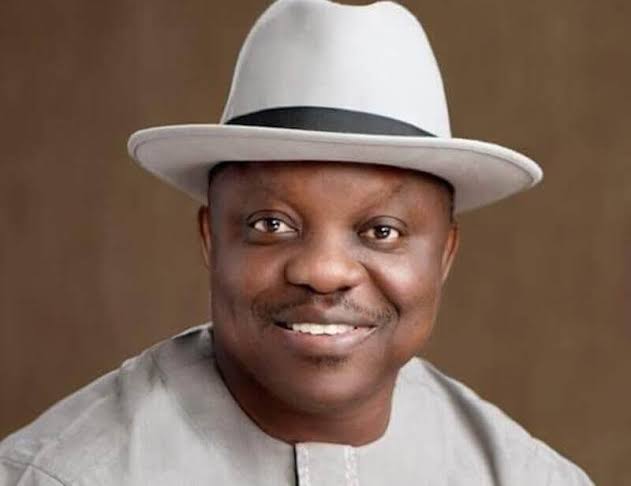
Emmanuel Uduaghan, the former governor of Delta state, has died aged 71.
Uduaghan, a two-term governor of Delta between 2007 and 2015, has been sick for some time.
Information reaching DISCLOSURE News indicates that he passed away on Monday, October 19 — three days before his 72nd birthday.
His death was announced in a statement issued by his family and signed by Toju Anire Uduaghan.
“It is with hearts weighed down by immeasurable grief and profound sorrow that we announce the passing to glory of our beloved Father, Brother, Uncle, and Patriarch, His Excellency, Dr. Chief Emmanuel Eweta Uduaghan, former Governor of Delta State, who departed this world on the morning of 19th October 2026,” the statement reads.
“His passing has left us devastated. Words can hardly express the depth of our sorrow at the loss of a man who meant so much to our family and whose life and service touched countless others across Delta State and Nigeria.
“He was a source of strength, a father figure, a beloved brother and uncle, and a respected elder. We will deeply miss his presence and forever cherish the memories and legacy he leaves behind.”
Uduaghan, born on October 22, 1954, served as Delta health commissioner between 1999 and 2003.
He was subsequently appointed as the secretary to the state government from 2003 to 2007.
***Available plant capacity falls by 41%
***13 years of privatisation yield little results
***FG turns to bonds to tackle N6trn debt
*** Power supply has improved, Power Minister insists Consumers, experts react
Revenue collected by Nigeria’s electricity Distribution Companies (DisCos) rose by about 450 per cent in eight years, from N218.16 billion in the first half of 2018 to N1.2 trillion in the corresponding period of 2026, far outpacing growth in electricity supply over the period.
Data from the Nigerian Electricity Regulatory Commission (NERC), analysed by Financial Vanguard, showed that while DisCos’ revenue increased by about N983.04 billion, total electricity supply grew by only 4.8 per cent, from 16,861 gigawatt-hours (GWh) in the first half of 2018 to 17,668GWh in the first half of 2026, even as their debt profile in the last six months hits N700billion.
The data also indicated that average available generation capacity declined by 41 per cent, from 7,565.5 megawatts (MW) in the first half of 2018 to 4,456MW in the corresponding period of 2026.
On an annual basis, DisCos’ revenue increased by about 666 per cent in ten years, from N302.93 billion in 2016 to N2.32 trillion in 2025, highlighting the widening gap between revenue growth and improvements in electricity supply.
NERC data showed that while DisCos’ annual revenue rose by about N2.016 trillion over the period, average daily power generation increased by approximately 36 per cent, from 3,276MW in 2016 to 4,475MW in 2025.
The disparity has raised concerns about the extent to which increased revenue collections have translated into improved electricity supply and service delivery to consumers, 13 years after the privatisation of the power sector.
In the same vein, data from NERC showed that in the first half of 2026, DisCos failed to collect N700.53 billion. It indicated that while the utilities received N1.9trillion worth of energy from the market, they collected N1.2trillion from consumers, leaving a balance of N700 billion.
The Rural Electrification Agency (REA) has estimated that about 85 million Nigerians still lack access to electricity.
In 2016, DisCos collected N302.925 billion, while total annual electricity supply stood at 23,742GWh. By 2025, revenue had risen by about 666 per cent to N2.3188 trillion, while annual electricity supply increased by 31.6 per cent to 31,251GWh.
DisCos’ revenue rose to N370.456 billion in 2017, before increasing to N448.749 billion in 2019 and N542.729 billion in 2020. Collections further climbed to N775.336 billion in 2021 and N841.811 billion in 2022.
The upward trend accelerated in subsequent years, with revenue reaching N1.0775 trillion in 2023, N1.6597 trillion in 2024 and N2.3188 trillion in 2025.
By comparison, annual electricity supply increased from 23,742GWh in 2016 to 33,489.17GWh in 2019 and 35,242.17GWh in 2020. It rose further to 36,710.60GWh in 2023 and peaked at 37,093.70GWh in 2024 before declining to 31,251GWh in 2025.
The divergence was particularly evident in 2025, when annual electricity supply fell by about 15.7 per cent from 37,093.70GWh in 2024, even as DisCos’ revenue increased from N1.6597 trillion to N2.3188 trillion.
13 years of privatisation yield little results
The bulk of the power sector was privatised in November 2013, with generation plants and 11 distribution companies handed over to private investors, while the Federal Government retained control of the transmission segment.
The arrangement formed the basis of the Nigerian Electricity Supply Industry, NESI.
However, 13 years after privatisation, concerns remain over the pace of growth in electricity supply despite over N10 trillion public investment in the sector.
NERC data showed that in 2016, three years after privatisation, the average available generation capacity of 27 power plants was 7,527MW, while actual average generation stood at 3,276MW.
By 2025, with installed generation capacity of more than 13,000MW, average available capacity had fallen by 28.3 per cent to 5,398MW, while average generation rose to 4,475MW.
Vangaurd
-

 General News1 week ago
Rivers 2027: We are not part of Rainbow Coalition – APC Legacy Group slams Wike, Fubara meeting
-
General News4 weeks ago
JOHESU demands: MHWUN puts FG on notice over fresh action
-

 Politics1 month ago
2027: ASAF backs APC governors, rejects rainbow coalition
-

 Politics1 month ago
You have demonstrated diligence, loyalty, statesmanship in leadership, Ekechi salutes Shetimma at 60
-

 Politics2 months ago
2027: Advertising experts raise concerns over irregular regulation of sector
-
FCT News2 months ago
2027: Hasana-Moneme pledges skills, empowerment, credit access for FCT women
-
General News3 months ago
2027: Dame Princess Esom-Nwafor Orizu confirmed as APC flagbearer for Nnewi North /South /Ekwusigo Federal Constituency as INEC releases names of candidates
-
Uncategorized3 months ago
Rescue of Oyo schoolchilden: Tinubu commends security agencies, says action breakthrough in fight against criminality