
Back Page Columnist
BACK PAGE COLUMNIST: NARRATIVE MATTERS: GLOBAL AMBITION, LOCAL HABITS: THE STANDARDS WE CANNOT AFFORD TO IGNORE


By Dr. Omolaraeni Olaosebikan
An impressive corporate profile can open a door. It cannot keep a client. Neither can an overseas office, a polished website or a photograph taken at an international conference. Yet we often mistake these signs of arrival for evidence that a business is ready to compete beyond its familiar market. The more useful question is a less comfortable one: if a demanding client examined how we actually work, would our reputation survive the inspection?
For Nigerian businesses, that question deserves serious attention. We operate in a difficult environment, and the resourcefulness required to keep an enterprise alive here should never be dismissed. Founders contend with uncertain costs, infrastructure gaps, currency pressures and a regulatory landscape that can test even the most carefully prepared plans. Many have built admirable companies despite these constraints. But an ability to survive adversity is not, by itself, proof of organisational excellence.
We have become exceptionally good at improvising. A supplier fails and someone finds another at midnight. A deadline approaches and the founder personally calls everyone involved. A client complains and a senior executive steps in to rescue the relationship. These interventions sometimes save the day. The danger is when the rescue becomes the operating model. If the business repeatedly depends on exceptional effort to deliver an ordinary promise, something in its system needs attention.
This is where the language of global ambition meets the reality of local habits. A company may want multinational clients while treating documentation as optional. It may promise world-class service but have no reliable way to track deliverables, resolve complaints or assess performance. It may invest heavily in visibility while underinvesting in the people and processes that make its promises credible. These are not uniquely Nigerian problems, but they are problems we must be willing to confront in our own businesses.
International competitiveness is often discussed as a matter of access: access to finance, partnerships, technology and new markets. Access matters. So does readiness. A prospective partner wants to know who is accountable when something goes wrong, whether financial records can be trusted, how information is protected and whether standards hold when the chief executive is away. The answers are usually found in everyday practices, not in the ambition statement on the first page of a presentation.
Consider the simple discipline of a written brief. Does everyone understand what the client approved, what is excluded, who signs off and when delivery is due? Or does the team rely on conversations remembered differently by different people? The same applies to procurement, hiring, invoices, performance reporting and the treatment of confidential information. None of these subjects is glamorous. All of them can determine whether a promising business becomes a trusted institution.
There is a cost to overlooking them. When decisions are poorly documented, errors are repeated. When responsibilities are unclear, talented employees become hesitant and founders become overwhelmed. When success is measured only by publicity or revenue, an organisation can overlook dissatisfied customers, weak margins and operational risks until they become expensive. A company may look larger from the outside while remaining fragile on the inside.
The solution is not to import every foreign management practice without question. Nigeria has produced valuable strengths of its own: speed, ingenuity, cultural intelligence and an instinct for opportunity. We should protect those advantages. But adaptability works best when it rests on dependable foundations. A business can be responsive without being disorderly, entrepreneurial without being opaque and ambitious without promising what it cannot consistently deliver.
Leadership sets the tone. If a chief executive bypasses agreed processes whenever it is convenient, employees will soon learn that the rules are decorative. If uncomfortable questions are treated as disloyalty, risks will travel underground. If mistakes are hidden to protect appearances, the organisation loses the chance to learn. Standards become credible only when the people at the top accept them for themselves.
For those of us building Nigerian enterprises with international aspirations, perhaps the next milestone should be less visible than a foreign address. It could be a stronger finance function, a reliable client reporting system, a clearer delegation framework or a team empowered to deliver without constant intervention. These improvements may not generate applause, but they build the confidence on which lasting partnerships depend.
Our national reputation is shaped in part by these private encounters. Every contract honoured, report verified, commitment kept and problem handled responsibly tells a story about what Nigerian enterprise can be. Equally, every avoidable failure reinforces doubts that no advertising campaign can easily erase. We cannot control every condition in which we operate. We can control more of our professional conduct than we sometimes admit.
The ambition to compete globally is worth pursuing. But it asks us to do more than announce where we intend to go. It asks us to examine how we work today, especially when no one is watching. The story we tell about Nigerian business will become more convincing when the evidence of our standards is visible in the experience of those who work with us. That is why the narrative matters.
Dr. Omolaraeni Olaosebikan is Chief Executive Officer of McEnies Global Communications, a strategic communications and public relations consultancy. Her thought leadership examines leadership, strategy, communication and national development.


By Lemmy Ughegbe, Ph.D
Something is deeply wrong when a journalist who investigates the spending of public funds ends up behind prison walls while the questions he raised remain unanswered.
The journalist may be wrong. His findings may be disputed. His methods may deserve scrutiny. But when the machinery of criminal justice is turned on those who investigate public officials, society must ask a hard question. Is the law protecting legitimate reputations, or discouraging the scrutiny on which accountable government depends?
The remand of Daniel Ojukwu, a reporter with the Foundation for Investigative Journalism (FIJ), at the Kuje Correctional Centre in Abuja brings that question into sharp focus.
On 10 November 2026, Justice Joyce Abdulmalik of the Federal High Court ordered his detention pending the hearing of his bail application on 1 December. Ojukwu had pleaded not guilty to twelve counts of cyberstalking and criminal defamation.
The charges stem from reports published in 2023 on alleged irregularities in contracts linked to the Office of the Senior Special Assistant to the President on Sustainable Development Goals, headed by Princess Adejoke Orelope-Adefulire. FIJ founder Fisayo Soyombo is also named in the charge.
Those allegations remain contested. Neither a published report nor a criminal charge establishes the truth. Any fair examination of this matter must begin there.
This is not Ojukwu’s first ordeal. He was arrested in May 2024 and held for ten days over reporting on the same matter. Little wonder his latest remand has drawn criticism from the Committee to Protect Journalists and the Wole Soyinka Centre for Investigative Journalism.
Their concern goes beyond one reporter. It touches the uneasy relationship between investigative journalism, reputational protection and the power of the state to prosecute.
Section 39 of the Constitution guarantees freedom of expression and of the press. Section 22 charges the mass media with upholding the responsibility and accountability of government to the people. The principle is simple. Citizens cannot judge those who govern them without knowing how public power is used and public money spent.
Yet press freedom is not absolute. Journalists must verify facts, seek responses, separate allegation from proven wrongdoing and avoid defamation. Public officials, whatever their office, retain a legitimate interest in protecting their reputations from falsehood.
Orelope-Adefulire’s lawyer, Muiz Banire, has called for responsible journalism and challenged the reporters to substantiate their claims. That position deserves acknowledgement. Reporting on public spending does not place a journalist beyond scrutiny.
The Cybercrimes Act was enacted to tackle online fraud, threats and other genuine digital harm. Its cyberstalking provisions, however, have long been invoked in disputes arising from journalism, with a chilling effect on free expression.
By October 2024, the Committee to Protect Journalists had counted at least 29 journalists prosecuted under the law since 2015. The 2024 amendment, which narrowed the cyberstalking provision, was meant to end that pattern. It has not. The line between cybercrime and public interest reporting is not being held.
Then there is the matter of pretrial detention. Ojukwu has been convicted of nothing. His remand is a judicial order, not a finding of guilt. But three weeks in custody before a bail application is even heard raises serious questions of proportionality and the presumption of innocence.
The courts must decide the charges on their merits. They must also ensure that the process itself does not become the punishment.
The message to other reporters is unmistakable. If investigating a public office can cost a journalist his liberty before trial, many will simply stop investigating. That silence serves no one but those with something to hide.
More importantly, the questions about public spending must not vanish beneath the prosecution. If the contracts were properly awarded and executed, transparent records will prove it. If there were irregularities, the appropriate authorities should investigate and act.
Accountability and reputation are not enemies. Both can be pursued without presuming either the journalist or the official guilty.
The National Assembly should examine whether the cybercrime law still lacks adequate safeguards against misuse in disputes over legitimate journalism. A law meant to protect citizens from online threats must not become a weapon against uncomfortable reporting. Those genuinely wronged by a publication already have a civil remedy in the courts.
The media has its own duty. Professional bodies must insist on accuracy, fairness and ethics while defending journalists from intimidation. Press freedom cannot rest on solidarity alone. It must be earned through credibility.
The Ojukwu case is a test of the balance between state power and democratic accountability. The police must pursue genuine offences without becoming instruments of reputational retaliation. The judiciary must protect due process. Journalists must substantiate their reports. Public officials must accept that public office invites public scrutiny.
Democracy does not require journalists to be infallible. It requires them to be responsible, independent and free to investigate without fear of the prison gate.
When asking uncomfortable questions becomes a pathway to prison, the danger reaches beyond the journalist in the dock. It reaches every citizen whose right to know depends on someone having the courage and freedom to ask.
Dr Lemmy Ughegbe, FIMC, CMC
Email: lemmyughegbeofficial@gmail.com
WhatsApp ONLY: +2348069716645
Back Page Columnist
GUEST COLUMNIST: Dutse rally: A presidential visit and renewed development partnership
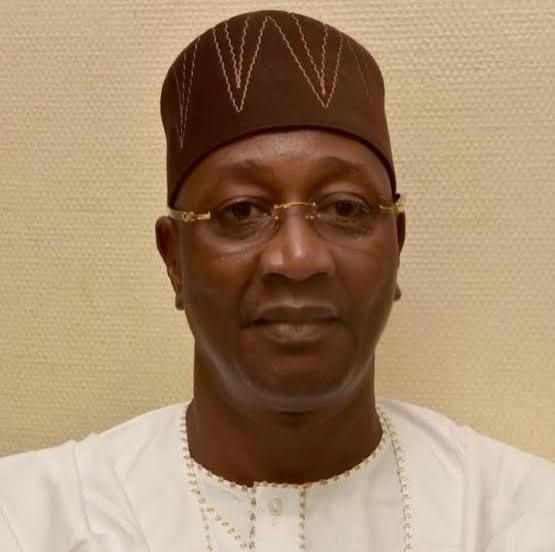
By Muhammad Garba
Dutse, the Jigawa state capital, witnessed an impressive display of public enthusiasm, political mobilisation and development-focused engagement on Tuesday, November 10, 2026, as President Bola Ahmed Tinubu paid a historic visit to the state.
The visit, which combined the commissioning of major development projects with an All Progressives Congress (APC) presidential campaign rally, attracted a mammoth crowd of party supporters, political leaders, government officials, traditional rulers and residents from different parts of Jigawa.
From the early hours of the day, the state capital experienced a noticeable atmosphere of excitement as thousands of supporters converged on the Dutse Township Stadium. The colourful display of APC flags, banners, party insignia and enthusiastic supporters gave the city a festive political atmosphere. The large turnout, with participants drawn from the state’s 27 local government areas, reflected the ruling party’s extensive grassroots presence and organisational structure in Jigawa.
The reception was marked by cheers, music, cultural displays and expressions of solidarity from party faithful. It provided an opportunity for APC leaders and supporters to demonstrate their political organisation and reaffirm their commitment to the party’s activities ahead of the 2027 general elections.
Received by Governor Umar Namadi, alongside other prominent political and government leaders, President Tinubu’s visit offered an important opportunity to strengthen engagement between the Federal Government and Jigawa State. It also brought national attention to the state’s development priorities and the efforts being made by the Namadi administration to improve infrastructure, agriculture, education and economic opportunities.
A major highlight of the visit was the commissioning of important projects executed by the Jigawa State Government. These included the Bola Ahmed Tinubu Multipurpose Skills Acquisition Centre, the Renewed Hope Technical Services Centre and the dualised Garu Road leading to the Emir of Dutse’s palace.
The President also inaugurated the state’s agricultural mechanisation programme, featuring 400 tractors, 60 combine harvesters and other modern farming equipment, including planters, seeders and boom sprayers. The programme represents a significant investment in the modernisation of agriculture and the strengthening of Jigawa’s productive capacity.
For a state where agriculture remains central to the livelihoods of many households, the provision of modern farming equipment is particularly important. Improved access to mechanised services can help reduce the burden of manual labour, expand cultivated areas, improve productivity and strengthen food production. It also creates opportunities for farmers to increase their output and participate more effectively in the agricultural value chain.
The skills acquisition centres commissioned during the visit equally demonstrate the importance attached to human capital development. By providing facilities for technical education and vocational training, the centres are expected to equip young people with practical skills that can support employment, entrepreneurship and self-reliance.
The dualisation of Garu Road is another notable addition to Dutse’s infrastructure landscape. Improved road connectivity is essential to the movement of people and goods, the growth of commercial activities and the orderly expansion of the state capital.
Beyond the projects commissioned, the visit also drew attention to other development initiatives in Jigawa, including the Greater Dutse Water Supply Project, federal road interventions, agricultural programmes, housing initiatives and social protection schemes.
Governor Namadi disclosed that the Greater Dutse Water Supply Project was more than 60 per cent complete, while acknowledging the need for continued federal support to address some of the state’s infrastructure challenges. He also highlighted the importance of federal interventions in agriculture, education, transportation and social welfare.
At the campaign rally, President Tinubu outlined his administration’s priorities for the next phase of national development, emphasising reliable electricity, support for small and medium-scale businesses, industrial expansion, employment generation and increased investment in agriculture.
His emphasis on agricultural development was particularly relevant to Jigawa, given the state’s considerable agricultural potential. The President expressed confidence in Nigeria’s capacity to strengthen domestic food production through mechanisation, irrigation, agricultural research and improved support for farmers.
READ ALSO: Tinubu unveils N52,500 minimum pension guarantee for retirees
He also reaffirmed his administration’s commitment to addressing the country’s economic and security challenges, while stressing the importance of sustaining reforms aimed at building a stronger and more productive economy.
The political dimension of the visit was equally significant. The scale of attendance, the presence of APC leaders from across the state and the enthusiastic participation of party supporters offered a visible picture of the party’s organisational reach in Jigawa. The rally also provided a platform for the party to engage its grassroots structures and communicate its political message ahead of the 2027 general elections.
The occasion, for the APC in Jigawa state, was an opportunity to bring together its political stakeholders, elected representatives, community leaders and supporters under one platform. The participation of party members from different local government areas gave the event a broad statewide character and underscored the importance of grassroots engagement in the party’s political activities.
The visit also provided an opportunity to recognise the development efforts of Governor Umar Namadi and his administration. The projects commissioned during the President’s visit reflect the state’s emphasis on agriculture, infrastructure and skills development, while demonstrating the importance of cooperation between the two levels of government.
President Tinubu’s visit was therefore more than a political gathering. It combined a high-profile presidential engagement, the commissioning of development projects and a demonstration of the APC’s political organisation in Jigawa.

Lemmy Ughegbe, Ph.D
A democracy is in trouble when the fate of candidates is settled more by judges than by voters.
Elections exist so that citizens can choose their leaders and hold them to account. Yet as Nigeria approaches the 2027 general elections, the courtroom again threatens to matter as much as the polling booth in deciding who appears on the ballot.
On 5 November 2026, the Federal High Court nullified the leadership of the African Democratic Congress (ADC) under former Senate President David Mark and invalidated decisions taken by that leadership. Among them was the nomination of former Vice-President Atiku Abubakar as the party’s presidential candidate.
The questions this raises go well beyond one man’s ambitions or one party’s internal troubles.
Justice Peter Lifu, ruling on a suit filed by former ADC Deputy National Chairman Nafiu Bala Gombe, held that the process through which the Mark-led leadership emerged violated the party’s constitution and relevant legal provisions. The party’s nominations for the coming elections are now in jeopardy.
The ADC has rejected the judgment, filed an appeal and applied for a stay of execution. The Independent National Electoral Commission (INEC) says it will study the certified judgment before deciding its response. The result is uncertainty at a sensitive point in the electoral calendar.
Political parties are not above the law because they command large followings or present themselves as alternatives to the ruling establishment. Their constitutions are binding instruments, not decorative documents to be set aside whenever powerful politicians need accommodating. If the ADC breached its own rules in constituting its leadership, the courts were right to examine the complaint.
Internal democracy would be meaningless if party leaders could ignore established procedures and then invoke the sanctity of electoral competition to escape scrutiny. The right to contest cannot be separated from the duty to obey the rules of nomination.
Yet the legitimacy of judicial intervention does not end the inquiry into its consequences.
When a leadership dispute yields a judgment capable of voiding nominations across several elective offices, the fallout extends well beyond the litigants. Aspirants who spent time and money on primaries, supporters who mobilised and voters who expected a real choice may all pay for decisions taken within party hierarchies.
That raises a hard question. Should every procedural defect in party leadership invalidate every later political action, whatever the interests affected? The answer must come from the law and the court’s specific findings. But electoral justice should not become so focused on correcting irregularities that it loses sight of the democratic interests at stake.
There is also the familiar habit of reading every adverse judgment as political conspiracy. The ADC has alleged that the ruling is an attempt to weaken the opposition before the presidential election. In a country where trust in institutions is fragile, such concerns cannot be waved away. But suspicion is not evidence. Allegations of judicial manipulation require proof, not repetition.
Those who welcome the judgment because it may hurt a formidable opposition candidate should be equally careful. A decision that removes an opponent today may set a precedent that becomes uncomfortable tomorrow. The rule of law loses credibility when its defenders change their convictions according to whose interests are affected.
INEC’s position is especially delicate. It is neither an appellate court nor a judge of political popularity. Its duty is to conduct elections in line with the Constitution, electoral law and binding court orders. It must resist pressure from competing factions and remember that filing an appeal does not, by itself, suspend a court’s decision.
Nor should it act hastily while proceedings remain unresolved. Its decisions must be transparent, legally defensible and consistent with its treatment of other parties.
The judiciary carries an equally heavy burden. A judgment delivered close to an election may cause damage that even a successful appeal cannot undo once deadlines pass. Speedy appeals, clear orders and consistent principles are essential to electoral justice.
Nigeria has travelled this road before. The lesson is not that courts should withdraw from electoral matters. It is that parties must strengthen their internal democracy, while the justice system must resolve disputes before they threaten an entire electoral timetable.
For the ADC, this should be a moment for introspection, not outrage alone. A party that wants Nigerians to see it as a credible alternative must show that its processes are governed by rules, not the convenience of influential newcomers. Political renewal cannot be built on procedural shortcuts.
For the ruling party and its supporters, the right response is restraint. Democracy is strengthened by credible competition, not by the legal misfortunes of opponents. A government confident in its record should welcome the chance to defend it before voters against the strongest lawful opposition available.
This is not really about Atiku Abubakar, David Mark or Nafiu Bala Gombe. It is about legality and democratic choice, and Nigeria needs both. Elections without lawful procedures invite manipulation. Legal processes that keep narrowing voters’ choices weaken faith in representative government.
The courts must uphold the law without fear or favour. Parties must respect their constitutions. INEC must show independence and fidelity to judicial authority. And Nigerians must insist that elections remain contests conducted within the law, not contests settled in court.
The judiciary must remain the guardian of electoral justice. It must not become the arena where political competition is concluded before voters have spoken.
Lemmy Ughegbe, Ph.D, FIMC, CMC
Email: lemmyughegbeofficial@gmail.com
WhatsApp ONLY: +2348069716645
-

 General News1 month ago
Rivers 2027: We are not part of Rainbow Coalition – APC Legacy Group slams Wike, Fubara meeting
-

 Politics2 months ago
2027: ASAF backs APC governors, rejects rainbow coalition
-
General News2 months ago
JOHESU demands: MHWUN puts FG on notice over fresh action
-

 Politics2 months ago
You have demonstrated diligence, loyalty, statesmanship in leadership, Ekechi salutes Shetimma at 60
-

 Politics3 months ago
2027: Advertising experts raise concerns over irregular regulation of sector
-
FCT News3 months ago
2027: Hasana-Moneme pledges skills, empowerment, credit access for FCT women
-
General News4 months ago
2027: Dame Princess Esom-Nwafor Orizu confirmed as APC flagbearer for Nnewi North /South /Ekwusigo Federal Constituency as INEC releases names of candidates
-
General News1 month ago
Senator Mandiya slipped, died in Abuja bathroom, corpse discovered after 3 days, says Sen Ningi