
Sports
Nigeria’s 400 remaining elephants face fight for survival -Conservationist

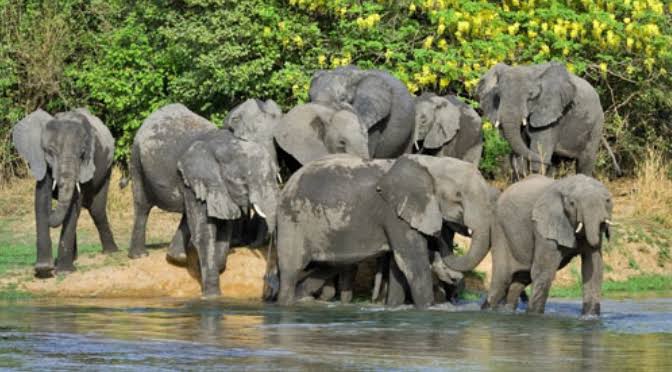
Nigeria has only about 400 elephants left in the wild, with conservationists warning that habitat loss, illegal ivory trade and human-wildlife conflict are threatening the survival of the species.
The conservationists disclosed this at a media engagement organised by Wild Africa and the Nigerian Conservation Foundation (NCF) ahead of the World Elephant Day, celebrated annually on Aug. 12.
The News Agency of Nigeria (NAN) monitored the event virtually.
Dr Mark Ofua, wildlife veterinarian, conservationist and West African representative of Wild Africa, said the remaining population comprised about 300 forest elephants and 100 savannah elephants.
Ofua described the population as a critical mass, warning that continued habitat fragmentation and hunting could result in inbreeding and eventually push the species into extinction.
“Elephants are tenders of the forest,” he said, explaining that the animals played important roles in maintaining forest health, biodiversity and ecological balance.
He described elephants as an “umbrella species”, saying their disappearance would signal that the forest ecosystem was unhealthy and collapsing.
According to him, the extinction of elephants would have consequences for biodiversity, carbon storage and other ecosystem services on which human populations depend.
Ofua said the threats to Nigeria’s elephants included illegal trade in ivory, retaliatory killings arising from human-elephant conflicts and accidental injuries from snares set for other wildlife.
He said the challenge went beyond wildlife conservation, as the disappearance of the species could have serious consequences for forest ecosystems and human wellbeing.
The conservationist also identified inadequate public awareness as a major challenge to elephant conservation in Nigeria.
He estimated that about 80 per cent of Nigerians were unaware that elephants still existed in the country.
Ofua, therefore, called for increased public education and stronger communication campaigns to change perceptions about wildlife and discourage practices that threatened endangered species.
He urged Nigerian companies to move beyond treating conservation as charity and instead regard it as part of their environmental responsibility.
According to him, companies could adopt individual rescued elephants and support conservation programmes as part of their corporate environmental commitments.
Ofua also called for greater investment in ecotourism, saying Nigeria could create jobs and generate revenue by developing its wildlife and natural attractions.
He cited Rwanda’s gorilla trekking programme as an example of how wildlife could generate revenue for conservation and local development.
Ofua said visitors paid about $1,500 for a one-hour gorilla trekking experience, with the revenue supporting local infrastructure and communities.
On illegal wildlife trade, he said elephant endangerment was not primarily driven by the bush-meat trade.
He identified the illegal black-market trade in ivory, retaliatory killings and accidental injuries from snares as major threats to the species.
He also called for changes in cultural practices involving elephant tusks and other wildlife products.
According to him, education was needed to encourage cultural evolution away from the use of animal parts.
Ofua said existing laws had loopholes relating to domestic possession of wildlife products, adding that a new bill awaiting presidential assent was expected to address some of the gaps.
He advocated stronger enforcement, public awareness and accountability against people involved in illegal wildlife activities.
The conservationist also stressed the need for closer collaboration among government agencies, NCF, the National Park Service, customs authorities and other stakeholders to combat illegal wildlife trade.
Dr Stella Egbe, who leads biodiversity pillar programmes at NCF, said forest elephants were found in areas including Omo Forest Reserve, Cross River National Park and coastal areas of Rivers State.
Egbe said savannah elephants were mainly found in Yankari Game Reserve, Bauchi State.
She noted that elephant populations could move across state and national boundaries, including between Nigeria, Benin Republic and Cameroon.
According to her, scientific methods such as line transects and camera traps were used to conduct elephant surveys, while field observations and monitored poaching incidents also contributed to population estimates.
On human-elephant conflicts, Egbe said habitat fragmentation remained one of the major factors driving encounters between elephants and communities.
She said conflicts had occurred in areas such as Itasin, where encroachment into elephant habitats had resulted in crop destruction and retaliatory killings.
Egbe recommended reducing habitat fragmentation while using deterrent measures such as noise, beehives and chilli fences to keep elephants away from farmlands.
She, however, said inadequate emergency funding made it difficult for conservation organisations to compensate farmers whose crops were destroyed by elephants.
The NCF official also identified insecurity, including banditry and the proliferation of sophisticated weapons, as a major challenge to conservation activities in areas such as Gashaka Gumti.
According to her, insecurity limited the ability of conservationists to manage green spaces and conduct research.
Egbe said implementation of the National Elephant Action Plan remained constrained by inadequate funding.
She explained that although funding was secured for developing the plan, substantial resources were still required to implement the actions contained in it.
The NCF official called for stronger partnerships among government agencies, non-governmental organisations and the private sector to close funding gaps and strengthen conservation efforts.
She said NCF had existing collaborations with private-sector organisations, including Chevron and MTN, while continuing to advocate policies requiring businesses to mitigate their environmental impacts.
Egbe said Nigeria’s abundance of natural resources had contributed to the neglect of wildlife and tourism, with greater attention historically given to crude oil and mineral exploration.
She said protecting green spaces and wildlife could generate year-round economic activities and create employment in sectors such as hospitality and transportation.
NAN reports that the conservationists lamented that several of Nigeria’s natural attractions, including waterfalls, floating lakes and other unique sites, remained largely underdeveloped and poorly marketed.
They stressed that developing ecotourism could diversify Nigeria’s economy while providing sustainable funding for conservation and benefiting communities living around protected areas.
The participants also urged journalists and other stakeholders to sustain public discussion on wildlife conservation and hold relevant authorities accountable for protecting Nigeria’s remaining elephant populations. (NAN).


The National Sports Commission (NSC) has announced commencement of Team Nigeria’s preparation for Dakar 2026 Youth Olympics Games
NSC, according a statement from the office of the Director General, Nikola Olapade, said with just 30 days to the start of the Dakar 2026 Youth Olympic Games, Nigeria is stepping up preparations to showcase some of the country’s brightest young talents on the global stage as anticipation builds for Africa’s first Olympic sporting event.
The Dakar 2026 Youth Olympic Games will take place from October 31 to November 13, 2026, bringing together approximately 2,700 young athletes aged 17 and under from across the world for a celebration of youth, sport and Olympic values.
“For Nigeria, the Director General of the National Sports Commission, Hon. Bukola Olopade said the Games present another opportunity to identify, nurture and expose the next generation of sporting stars as the country continues to strengthen its pathway for young athletes and build a sustainable future for Nigerian sports,” the statement noted
The competition will feature 25 sports, alongside 10 engagement sports, providing a broad platform for young athletes to compete at the highest level while encouraging participation and interaction beyond the traditional competition programme.
The Games will be staged across three host zones in Senegal: Dakar, Diamniadio and Saly, with athletes and officials expected to converge on the West African nation for two weeks of high-level youth sporting action.
As the countdown enters its final month, attention is increasingly turning to the young athletes who will carry Nigeria’s colours in Dakar and the opportunity before them to gain invaluable international experience.
Hon. Olopade stated that the Commission is focused on supporting the development of Nigeria’s emerging talents and ensuring that the country’s participation in major international youth competitions contributes to a stronger pipeline of athletes for future Olympic and global sporting events.
The Dakar 2026 Youth Olympic Games will also represent a historic moment for the continent, with Africa hosting an Olympic sporting event for the first time.

Argentina legend, Lionel Messi has been confirmed as the new owner of Spanish football club CD Eldense
Eldense announced the ownership change in an official statement on X on Thursday confirming that Messi has completed the acquisition of the club and will now oversee its next phase.
The move adds Eldense to Messi’s growing football investment portfolio. The former Barcelona and Argentina captain previously became an owner of UE Cornellà, making Eldense his second Spanish club.
Messi’s entry into Eldense ownership is expected to bring increased international attention to the club as it looks to strengthen its sporting and commercial ambitions.
The development represents another step in Messi’s transition from football superstar to influential figure in club ownership and football business.
“CD Eldense officially announces the acquisition of the club by Leo Messi, marking the beginning of a new and exciting chapter in the institution’s more than 100-year history.
“The arrival of one of the most important figures in the history of sport as owner of CD Eldense in Spanish professional football marks the beginning of a long-term project aimed at promoting the sporting, institutional and social development of CD Eldense.
“Founded in 1921, CD Eldense enters this new chapter with the ambition of consolidating its position and growing in professional football, while also showcasing its roots, history and blue-and-red identity.
“The transaction is pending the required authorization from the CSD under the terms established by the Sports Law,” CD Eldense added.
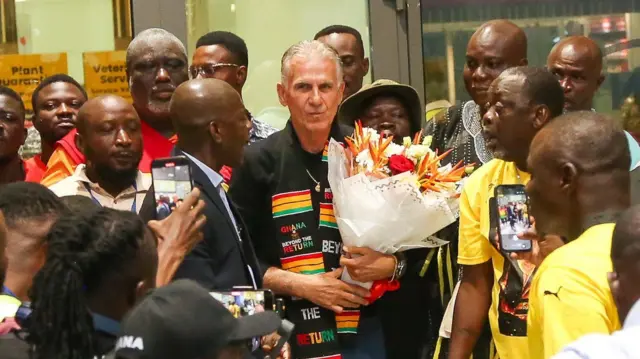
Barely three months after he was reinstated as coach of the Black Stars, Portuguese coach, Carlos Queiroz has parted ways with Ghana following the teams home defeat to Gambia that further deepened the Black Stars’ latest crisis.
The Ghana Football Association announced on Thursday that it had mutually agreed with the experienced Portuguese coach to terminate his contract, just a month after bringing him back for a new spell in charge.
“This was not an easy decision, but both parties agreed that, under the present circumstances, ending our professional relationship was the most appropriate course of action, with the interests of Ghana, the Black Stars and Ghanaian football above everything else,” Queiroz said in a farewell message published on the association’s website.
He added that “the necessary conditions were not fully established, and our recent performance added to the decision to bring this journey to an end.”
Queiroz led Ghana to a devastating 4-2 home defeat against Gambia in an Africa Cup of Nations qualifying fixture, despite taking a two-goal lead at the Accra Sports Stadium.
The defeat came after the West African country had earlier suffered a 2-0 defeat away to Ivory Coast and currently sit bottom of Group C without a point from their opening two matches.
Queiroz leaves with a record of one victory, two draws and four defeats from seven games, with Ghana scoring five goals and conceding 10 during his spell.
His departure brings an end to a turbulent five-month association that began in April, when the 73-year-old signed a four-month deal to lead Ghana at the 2026 World Cup.
Queiroz guided the Black Stars into the World Cup knockout stage for the first time since 2010 after defeating Panama and holding England to a draw.
Ghana’s campaign eventually ended with a 1-0 defeat to Colombia in the Round of 32.
Although his initial contract expired after the tournament, the GFA brought him back on September 2.
Queiroz’s departure leaves the association searching for stability once again at a difficult stage of the qualifying campaign.
Ghana are already six points behind Ivory Coast and Gambia after two matches, and with only the top two teams in each four-team group securing qualification, the Black Stars face a difficult task to avoid missing a second consecutive Africa Cup of Nations.
-
General News2 weeks ago
JOHESU demands: MHWUN puts FG on notice over fresh action
-

 Politics4 weeks ago
You have demonstrated diligence, loyalty, statesmanship in leadership, Ekechi salutes Shetimma at 60
-

 Politics2 weeks ago
2027: ASAF backs APC governors, rejects rainbow coalition
-

 Politics2 months ago
2027: Advertising experts raise concerns over irregular regulation of sector
-
FCT News2 months ago
2027: Hasana-Moneme pledges skills, empowerment, credit access for FCT women
-
General News2 months ago
2027: Dame Princess Esom-Nwafor Orizu confirmed as APC flagbearer for Nnewi North /South /Ekwusigo Federal Constituency as INEC releases names of candidates
-
Uncategorized3 months ago
Rescue of Oyo schoolchilden: Tinubu commends security agencies, says action breakthrough in fight against criminality
-
General News1 month ago
Chi-Jenco CEO, Jude Orji loses mother