
Sports
Nigeria’s 400 remaining elephants face fight for survival -Conservationist

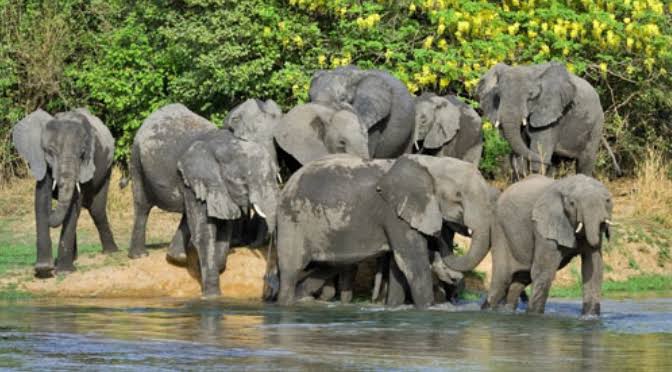
Nigeria has only about 400 elephants left in the wild, with conservationists warning that habitat loss, illegal ivory trade and human-wildlife conflict are threatening the survival of the species.
The conservationists disclosed this at a media engagement organised by Wild Africa and the Nigerian Conservation Foundation (NCF) ahead of the World Elephant Day, celebrated annually on Aug. 12.
The News Agency of Nigeria (NAN) monitored the event virtually.
Dr Mark Ofua, wildlife veterinarian, conservationist and West African representative of Wild Africa, said the remaining population comprised about 300 forest elephants and 100 savannah elephants.
Ofua described the population as a critical mass, warning that continued habitat fragmentation and hunting could result in inbreeding and eventually push the species into extinction.
“Elephants are tenders of the forest,” he said, explaining that the animals played important roles in maintaining forest health, biodiversity and ecological balance.
He described elephants as an “umbrella species”, saying their disappearance would signal that the forest ecosystem was unhealthy and collapsing.
According to him, the extinction of elephants would have consequences for biodiversity, carbon storage and other ecosystem services on which human populations depend.
Ofua said the threats to Nigeria’s elephants included illegal trade in ivory, retaliatory killings arising from human-elephant conflicts and accidental injuries from snares set for other wildlife.
He said the challenge went beyond wildlife conservation, as the disappearance of the species could have serious consequences for forest ecosystems and human wellbeing.
The conservationist also identified inadequate public awareness as a major challenge to elephant conservation in Nigeria.
He estimated that about 80 per cent of Nigerians were unaware that elephants still existed in the country.
Ofua, therefore, called for increased public education and stronger communication campaigns to change perceptions about wildlife and discourage practices that threatened endangered species.
He urged Nigerian companies to move beyond treating conservation as charity and instead regard it as part of their environmental responsibility.
According to him, companies could adopt individual rescued elephants and support conservation programmes as part of their corporate environmental commitments.
Ofua also called for greater investment in ecotourism, saying Nigeria could create jobs and generate revenue by developing its wildlife and natural attractions.
He cited Rwanda’s gorilla trekking programme as an example of how wildlife could generate revenue for conservation and local development.
Ofua said visitors paid about $1,500 for a one-hour gorilla trekking experience, with the revenue supporting local infrastructure and communities.
On illegal wildlife trade, he said elephant endangerment was not primarily driven by the bush-meat trade.
He identified the illegal black-market trade in ivory, retaliatory killings and accidental injuries from snares as major threats to the species.
He also called for changes in cultural practices involving elephant tusks and other wildlife products.
According to him, education was needed to encourage cultural evolution away from the use of animal parts.
Ofua said existing laws had loopholes relating to domestic possession of wildlife products, adding that a new bill awaiting presidential assent was expected to address some of the gaps.
He advocated stronger enforcement, public awareness and accountability against people involved in illegal wildlife activities.
The conservationist also stressed the need for closer collaboration among government agencies, NCF, the National Park Service, customs authorities and other stakeholders to combat illegal wildlife trade.
Dr Stella Egbe, who leads biodiversity pillar programmes at NCF, said forest elephants were found in areas including Omo Forest Reserve, Cross River National Park and coastal areas of Rivers State.
Egbe said savannah elephants were mainly found in Yankari Game Reserve, Bauchi State.
She noted that elephant populations could move across state and national boundaries, including between Nigeria, Benin Republic and Cameroon.
According to her, scientific methods such as line transects and camera traps were used to conduct elephant surveys, while field observations and monitored poaching incidents also contributed to population estimates.
On human-elephant conflicts, Egbe said habitat fragmentation remained one of the major factors driving encounters between elephants and communities.
She said conflicts had occurred in areas such as Itasin, where encroachment into elephant habitats had resulted in crop destruction and retaliatory killings.
Egbe recommended reducing habitat fragmentation while using deterrent measures such as noise, beehives and chilli fences to keep elephants away from farmlands.
She, however, said inadequate emergency funding made it difficult for conservation organisations to compensate farmers whose crops were destroyed by elephants.
The NCF official also identified insecurity, including banditry and the proliferation of sophisticated weapons, as a major challenge to conservation activities in areas such as Gashaka Gumti.
According to her, insecurity limited the ability of conservationists to manage green spaces and conduct research.
Egbe said implementation of the National Elephant Action Plan remained constrained by inadequate funding.
She explained that although funding was secured for developing the plan, substantial resources were still required to implement the actions contained in it.
The NCF official called for stronger partnerships among government agencies, non-governmental organisations and the private sector to close funding gaps and strengthen conservation efforts.
She said NCF had existing collaborations with private-sector organisations, including Chevron and MTN, while continuing to advocate policies requiring businesses to mitigate their environmental impacts.
Egbe said Nigeria’s abundance of natural resources had contributed to the neglect of wildlife and tourism, with greater attention historically given to crude oil and mineral exploration.
She said protecting green spaces and wildlife could generate year-round economic activities and create employment in sectors such as hospitality and transportation.
NAN reports that the conservationists lamented that several of Nigeria’s natural attractions, including waterfalls, floating lakes and other unique sites, remained largely underdeveloped and poorly marketed.
They stressed that developing ecotourism could diversify Nigeria’s economy while providing sustainable funding for conservation and benefiting communities living around protected areas.
The participants also urged journalists and other stakeholders to sustain public discussion on wildlife conservation and hold relevant authorities accountable for protecting Nigeria’s remaining elephant populations. (NAN).


Nigeria’s U-17 Women National Team, the Flamingos, kept their campaign at the ongoing FIFA U-17 Women’s World Cup in Morocco on track with a hard-fought 2-0 victory over Puerto Rico in their Group B encounter on Tuesday night in Rabat.
The 2022 World Cup bronze-medallists started the game with real intent, pressing high and creating early problems for the Puerto Rican defence. It was a lively opening from both sides, but the Flamingos soon took control with their quick movement and direct play going forward.
The breakthrough came in the 25th minute when in-form striker Oluwakemi Adegbuyi finished brilliantly from Queen Joseph’s assist to put Nigeria 1-0 up. That goal settled the Nigerian girls and gave them the confidence to dominate possession for most of the first half.
In the second period, the Flamingos continued to push for another goal. Queen Joseph, Tosin Rafiu and Favour Nkwocha all came close, while Puerto Rico also tried to find a way back into the game with a couple of changes. Coach Hakeem Busari responded by introducing Awawu Bashiru and Oluebube Umejiaku in the 67th minute to add more energy and bite in attack.
The pressure finally paid off in the 90th minute when Nigeria got the second goal as substitute Precious Oscar nodded home a cross from Kemi Adegbuyi to seal the contest at 2-0. The team showed great maturity to see out six minutes of added time and secure all three points. The victory is a big boost for the Flamingos as North Korea defeated Poland 6-1 in the other match of Group B. The high-score deficit against the Poles is an advantage to the Flamingos ahead of Friday’s Group B encounter against the Koreans.

Gombe based Nigeria Premier Football League (NPFL) side, Doma United has been fined N5.25 million and ordered to play its next three home matches behind closed doors following security breaches and supporters’ misconduct during its 1-1 draw with Kun Khalifat FC.
The sanctions followed the club’s supporters alleged attack on Kun Khalifat of Owerri during the Matchday 9 fixture played at the Pantami Stadium in Gombe on Saturday, October 17.
In a disciplinary notice issued on Monday, the NPFL said Doma United failed to provide adequate and effective security, allowing unauthorised persons to access restricted areas.
The club was also fined 1 million for hostile conduct towards match officials and another 1 million for gross misconduct involving an official of the visiting team.
The club was further tasked to pa additional N250,000 as compensation for the medical treatment of Kun Khalifat head coach, Obinna Uzoho, who sustained an injury during the incident.
The total financial penalty amounts to 5.25 million, alongside the restriction barring spectators from the club’s next three home fixtures.
The disciplinary action also affects the match commissioner, who has been recommended for demotion to a lower league over alleged dereliction of duty, inadequate supervision and insufficient reporting of the match.
The club has 48 hours from the date of the notice to appeal the decision.

The International Basketball Federation (FIBA) has congratulated Dr. Abdullahi Mustapha on his election as President of the Nigeria Basketball Federation (NBBF), acknowledging the successful conduct of the federation’s elective congress held on October 15, 2026.
A statement from the NBBF Media office said FIBA, in an official letter signed by FIBA Secretary General Andreas Zagklis congratulated Mustapha and all elected board members who will serve the federation for the 2026-2030 term.
FIBA’s letter acknowledged receipt of the NBBF’s communication confirming the outcome of the election and commended the federation’s commitment to good governance and compliance with its constitution and applicable FIBA regulations.
The recognition represents a significant endorsement of the electoral process and Mustapha’s emergence as NBBF president, reinforcing the international body’s acknowledgement of the new leadership.
FIBA also recognized the support provided by relevant Nigerian authorities and stakeholders throughout the electoral process, highlighting the importance of institutional cooperation in advancing basketball administration in the country.
The international federation also expressed appreciation to the outgoing NBBF board, led by Engr. Ahmadu Musa Kida, for its work and contributions to Nigerian basketball.
Zagklis further recalled his recent meeting with Mustapha in Berlin and expressed his expectation of meeting him again in person, wishing the new president and his colleagues success throughout their tenure.
The new leadership is expected to build on the recognition and institutional support to strengthen basketball development, improve governance and advance Nigeria’s competitiveness on the continental and international stages.
-

 General News2 weeks ago
Rivers 2027: We are not part of Rainbow Coalition – APC Legacy Group slams Wike, Fubara meeting
-
General News1 month ago
JOHESU demands: MHWUN puts FG on notice over fresh action
-

 Politics1 month ago
2027: ASAF backs APC governors, rejects rainbow coalition
-

 Politics2 months ago
You have demonstrated diligence, loyalty, statesmanship in leadership, Ekechi salutes Shetimma at 60
-

 Politics2 months ago
2027: Advertising experts raise concerns over irregular regulation of sector
-
FCT News2 months ago
2027: Hasana-Moneme pledges skills, empowerment, credit access for FCT women
-
General News3 months ago
2027: Dame Princess Esom-Nwafor Orizu confirmed as APC flagbearer for Nnewi North /South /Ekwusigo Federal Constituency as INEC releases names of candidates
-
Uncategorized3 months ago
Rescue of Oyo schoolchilden: Tinubu commends security agencies, says action breakthrough in fight against criminality