
Metro
Knights Of ST. Mulumba Nigeria, Onitsha Metropolitan Council elevates 173 members to Fourth Degree

By Ijeoma Nwajiobi , Nnewi
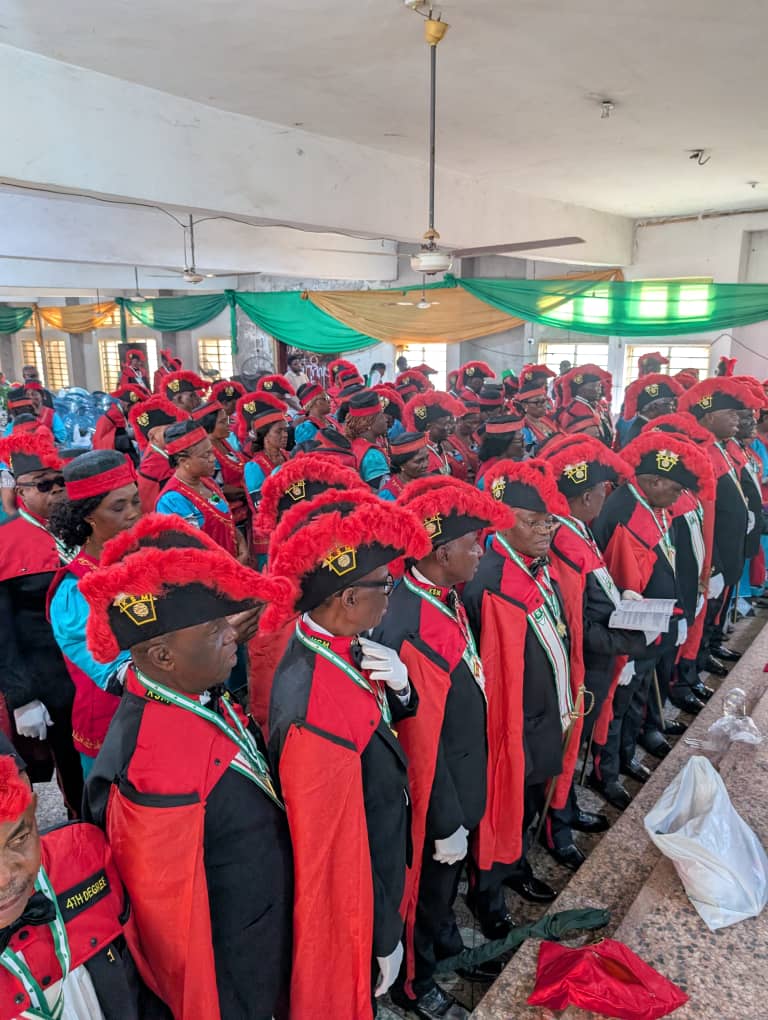
The Knights of St. Mulumba Nigeria (KSM), Onitsha Metropolitan Council, has elevated 173 members – comprising 75 Brothers, their wives, and 23 widows—to the prestigious Fourth Degree of the Order, marking a significant milestone in their spiritual growth and commitment to service within the Catholic Church.
The investiture ceremony which took place on Saturday, 18 July 2026, at Holy Trinity Parish, Independence Layout, Enugu State, attracted Supreme Officers of the Order, Metropolitan and Sub-Council Executives, clergy, families, and well-wishers from across the country.
Addressing the newly invested members, the Supreme Knight, Sir Steve Adehi, SAN, CKSM, KCSS, reminded them that elevation to the Fourth Degree is not a mark of arrival but a call to greater responsibility.
Quoting the biblical principle, “To whom much is given, much is expected,” Sir Adehi urged the new Fourth Degree Knights and Ladies to embrace their new status with humility, integrity, and unwavering dedication to God, the Church, and humanity. He encouraged them to continue offering their Time , Treasure, and Talent in the service of God and the common good, describing these as the enduring pillars upon which the Order of Knights of St. Mulumba is built.
Also speaking at the ceremony, the Supreme Chaplain, Rev. Fr. Dr. Pascal-Paul Okeke, called on members to remain united in love and fraternity, stressing that genuine Christian leadership is demonstrated through selfless service, mutual support, and the effective use of one’s God-given gifts for the advancement of the Church and society.
Among the distinguished personalities present were the Noble President of the Ladies of St. Mulumba (LSM) Nigeria, Lady Anthonia Ngozi Obah; the Worthy Deputy Supreme Knight, Sir Daniel Egwu; the Noble Vice President, Lady Maria Uzoma; the Noble Secretary, Lady Angela Obodozie; the Worthy Supreme Physician, Sir Dr. Callistus Eneh; the Noble Advocate, Dame Rose Chukwuonwe; the Noble Physician, Lady Dr. Isioma Ezemenali; and the Worthy Supreme Warden, Sir Chinedu Enemuo.
The ceremony was hosted by the Worthy Metropolitan Grand Knight of Onitsha Metropolitan Council, Sir (Hon.) Jude Mbaegbu, alongside the Metropolitan Lady President, Lady Prof. Constance Okoli, and was attended by members of the Metropolitan Executive Councils of both KSM and LSM, Grand Knights, Lady Presidents, and delegates from various Sub-Councils.
The Investiture Thanksgiving Mass was celebrated by the Supreme Chaplain, Rev. Fr. Dr. Pascal-Paul Okeke, with Rev. Fr. Lazarus Alor, representing the Chaplain of Holy Trinity Sub-Council, Enugu, as co-celebrant.
The highlight of the celebration was the formal investiture of the 173 members into the prestigious Fourth Degree of the Order.
As part of activities marking the investiture, the Supreme Knight, accompanied by Supreme and Onitsha Metropolitan Officers, paid a courtesy visit on Friday, 17 July 2026, to the Catholic Bishop of Enugu Diocese, Most Rev. Dr. Callistus Onaga, where they received a warm and gracious reception.
Following the investiture, a colourful reception was held in honour of the Supreme Knight, Sir Steve Adehi, the Noble President, Lady Anthonia Ngozi Obah, and other Supreme Officers.
During the reception, the traditional chieftaincy title “Ochiaha I of KSM” was conferred on Sir Steve Adehi, while Lady Anthonia Ngozi Obah was honoured with the title “Adaeji Ejemba of LSM” in recognition of their exceptional leadership, commitment to repositioning the Order, and outstanding contributions toward strengthening the mission of the Knights and Ladies of St. Mulumba Nigeria.
Responding to the honours, Sir Steve Adehi expressed profound appreciation to the Worthy Metropolitan Grand Knight, Sir (Hon.) Jude Mbaegbu, the Metropolitan Executive, and the entire Onitsha Metropolitan Council for the warm reception and outstanding hospitality. He prayed that Almighty God would continue to bless and strengthen them in their service to the Church and humanity.
The successful investiture further reaffirmed the commitment of the Knights of St. Mulumba Nigeria to building faithful Catholic leaders dedicated to Christian values, charitable service, and the advancement of the mission of the Church.

By Our Reporter
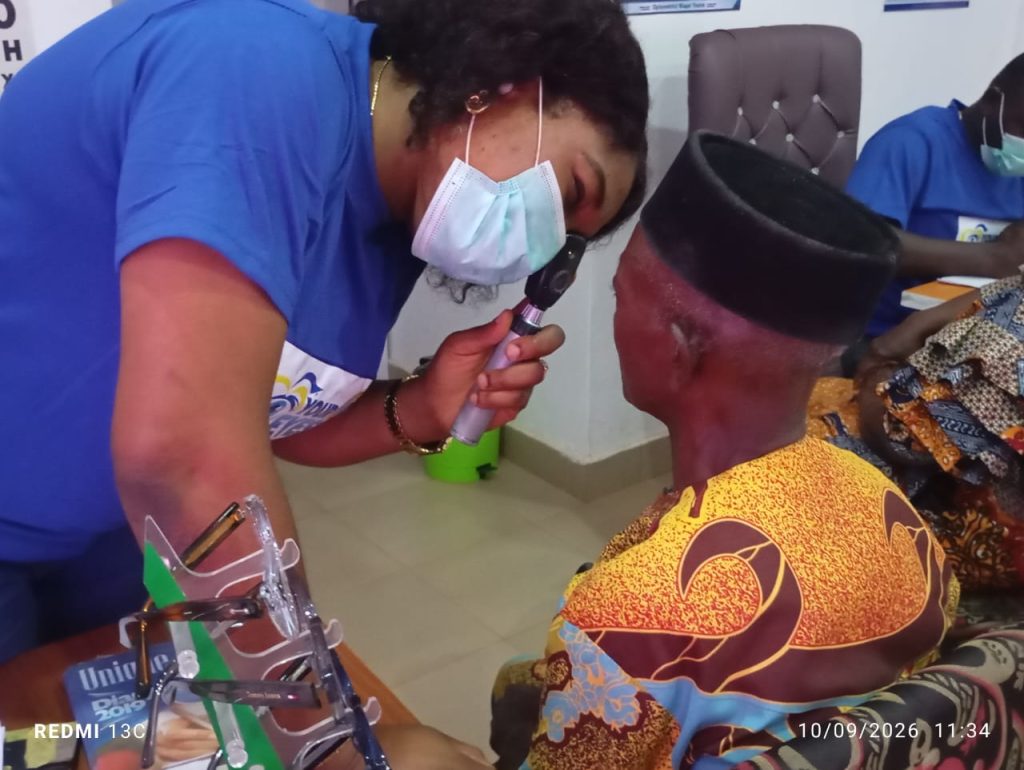
A civil society organisation has called for the adoption of the Girls Act model as a strategy to reduce HIV infections among young girls, warning that the disease remains prevalent, particularly among adolescent girls and young women.
The call was made on Tuesday during activities to commemorate the International Day of the Girl Child in Abuja. It follows concerns that women and adolescent girls bear a disproportionate burden of HIV infections compared with men and boys, particularly in sub-Saharan Africa.
The advocacy group noted that HIV could be better controlled if girls living with HIV were supported to remain on treatment, while those who were HIV-negative learned skills to prevent new infections and make informed decisions.
According to the Advocacy Lead at AIDS Healthcare Foundation (AHF), Steve Aborisade, although significant progress has been recorded in the global fight against HIV/AIDS, more work is needed to support young girls and vulnerable women.
Quoting the Joint United Nations Programme on HIV/AIDS (UNAIDS), Aborisade said women account for more than 50 per cent of people living with HIV globally and roughly 60 per cent in sub-Saharan Africa.
“Adolescent girls and young women aged 15 to 24 years are up to two to three times more likely to acquire HIV than young males of the same age.
“Biologically, women face a roughly two-fold higher acquisition risk per unprotected heterosexual act due to a larger mucosal surface area and longer exposure to seminal fluids.”
The UNAIDS data further indicated that many people living with HIV do not know their status and that concerted efforts are still needed to improve young people’s knowledge of HIV transmission and prevention.
“Adolescents aged 10 to 19 years face distinct physiological, psychological, legal and social factors that make them disproportionately vulnerable to low uptake of HIV testing,” the data indicated.
AHF, however, said patriarchy weighs heavily on women and girls and, combined with poverty and limited information, narrows their choices long before they can decide the terms of their own lives.
“A girl who cannot afford menstrual products, who has dropped out of school, or who depends on others for money, has fewer options, including options about sex. HIV and other sexually transmitted infections (STIs) thrive in exactly those conditions,” AHF said.
AHF said the Girls Act model, championed “for girls, by girls,” seeks to prevent HIV and STI transmission, support girls living with HIV to remain on treatment, reduce unplanned pregnancies and keep girls in school.
“As of 2026, the programme counted more than 4,500 girls in active engagement,” it said.
According to AHF, Girls Act works across four connected areas: health, education and livelihoods, leadership, and results.
On health, the organisation said girls living with HIV were supported to remain on treatment, while those who were HIV-negative learned skills to prevent infection and make informed decisions.
It said the provision of free menstrual health products, extended to surrounding communities, addressed a basic need that often costs girls their dignity and school attendance.
The organisation added that the programme also teaches girls how to make and care for reusable pads, ensuring that access does not depend solely on supply.
On education and livelihoods, AHF said the programme recognised that not every girl was in school and did not abandon those who were out of school.
It said girls who wanted to return to school were supported to do so, while those who had dropped out were trained in life skills and helped to establish businesses.
On leadership, the organisation said Girls Act created opportunities for girls to aspire and lead through mentorship, advocacy and access to resources.
“Girls are turning up empowered, able to negotiate safe sex and exercise bodily autonomy.
“Negotiating safe sex is the difference between exposure and protection, and bodily autonomy is not a slogan but a public health asset.”
AHF called on federal and state governments to adopt and fund the Girls Act model, integrating it into national and state plans for HIV, education and youth development.
“This means dedicated budget lines for menstrual health, so no girl misses school for want of a sanitary pad; skills training and start-up support that reach out-of-school girls where they live; support for girls to return to, and stay in, school; leadership platforms for girls in schools and communities; and clear pathways linking young people to HIV testing, treatment and care,” the advocacy group said.
The group also called on stakeholders in the HIV response to recognise their critical roles in addressing the challenges facing girls and young women.
“Some will say the country has more pressing priorities. They should weigh the cost of inaction: new infections among young people, lifelong treatment, interrupted schooling and lost productivity.
“Prevention that also builds livelihoods and leadership is among the smartest investments a government can make.
“Our girls have shown what is possible when someone invests in them. They have earned the right to be treated as a key population in the national response, not as an afterthought.”
By Chidera Orji
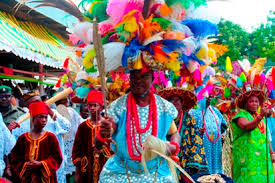
Globacom, Nigeria’s indigenous telecommunications company, has reaffirmed its commitment to preserving, promoting and projecting Nigeria’s cultural heritage, as it joins the people of Onitsha in celebrating the 2026 Ofala Festival of Onitsha.
The telecommunications giant is the official sponsor of Ofala 2026, sustaining a relationship with the historic festival that has endured for over 15 years. The partnership reflects Globacom’s conviction that culture is not merely an inheritance from the past, but a living patrimony through which communities preserve identity, transmit values and renew their place in civilisation.
The 2026 edition, marking the 25th Ofala of the reign of the Obi of Onitsha, Igwe Nnaemeka Alfred Achebe, is themed “Igba Mbo, Iga N’Iru – Strive and Advance From Resilience to Progress.” The theme captures the spirit of Ndi Onicha, whose history is defined by resilience, enterprise, adaptation and determination to advance.
A statement from Globacom disclosed that the Company’s continued association with Ofala “reflects a philosophy that places culture alongside connectivity as instruments of national development.
“For Globacom, Ofala is far more than an annual cultural celebration. It is a living expression of identity, continuity and collective aspiration. Our sustained partnership with this magnificent institution reflects our belief that preserving heritage and advancing society are not competing imperatives; they are mutually reinforcing pillars of a progressive nation. This is the spirit of Globacom’s clarion call, ‘Never Settle for Less’, which is to honour what is worthy, while continually striving for something greater.
“Never Settle for Less is a philosophy of progress: to respect the foundations upon which we stand, while seeking to broaden possibilities, deepen impact and move the nation forward. We are proud to support a cultural institution that honours its roots while engaging the future.”
Ofala has evolved from a sacred rite of royal renewal into a platform for cultural affirmation, community engagement and collective progress. For Globacom, therefore, supporting Ofala transcends conventional sponsorship. It represents corporate citizenship and cultural stewardship – an investment in the memory, meaning and continuity of a people.
Highlights include the Obi’s sacred period of seclusion and ceremonial emergence; the Medical, Health and Wellbeing Community Outreach; the international Oreze Art Exhibition; the Youth Carnival; and the climax of Iru Ofala and Azu Ofala.
The Company’s support also resonates with the festival’s philosophy of advancement. Just as Ofala draws strength from its ancestral foundations while looking towards tomorrow, Globacom has consistently championed the democratization of telecommunications, innovation and digital inclusion, connecting Nigerians to opportunities beyond circumstance.
*** We paid N6m each in dollars to secure release of 20 victims – Mother
*** As Security agencies lay claim to rescue of kidnapped victims
By Udoka Immaculate
There are conflicting reports both from emanating from parests of the victims of NYSC members who were kidnapped in Imo State and from from.the security agencies, who who made possible for the release of the corps members from the hands of the abductors in Imo state, with one of the parents of 20 corps members claiming that they paid about N120 million in total ransom to secure their release, the mother of one of the victims has disclosed.
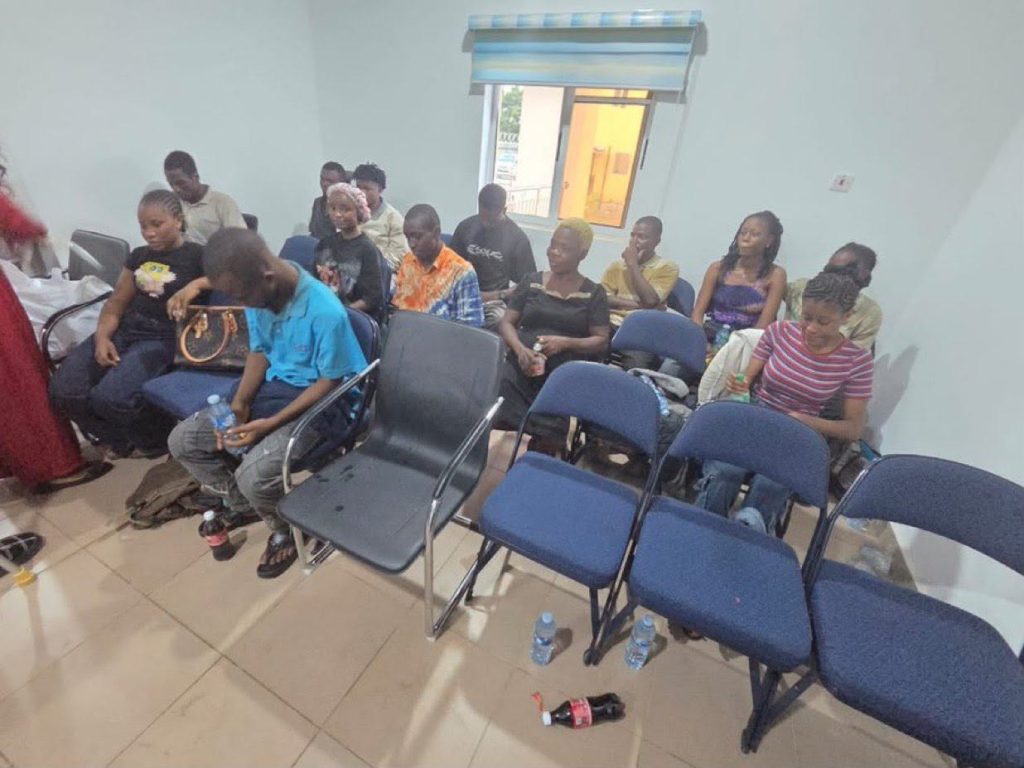
Recall the prospective corps members were abducted on October 1 after gunmen attacked two 18-seater buses travelling from Ibadan, Oyo State, along the Owerri-Onitsha expressway.
They were freed seven days after they were abducted along the Owerri-Onitsha road in Umunoha, Imo State.
Though the details of the rescue operation were unavailable at the initial time but the Force Public Relations Officer, CSP Anietie Iniedu, confirmed the release of the corps members in a statement on Wednesday, with security sources claiming that hostages were reportedly rescued by a joint team of the Nigeria Police Force, Army, Department of State Services and other security agencies.
But one of the parents of the victims, who is based in Ibadan, Oyo State, said her family paid N6 million in dollar equivalent to the abductors for the release of her son, one of the graduates travelling to NYSC orientation camps in Abia and Akwa Ibom states.
She made the disclosure in an interview with News Central TV, saying the kidnappers initially demanded N50 million for each of the 20 victims before reducing the amount to N6 million per person.
According to her, the abductors first established contact with the families and allowed the victims to speak with their relatives as proof that they were still alive.
“The terrorists first demanded N50 million. They gave the abductees phone to confirm that they were alive. We now asked if the money is for all of them, they said no. The money is for each of them,” she said.
“It was later they agreed for us to pay N6 million and that was what we paid. We paid N6 million,” she said.
According to her, the abductors first established contact with the families and allowed the victims to speak with their relatives as proof that they were still alive.
“The terrorists first demanded N50 million. They gave the abductees phone to confirm that they were alive. We now asked if the money is for all of them, they said no. The money is for each of them,” she said
The mother said the families initially offered N500,000 but the kidnappers rejected the amount and threatened to kill the victims.
“It was later they agreed for us to pay N6 million and that was what we paid. We paid N6 million,” she said.
She said the affected parents in Ibadan subsequently met to work out arrangements for raising the ransom and transporting it to Imo State.
“We called a meeting of the parents of the victims in Ibadan. And we agreed to pay the money into our account and convert it to dollars when taking it to Imo. And that was what we did,” she said.
The woman said the families later received confirmation that the abducted graduates had regained their freedom.
She added that her son’s brother was part of the team that travelled to Imo State to negotiate with the abductors alongside relatives of other victims.
“It is true that they have released them. We saw the video. His brother was among the people who were in the negotiating team. His brother confirmed the ransom payment and he went there with the parents of other victims,” she said.
Describing the ordeal as deeply traumatic, the mother said the abduction had affected her physically and emotionally.
“I have not been myself since the abduction. I cannot sleep and I have been purging. I am not sad because of the money; I am sad because of my child. No money can’t buy a child,” she said.
The victims were reportedly travelling in two buses when gunmen intercepted them along the Owerri-Onitsha Road in the Umunoha area of Mbaitoli Local Government Area of Imo State.
The incident triggered widespread concern among the victims’ families, particularly after the kidnappers reportedly demanded N50 million for each victim, amounting to N1 billion, and gave the families 24 hours to raise the money.
In the aftermath, the parents sought intervention from traditional and security authorities. They visited the Olubadan of Ibadanland, Oba Rashidi Ladoja, in Ibadan, alongside the Oyo State Commissioner of Police, Olugbenga Abimbola, and the Aseyin of Iseyinland, Oba Sefiu Adeyeri.
The parents said they could not raise the N1 billion demanded and appealed for help to secure the safe return of their children.
The kidnappers were subsequently reported to have lowered the ransom demand to about N5 million per victim.
Relatives also alleged that some of the victims, including female abductees, were subjected to physical assault while the families were being pressured to pay.
The Imo State Police Command later announced that security operatives had identified the suspected location where the victims were being held through drone surveillance.
Police, however, said the rescue operation had been delayed after intelligence reports indicated that improvised explosive devices (IEDs) had been planted around the area.
According to the police, bulldozers, armoured personnel carriers and other operational equipment were being deployed to gain access to the location and facilitate a safe rescue operation.
The Inspector-General of Police, Olatunji Disu, also deployed the Deputy Inspector-General of Police in charge of Operations, Shehu Nadada, to coordinate the search-and-rescue efforts in Imo State.
Although authorities confirmed the release of the victims, details of how they were freed, including whether any ransom was paid, had not been publicly disclosed.
The account provided by the victim’s mother therefore offers details of the negotiations between the families and the abductors, including the alleged payment of ransom in dollars.
The incident has renewed concerns over the safety of prospective corps members travelling to orientation camps and the financial and emotional pressure kidnapping places on victims’ families.
.
.
-
General News3 weeks ago
JOHESU demands: MHWUN puts FG on notice over fresh action
-

 Politics4 weeks ago
2027: ASAF backs APC governors, rejects rainbow coalition
-

 Politics1 month ago
You have demonstrated diligence, loyalty, statesmanship in leadership, Ekechi salutes Shetimma at 60
-
 General News5 days ago
Rivers 2027: We are not part of Rainbow Coalition – APC Legacy Group slams Wike, Fubara meeting
-

 Politics2 months ago
2027: Advertising experts raise concerns over irregular regulation of sector
-
FCT News2 months ago
2027: Hasana-Moneme pledges skills, empowerment, credit access for FCT women
-
General News2 months ago
2027: Dame Princess Esom-Nwafor Orizu confirmed as APC flagbearer for Nnewi North /South /Ekwusigo Federal Constituency as INEC releases names of candidates
-
Uncategorized3 months ago
Rescue of Oyo schoolchilden: Tinubu commends security agencies, says action breakthrough in fight against criminality