
Opinion
Borno Deputy Governorship: Shealting The Swords , Healing The Wounds.

By Inuwa Bwala
Given the role of a Deputy Governor, it is rather an anathrma to campaign, seeking to be chosen, as a deputy governorship candidate.
Changing dynamics have however seen to the emergence of individuals, openly campaigningy , to be so chosen.
It is a truism that, the choice is the prerogative of the governorship candidate, to nominate someone, he or she feels he or she can blend well.
The case in Borno for the oncoming elections, presents a case study, of people doing things wrongly and expect to alter a long standing narrative.
In the last few days, since Ali Abdullahi, was chosen as the runningmate to Engineer Mustapha Gubio, the polity seems to be getting charged.
I have tried to jaxtapose argumentson the appropriateness or lack of it, in the choice of Ali Abdullahi, as the deputy Governorship candidate of the All Progresdives Congress, APC, in Borno state.
While some justify the choice, others were not too comfortable with it.
To many, there was no sufficient consultations, with critical stakeholders, before the choice was made public.
To others, the candidate was picked from outside the traditional political circle, and yet to others, he is not conversant with the ways of the people, having been born and bred outside the enviroment.
I understand others even feel that the choice negates the expectations of frontrunners in the campaigns, with some people even developing a sense of entitlement, in way.
In as much as everybody os granted the right to aspire, it has never been the norm to consult everybody before a deputy governorship candidate is chosen.
It is normal to try selling the idea, but it is not a must, that the evrntual choice must be someone others feel must be the one.
No matter how anyone feels, there are rooms for a rhendezvous of interests, in a party that controls the government.
And given our peculiar circumstances in Borno, we have to give it to the candidate, to nominate somebody he feels he could blend with, effectively.
That most of the arguments did not center on competence, capacity or value addition of the deputy governorship candidate, leave room for one to surmise that, the conventional practice, rrlies more on atributes, above interest.
I would rather, those who feel slighted to reminiscence, on Ali Abdullahi’s past performances, and not the lack of patronage, or political convenience, on their sides.
The Task Ahead, presupposes that, while Borno is still smarting from years of insecurity, we do not enjoy the luxury of internal political bickerings, which could cause dislocations and possible going into the elections as a divided house.
It is a truism that we need a deputy governor, with requisite administrative experience and technical capacity, to fully compliment the efforts of Engineer Mustapha Gubio, so that together they can hit the ground running reminisceint of the Governor Zulum era. A curious look into Ali Abdullahi’s pedigree, shows that, he brings that capacity, in the same fashion that he demonstrated at SEMA. I have no doubt at the back of my mind, that both governor Zulum and our governorship candidate, Mustapha Gubio, are passionate about the continuity of the Zulum Agenda, hence the choice of Ali SEMA, as he is popularly known.
Taking into consideration the need to live up to the expectations of the people, especially on the need to rebuild Borno, they may have considered changing the course midstream may tend to slow us down.
I know as a matter of fact, that, Ali Abdullahi has been aligned to Zulum’s vision of service, integrity, and results, for a long time.
That the governor has gone out of his way in trying to placate those who may have nursed the ambition of being the ones to be considwred, points to the fact that, the Gubio/Abdullahi ticket was chosen to unite us, not divide us.
I am sure the Governor values every zone, every elder, and every stakeholder, and never intended to shut out anybody. We may recall, that, similar skepticism greeted the emergence of Zulum and Kadafur in 2023, but having seen their best sides, makes Borno the better off for it today.
Shealthing our swords and healing the wounds of this innitial perceibed snub, is a sinquanon to making the choice the best team, we could put forward for Borno.
I am compelled to appeal to all of us to look beyond personal interests and prioritize Borno, even as we strive to deliver. The Governor’s door remains open for dialogue, as always.
Let us rally behind this ticket, and mot risk a divided house that cannot deliver to our people. A united APC in Borno is what our people expect of us.
Let the narrative turn to the choice of Ali Abdullahi as Deputy Governorship candidate is about *competence, continuity, and service to Borno people, and not about how he emerged.
Governor Babagana Umara Zulum with his deputy have showed focus on finishing the work of rebuilding Borno’s destroyed schools, hospitals and roads, and resettling our people. His successor needs a deputy who understands this vission and shares that same commitment.
Ali Abdullahi has the experience, he has demonstrated loyalty, and has showed dedication. Let us not crucify him on the cross of our personal ambitions.
I respect all opinions expressed so far, but this is not the time for divisions, this is the time to unite behind the ticket no matter its perceived inadequacies, so that we can continue to deliver for Borno.
Our collective focus should be Borno first, and not who should be in a particular position.
We have no cause to doubt the man who delivered for us, in the face of innitial skepticism, so, let Ali SEMA, be.

Opinion
Between Law and The Masses: Why Supreme Court Holds Key to Labour Party’s Grassroots Destiny

By Demola Abimboye
The soul of a political party does not reside in the sleek briefcases of its high-flying flagbearers; neither does it belong to the latecomer elites who naturally gravitate towards a platform only after it has been nutured into national prominence. It belongs, intrinsically and undeniably, to the ordinary people — the workers, the youths, and the market women — who built the Labour Party, LP, from a quiet ideological corner into a roaring, formidable third force in Nigeria’s democratic journey so far.
Today, this organic mass movement stands at a historic crossroads, paused in anxious anticipation, refusing to yield to despair, and waiting resolutely for the Supreme Court to speak. Across the length and breadth of Nigeria, the millions of citizens who invested their sweat, tears, and hope into this platform remain completely undecided on their future steps, anchoring their ultimate hope on the apex court to preserve the structural sanctity of their vehicle. They do not look upon the institutional stakeholders who came later with bitterness; rather, they simply look upward to the grand temple of justice to ensure that the foundational architecture of their political home is not inadvertently dismantled by administrative interventions.
At the heart of the current crisis is a profound question of justice and fairness that transcends the restrictive walls of the lower courts. While the lower judicial chambers focused heavily on punitive technicalities and procedural rigidities; interpreting the intense struggle for the party’s institutional survival as mere re-litigation — they inadvertently overlooked a broader, more significant precedent. By employing the extraordinary doctrine of necessity to validate external caretaker committees, the lower courts stepped dangerously close to the judicial management of leadership, fracturing the sacred principle that a party’s internal affairs belong strictly to its constitutionally established mechanisms. The Nnewi national convention, regardless of the administrative squabbles surrounding its notification processes, represents an expression of constitutional continuity that cannot be easily set aside by an assembly of stakeholders, no matter how well-meaning their intentions to salvage the party might be. The ordinary people are watching this legal tug-of-war, fully aware that if the Supreme Court does not examine the fresh grounds of this appeal, a populist movement risk losing its organic link to the common man, transforming instead into a top-down bureaucratic apparatus where the grassroots members are merely spectators.
Yet, there is a deep, abiding reason why the grassroots have not lost faith, and it lies in the historic character and intellectual depth of the Supreme Court of Nigeria.
The apex court has never been a mere rubber stamp of mechanical, rigid rules; it is, and has always been recognised as a reliable court of law and a profound court of policy. As legal scholars and practitioners frequently note, the Supreme Court directs the policy of the law, ensuring that legal interpretations foster societal peace and protect the democratic rights of the masses. Throughout our national history, when the political climate becomes turbulent and the powerful seek to assert structural control over populist vehicles, it is the Supreme Court that steps forward as the ultimate shield of the people. Repeatedly, the learned Justices have demonstrated a masterful capacity to look at past restrictive technical barriers to deliver substantial justice that preserves social stability. By considering the new grounds of the Abure-led LP appeal, the apex court has a timely opportunity to do what it does best: reinforce the internal sanctuary of party democracy and declare that the internal administrative decisions of a political association are best handled by its internal legal structures rather than external interventions.
This philosophical dedication to internal party autonomy is deeply rooted in a long line of classic and contemporary Supreme Court jurisprudence. The apex court has consistently maintained a hands-off policy regarding the internal governance of political associations, recognising that to do otherwise would undermine the very essence of multi-party democracy. In the landmark case of Onuoha v. Okafor, the Supreme Court laid down the immutable principle that the domestic affairs of a political party are non-justiciable questions over which courts should not lightly assume control. This position was robustly reinforced in Dalhatu v. Turaki, where the court clarified that the judiciary must resist the temptation to micro-manage political entities as long as they operate within the general framework of their party regulations.
More recently, the apex court reaffirmed this enduring legal philosophy in its unanimous decision regarding the national secretary dispute of the People’s Democratic Party, PDP. In that matter, the Supreme Court eloquently held that political parties possess the inherent autonomy to manage their internal affairs without undue interference from external bodies, explicitly warning that the judiciary’s role is not to referee administrative disputes or impose leadership structures, but to ensure adherence to due process, equity, and fairness.
It is this rich heritage of judicial restraint and wisdom that the ordinary builders of the Labour Party now invoke, asking the panel that would be constituted under the leadership of the Chief Justice of Nigeria, CJN, Hon. Justice Kudirat Olatokunbo Kekere-Ekun GCON, to apply these same protective doctrines to their beloved platform.
The request to return to status quo ante-bellum while examining the fresh grounds of appeal is not an act of defiance against the lower courts, but an appeal to the higher policy function of the apex court. The lower courts, in their rigid focus on the timeline of Abure’s tenure, created a vacuum that was quickly filled by an ad-hoc caretaker committee. While the elites who convened the Umuahia meeting may have acted out of a genuine desire to see the party organised for future elections, the legal mechanism used, i.e. the doctrine of necessity, remains an extraordinary tool meant for constitutional breakdowns, not regular administrative disagreements. If every intra-party leadership dispute can be bypassed by creating parallel caretaker structures under judicial cover, the stability of the entire Nigerian political system faces a quiet crisis.
The Supreme Court understands that its rulings set the standard for all subordinate authorities. By granting an order to return the status quo ante bellum, the court would not be declaring a final winner; instead, it would be freezing the situation to prevent an irreversible change on the ground before the substantial constitutional questions can be thoroughly answered. This approach protects the institutional integrity of the party and gives the ordinary members a sense of security, knowing that their platform cannot be structurally altered overnight while their appeals are still pending before the highest court in the land.
Ultimately, this struggle is less about individual personalities and far more about the democratic rights of the common man. In a developing democracy like Nigeria, the court truly represents the last hope of the ordinary citizen who lacks the financial capital to compete with institutional power. When thousands of regular citizens pool their modest resources, organise grassroots campaigns, and build a political party from obscurity into a national phenomenon, they create a form of social capital that must be protected by law. They rely on the predictability of the legal system to guard their collective investment. If the legal rules can be subtly adjusted to validate external interventions over established internal party processes, the common man loses his incentive to participate in democratic state-building.
The current sense of uncertainty among the Labour Party grassroots is a reflection of this profound anxiety. They are waiting because they believe in the rule of law; they remain undecided because they respect the judicial process and refuse to take matters into their own hands. Their patience is a profound vote of confidence in the Supreme Court’s historical legacy as an institution that listens to the quiet whispers of the populace just as clearly as it hears the loud arguments of prominent advocates.
As the legal teams prepare to present their arguments on these new grounds of appeal, the eyes of the nation remain fixed on the apex court. The judicial task ahead is one of delicate balance — harmonizing the strict requirements of legal form with the expansive demands of substantial justice.
The ordinary people who built the Labour Party are not asking for a special favor; they are asking for the consistent application of the Supreme Court’s own established precedents on party supremacy and internal autonomy. They are asking that their party be allowed to resolve its administrative challenges through its own constitutional organs, free from judicially enforced caretaker interventions.
Ultimately, if the Supreme Court in its unmatched wisdom can be magnanimous enough to stand firmly on the side of the common man by returning the party to the status quo ante bellum, such a profound intervention will carry absolutely no negative consequences for the platform. Far from fracturing the institution, it will serve as the ultimate healing balm, quickly uniting all factions around the shared objective of moving both the party and the common man in the direction of genuine participatory democracy. This approach guarantees a win-win resolution for both sides. Because the established structures remain intact, the party’s meticulous preparations and institutional readiness for upcoming elections will not be tampered with in any way. In doing so, the Supreme Court will not only be resolving a leadership dispute; it will be reassuring millions of ordinary Nigerians that their contributions to democracy are valued, that their political vehicles are secure, and that the temple of justice remains an unshakeable fortress for the common man.
Abimboye writes from Lagos.
FCT News
“I will be the first politician they will come after” Wike shares fears if Atiku or Obi wins election
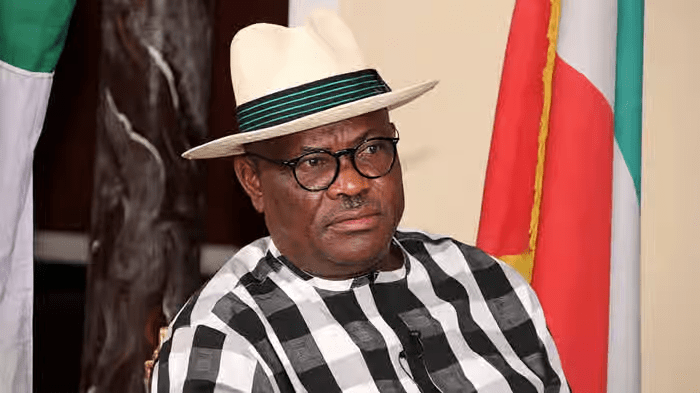
Nyesom Wike, the Federal Capital Territory (FCT) Minister, has said he would become the first target if President Bola Tinubu loses the 2027 presidential election to former Vice President Atiku Abubakar or Peter Obi.
Wike, who has been supporting Tinubu despite being a member of the Peoples Democratic Party (PDP), said he was fully aware of the consequences of the position he had taken.
Speaking during a media chat, Wike said: “I will be the first politician that I think they will come after. I will be the first politician. I know they will come for my head.”
Wike said in spite of the possibility of political consequences, his resolve to campaign for and support Tunubu remains strong.
“Each day I sleep, I am thinking about the president’s reelection. When I am eating, I think about the president’s reelection. Everything I am doing now is about the president’s reelection,” he stated.
The former Rivers State governor said the criticism directed at him over his political position had been unusually intense.
But he maintained that he was not concerned about the names he had been called or the opinions expressed by his critics.
“I don’t see where anybody in this country today has been called names the way my name has been. I am not bothered about people who say their [own] thing. My business is, like I said, I am going to support Mr President,” he said..
By Chika Esomonu
Since the Independent National Electoral Commission, INEC, released the Official Campaign Timetable for the 2027 General Elections, political parties and candidates are expected to begin public campaigns – including rallies, media advertisements, voter engagement, and grassroots mobilization within the respective periods.
This development has again brought to the fore the need for the Supreme Court to speedily resolve the judicial hijack of the Labour Party, LP, as the lower courts overstepped by wading into LP’s internal affairs and misapplying the April 4, 2025 precedent.
Instructively, millions of ordinary Nigerians – workers, artisans, traders, students, transporters, joined the LP movement because they saw it as theirs and decided to own, promote and protect it to the extent of waking up to be at polling units as early as 6am during elections.
That is why this moment hurts that a party built, supported and promoted by ordinary Nigerians can be taken away by court orders and elite bargains? The dispute now before the Supreme Court is whether our courts will protect the rule of law, or normalize judicial hijack of political parties?
As the Supreme Court prepares to speak again, one enjoins it to revisit its earlier verdict of April 4, 2025 when it said: “We will not be used to hijack a party.” That day, their Lordships did three critical things that the lower courts blatantly ignored or overlooked.
First, they protected jurisdiction. The Court reminded everyone that judges do not run parties and pointed everyone back to the Constitution and the party’s own rules.
Second, it affirmed that membership, discipline, and leadership of a political party are its internal matters. It did not declare anyone the national chairman. It did not dissolve any NEC. It said, in essence: “This house has its own landlord. Go settle it there first.” That is judicial wisdom.
Third, it preserved the status quo ante. The Supreme Court neither declared Abure’s seat vacant nor installed a new leadership. By refusing to make that declaration, it left things as they were before the litigation and told the parties to go back to their constitution. That was the law.
As we await a balanced ruling expected to address the areas where the lower courts missed it, four legal pillars demand Supreme Court’s attention.
First, jurisdiction was breached when the Federal High Court, per Justice Lifu, issued an order directing INEC to recognise the Nenadi-LP faction. That directive crossed from adjudication into administration. If this stands, any member can run to court tomorrow to install a national chairman or executives in any party. That is nothing more than judicial endorsement and a judicial hijack, not rule of law.
Section 6 of the Constitution vests judicial power in courts to interpret laws, not run political parties. Section 82(1) of the Electoral Act 2022 also places the conduct of party congresses and leadership succession within party constitutions.
Second, internal affairs was inverted: The Court of Appeal described the Nenadi-LP NEC as a product of “doctrine of necessity.” With respect, necessity cannot override a party’s constitution. You cannot use a legal phrase to break into a house and then call it renovation. April 4, 2025 told us to stay out. The lower courts walked in. The Supreme Court has consistently held that matters of party membership, discipline, and leadership are non-justiciable internal affairs. The purpose is simple: judges are not delegates of party conventions. Yet the lower courts cited internal affairs and then did the opposite. The Court of Appeal, in its ruling described the Nenadi-LP faction’s NEC as arising from a “doctrine of necessity” thereby constituting a label used to justify stepping into the internal management of the party and validating a parallel structure. That is not deference. That is intervention. You cannot use the shield of “internal affairs” to justify the very intrusion the doctrine forbids.
Third, the April 4, 2025 status quo precedent was destroyed by misapplying the Supreme Court decision. The lower courts did what the Supreme Court deliberately refused to do on April 4, 2025. They declared a winner. They altered the status quo. They turned judicial restraint into judicial action. On April 4, 2025, Nigeria’s highest Court reminded us that courts must exercise restraint where party constitutions provide internal mechanisms. The principle was to prevent forum shopping and judicial overreach. Both the Lifu order and the Appeal Court’s “doctrine of necessity” reasoning stand in direct tension with that guidance. This creates a dangerous contradiction. As the final custodian of its own pronouncements, only the supreme court can reconcile the record and ensure the April 4, 2025 judgment is applied as intended: hands off internal leadership, unless a clear constitutional breach is shown. Here, no such breach was proven, only competing claims that deliberately shifted attention away from the sanctity of the 2024 Owerri LP convention to the issue of claiming INEC leadership recognition within the party.
Fourth, the need to protect the ordinary people against the elites. The LP was founded, funded by workers, students, and market people. They have legitimate expectations that it will not be taken from them through technical court orders.
Why this matters to ordinary Nigerians now:
The ordinary Nigerians, the owners of LP, now look up to the judges again with honour, respect and hope that they will consider all grounds of the new appeal awaiting ruling holistically: the Lifu order; the doctrine of necessity; how April 4, 2025 Supreme Court ruling was misapplied and the helpless situation of real LP proprietors now at the mercy of powerful late comer elites.
The issue at stake is not about Abure or Nenadi but the Constitution. The judges should pick the law; set aside orders that overreach; reaffirm jurisdictional limits. Most importantly, reaffirm that by not openly declaring the national chairman’s seat vacant on April 4, 2025 the Supreme Court intended the status quo ante to remain until the party’s internal organs, procedures and processes are reorganised to decide otherwise.
-
 General News3 weeks ago
Rivers 2027: We are not part of Rainbow Coalition – APC Legacy Group slams Wike, Fubara meeting
-
General News1 month ago
JOHESU demands: MHWUN puts FG on notice over fresh action
-

 Politics1 month ago
2027: ASAF backs APC governors, rejects rainbow coalition
-

 Politics2 months ago
You have demonstrated diligence, loyalty, statesmanship in leadership, Ekechi salutes Shetimma at 60
-

 Politics2 months ago
2027: Advertising experts raise concerns over irregular regulation of sector
-
FCT News2 months ago
2027: Hasana-Moneme pledges skills, empowerment, credit access for FCT women
-
General News3 months ago
2027: Dame Princess Esom-Nwafor Orizu confirmed as APC flagbearer for Nnewi North /South /Ekwusigo Federal Constituency as INEC releases names of candidates
-
Uncategorized4 months ago
Rescue of Oyo schoolchilden: Tinubu commends security agencies, says action breakthrough in fight against criminality