
General News
Colleges of agriculture drive Nigeria’s food security, train over 50,000 professionals annually

Stella Odu
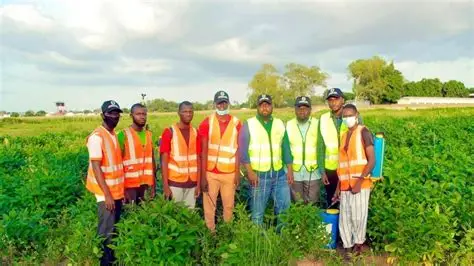
Nigeria’s Colleges of Agriculture have reaffirmed their critical role in transforming the country’s agricultural sector, revealing that they collectively train more than 50,000 technicians, technologists, artisans, farmers and agripreneurs every year while serving as a bridge between research and practical farming.
The achievements were highlighted during the 9th Africa Agriculture Science Week and 10th FARA General Assembly on Wednesday, where the country’s Federal and State Colleges of Agriculture presented a joint paper titled “Success Stories of Colleges of Agriculture in Nigeria.”
The presentation was delivered by Jonathan Atungwu on behalf of the provosts of all Colleges of Agriculture in Nigeria.
The colleges noted that Africa’s food systems continue to face major challenges, including low agricultural productivity, climate change, post-harvest losses, weak seed systems, inadequate infrastructure, limited access to finance and policy constraints.
They stressed that overcoming these challenges requires increased investment in innovation, research, technology adoption and practical agricultural education.
According to the presentation, Nigeria’s Colleges of Agriculture remain the country’s oldest higher education institutions dedicated to agricultural training, tracing their roots from the establishment of the Agricultural Research Station at Moor Plantation, Ibadan, in 1893 and the School of Agriculture in 1921.
The Agricultural Research Council of Nigeria (ARCN) currently coordinates 42 agricultural colleges, comprising 23 Federal and 19 State institutions, with mandates covering teaching, research, agricultural extension, manpower development and technology adaptation.
The colleges said they have become engines of innovation by promoting research, operating dedicated innovation centres and ensuring that scientific discoveries reach farmers through extension services and community outreach programmes.
They also highlighted the strong emphasis on practical training through the Students Industrial Work Experience Scheme (SIWES), six-month farm placements, one-year industrial attachments, student-led enterprises and demonstration farms.
These initiatives, they said, have enabled more than 70 per cent of graduates to establish or join agribusinesses within two years of graduation.
The institutions reported significant progress in reducing post-harvest losses through improved farm coordination and value chain management, while climate-smart agricultural practices such as drip irrigation, greenhouse farming and demonstration plots have been introduced across campuses and surrounding communities.
Beyond training, the colleges said they are promoting youth and women inclusion, strengthening research-extension linkages, improving infrastructure and aligning their programmes with national agricultural policies.
They disclosed that improved crop varieties developed and disseminated through the institutions have helped farmers achieve yield increases of over 100 per cent in several locations, while more than 1,000 young graduates have been empowered as agribusiness entrepreneurs.
According to the presentation, innovations from the colleges have reached farmers in all 36 states and the Federal Capital Territory through technology transfer programmes, demonstrating the effectiveness of Nigeria’s agricultural training model.
The institutions also showcased several innovations, including demonstration farms, agripreneurship laboratories, student-led enterprises and research commercialisation initiatives designed to bridge the gap between academic research and market needs.
They urged African countries to strengthen regional collaboration by replicating successful Nigerian models, promoting institutional partnerships and expanding knowledge-sharing networks to accelerate agricultural transformation across the continent.
Despite the progress, the colleges identified inadequate funding, weak commercialisation of research findings, low public awareness and policy gaps as major obstacles limiting the impact of agricultural innovations.
They called for stronger partnerships between government, research institutions and the private sector, increased investment in agricultural research, greater support for agribusiness incubation and entrepreneurship, and the replication of successful models across Nigeria and Africa.
The presentation concluded that agricultural colleges have already demonstrated their capacity to drive innovation and food security, adding that with sustained support they can play an even greater role in transforming Nigeria’s agrifood system and strengthening the continent’s agricultural future.


By Our Reporter
Veteran Nollywood actor Francis Duru has died at the age of 57 following a brief illness, his family has announced.
The family disclosed his death in a statement published on the actor’s official Instagram page in the early hours of Friday.
“We, the family of Francis Duru, regret to announce his passing following a brief illness,” the post reads.
“We appreciate your prayers, love, and understanding. May his soul rest in perfect peace. Amen.”
Duru’s death comes months after he dismissed reports circulating on social media that he was battling a life-threatening illness.
The rumours intensified in June after a video showing the actor looking frail went viral, prompting concerns among fans and colleagues in the entertainment industry.
Responding to the speculation at the time, Duru released a video on Instagram in which he described the footage as “fabricated and malicious”.
Born on July 27, 1969, in Cameroon to Nigerian parents from Imo State, Duru completed his primary and secondary education in the Central African country before moving to Nigeria for university education.
He gained admission to the University of Port Harcourt, Rivers State, where he studied Theatre Arts and graduated with a Bachelor of Arts degree in 1996.
Duru began his acting career in 1989 when he featured in Missing Mark, a film directed by the late Ndubuisi Oko. However, the role did not immediately establish him as a prominent figure in the Nigerian movie industry.
His breakthrough came in 1995 following his appearance in Rattlesnake, an action-comedy produced by the late filmmaker Amaka Igwe. In the film, he played the character Ahanna, a role that helped raise his profile in Nollywood.
Throughout his career, Duru earned several awards and honours in recognition of his contributions to the entertainment industry.
He was named a United Nations ambassador of peace for his positive influence on young people.
In 2020, he won the Best Actor in a Leading Role (Igbo) award at the Best of Nollywood Awards for his performance in Mboputa.
Beyond his acting career, Duru was married to Adokiye, whom he wed in 2003. Their union produced four children.
The family suffered a major loss in August 2024 when one of their children, Ifeanyi, died.
Duru’s death marks the loss of an actor whose career spanned several decades in Nigeria’s film industry.
By Our Reporter
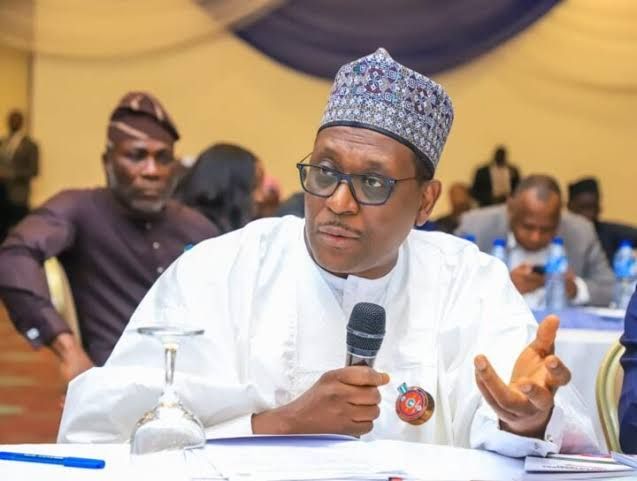
Ali Pate, coordinating minister of health and social welfare, says Nigerians should remain vigilant, shun panic, and stop spreading misinformation about Ebola virus disease.
Speaking on Wednesday after meeting with Femi Gbajabiamila, chief of staff to the president in Abuja, Pate said citizens should rely on verified public health information from trusted sources rather than circulating false rumours.
The minister said the federal government is collaborating with Uganda to manage the situation.
“All I can tell you is that we are collaborating with our sister African nation of Uganda,” Pate said.
“What is important is that we have found this one case. We are doing contact tracing, and we are putting containment measures to ensure that it doesn’t go into our population.”
He urged Nigerians to remain calm and communicate responsibly, adding that the situation should be taken seriously without causing fear.
“Nigerians should be reassured. We must be vigilant, but not panic, and people should respect public health information from trusted sources, and not spread misinformation and false rumours,” Pate said.
The minister said Nigeria has the public health institutions and expertise needed to respond to the situation.
Pate added that the Nigeria Centre for Disease Control and Prevention (NCDC) had activated its incident management system (IMS), with response teams working round the clock and the relevant task force coordinating containment efforts.
“They are working 24/7, and the task force is also active. So, we have things in place that give us confidence that Nigeria can weather this public health crisis,” he said.
He said the government would continue to monitor developments and provide updates as verified information became available.
“If the situation changes, we’ll come out and inform Nigerians,” he said.
Pate reiterated that the immediate priority was to contain the imported case and prevent its spread within the population.
The meeting between Pate and Gbajabiamila came nearly 24 hours after the federal government announced a confirmed case of Ebola disease in the Federal Capital Territory (FCT).
On Tuesday, Pate said 44 close contacts had been identified for tracing to prevent further transmission.
He added that the patient, a woman who recently arrived in Nigeria on an international flight from Uganda, had been admitted to a private hospital in the FCT, where she received care for several days before the diagnosis was confirmed.
By Our Reporter
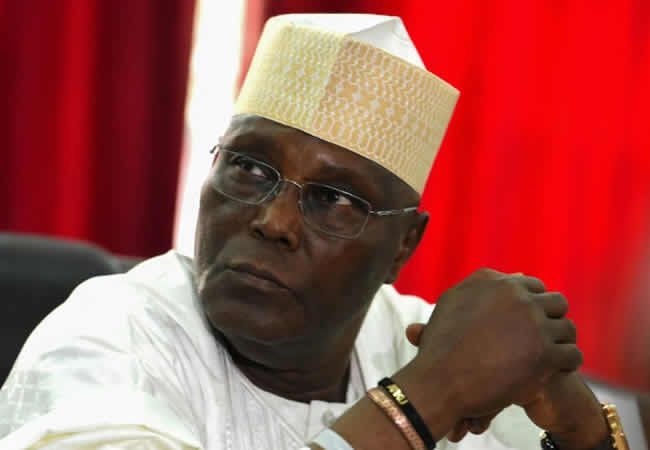
Former Vice-President Atiku Abubakar has asked President Bola Tinubu to account for the N10 billion approved for Ebola preparedness in June.
The African Democratic Congress (ADC) presidential candidate made the demand in a statement issued on Wednesday by Phrank Shaibu, his director of strategic communication.
Atiku’s remarks followed an announcement by Ali Pate, coordinating minister of health and social welfare, that the federal government had confirmed an Ebola case in Abuja and identified 44 close contacts for tracing to prevent further transmission.
Atiku said the confirmed Ebola case in Abuja had raised questions about the government’s preparedness and response.
“Ebola is a grave public health threat. Nigerians deserve urgent action, competent leadership and the truth,” he said.
“Instead, the first confirmed case in Abuja has exposed unanswered questions about preparedness, surveillance and the protection of health workers. Tinubu must account for the N10 billion he said would be released immediately in June.”
Atiku asked the president to publish the amount disbursed, the dates of payment, details of contract awarded, the recipients and items delivered.
The former vice-president said Tinubu must explain if the money had not been released.
“Tinubu must explain why he announced emergency funding that never reached the people responsible for protecting Nigerians. A press statement cannot replace an audit,” he said.
Atiku questioned the timeline of the reported case, saying the patient arrived in Nigeria on October 5, developed symptoms on October 7 and sought treatment at a private hospital on October 11.
He said the government did not publicly confirm the case until October 20, nine days after the patient sought treatment.
Atiku alleged that 44 close contacts were not monitored during that period and that private health workers who handled the case lacked adequate protective equipment.
“This is a failure of preparedness with potentially grave consequences,” he said.
Atiku called on the government to disclose the steps taken at every stage of the response, including travel history and exposure screening, follow-up after the patient developed symptoms, and when the 44 contacts were first reached and monitored.
He also questioned why frontline health workers were allegedly left without adequate protection.
“Nigerians deserve answers, and those responsible for these failures must be held accountable,” he said.
Atiku further faulted the role of political appointees in the response, noting that Tinubu had announced a presidential task force chaired by Femi Gbajabiamila, his chief of staff, in June.
He said medical experts should lead the response, with the authority and resources to act.
“The NCDC, epidemiologists, doctors and public health professionals must be in charge, with the authority and resources to act. Political titles cannot trace contacts, equip hospitals or save lives,” he said.
The former vice-president warned that the government’s handling of the outbreak could deepen public anxiety and disrupt movement, livelihoods and economic activity.
He attributed the country’s economic hardship to Tinubu’s policies, saying Nigerians should not bear the cost of both economic difficulties and an inadequate emergency response.
“The people must not pay twice for the same failure: first through hardship, then through a bungled emergency response. Both caused by Bola,” he said.
On June 9, Tinubu ordered the immediate release of N10 billion as emergency intervention funding to strengthen Nigeria’s preparedness against Ebola and other emerging public health threats.
The president’s directive followed the discovery of Ebola in the Democratic Republic of Congo (DRC) and Uganda, both of which were affected by outbreaks at the time.
In a statement, Bayo Onanuga, special adviser to the president on information and strategy, said Tinubu also approved the establishment of a presidential task force (PTF) on Ebola virus disease preparedness and emerging public health threats.
Onanuga said the fund would strengthen the operational preparedness of the Nigeria Centre for Disease Control and Prevention (NCDC) and support critical national public health emergency response activities.
TheCable
-
 General News2 weeks ago
Rivers 2027: We are not part of Rainbow Coalition – APC Legacy Group slams Wike, Fubara meeting
-
General News1 month ago
JOHESU demands: MHWUN puts FG on notice over fresh action
-
 Politics1 month ago
2027: ASAF backs APC governors, rejects rainbow coalition
-

 Politics2 months ago
You have demonstrated diligence, loyalty, statesmanship in leadership, Ekechi salutes Shetimma at 60
-

 Politics2 months ago
2027: Advertising experts raise concerns over irregular regulation of sector
-
FCT News2 months ago
2027: Hasana-Moneme pledges skills, empowerment, credit access for FCT women
-
General News3 months ago
2027: Dame Princess Esom-Nwafor Orizu confirmed as APC flagbearer for Nnewi North /South /Ekwusigo Federal Constituency as INEC releases names of candidates
-
Uncategorized3 months ago
Rescue of Oyo schoolchilden: Tinubu commends security agencies, says action breakthrough in fight against criminality