
General News
Delta economic summit begins to yield results as MB refinery project takes shape

Our Reporter
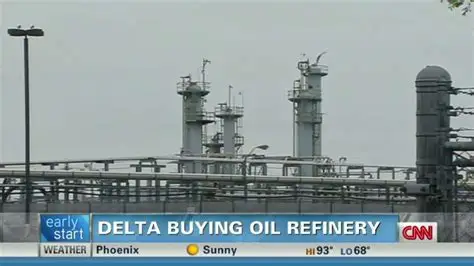
The recent Economic and Investment Summit organized by the Delta State Government is beginning to yield positive results, particularly in the oil and gas sector, with the ongoing development of the MB Refinery and Petrochemical Company Limited in Ajagbodudu, Warri North Local Government Area.
The Delta State government has reaffirmed its commitment to attracting and supporting strategic private-sector investments capable of driving sustainable economic growth and industrial development across the state.
The Commissioner for Oil and Gas, Hon. Peter Uviejitobor, stated this during an inspection visit to the refinery site, following a presentation by the management of MB Refinery to the state government.
According to him, the MB Refinery project represents a significant step towards deepening private-sector participation in the oil and gas industry, expanding local refining capacity, creating employment opportunities and strengthening the industrial base of Delta State.
Uviejitobor noted that investments of this nature align with the state government’s commitment to promoting sustainable economic development and creating an enabling environment for businesses to thrive.
He said the inspection showed that significant progress had been made, including the development of the basement and foundation, as well as designated areas for the installation of storage tanks for petroleum products.
The Commissioner noted that the refinery’s strategic location along the riverbank and the vast expanse of land acquired by the company would provide significant advantages for the transportation and importation of equipment, exportation of refined products and future expansion of the facility into petrochemical production.
According to him, the project has the potential to develop into a major industrial hub capable of competing with some of the country’s leading refineries, adding that the arrival of equipment from overseas would further accelerate the project’s development.
He therefore called on investors and strategic partners to support the project through collaboration, public-private partnerships and other viable financing arrangements that could strengthen its financial base and facilitate the commencement of production.
Uviejitobor disclosed that the refinery was expected to commence production within 18 months, adding that its proposed petrochemical component could attract additional industries, create employment and stimulate economic activities in the surrounding communities.
The Chairman and Chief Executive Officer of MB Refinery and Petrochemical Company Limited and Bob and Sil Global Services Limited, Akuyoma Bobson, said the project was designed as a 30,000-barrels-per-day modular refinery to be developed in phases.
Bobson explained that the first phase would have a refining capacity of 5,000 barrels per day and produce Naphtha, Automotive Gas Oil (AGO/Diesel), Fuel Oil and Jet Fuel.
According to him, the second phase would increase the capacity to 15,000 barrels per day, while the third phase would take the refinery to its full 30,000-barrels-per-day capacity and introduce processes for converting Naphtha into Premium Motor Spirit (PMS), commonly known as petrol.
Bobson further disclosed that the facility would utilize Liquefied Petroleum Gas (LPG) for power generation, noting that the initiative would help reduce operating costs and improve the refinery’s overall economic efficiency.
He added that the project was expected to create between 150 and 200 direct local jobs when fully operational, apart from the wider economic opportunities it would generate for businesses, service providers and communities in the area.
The refinery management expressed appreciation to the Delta State Government and the host community for their support and warm reception, stressing that the cooperation would contribute significantly to the successful completion and operation of the project.

General News
Panel recommends dismissal of NSCDC commandant, other officers, compensates victims’ families

By Our Reporter
The Chairman of the Independent Investigative Committee on the death of some Niger miners in the state, Jonathan Kure, has recommended that one point four billion be paid to the families of 33 victims and 44 survivors.
Speaking in Abuja while presenting the report of the committee on Tuesday, Kure said the deaths were avoidable as the victims, including 14 minors, were held in inhuman conditions.
The committee also recommended summary dismissal of the state commandant of the Niger State Command of the Nigeria Security and Civil Defence Corps and all other officers who were directly involved in the detention and eventual death of the miners.
The committee equally recommended institutional reforms for the Nigeria Security and Civil Defence Corps in order to strengthen the leadership of the corps.
The Minister of Interior, Olubunmi Tunji-Ojo, who received the report, promised to implement the recommendations of the committee in order to ensure justice for all affected persons.
Tunji-Ojo also directed the commandant of the Corps to immediately suspend all officers who cleaned up the detention centre in order to destroy evidence.
By Our Reporter with agency report
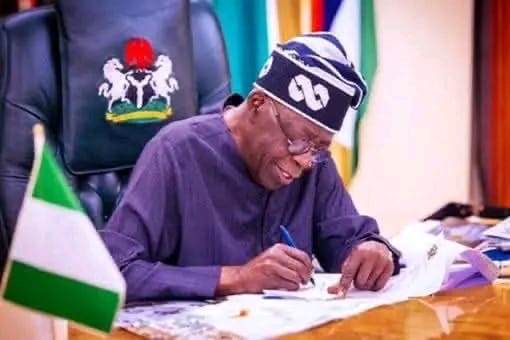
President Bola Tinubu has sought the approval of the Senate for a 2026–2027 supplementary external borrowing plan of $20.52 billion dollars and 1.05 billion euros.
Tinubu’s request is contained in a letter addressed to Senate President Godswill Akpabio and read at plenary on Tuesday.
Tinubu said the proposed borrowing plan would be utilised on critical sectors of the economy, including infrastructure, agriculture, healthcare, education, water supply, security, employment generation and financial management reforms.
He said the funds would help address the country’s infrastructure deficit and bridge the financing gap required to implement critical development projects.
The president said that the projects and programmes under the plan were selected following technical and economic evaluations, with consideration on its anticipated contributions to Nigeria’s socioeconomic development.
“These initiatives aim to generate employment, promote skill acquisition, foster entrepreneurship, reduce poverty and enhance food security, all of which improve the livelihood of the Nigerian child,” he said.
Tinubu said most of the projects and programmes would be implemented across 36 states and the Federal Capital Territory. (FCT).
He said substantial investment in infrastructure remained necessary to support economic growth and address longstanding development challenges.
“In light of the need for significant infrastructure investment in the country and the vast financial resources needed to address this gap.
“It has become essential to pursue prudent external borrowings to close the financing shortfall,” the President said.
He said the funds would primarily be channelled into critical infrastructure projects, particularly in the power, transportation and healthcare sectors.
Tinubu urged the Senate to give the borrowing plan urgent consideration, adding that approval would enable the government to meet its obligations to Nigerians through timely disbursements and effective project implementation.
Senate President Godswill Akpabio, in his remarks, said that the borrowing plan had been previously featured in the approved borrowing plan of the federal government.
He thereafter referred the request to the Senate Committee on Local and Foreign Debts for further legislative inputs with collaboration from the Committees on Appropriations and Finance.
“The borrowing plan is attached, but of course, this was even earlier approved in our budget, and also the external borrowing plan was approved as far back as 2025 to 2027,” Akpabio said. (NAN)

England captain Harry Kane has been crowned the 2026 men’s Ballon d’Or winner, beating Lamine Yamal and Kylian Mbappé to claim the prestigious individual award.
Kane received the award at the Palladium Theatre in London, United Kingdom, on Monday, becoming the first English player to win the men’s Ballon d’Or since Michael Owen in 2001.

The 33-year-old striker enjoyed a remarkable 2025/26 season, scoring 73 goals for club and country. His goals played a key role in helping Bayern Munich secure the German Bundesliga title and reach the semi-finals of the UEFA Champions League.
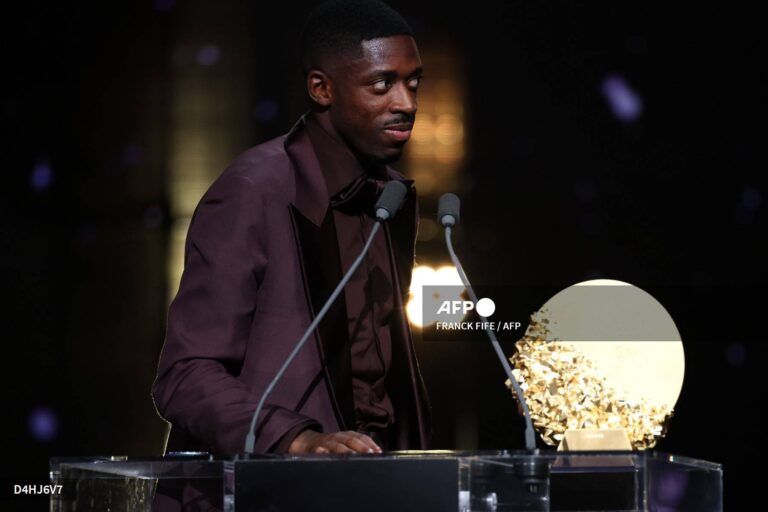
Kane also captained England at the 2026 FIFA World Cup in North America, where the Three Lions finished with a bronze medal.
Meanwhile, Barcelona and Spain legend Alexia Putellas won the women’s Ballon d’Or for the third time, joining fellow Spaniard Aitana Bonmatí as the only players to have achieved the feat.
Putellas’ latest triumph further underlines her status as one of the most decorated players in women’s football.
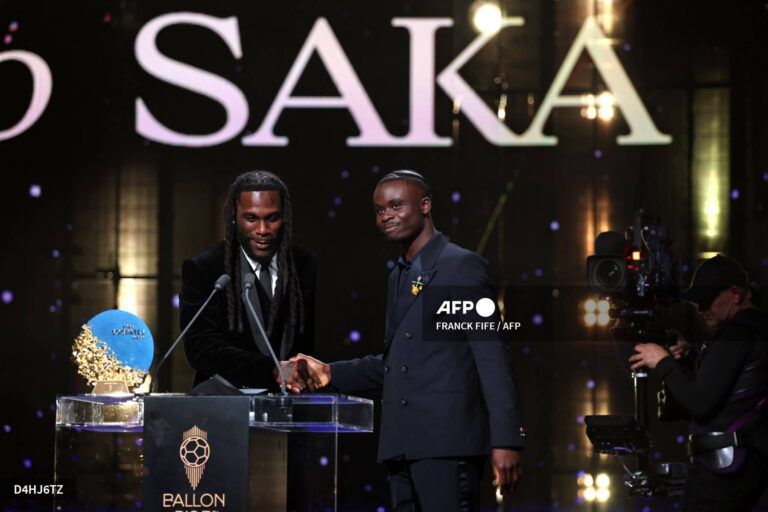
Earlier in the ceremony, Arsenal and England forward Bukayo Saka received the Socrates Trophy in recognition of his humanitarian and charitable activities.
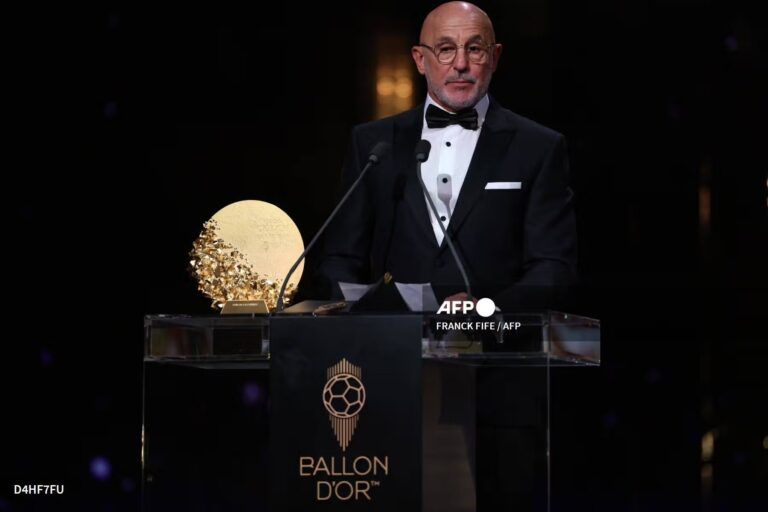
Saka was honoured for his charity work, which has supported surgeries for children in Nigeria and other African countries.
Full List of 2026 Ballon d’Or Winners
1- Men’s Ballon d’Or: Harry Kane
2- Women’s Ballon d’Or: Alexia Putellas
3- Best Young Talent of the Year: Lamine Yamal and Vicky López
4- Best Goalkeeper Trophy: Cata Coll and Unai Simón
5- Women’s Best Striker of the Year: Charlyn Corral
-6- Men’s Best Striker of the Year: Harry Kane
7- Best Men’s Coach: Luis de la Fuente
8- Best Women’s Coach: Pere Romeu
9+ Men’s Best Club: Paris Saint-Germain
10+ Women’s Club of the Year: FC Barcelona
11- Socrates Trophy: Bukayo Saka
-
 General News3 weeks ago
Rivers 2027: We are not part of Rainbow Coalition – APC Legacy Group slams Wike, Fubara meeting
-
General News1 month ago
JOHESU demands: MHWUN puts FG on notice over fresh action
-
 Politics1 month ago
2027: ASAF backs APC governors, rejects rainbow coalition
-

 Politics2 months ago
You have demonstrated diligence, loyalty, statesmanship in leadership, Ekechi salutes Shetimma at 60
-

 Politics2 months ago
2027: Advertising experts raise concerns over irregular regulation of sector
-
FCT News2 months ago
2027: Hasana-Moneme pledges skills, empowerment, credit access for FCT women
-
General News3 months ago
2027: Dame Princess Esom-Nwafor Orizu confirmed as APC flagbearer for Nnewi North /South /Ekwusigo Federal Constituency as INEC releases names of candidates
-
Uncategorized4 months ago
Rescue of Oyo schoolchilden: Tinubu commends security agencies, says action breakthrough in fight against criminality