
General News
Police deploy tactical teams to rescue worshippers abducted in Niger

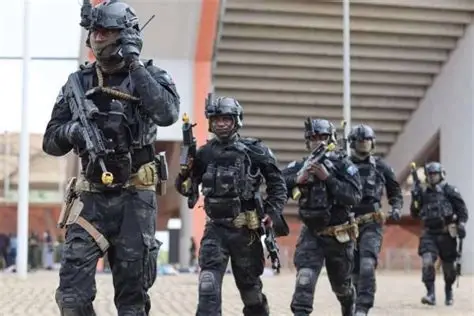
The Police Command in Niger has deployed tactical teams and other security personnel to Borgu and Agwara Local Government Areas following abduction of Muslim worshippers and the killing of a district head.
The Police Public Relations Officer (PPRO), SP Wasiu Abiodun, disclosed this at the maiden security situation interactive session with newsmen, security agencies and the Niger state government on Thursday in Minna.
Abiodun said that the command received a report from New Bussa on Aug. 21 that suspected terrorists had invaded communities in Borgu Local Government Area during Friday prayers.
He said that the attacks occurred in Dekara, Kpenya, Sabon-Gida and Gidan-Zana, where the attackers surrounded mosques shortly after worshippers had concluded the Juma’at prayers and abducted an unspecified number of persons.
The PPRO said that security agencies, including the Police Mobile Force, tactical teams, military and Department of State Services (DSS), immediately mobilised to the affected communities to assess the situation and commence rescue operations.
He said that the command was still working with community members to establish the exact number of persons abducted, noting that the difficult terrain and vastness of the affected areas had made the assessment challenging.
Abiodun said that the Inspector-General of Police (IGP) had responded to the situation by directing the Assistant Inspector-General of Police (AIG) Zone 7 to relocate to Niger to coordinate recue efforts.
The command’s spokesman also said that IGP Olatunde Disu had also approved the deployment of additional tactical personnel and air support.
He said that the police were working in collaboration with other security agencies and the state government, which was providing necessary logistics, to facilitate the rescue of the victims.
According to him, the priority of the security agencies was to rescue the victims alive, stressing that the operation would be guided by intelligence and careful assessment rather than haste.
“Timeliness is not our priority; our priority is to rescue the victims alive.
“We need to analyse our intelligence properly and work with the families and communities because what matters most is the safe rescue of the victims,” he said.
Abiodun said the security situation was further complicated by the vastness of Niger State, adding that Borgu, one of the largest local government areas in the country, had difficult terrains that could delay security response.
He said that tactical units had been deployed to Agwara, Papiri and other locations, while a divisional police formation remained in New Bussa to strengthen security coverage across the affected areas.
The PPRO also confirmed the killing of the Magajin Gari of Agwara, who was attacked by suspected armed men.
Abiodun further said that a tactical team and the Divisional Police Officer (DPO) in the area mobilised to the scene and had recovered the corpse.
He said the command had commenced investigation to identify those responsible for the killing, while clearance operations would be intensified to rid the affected communities of criminal elements.
Abiodun said the command was also paying particular attention to activities around the Kainji Lake National Park and other difficult-to-access areas believed to be used by criminal elements as hideouts.
He added that the Force Headquarters had deployed air assets and other resources to support the ongoing operations, stressing that the combined efforts of the security agencies were aimed at rescuing the abducted persons and restoring lasting peace to the affected communities.
The PPRO called for continued cooperation between security agencies, the state government and local communities, saying timely and credible information from residents remained critical to the success of the rescue and clearance operations.
The News Agency of Nigeria (NAN) reports that the interactive session was attended by Mr Maurice Magaji, Commissioner for Homeland Security in Niger, representative of the DSS and heads of other security agencies.(NAN).

By Our Reporter
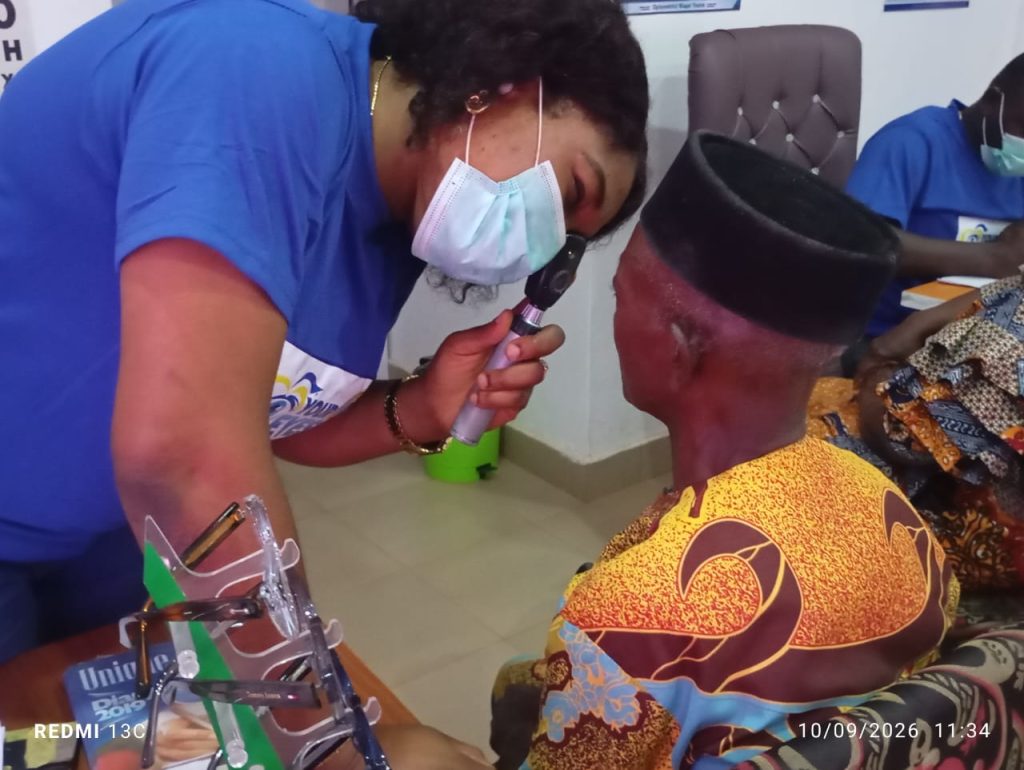
A civil society organisation has called for the adoption of the Girls Act model as a strategy to reduce HIV infections among young girls, warning that the disease remains prevalent, particularly among adolescent girls and young women.
The call was made on Tuesday during activities to commemorate the International Day of the Girl Child in Abuja. It follows concerns that women and adolescent girls bear a disproportionate burden of HIV infections compared with men and boys, particularly in sub-Saharan Africa.
The advocacy group noted that HIV could be better controlled if girls living with HIV were supported to remain on treatment, while those who were HIV-negative learned skills to prevent new infections and make informed decisions.
According to the Advocacy Lead at AIDS Healthcare Foundation (AHF), Steve Aborisade, although significant progress has been recorded in the global fight against HIV/AIDS, more work is needed to support young girls and vulnerable women.
Quoting the Joint United Nations Programme on HIV/AIDS (UNAIDS), Aborisade said women account for more than 50 per cent of people living with HIV globally and roughly 60 per cent in sub-Saharan Africa.
“Adolescent girls and young women aged 15 to 24 years are up to two to three times more likely to acquire HIV than young males of the same age.
“Biologically, women face a roughly two-fold higher acquisition risk per unprotected heterosexual act due to a larger mucosal surface area and longer exposure to seminal fluids.”
The UNAIDS data further indicated that many people living with HIV do not know their status and that concerted efforts are still needed to improve young people’s knowledge of HIV transmission and prevention.
“Adolescents aged 10 to 19 years face distinct physiological, psychological, legal and social factors that make them disproportionately vulnerable to low uptake of HIV testing,” the data indicated.
AHF, however, said patriarchy weighs heavily on women and girls and, combined with poverty and limited information, narrows their choices long before they can decide the terms of their own lives.
“A girl who cannot afford menstrual products, who has dropped out of school, or who depends on others for money, has fewer options, including options about sex. HIV and other sexually transmitted infections (STIs) thrive in exactly those conditions,” AHF said.
AHF said the Girls Act model, championed “for girls, by girls,” seeks to prevent HIV and STI transmission, support girls living with HIV to remain on treatment, reduce unplanned pregnancies and keep girls in school.
“As of 2026, the programme counted more than 4,500 girls in active engagement,” it said.
According to AHF, Girls Act works across four connected areas: health, education and livelihoods, leadership, and results.
On health, the organisation said girls living with HIV were supported to remain on treatment, while those who were HIV-negative learned skills to prevent infection and make informed decisions.
It said the provision of free menstrual health products, extended to surrounding communities, addressed a basic need that often costs girls their dignity and school attendance.
The organisation added that the programme also teaches girls how to make and care for reusable pads, ensuring that access does not depend solely on supply.
On education and livelihoods, AHF said the programme recognised that not every girl was in school and did not abandon those who were out of school.
It said girls who wanted to return to school were supported to do so, while those who had dropped out were trained in life skills and helped to establish businesses.
On leadership, the organisation said Girls Act created opportunities for girls to aspire and lead through mentorship, advocacy and access to resources.
“Girls are turning up empowered, able to negotiate safe sex and exercise bodily autonomy.
“Negotiating safe sex is the difference between exposure and protection, and bodily autonomy is not a slogan but a public health asset.”
AHF called on federal and state governments to adopt and fund the Girls Act model, integrating it into national and state plans for HIV, education and youth development.
“This means dedicated budget lines for menstrual health, so no girl misses school for want of a sanitary pad; skills training and start-up support that reach out-of-school girls where they live; support for girls to return to, and stay in, school; leadership platforms for girls in schools and communities; and clear pathways linking young people to HIV testing, treatment and care,” the advocacy group said.
The group also called on stakeholders in the HIV response to recognise their critical roles in addressing the challenges facing girls and young women.
“Some will say the country has more pressing priorities. They should weigh the cost of inaction: new infections among young people, lifelong treatment, interrupted schooling and lost productivity.
“Prevention that also builds livelihoods and leadership is among the smartest investments a government can make.
“Our girls have shown what is possible when someone invests in them. They have earned the right to be treated as a key population in the national response, not as an afterthought.”

By Our Reporter
The Minister of the Federal Capital Territory, FCT, Nyesom Wike, has described the strike declared by the Nigeria Labour Congress, NLC, and the Nigeria Union of Teachers, NUT, as politically motivated blackmail aimed at paralysing the government.
Speaking during a media chat in Abuja on Tuesday, Wike claimed that the ongoing labour dispute, which has led to school closures and disrupted public education, was being driven by opposition political interests rather than genuine workers’ grievances.
The minister pointed to the political affiliations of the NLC chairman in the FCT, accusing him of harbouring partisan motives linked to the African Democratic Congress (ADC).
“It was political and so we must stop this blackmail. An ADC person who ran for election in the past area council election is the chairman of the NLC in FCT.
“What do you think he would do? To make sure that the government cripples, to use as a campaign that teachers are on strike,” he said.
Addressing accusations that the FCT Administration owes teachers unpaid entitlements and promotion arrears, Wike insisted that his administration had met its financial obligations and invested heavily in public school infrastructure.
“We are not owing. Go and see the schools today—what we have done in the schools, the rehabilitation of schools and providing the basic infrastructure.
“Labour cannot continue to blackmail us,” he said.
Expressing concern over the plight of primary and secondary school students forced to stay at home, Wike assured residents that the deadlock would soon end.
He threatened to take legal action against labour union leaders, adding that the FCT Administration’s legal advisers were finalising the suit.
“Negotiation has to end because it is the children that will suffer at the end of the day, but don’t worry, we will solve it. I will clip the wings of that NLC chairman,” he said.
Rejecting criticisms that his tough approach reflected autocratic leadership, Wike maintained that any counteraction by the FCT Administration would strictly adhere to statutory provisions and the rule of law.
The NLC FCT Council had declared an indefinite strike on October 7 over unresolved issues between the FCT Administration and the NUT

By Our Reporter with agency report
The International Monetary Fund (IMF) has advised Nigeria against restoring broad petrol subsidy, recommending targeted support for vulnerable households to cushion the impact of rising energy costs.
IMF said blanket petrol subsidies were expensive, often benefited higher-income consumers disproportionately and could worsen fiscal pressures amid rising borrowing costs.
Rodrigo Valdés, director of the IMF’s fiscal affairs department, spoke during a press briefing on the fund’s fiscal monitor at the 2026 annual meetings of the IMF and World Bank in Bangkok, Thailand, on Wednesday.
His comments followed a question on how the fund could recommend allowing energy prices to reflect scarcity when higher fuel prices in Nigeria could raise transport costs, worsen inflation and deepen poverty, particularly when the government was facing calls to restore petrol subsidy ahead of an election year.
“Protecting people is not the same as protecting the price of fuels,” Valdés said.
He said fuel subsidies or measures preventing prices from adjusting fully to an energy shock had cost countries between 1 percent and 1.5 percent of gross domestic product (GDP) in 2026.
“It’s first fiscally very costly, and second, if you look at the pattern of consumption, it’s easy to see that that subsidy is readily regressive in many places,” he said.
Valdés said governments should instead use social safety nets and household data to identify people who need assistance.
“There are better tools to deal with this,” he said.
The federal government recently announced a 30-day petrol discount at Nigerian National Petroleum Company (NNPC) Limited retail stations, with priority for public transport operators, to cushion the impact of rising fuel prices.
Taiwo Oyedele, minister of finance, said NNPC retail would sell petrol at cost by foregoing its retail profit margin, describing the measure as temporary relief rather than a return to petrol subsidy.
The government also proposed negotiating a ceiling of N1,350 per litre on petrol’s ex-gantry or landing cost, subject to monthly reviews
IMF URGES FG TO REDIRECT SUBSIDY GAINS TOWARDS VULNERABLE PEOPLE
The IMF also recommended targeted interventions to cushion the effect of higher fuel prices on transportation costs.
Davide Furceri, a division chief in the fund’s fiscal affairs department, said governments could redirect some of the resources spent on blanket subsidies towards vulnerable consumers.
“For example, you mentioned transportation costs. Yeah, gasoline could go up, and perhaps bus fees may be subsidised in a way that is a much better policy at the end of the day than just a blanket subsidy for everybody,” Furceri said.
He also suggested alternatives such as school feeding programmes, geographical targeting and assistance for vulnerable farmers.
READ ALSO: Atiku accuses Tinubu of copying his fuel subsidy proposal
Furceri acknowledged that some countries lacked household registries and digital payment systems needed to deliver targeted support effectively.
However, he said governments could adopt alternative approaches in the short term while developing stronger systems.
He recommended that assistance should be limited, targeted and temporary.
Valdés explained that fuel subsidies could worsen global energy pressures by preventing demand from adjusting when supplies were constrained.
“When you subsidise, you don’t allow, at the end of the day, demand to adjust,” he said.
“And reality is that we have less fuels in the world economy. That means that someone else has to adjust more, and the market produces a higher price for that.”
The IMF official said subsidies were not only costly and regressive but could also have spillover effects on the global economy.
TheCable
-
General News3 weeks ago
JOHESU demands: MHWUN puts FG on notice over fresh action
-

 Politics4 weeks ago
2027: ASAF backs APC governors, rejects rainbow coalition
-

 Politics1 month ago
You have demonstrated diligence, loyalty, statesmanship in leadership, Ekechi salutes Shetimma at 60
-
 General News5 days ago
Rivers 2027: We are not part of Rainbow Coalition – APC Legacy Group slams Wike, Fubara meeting
-

 Politics2 months ago
2027: Advertising experts raise concerns over irregular regulation of sector
-
FCT News2 months ago
2027: Hasana-Moneme pledges skills, empowerment, credit access for FCT women
-
General News2 months ago
2027: Dame Princess Esom-Nwafor Orizu confirmed as APC flagbearer for Nnewi North /South /Ekwusigo Federal Constituency as INEC releases names of candidates
-
Uncategorized3 months ago
Rescue of Oyo schoolchilden: Tinubu commends security agencies, says action breakthrough in fight against criminality