
Politics
2027: Subsidy return will reverse economic gains, says APC chairman

By Tony Chuddy
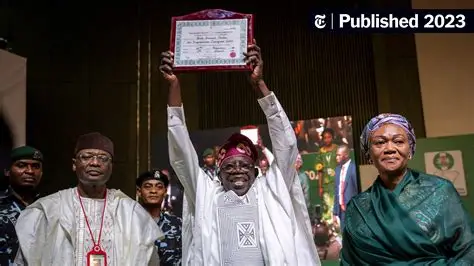
National Chairman of the ruling All Progressives Congress, (APC), Professor Nentalwe Yilwatda, has warned that proposals by former Vice President and presidential candidate of the opposition African Democratic Congress (ADC), Atiku Abubakar, to return the old fuel subsidy regime could reverse the economic gains recorded under the ongoing reforms of president Bola Tinubu
Professor Nentalwe stated that proposals will come with with negative consequences for workers’ wages, education, infrastructure and the fiscal stability of states.
The APC National Chairman, who gave the warning in a statement issued by his Special Adviser on Media and Information Strategy, Abimbola Tooki, on Sunday, said the proposal to reinstate fuel subsidy would return Nigerians to fuel queues, threaten the payment of the current minimum wage and lead to the cancellation of education grants for Nigerian students, among other negative consequences for the masses.
Recall that the ADC presidential candidate had caused stir a cross the political class ahead of the 2027 general election, when he declared that he would return petrol subsidy, if elected Nigeria’s new president in January 2027
The declaration has stored comments from especially the presidency and members of the ruling APC who have continuosly criticised Atiku’s planned return to subsidy regime
President Bola Tinubu, has on May 29, 2023, during his inauguration, declared that fuel subsidy was gone, in line with his campaign promise. Although the removal triggered an increase in the prices of goods and services, the APC-led Federal Government has consistently maintained that the policy has yielded significant economic gains for the country.
Professor Nentalwe warned while receiving a delegation of economic stakeholders in Abuja, that the subsidy debate should go beyond political rhetoric and consider the fiscal burden and wider consequences for states, workers, education and infrastructure.
APC National Chairman stated, “The former Vice President, Atiku Abubakar’s proposal to restore fuel subsidy raises fundamental questions about how such a policy would be financed and sustained without returning Nigeria to the cycle of fiscal pressures that characterised the previous arrangement.
“Subsidy may appear attractive because it promises cheaper petrol, but Nigerians must also ask the bigger question: who pays for the subsidy and what happens to the resources that government must divert to finance it? A policy cannot be judged only by its immediate benefit at the pump. We must examine its impact on government revenues, salaries, pensions, education, healthcare, infrastructure and the overall capacity of government to meet its obligations to citizens.
“A return to a fiscally unsustainable subsidy regime could have consequences far beyond the price of petrol. When government revenue is squeezed, the first victims are often the critical sectors that directly affect the welfare and future of our people.”
He noted that many states previously struggled to pay workers’ salaries and pensions, with some resorting to partial payments, adding that increased federal allocations following subsidy removal had improved states’ finances, urging caution against reintroducing subsidy and returning to past fiscal pressures.
The statement added, “The APC chairman also drew attention to the education sector, recalling the prolonged disruption of academic activities in Nigerian universities under the previous administration. Nigerians should be concerned about policies that could weaken the capacity of governments to finance education and other essential public services.
He added that the sustainability of improved workers’ salaries must be considered in the subsidy debate, stressing that governments must have the capacity to meet their recurrent obligations. He said higher wages should not come at the expense of funding infrastructure, education, healthcare and other essential services.
The APC chairman also said the ongoing reforms were improving Nigeria’s digital payment system, allowing more Nigerians, particularly young people, freelancers and content creators, to make and receive international payments.
According to the APC National Chairman, “Our young people are no longer limited by geographical boundaries. A Nigerian content creator, software developer, consultant or freelancer can provide services to clients anywhere in the world. But that opportunity requires a financial and payment system capable of supporting the global digital economy.
“We must therefore be careful about policies that could undermine the progress being made in strengthening Nigeria’s financial and digital ecosystem. The APC National Chairman also highlighted the Nigeria Education Loan Fund, describing it as an important intervention that has expanded access to tertiary education financing and reduced the immediate financial burden on many families.
“He said sustainable financing for education was critical to ensuring that young Nigerians are not forced to abandon their studies because their parents cannot afford tuition and other educational expenses.”
Professor Yilwatda said the subsidy debate should focus on building a strong and sustainable economy rather than relying on costly government interventions.
He acknowledged the hardship caused by subsidy removal, stressing the need for stronger measures to cushion its impact on vulnerable Nigerians.
The statement continued, “The hardship Nigerians have experienced is real, and government must continue to respond to it. But the answer cannot simply be to return to a system whose long-term fiscal implications created serious distortions in our economy.
“What Nigerians deserve is an economy that can sustainably finance good wages, quality education, healthcare, infrastructure and social protection without depending on an opaque and expensive subsidy system. Whenever anybody proposes a return to subsidy, Nigerians should ask: how much will it cost?
“Where will the money come from? What programmes will be sacrificed to finance it? And for how long can the government sustain it? These are legitimate questions that must be answered before the country embarks on another expensive policy experiment.”

From Kingsley Wiseman (Yenegoa)
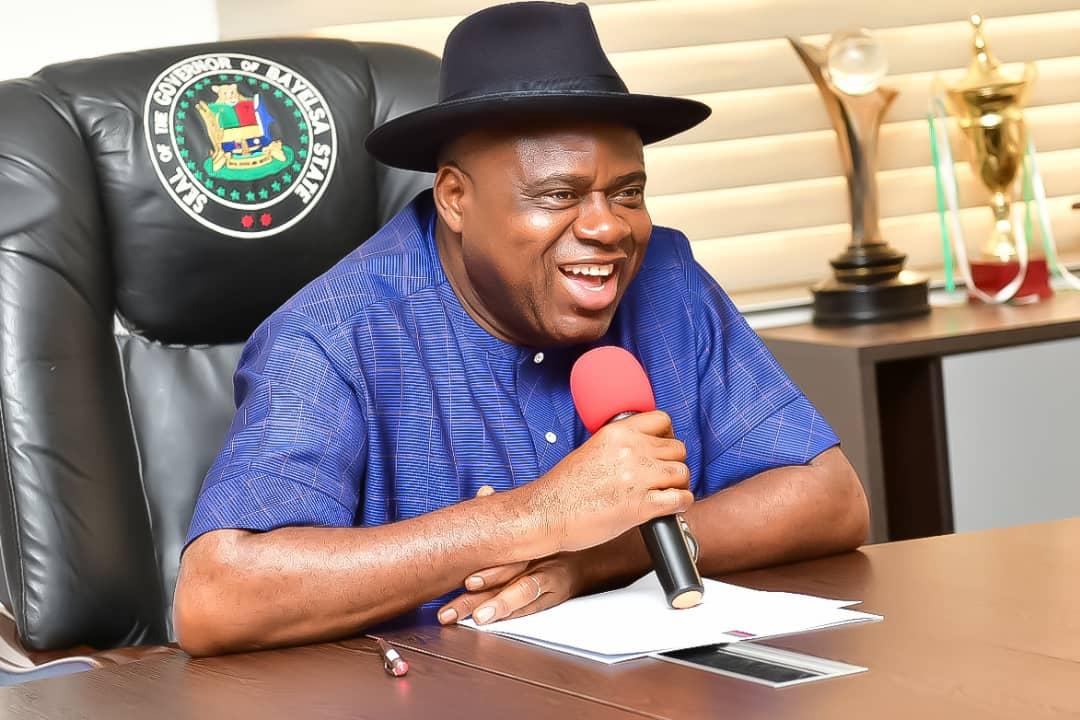
Bayelsa state governor, Senator Douye Diri has expressed his disagreement with the Minister of Works, Senator David Umahi, over the rumoured diversion of the ongoing Lagos-Calabar Coastal Highway project.
Governor Diri explained that the South-South governors were unanimous in their support for the coastal road, adding that they were against its realignment with the East-West Road.
According to a statement by his Chief Press Secretary, Daniel Alabrah, the governor stated this when he spoke during the 200th session of the state executive council in Government House, Yenagoa.
His words: “I read, like everyone else, that there would be a realignment and that the coastal road would be merged with the East-West Road, which I do not believe is the same project. That should be a South-South Road.
“I privately called the Minister of Works and said, ‘Honourable Minister, that is a no, no, no for us. These are two different projects.
“I agree with you that the East-West Road should be reconstructed. It is called the East-West Road, but its reconstruction should not take the place of the coastal road.
“While you reconstruct the East-West Road, the coastal road must continue because you have already won the hearts of all the coastal states.”
“I told him that, for me and my state, the coastal road must continue. He kept mentioning Mr President’s name, and I felt that he was the implementer and was the one who addressed the media. So, go back and tell Mr President that this is the position of the governors of the South-South, because I also speak as chairman of the South-South Governors’ Forum.”The governor however slammed the former Cross River State governor, Donald Duke, over his remarks on the planned diversion of the project on a television programme
Diri expressed shock that a son of the South-South could describe the project as not feasible because, according to him, Bayelsa was a swamp.
“When I watched the video and listened to everything he said about the coastal road, what actually made me respond was the example he gave using my state, Bayelsa. He said the coastal road was not feasible, and his reason was that even the state capital of Bayelsa is a swamp. According to him, for the coastal road to pass through Bayelsa, 100 to 200 bridges would have to be constructed.
“You pretend to be a presidential candidate of PRP. There is not even a councillor from PRP in Cross River. Not even in your own ward. Yet, you pretend to be a presidential candidate so that at the end of the day you can be rehabilitated.
“You can continue to be your national and international champion without a nucleus, without a base.
“I advise you to go back and settle the huge debts hanging over the heads of generations yet unborn, debts that you incurred and passed on to successive governments in your state.
“Do not use Bayelsa State as an example of a place where roads cannot be built. You were in office when Bakassi was ceded out of Nigeria. But because you were not a local champion, you did nothing about it,” he remarked
From Abu Hussain (Bauchi)
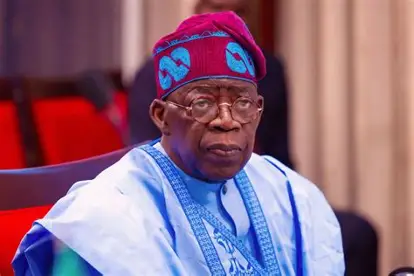
A mosque located at the Madina quarters in Bauchi has sacked it’s Imam, over his pro Bola Tinubu preachings ahead of the 2027 general elections
Imam Dahiru Abubakar reportedly lost his role, after his continuous pro presidentTinubu teachings at the mosque, despite repeated warnings
The imam was said to have been subtly campaigning for Tinubu’s reelection during preaching after every obligatory prayer.
The mosque management however, placed him on suspension after he repeated the act following the early morning prayer (Subhi) on Sunday.
“He would tell the congregation after prayer that Tinubu did not cause insecurity and he deserved to be reelected.
“A committee was set up after he did the same thing last weekend and he was subsequently removed,” a source said.
Confirming his sack, Imam Abubakar said he was removed for telling the people in his preaching that President Tinubu was not the problem because the hardship and insecurity were caused by “end times phenomenon.”
He said, “I have been preaching to the people to stop castigating President Tinubu for the insecurity and economic challenges. They prepared to vote for him and give him another mandate in 2027 to continue his mandate.
“My preaching centred on telling people to embrace fear of God and stop blaming leaders for the insecurity, particularly President Tinubu, because only God’s intervention can stop the challenges with the power of prayers, and that didn’t go down well with the committee of the mosque.
“My preaching priorities are fear of God and our day-to-day activities. I cited examples of what is happening, especially insecurity in African countries like Sudan, Chad, Mali and others facing crisis. I asked whether President Tinubu was responsible for their insecurity.”
But chairman of the mosque committee, Imam Abubakar Jibrin, said, “Our major challenge with him was not only his campaign for Tinubu but the way and manner he gathered many people in front of the mosque and sometimes entered the mosque purposely to discuss politics.
“The mosque committee sat down with him and cautioned him against turning the mosque to a political platform because of the Quranic verse which says the Mosque is solemnly for worship of Allah alone. We vehemently rejected the use of the mosque for political meetings. We have warned him not once or twice but many times, but he didn’t heed our pleas.
“Even though we believe that politics is the process of producing leaders in the country, there are laid down procedures, which are political parties, and the activities should take place in their political party offices and not in the mosque.“He should go and build his personal mosque, or politicians should go buy a mosque for him; that is not our business. Let me clarify that we, members of the committee of the mosque, are not against the candidate of any political party. Our prayer is to Allah to choose the best for the country, be it President Tinubu or any candidate among the presidential candidates that would become a blessing to the country,” Jibrin added.
From Kingsley Wiseman (Yenegoa)
Bayelsa state governor, Senator Douye Diri has expressed his disagreement with the Minister of Works, Senator David Umahi, over the rumoured diversion of the ongoing Lagos-Calabar Coastal Highway project.
Governor Diri explained that the South-South governors were unanimous in their support for the coastal road, adding that they were against its realignment with the East-West Road.
According to a statement by his Chief Press Secretary, Daniel Alabrah, the governor stated this when he spoke during the 200th session of the state executive council in Government House, Yenagoa.
His words: “I read, like everyone else, that there would be a realignment and that the coastal road would be merged with the East-West Road, which I do not believe is the same project. That should be a South-South Road.
“I privately called the Minister of Works and said, ‘Honourable Minister, that is a no, no, no for us. These are two different projects.
“I agree with you that the East-West Road should be reconstructed. It is called the East-West Road, but its reconstruction should not take the place of the coastal road.
“While you reconstruct the East-West Road, the coastal road must continue because you have already won the hearts of all the coastal states.”
“I told him that, for me and my state, the coastal road must continue. He kept mentioning Mr President’s name, and I felt that he was the implementer and was the one who addressed the media. So, go back and tell Mr President that this is the position of the governors of the South-South, because I also speak as chairman of the South-South Governors’ Forum.”The governor however slammed the former Cross River State governor, Donald Duke, over his remarks on the planned diversion of the project on a television programme
Diri expressed shock that a son of the South-South could describe the project as not feasible because, according to him, Bayelsa was a swamp.
“When I watched the video and listened to everything he said about the coastal road, what actually made me respond was the example he gave using my state, Bayelsa. He said the coastal road was not feasible, and his reason was that even the state capital of Bayelsa is a swamp. According to him, for the coastal road to pass through Bayelsa, 100 to 200 bridges would have to be constructed.
“You pretend to be a presidential candidate of PRP. There is not even a councillor from PRP in Cross River. Not even in your own ward. Yet, you pretend to be a presidential candidate so that at the end of the day you can be rehabilitated.
“You can continue to be your national and international champion without a nucleus, without a base.
“I advise you to go back and settle the huge debts hanging over the heads of generations yet unborn, debts that you incurred and passed on to successive governments in your state.
“Do not use Bayelsa State as an example of a place where roads cannot be built. You were in office when Bakassi was ceded out of Nigeria. But because you were not a local champion, you did nothing about it,” he remarked
-
 General News2 weeks ago
Rivers 2027: We are not part of Rainbow Coalition – APC Legacy Group slams Wike, Fubara meeting
-
General News1 month ago
JOHESU demands: MHWUN puts FG on notice over fresh action
-
 Politics1 month ago
2027: ASAF backs APC governors, rejects rainbow coalition
-

 Politics2 months ago
You have demonstrated diligence, loyalty, statesmanship in leadership, Ekechi salutes Shetimma at 60
-

 Politics2 months ago
2027: Advertising experts raise concerns over irregular regulation of sector
-
FCT News2 months ago
2027: Hasana-Moneme pledges skills, empowerment, credit access for FCT women
-
General News3 months ago
2027: Dame Princess Esom-Nwafor Orizu confirmed as APC flagbearer for Nnewi North /South /Ekwusigo Federal Constituency as INEC releases names of candidates
-
Uncategorized4 months ago
Rescue of Oyo schoolchilden: Tinubu commends security agencies, says action breakthrough in fight against criminality