
Business and Economy
Budget delivery key to improved citizens’ livelihood – Oyedele


By Sam Otuonye
The Minister of finance and coordinating Minister of the Economy, Prof. Taiwo Oyedele, has described an approved budget as a mere document and set of numbers that are signed into law without impact on the citizenry until it delivered the purpose for which it was approved, even as the Country Director, International Budget Partnership (IBP) Nigeria, Olayinka Babalola noted that there is a wide disconnect between macro-economic indicators and the micro-level outcomes for regular Nigerians.
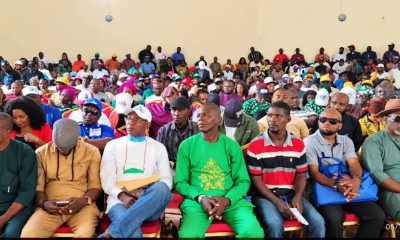
Oyedele stated this on Thursday, at the 2026 PULSE Summit organized by International Budget Partnership, an international Non-governmental Organization, with the theme: From Approved Budgets to the Last Mile: Examining Budget Implementation in Nigeria.
The Minister explained that approval of budget is upstream, and delivery
downstream noted that the distance between the two is the last mile, where most of the value of public money is actually won or lost. He stated that the budget delivered is what determines whether a teacher would show up in the classroom, a farmer have access road from his farm to the market, and a functional health facility.
The Hon. Minister of Finance Taiwo Oyedele said Nigeria had made progress in budget preparation, classification and open data, but stressed that the country must now focus more intensely on the gap between budget approval and actual delivery.
“Approval is upstream, delivery is downstream. And the distance between the two, that is the last mile, is where most of the value of public money is actually won or lost,” he said.
The minister identified three major challenges undermining effective public finance management in the country, including fiscal constraints, weak systems for transferring funds to implementing agencies and communities, and inadequate accountability mechanisms.
He explained that revenue performance often failed to match projections, resulting in adjustments that disproportionately affected capital expenditure and service-delivery programmes.
Oyedele also noted that even when funding was available, procurement delays, fragmented systems and varying implementation capacities at the sub national level could prevent funds from reaching their intended beneficiaries.
“A naira approved in Abuja for a state capital and a naira that reaches the primary health centre in the rural wards are not the same naira,” he said, stressing the need to strengthen the institutional bridge between budget allocation and actual service delivery.
On accountability, the minister said citizens must be able to track what the government had promised, what had been funded and what had actually been delivered.
“Whatever is not tracked is in reality unlikely to be achieved and may not even exist,” he warned.
Taiwo also defended key economic reforms undertaken by the President Bola Ahmed Tinubu administration, particularly the removal of fuel subsidy and the unification of the foreign exchange market.
He said the reforms, although difficult in the short term, were necessary to correct distortions that had constrained the economy and diverted resources away from critical sectors.
According to him, the fiscal space created by the reforms was now being directed towards sectors including health, education, water and social protection.
The minister, however, cautioned that creating fiscal space was only the beginning, stressing that institutional and accountability mechanisms must be strengthened to ensure that public resources produce measurable outcomes.
He described this as the “federation of shared prosperity,” arguing that economic stability should be driven at the federal level, while shared prosperity should be achieved in the states and improved living standards delivered at the local government level.
“That is not a division of convenience. It is a division of responsibility,” he said.
Taiwo urged federal, state and local governments to recognise their respective responsibilities in delivering services to citizens, insisting that no level of government should shift blame to another.
He commended the design of the PULSE Summit, particularly its use of policy labs covering health, education, water, sanitation and hygiene, social protection and debt.
Unlike conventional conference panels, he said, the labs should produce specific, costed and measurable commitments showing who will do what, by when, at what cost and against which indicators.
He also welcomed the summit’s reform tracker, describing it as an important accountability mechanism for publishing and monitoring commitments made during the summit.
Taiwo called on government officials attending the summit to treat every commitment made in the policy labs as a budget line — “costed, owned and reported.”
He assured participants that the Ministry of Finance would engage with the reform tracker while urging civil society organisations and development partners to hold the government accountable for its commitments.
Also speaking, the Country Director of IBP Nigeria, Olayinka Babalola, said Nigeria must close the gap between improving macroeconomic indicators and the everyday experiences of citizens.
Babalola said although Nigeria had recorded improvements in indicators such as economic growth, inflation and foreign reserves, these gains had not sufficiently translated into better public services at the grassroots.
She said the core question addressed by the summit was how revenues collected, loans borrowed and budgets implemented could deliver quality and affordable services to citizens at the last mile.
According to her, “the last mile is actually where policy meets reality, where budgets become services, and where citizens experience government directly.”
Babalola called for greater consultation with citizens on how public resources are spent, particularly at the state and local government levels.
She said governments were appointed to manage public resources on behalf of citizens and must therefore remain accountable to them.
She also criticised unrealistic revenue and expenditure projections, warning that repeated failure to meet budget targets could erode public confidence in fiscal data and government budgets.
The IBP Nigeria Country Director further called for public finance information to be made accessible to ordinary Nigerians through simplified citizens’ guides and local languages.
She urged stronger independent oversight of public finances involving the Auditor-General, National and State Assemblies, local councils, civil society organisations, community representatives and the media.
Babalola also demanded real and immediate consequences for financial mismanagement, saying oversight would have little meaning if identified infractions produced no sanctions.
She advocated the use of both official government data and citizen-generated evidence in public finance decisions, arguing that quantitative figures must be complemented by the lived experiences of Nigerians.
She said the success of the PULSE Summit would ultimately be measured by whether its policy labs produced practical solutions to the bottlenecks preventing public funds from reaching citizens.
Babalola said the summit’s reform tracker would continue to monitor commitments beyond the event, ensuring that the gathering would not become another conference where discussions end without implementation.


The Nigerian National Petroleum Company Limited, NNPCL, has increased its premium motor spirit, PMS, pump price following the announcement of a discounted fuel price.
Checks on Friday showed that NNPCL increased its petrol price to N1,405 per litre from N1,370 per litre.
Several fuel pump attendants, who spoke to an online medium Daily Post, on condition of anonymity, said the latest price increase was announced on Thursday but implemented on Friday.
This means that NNPCL’s petrol price increased by N35 per litre, although the state-owned oil company has not explained the reason for the adjustment.
The latest development means that petrol prices at the company’s filling stations have risen again despite the controversy surrounding the announced fuel discount.
On Thursday, the Minister of Finance, Taiwo Oyedele, announced a proposed fixed petrol gantry price of N1,375 per litre ahead of the January 16, 2027, presidential election.

By Our Reporter with agency report
The International Monetary Fund (IMF) has advised Nigeria against restoring broad petrol subsidy, recommending targeted support for vulnerable households to cushion the impact of rising energy costs.
IMF said blanket petrol subsidies were expensive, often benefited higher-income consumers disproportionately and could worsen fiscal pressures amid rising borrowing costs.
Rodrigo Valdés, director of the IMF’s fiscal affairs department, spoke during a press briefing on the fund’s fiscal monitor at the 2026 annual meetings of the IMF and World Bank in Bangkok, Thailand, on Wednesday.
His comments followed a question on how the fund could recommend allowing energy prices to reflect scarcity when higher fuel prices in Nigeria could raise transport costs, worsen inflation and deepen poverty, particularly when the government was facing calls to restore petrol subsidy ahead of an election year.
“Protecting people is not the same as protecting the price of fuels,” Valdés said.
He said fuel subsidies or measures preventing prices from adjusting fully to an energy shock had cost countries between 1 percent and 1.5 percent of gross domestic product (GDP) in 2026.
“It’s first fiscally very costly, and second, if you look at the pattern of consumption, it’s easy to see that that subsidy is readily regressive in many places,” he said.
Valdés said governments should instead use social safety nets and household data to identify people who need assistance.
“There are better tools to deal with this,” he said.
The federal government recently announced a 30-day petrol discount at Nigerian National Petroleum Company (NNPC) Limited retail stations, with priority for public transport operators, to cushion the impact of rising fuel prices.
Taiwo Oyedele, minister of finance, said NNPC retail would sell petrol at cost by foregoing its retail profit margin, describing the measure as temporary relief rather than a return to petrol subsidy.
The government also proposed negotiating a ceiling of N1,350 per litre on petrol’s ex-gantry or landing cost, subject to monthly reviews
IMF URGES FG TO REDIRECT SUBSIDY GAINS TOWARDS VULNERABLE PEOPLE
The IMF also recommended targeted interventions to cushion the effect of higher fuel prices on transportation costs.
Davide Furceri, a division chief in the fund’s fiscal affairs department, said governments could redirect some of the resources spent on blanket subsidies towards vulnerable consumers.
“For example, you mentioned transportation costs. Yeah, gasoline could go up, and perhaps bus fees may be subsidised in a way that is a much better policy at the end of the day than just a blanket subsidy for everybody,” Furceri said.
He also suggested alternatives such as school feeding programmes, geographical targeting and assistance for vulnerable farmers.
READ ALSO: Atiku accuses Tinubu of copying his fuel subsidy proposal
Furceri acknowledged that some countries lacked household registries and digital payment systems needed to deliver targeted support effectively.
However, he said governments could adopt alternative approaches in the short term while developing stronger systems.
He recommended that assistance should be limited, targeted and temporary.
Valdés explained that fuel subsidies could worsen global energy pressures by preventing demand from adjusting when supplies were constrained.
“When you subsidise, you don’t allow, at the end of the day, demand to adjust,” he said.
“And reality is that we have less fuels in the world economy. That means that someone else has to adjust more, and the market produces a higher price for that.”
The IMF official said subsidies were not only costly and regressive but could also have spillover effects on the global economy.
TheCable

The Nigerian Communications Commission (NCC) the telecoms industry regulator, has commended Globacom on its outstanding performance in consumer complaint management and resolution.
In a letter to the company, which was signed by Kabiru S. Haruna, Principal Manager, Consumer Protection & Advocacy
Consumer Affairs Bureau (CAB), the Commission expressed happiness at Globacom’s treatment and resolution of customer issues during the month of August, 2026.
The letter read in part: “We are pleased to note that your organization achieved and surpassed the Commission’s complaint resolution thresholds of 90% and 97% for Level 2 (L2) complaints. This accomplishment reflects your commitment to regulatory compliance, consumer satisfaction, and the continuous improvement of service delivery.”
NCC noted that Globacom’s dedication to timely complaint resolution and adherence to established Service Level Agreements (SLAs) put in place by the Commission has contributed significantly to enhancing consumer confidence and promoting a positive customer experience within the telecommunications sector.
The Commission further encouraged Globacom to sustain this level of outstanding performance while continuing to implement measures aimed at further improving service quality and consumer satisfaction.
Globacom noted that constant training of its customer-interfacing staff and investment in the latest technology were responsible for observed improvement. The company promised not to relent in this regard.
-
 General News2 weeks ago
Rivers 2027: We are not part of Rainbow Coalition – APC Legacy Group slams Wike, Fubara meeting
-
General News1 month ago
JOHESU demands: MHWUN puts FG on notice over fresh action
-

 Politics1 month ago
2027: ASAF backs APC governors, rejects rainbow coalition
-

 Politics2 months ago
You have demonstrated diligence, loyalty, statesmanship in leadership, Ekechi salutes Shetimma at 60
-

 Politics2 months ago
2027: Advertising experts raise concerns over irregular regulation of sector
-
FCT News2 months ago
2027: Hasana-Moneme pledges skills, empowerment, credit access for FCT women
-
General News3 months ago
2027: Dame Princess Esom-Nwafor Orizu confirmed as APC flagbearer for Nnewi North /South /Ekwusigo Federal Constituency as INEC releases names of candidates
-
Uncategorized3 months ago
Rescue of Oyo schoolchilden: Tinubu commends security agencies, says action breakthrough in fight against criminality