
General News
Court remands content creator Odogwu Asaba over alleged rape, death of 20-year-old lady


By Our Reporter
A Delta State High Court has ordered the remand of content creator, Ifeanyi Ogbonna, popularly known as Odogwu Asaba, at the Ogwashi-Uku Maximum Correctional Centre over allegations surrounding the rape and death of 20-year-old Favour Agbro.
The remand order was granted on Friday, September 4, 2026, following the conclusion of investigations into the circumstances surrounding the young woman’s death.
Counsel to Favour’s family, Awele Ideal, confirmed the development in a statement issued on Friday, noting that the results of the autopsy and toxicology examinations had been released to the police investigation team.
“Today the 4/9/2026, The application to remand Mr Ifeanyi Ogbonna (Odogwu Asaba) was heard and granted by the Court. He has now been Remanded at the Ogwashi Uku Maximum Correctional Center (Prison), from there he shall be brought to court until the completion of his trial which now lies with the Ministry of Justice (AG and DPP),” she said.
Ideal explained that the autopsy and toxicology findings, together with other evidence obtained during the investigation, had been compiled into the report prepared for prosecution.
She said she was handling the matter for Favour’s family on a pro bono basis and remained committed to providing the necessary legal and financial assistance to ensure the case received proper attention.
“I still hold the brief of this case for late Favour’s family on Probono basis rendering my legal services and financial support to ensure that no stone is left unturned,” she said.
The lawyer also pledged to provide updates on the proceedings, adding, “Justice is everyone’s business.”
The development was independently confirmed by the Senior Special Assistant to the Delta State Governor on Media, Ossai Ovie Success.
Ossai, in a Facebook post on Friday, said Ogbonna had been taken to the correctional facility following the court’s decision.
“Court Remands Ifeanyi Ogbonna, ‘Odogwu Asaba,’ Over Late Favour’s Case,” he wrote.
According to him, the remand followed the release of the autopsy and toxicology reports to the police team investigating the matter. He added that the findings and other evidence gathered had been incorporated into the prosecution report.
Ogbonna is expected to remain in custody and be produced before the court as proceedings continue.
The case began attracting public attention following allegations that Ogbonna raped Favour after inviting her to Asaba for a content creation training programme promoted on social media.
Reports indicated that Favour travelled to Asaba following the invitation and was allegedly taken to a hotel, where she claimed she was raped and assaulted.
After returning home, the deceased reportedly informed her parents about the alleged incident and recorded a video in which she recounted her account of what transpired.
She subsequently ingested a toxic substance and died.
Following a petition from Favour’s family, the Delta State Commissioner of Police directed the Effurun Area Command to investigate the allegations, resulting in Ogbonna’s arrest.
Investigators subsequently commenced inquiries into the case, while autopsy and toxicology examinations were carried out to help establish the circumstances surrounding Favour’s death.
With the remand order now granted, the matter is expected to proceed to prosecution under the supervision of the Delta State Ministry of Justice, including the Attorney-General and Director of Public Prosecutions.
Ogbonna remains presumed innocent of the allegations until proven guilty by a court of competent jurisdiction.
(PUNCH)

By Prosper Okoye
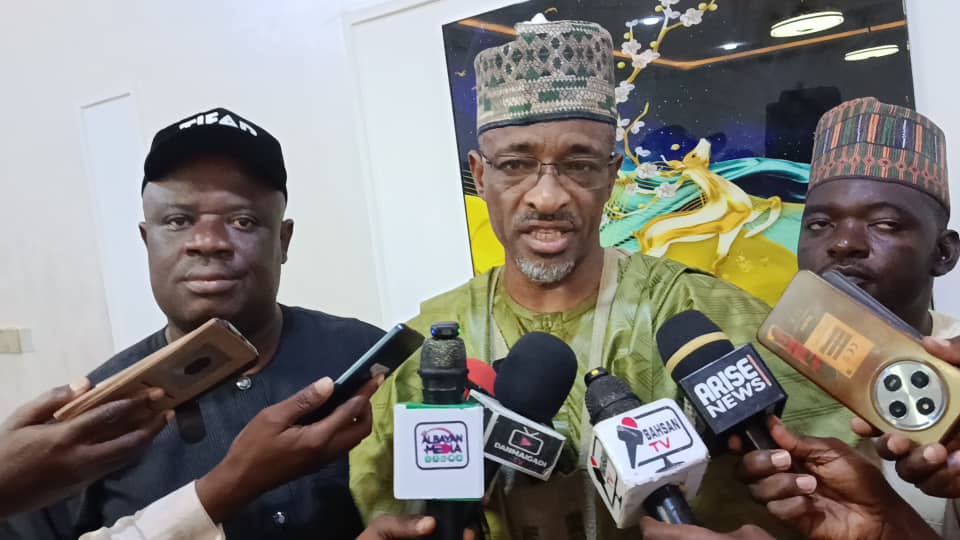
Hassan Umar Dangaladima has won the All Progressives Congress (APC) primary for Kaura Namoda and Birnin Magaji federal constituency in Zamfara State, securing 9,416 votes in an exercise preceded by security concerns and attacks on party members.
His opponent, Aminu Sani Jaji, polled 661 votes, according to the result announced by the party’s electoral committee.
The declaration was made by Mustapha Muhammed, acting chairman of the APC electoral committee from the party’s national headquarters, who served as the returning officer.
Muhammed said Umar met the party’s constitutional requirements and electoral guidelines, formally declaring him the winner of the primary.
The election took place against a backdrop of security concerns following attacks by suspected political thugs that reportedly left several APC members injured and vehicles damaged.
Security agencies subsequently intervened to restore order, allowing the voting exercise to continue.
Speaking to journalists after his victory, Umar thanked party members and constituents for their support, while acknowledging the role of security personnel and electoral officials in conducting the exercise.
He also called for reconciliation among party stakeholders, extending an olive branch to Jaji and urging supporters of both camps to unite ahead of the 2027 general elections.
Umar said unity within the party would be crucial to its prospects in the next general election.
General News
Geosciences Society explores benefits of GeoAI in remote sensing, climate challenges in Africa
By Chidera Orji
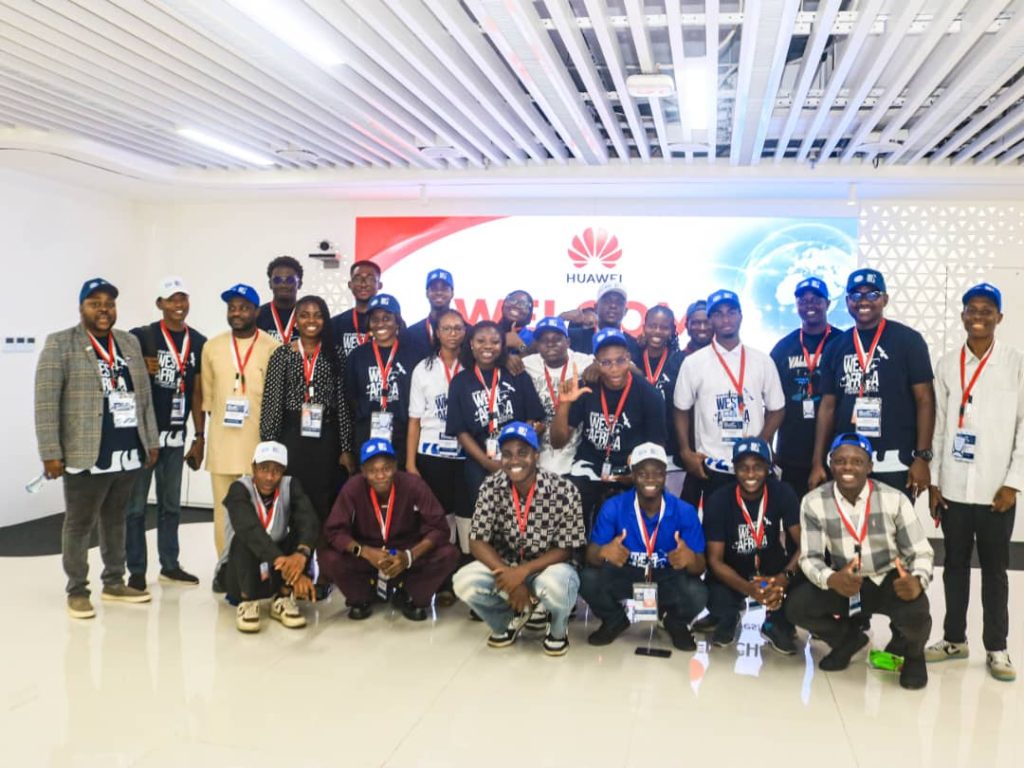
Participants at the 2026 IEEE Geoscience and Remote Sensing Society (GRSS) West Africa Summer School have stressed the need for government to embark on critical studies on how geospatial artificial intelligence (GeoAI), remote sensing and Earth observation can help address environmental and climate challenges in Africa.
They made the call at the end of a conference which took place at the Nigerian Institute for Oceanography and Marine Research (NIOMR) Lagos, from 31st October to 4th November, 2026.
The conference dubbed “Summer School”, drew participants from the NNPCL, NGC, Ministry of Environment, Housing, Computer Scientists, Engineers, among others.
They explored opportunities for learning, collaboration, innovation, and professional development, especially on the transformative potential of geospatial technologies, and remote sensing in addressing some of the most pressing environmental and climate challenges facing the West African region.
The gathering brought together industry professionals, researchers, and students with a shared commitment to advancing science and technology for humanity.
The key sponsors of the workshop was the IEEE Geoscience and Remote Sensing Society, drawing distinguished academics including Prof. Lizhe Wang, Prof. Saurabh Prasad, Dr. Anabella Ferral, Dr. Andongma Tende, Ms. Temitope Ajayi, Mr. Ifeanyi Ezealaji, Dr. Victor Okorondu, Dr. Samuel Dekolo, and Dr. Richmon Akwasi Nsiah who provided the knowledge to broaden the expertise, experiences, and insight of the participants.
The host institution, the Nigerian Institute for Oceanography and Marine Research (NIOMR), as well as industry partners, Geospatial Research Limited and Huawei Technologies Nigeria, provided support and facilities which made the training a huge success.
The General Chair of the event, Engr. Oto-Obong John Effiong, and Chair of the IEEE Nigeria Section, Prof. Ifeyinwa Achumba, spelt out the ground rules, encouraging participants to remain focused through the discussions.
Delivering the keynote address, Engr. Abdulhafis Gbolahan, FNSE, Permanent Secretary of the Lagos State Ministry of Housing, spoke vividly on how urban development and increasing heat exposure affect housing and environmental conditions in Lagos State, while Dr. Adongma Wanduku who the first technical lecture, “Fundamentals of Remote Sensing and Earth Observation”, introduced the paerticipants to the use of remotely sensed data in environmental monitoring, climate action, weather forecasting and disease control, and explained how these data can inform decisions.
Also, Mrs. Temitope Ajayi of the University of Basilicata, Italy, took the participants on an excursion on how her background in electronics and computer science in Nigeria and her participation in an academic programme sparked her interest in remote sensing.
Dr. Saurabh Prasad delivered a lecture “From Observation to Understanding: AI and Earth Observation”, explaining how artificial intelligence (AI) can help process and interpret remotely sensed data and turn observations into information that supports environmental decision-making.
Engr. Peter Magbo, Chair of the Local Organising Committee, briefed participants on travel and accommodation for the in-person sessions, while Engr. Sandra Nwokoye encouraged the participants to stay curious and apply what they learned to practical problems.
Ifeanyi Peter Ezealaji, one of the key resource persons, led a hands-on session on how QGIS, a geographic information system (GIS) used to analyse and visualise spatial data.
At the end of the academic sessions, participants practised acquiring and importing geospatial data into QGIS, merging datasets, cleaning records and removing unwanted data, clipping datasets to defined geographical boundaries, working with coordinate reference systems, as well as organising and processing spatial data for further analysis.
Equally lined up as part of the practical training, the participants embarked on a guided tour to the Nigerian Institute for Oceanography and Marine Research to secure hands-on knowledge on how its research and monitoring support the study and management of marine environments.
By Our Reporter
The Independent National Electoral Commission (INEC) has removed artificial intelligence-generated photographs uploaded to the national voters’ register and flagged officials implicated in the practice across 10 states for disciplinary action.
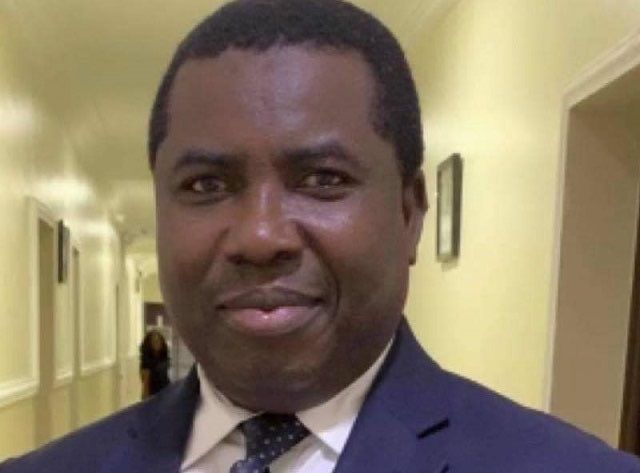
INEC National Commissioner, Mohammed Haruna, disclosed this on Wednesday during a webinar organised by the PUNCH Media Foundation, titled ‘AI, Misinformation and Nigeria’s 2027 Elections: Safeguarding the Truth, Protecting the Vote’.

Haruna, who is also Chairman of the commission’s Information and Voter Education Committee, described the development as a major challenge, noting that the commission had already taken down AI-generated photographs identified on the voters’ register.
He, however, acknowledged that INEC faced limitations in preventing members of the public from manipulating or enhancing their photographs before uploading them during voter registration.
The commissioner said the commission had also identified cases involving its own personnel and was taking steps to address the violations.
“We have already seen one of the challenges, which is that a lot of AI-generated photographs were posted onto the voters’ register, which, as we have said, we have had to take down,” he said.
Haruna explained that while it might be difficult for the commission to prevent members of the public from manipulating their photographs before submission, it had greater control over violations involving its officials.
“But the ones involving our own staff, where it is our own staff that did so, that one is within our control. We are in the process of addressing it. They have been flagged,” he said.
He disclosed that the commission had obtained the names of the officials involved across about 10 states, adding that they would face disciplinary action.
“We have their names across about 10 states, and obviously, they are going to face disciplinary action,” he added.
On INEC’s preparedness to regulate the use of artificial intelligence in the electoral process ahead of the 2027 general elections, Haruna said the commission had developed an AI policy but was working to finalise it.
He noted that the rapid evolution of artificial intelligence had created regulatory challenges for countries across the world, including advanced democracies.
According to him, the evolving nature of the technology has made it difficult for governments to establish comprehensive and specific regulatory frameworks.
“As you know very well, it is new territory out there. Even the most advanced countries don’t have what you might call concrete, specific policies about AI because these things are evolving,” he said.
Haruna, however, said INEC had developed ideas on how it intended to deploy and regulate the technology, assuring that the policy would soon be finalised and made available to the media.
“But we have at least some ideas of what we want to do and how we want to use that. We have that policy. Very soon, we will concretise it, and we will be able to share it with the media,” he said.
-
 General News1 month ago
Rivers 2027: We are not part of Rainbow Coalition – APC Legacy Group slams Wike, Fubara meeting
-
 Politics2 months ago
2027: ASAF backs APC governors, rejects rainbow coalition
-
General News2 months ago
JOHESU demands: MHWUN puts FG on notice over fresh action
-

 Politics2 months ago
You have demonstrated diligence, loyalty, statesmanship in leadership, Ekechi salutes Shetimma at 60
-

 Politics3 months ago
2027: Advertising experts raise concerns over irregular regulation of sector
-
FCT News3 months ago
2027: Hasana-Moneme pledges skills, empowerment, credit access for FCT women
-
General News3 months ago
2027: Dame Princess Esom-Nwafor Orizu confirmed as APC flagbearer for Nnewi North /South /Ekwusigo Federal Constituency as INEC releases names of candidates
-
Uncategorized4 months ago
Rescue of Oyo schoolchilden: Tinubu commends security agencies, says action breakthrough in fight against criminality