
Politics
Elites in Villa, govt houses are Nigeria’s problem – Adebayo, SDP presidential candidate


***Challenges Tinubu to public debate
Presidential candidate of the Social Democratic Party (SDP) Prince Adewole Adebayo, has accused the Nigerian elites at the presidential villa and other government houses for being responsible for the numerous challenges facing the country
Adebayo, who argued that four years is enough for a determined government to transform Nigeria, called on voters to reject what he described as the country’s “politics of comedy and clowning.”
Adebayo, who spoke in Abuja on Tursday, while unveiling the SDP’s 2027–2031 policy document, titled “Farewell to Poverty and Insecurity,” regretted that bad leadership had been Nigeria’s primary problem since 1999, and urged a change of government through the 2027 general election to significantly reduce insecurity.
According to him, “It is the men in the Villa, government houses, that are the problem of Nigeria. We are promising that in four years we will defeat insecurity. When you use your vote in 2027 to change government, you have a chance of defeating 60 per cent of bandits.”
He described the document as the party’s blueprint for tackling Nigeria’s security, economic and infrastructure challenges.
The SDP candidate also challenged President Bola Tinubu to a public debate ahead of the 2027 presidential election, while questioning the utilisation of funds associated with the removal of petrol subsidy.
Adebayo accused the administration of failing to adequately account for funds he said were saved from subsidy removal and demanded explanations on spending on security, compressed natural gas, CNG, and electricity.
He said, “The first challenge is thrown to President Bola Ahmed Tinubu: come out of hiding. Come and debate.
“Anyone who wants to keep his job should be able to answer his bosses. Where have you been in the past four years? What have you been doing? Where is the money?
“Where is the money you saved from subsidies that never existed? Where are the trillions for security? Where is the CNG? Where is the electricity?”
Adebayo declared that “four years is enough for a determined leader to help his people,” insisting that an SDP administration would use its first term to fundamentally alter the country’s economic and security fortunes.
“We are trying to tell Nigerians that we are beyond sloganeering. We are saying to you: here is our farewell to poverty and insecurity.
“We have submitted our thesis to Nigerians. Mark us. Evaluate us. Contradict us,” he said.
On monetary policy, Adebayo criticised the Central Bank of Nigeria, CBN, alleging that it had failed to adequately protect the naira, promote productivity and create employment.
“The Central Bank of Nigeria is not protecting our currency. It is not creating productivity and employment. It has become a warehouse for thieves. We must kick the thieves out of the team,” he alleged.
He noted that government failure had contributed to insecurity adding that changing the government through the ballot in 2027 would be a major step towards tackling banditry.
He said, “Since the majority of insecurity is caused by government failure, when you use your vote in 2027 to change the government, you have already gone 60 per cent of the way towards chasing away the bandits.”
The SDP presidential candidate further pledged to promote national unity and tackle what he described as “internal colonialism,” which he said had encouraged ethnic, religious and regional divisions.
He also promised to expand electricity generation to 75,000 megawatts using Nigeria’s available resources.
Adebayo pledged to establish four functional public refineries and 36 modular refineries, while creating an enabling environment for private investors to exist
“That is why we calculated it and concluded that ₦200, at the current rate, is the price at which petrol can be sold without pushing the people further into poverty,” he said.
Adebayo said the SDP manifesto would focus on human development, dignity of citizenship and affordable infrastructure financed from Nigeria’s resources.
He lamented the decline in workers’ purchasing power, noting that previous generations were able to build houses and educate their children on incomes considerably lower than what many Nigerians require to survive today.
Earlier, SDP National Chairman, Prof. Sadiq Umar Gombe, said the manifesto was built around three interconnected pillars: security, productivity and prosperity.
Gombe said the party would secure lives and property while addressing the economic problems
“We do not believe that poverty should be managed in Nigeria. We believe poverty must be eliminated through production, employment, opportunity and responsible social protection
“Accountability is not an inconvenience to governance. Accountability is governance itself,” he said.
Gombe said the SDP wanted to build a Nigeria where farmers could cultivate their land without fear, traders could transport their goods safely, businesses could invest with confidence and citizens could live, work, worship and travel without fear.
Also speaking, SDP vice-presidential candidate, Dr Usman Bugaje, said Nigeria’s fundamental problem was not a shortage of capable citizens but poor leadership.

By Prosper Okoye
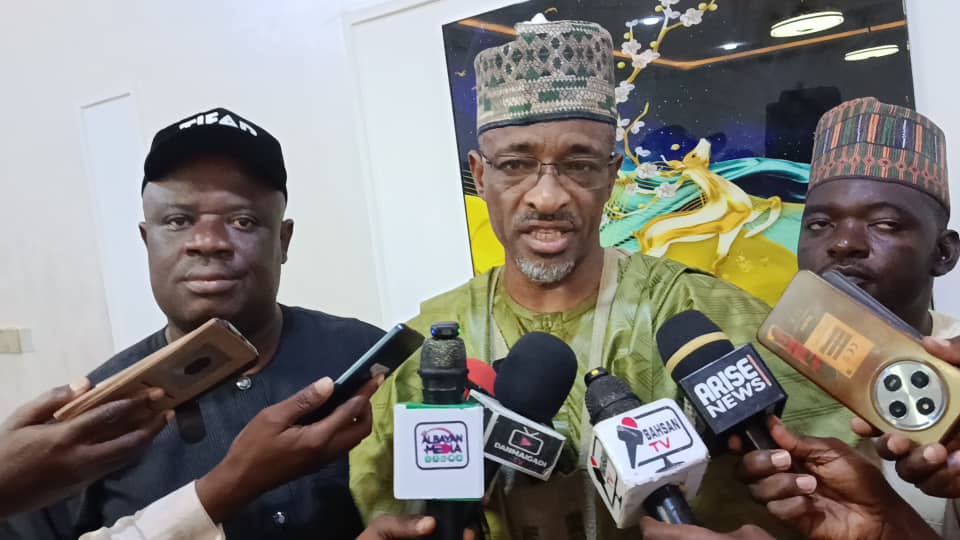
Hassan Umar Dangaladima has won the All Progressives Congress (APC) primary for Kaura Namoda and Birnin Magaji federal constituency in Zamfara State, securing 9,416 votes in an exercise preceded by security concerns and attacks on party members.
His opponent, Aminu Sani Jaji, polled 661 votes, according to the result announced by the party’s electoral committee.
The declaration was made by Mustapha Muhammed, acting chairman of the APC electoral committee from the party’s national headquarters, who served as the returning officer.
Muhammed said Umar met the party’s constitutional requirements and electoral guidelines, formally declaring him the winner of the primary.
The election took place against a backdrop of security concerns following attacks by suspected political thugs that reportedly left several APC members injured and vehicles damaged.
Security agencies subsequently intervened to restore order, allowing the voting exercise to continue.
Speaking to journalists after his victory, Umar thanked party members and constituents for their support, while acknowledging the role of security personnel and electoral officials in conducting the exercise.
He also called for reconciliation among party stakeholders, extending an olive branch to Jaji and urging supporters of both camps to unite ahead of the 2027 general elections.
Umar said unity within the party would be crucial to its prospects in the next general election.
By Our Reporter
The Independent National Electoral Commission (INEC) has removed artificial intelligence-generated photographs uploaded to the national voters’ register and flagged officials implicated in the practice across 10 states for disciplinary action.
INEC National Commissioner, Mohammed Haruna, disclosed this on Wednesday during a webinar organised by the PUNCH Media Foundation, titled ‘AI, Misinformation and Nigeria’s 2027 Elections: Safeguarding the Truth, Protecting the Vote’.
Haruna, who is also Chairman of the commission’s Information and Voter Education Committee, described the development as a major challenge, noting that the commission had already taken down AI-generated photographs identified on the voters’ register.
He, however, acknowledged that INEC faced limitations in preventing members of the public from manipulating or enhancing their photographs before uploading them during voter registration.
The commissioner said the commission had also identified cases involving its own personnel and was taking steps to address the violations.
“We have already seen one of the challenges, which is that a lot of AI-generated photographs were posted onto the voters’ register, which, as we have said, we have had to take down,” he said.
Haruna explained that while it might be difficult for the commission to prevent members of the public from manipulating their photographs before submission, it had greater control over violations involving its officials.
“But the ones involving our own staff, where it is our own staff that did so, that one is within our control. We are in the process of addressing it. They have been flagged,” he said.
He disclosed that the commission had obtained the names of the officials involved across about 10 states, adding that they would face disciplinary action.
“We have their names across about 10 states, and obviously, they are going to face disciplinary action,” he added.
On INEC’s preparedness to regulate the use of artificial intelligence in the electoral process ahead of the 2027 general elections, Haruna said the commission had developed an AI policy but was working to finalise it.
He noted that the rapid evolution of artificial intelligence had created regulatory challenges for countries across the world, including advanced democracies.
According to him, the evolving nature of the technology has made it difficult for governments to establish comprehensive and specific regulatory frameworks.
“As you know very well, it is new territory out there. Even the most advanced countries don’t have what you might call concrete, specific policies about AI because these things are evolving,” he said.
Haruna, however, said INEC had developed ideas on how it intended to deploy and regulate the technology, assuring that the policy would soon be finalised and made available to the media.
“But we have at least some ideas of what we want to do and how we want to use that. We have that policy. Very soon, we will concretise it, and we will be able to share it with the media,” he said.
General News
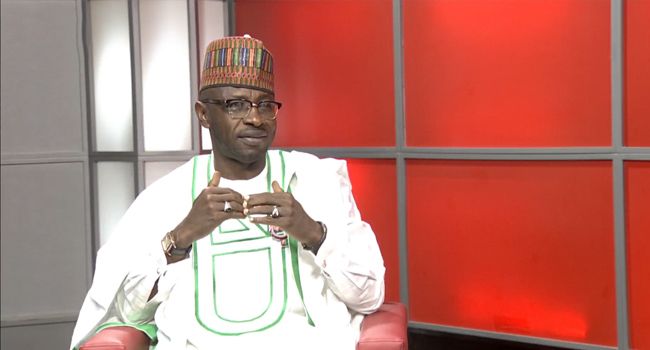
Yunusa Tanko dumps Peter Obi, Obidient Movement, appointed SDP presidential campaign coordinator
Yunusa Tanko
By Our Reporter
The Social Democratic Party (SDP) has appointed Yunusa Tanko, former coordinator of the Obidient Movement, as national coordinator of its presidential campaign council for the 2027 elections.
The SDP unveiled Tanko as its national presidential coordinator on Wednesday during the inauguration of the party’s campaign council in Abuja.
Mark Adebayo, chief media and communication advisor of the Adebayo/Bugaje presidential campaign council, also confirmed Tanko’s appointment to TheCable.
Speaking at the event, Tanko pledged to work with Adewale Adebayo, the SDP presidential candidate, and Usman Bugaje, his running mate, to secure victory in the 2027 elections.
“The SDP is a left-wing political party. For those of you who do not know, we represent the interests of the downtrodden. The SDP represents those people that you neglect on the streets. So, that makes this particular party people-oriented,” he said.
Tanko said he resigned as political adviser (north) to Peter Obi, presidential candidate of the Nigeria Democratic Congress (NDC), on October 30.
He said his resignation followed his appointment to the leadership of the National Consultative Front (NCFront) after the death of Ghali Na’Abba, the group’s former co-chairman and ex-speaker of the House of Representatives.
Tanko said he had reached out to Obi and Seriake Dickson, national leader of the NDC, whom he commended for their support when he served as coordinator of the Obidient Movement.
He pledged to work with the NCFront leadership and Adebayo, saying his relationship with Adebayo dates back to 2023, and added that they share a commitment to building a better Nigeria.
“In advancing our political mission to a new Nigeria that works for all, I pledge to remain consistent and committed to our unwavering belief in good governance, justice, equity, national loyalty and dedication and unwavering commitment to new Nigeria from where it is to a better and prosperous Nigeria,” he said.
Obi appointed Tanko as national coordinator of the Obidient Movement in September 2024, following a consensus to zone the position to the north.
Tanko served as Obi’s presidential campaign spokesman during the 2023 elections when the former Anambra governor contested under the Labour Party (LP) platform.
Tanko was the Northern People’s Congress (NPC) presidential candidate in 2019 and the party’s national chairman in 2023.
-

 General News1 month ago
Rivers 2027: We are not part of Rainbow Coalition – APC Legacy Group slams Wike, Fubara meeting
-

 Politics2 months ago
2027: ASAF backs APC governors, rejects rainbow coalition
-
General News2 months ago
JOHESU demands: MHWUN puts FG on notice over fresh action
-

 Politics2 months ago
You have demonstrated diligence, loyalty, statesmanship in leadership, Ekechi salutes Shetimma at 60
-

 Politics3 months ago
2027: Advertising experts raise concerns over irregular regulation of sector
-
FCT News3 months ago
2027: Hasana-Moneme pledges skills, empowerment, credit access for FCT women
-
General News3 months ago
2027: Dame Princess Esom-Nwafor Orizu confirmed as APC flagbearer for Nnewi North /South /Ekwusigo Federal Constituency as INEC releases names of candidates
-
Uncategorized4 months ago
Rescue of Oyo schoolchilden: Tinubu commends security agencies, says action breakthrough in fight against criminality