
General News
2027 Hajj: Mahmoud backs Saudi Arabia’s B2B reform, seeks smooth transition

Tella Onah
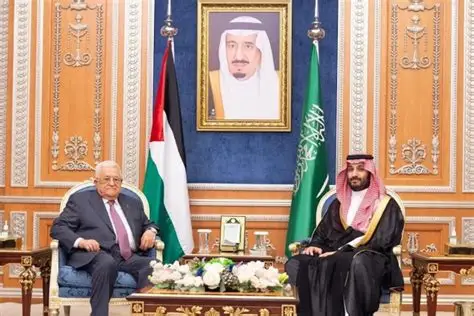
The Minister of State for the Federal Capital Territory (FCT), Dr. Mariya Mahmoud, has expressed support for the proposed reforms by the Saudi Arabian Ministry of Hajj and Umrah, including the proposed migration of Nigeria’s national pilgrims’ quota to a Business-to-Business (B2B) tour operator model.
Mahmoud, who spoke during a policy communication engagement on the proposed reform, described the initiative as a clear and straightforward measure aimed at improving the efficiency and smooth operation of Hajj activities.
She said Nigeria, as a law-abiding country, would continue to respect and operate within the framework of reforms introduced by the Saudi authorities, while urging that adequate transition arrangements be put in place to enable stakeholders to adapt effectively.
The Minister particularly welcomed the proposed transition period, noting that a phased implementation would make it easier for Nigeria to adjust to the new system and ensure smoother Hajj operations.
Mahmoud commended the National Hajj Commission of Nigeria (NAHCON) for the success recorded during the last Hajj operation, describing it as unprecedented in the history of Hajj administration in Nigeria.
She emphasised the need for strict adherence to health requirements, particularly for pregnant women and pilgrims with chronic conditions such as diabetes, hypertension, and heart disease.
The Minister assured that relevant authorities would continue to strengthen medical screening and ensure compliance with established guidelines.
Mahmoud thanked the NAHCON delegation for the engagement and expressed optimism that continued collaboration among stakeholders would result in more efficient, successful, and sustainable Hajj operations in Nigeria.
Earlier, the Zonal Commissioner representing the North-Central Zone of the National Hajj Commission of Nigeria (NAHCON), Prof. Muhammad Unaru Ndagi, said the Saudi authorities had indicated that 98 per cent of Nigeria’s Hajj quota would migrate to the B2B model from the 2027 Hajj, as part of Saudi Arabia’s Vision 2030 reforms.
He explained that while NAHCON supports reforms aimed at improving efficiency and service delivery, an immediate 98 per cent migration was considered operationally unfeasible because of its potential impact on Nigeria’s existing Hajj administration, financial structures, and the affordability of pilgrimage for ordinary Nigerians.
Ndagi said the Commission had consequently engaged the Saudi authorities and secured a major concession on August 18, 2026, allowing for a phased 30 per cent migration for the 2027 Hajj, with further transition in subsequent years.
According to him, the phased approach would provide Nigeria with time to strengthen regulatory oversight, build the capacity of private tour operators, complete the necessary digitisation, and ensure an orderly transition without compromising pilgrims’ welfare.
He further disclosed that NAHCON had briefed the Vice President and engaged relevant state pilgrims’ welfare boards, agencies, and senior government officials.
He added that diplomatic efforts with the Saudi authorities were ongoing to secure a mutually acceptable framework for the reforms.
Ndagi also drew the Minister’s attention to the strict timelines introduced by the Saudi authorities for Hajj preparations, noting that the final deadline for uploading pilgrims’ registration is September 26, 2026, with no extension expected.
He therefore sought the Minister’s urgent intervention to ensure that the FCT and other relevant stakeholders accord the highest priority to pilgrims’ registration, documentation, payment, and related processes in order to safeguard Nigeria’s Hajj arrangements and the interests of prospective pilgrims.

Tella Onah
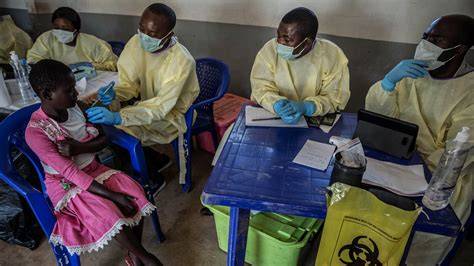
The Minister of Information and National Orientation, Alhaji Mohammed Idris, has directed agencies under the Federal Ministry of Information and National Orientation to immediately scale up public education and enlightenment on the Ebola Virus Disease, (EVD), following the confirmation of a case in the Federal Capital Territory.
The agencies are the National Orientation Agency (NOA), the Nigerian Television Authority (NTA), the Federal Radio Corporation of Nigeria (FRCN), the Voice of Nigeria (VON) and the News Agency of Nigeria (NAN).
The Nigeria Centre for Disease Control and Prevention (NCDC) confirmed the case this week in a woman who had recently travelled to Abuja from Uganda. She is in isolation and receiving treatment, and her contacts have been identified and are being followed up by the health authorities.
“The Federal Government is taking every necessary step to contain this case and protect Nigerians. Accurate and timely information is one of our strongest defences.
“Our agencies must reach every community, in every language, with clear facts on how Ebola spreads, how to protect ourselves and where to report suspected cases,” he said.
Idris directed the agencies to work closely with the Federal Ministry of Health and Social Welfare and the NCDC to ensure that all public messaging is verified and evidence-based.
He also tasked the NOA to deploy its offices nationwide for grassroots sensitisation, working with traditional and religious leaders, community groups and the media.
The Minister urged Nigerians to remain calm, rely only on information from official sources and avoid spreading unverified claims on social media.
Members of the public are advised to report any suspected case immediately by calling the NCDC’s toll-free 24-hour emergency line, 6232.

Our Reporter
The Peoples Redemption Party (PRP), Bauchi state chapter, has accused some traditional rulers in the state of interfering in politics and harassing its members, particularly in rural communities.
In a statement signed by its State Secretary, Abubakar Sani, and made available to newsmen on Thursday, the party alleged that some traditional rulers were taking sides with the ruling party and suppressing the lawful activities of opposition parties in their domains.
“We are concerned by reports that some traditional rulers are taking sides with the ruling party and suppressing the lawful activities of opposition members within their domains. Such conduct is unacceptable, reprehensible and contrary to the law,” the statement said.
The party warned that using revered traditional institutions to stifle opposition could bring the stools into disrepute and create unnecessary tension and disorder in the state.
The PRP however commended traditional rulers who have remained politically neutral despite alleged pressure to support the ruling party, describing their impartiality as commendable and worthy of emulation.
“We commend the traditional rulers who have maintained neutrality despite pressure to favour the ruling party or treat opposition members unfairly. We urge them to remain neutral, as expected of them as fathers to all,” Sani said.
The party called on those involved in partisan politics to desist, stressing that traditional rulers are expected to be fathers to all, irrespective of political affiliation.
Abu Umar
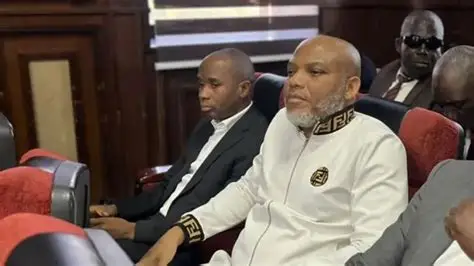
The Federal High Court in Abuja, on Thursday, convicted and sentenced a self-confessed member of the Indigenous People of Biafra (IPOB), Mr. Paul Okechukwu, 48, to 20 years in prison for belonging to a proscribed organisation.
Okechukwu who appeared in court as defendant pleaded guilty to one count of a two-count charge the Federal Government preferred against him.
The Federal Government alleged in the first count that the defendant, who is from Nnewi South in Anambra State, had in 2021, while in Imo State, committed an offence by belonging to IPOB, a proscribed organisation, contrary to and punishable under Section 16 of the Terrorism (Prevention) (Amendment) Act, 2013.
In the second count, the Federal Government alleged that the defendant participated in an attack in which two security operatives were killed, and thereby committed an offence contrary to Section 2(1) of the Terrorism (Prevention) (Amendment) Act, 2013.
After the charge was read to him, the defendant pleaded not guilty to the second count.
In view of this development, and following an application by the Attorney-General of the Federation and Minister of Justice, Prince Lateef Fagbemi, SAN, who was in court to lead the prosecution, the court struck out the second count after it was withdrawn.
Relying on Section 72 of the Terrorism Prevention and Prohibition Act (TPPA) 2022, the Attorney-General applied for the court to allow a witness from the Department of State Services (DSS) to review some facts of the case.
The witness, whose name was given as “ABC” for the purpose of the trial, identified the defendant as a member of IPOB, which he said had since been outlawed.
He told the court that the defendant was involved in acts of terrorism, which he said included attacks on security agents.
The witness, who said he was part of a team that investigated the defendant, tendered a copy of the report, which was admitted as Exhibit A.
While applying for the defendant to be convicted, the AGF argued that the law prescribed a minimum sentence of 20 years for the offence.
“We therefore urge my lord to impose the maximum sentence, at least to serve as a deterrent to others and to also show that the nation cannot condone any act of terrorism,” the AGF added.
Meanwhile, immediately after the AGF made the application, the defendant broke down in tears in the dock, begging the court to temper justice with mercy.
Delivering judgment in the matter, Justice Hawa Yilwa found the defendant guilty and sentenced him to 20 years.
The court said it took note of the charge against the defendant and “the ripple effect it has on the nation.”
It held that the defendant should be remanded in any correctional facility chosen by the Comptroller-General of the Nigerian Correctional Service to serve his sentence, which should count from the day he was arrested.
The court held that the convict should be rehabilitated and redecalised upon the completion of his prison sentence.
-

 General News2 weeks ago
Rivers 2027: We are not part of Rainbow Coalition – APC Legacy Group slams Wike, Fubara meeting
-
General News1 month ago
JOHESU demands: MHWUN puts FG on notice over fresh action
-

 Politics1 month ago
2027: ASAF backs APC governors, rejects rainbow coalition
-

 Politics2 months ago
You have demonstrated diligence, loyalty, statesmanship in leadership, Ekechi salutes Shetimma at 60
-

 Politics2 months ago
2027: Advertising experts raise concerns over irregular regulation of sector
-
FCT News2 months ago
2027: Hasana-Moneme pledges skills, empowerment, credit access for FCT women
-
General News3 months ago
2027: Dame Princess Esom-Nwafor Orizu confirmed as APC flagbearer for Nnewi North /South /Ekwusigo Federal Constituency as INEC releases names of candidates
-
Uncategorized3 months ago
Rescue of Oyo schoolchilden: Tinubu commends security agencies, says action breakthrough in fight against criminality