
Oil and Gas
Within 5 days, Dangote Refinery raises petrol price

By Our Reporter
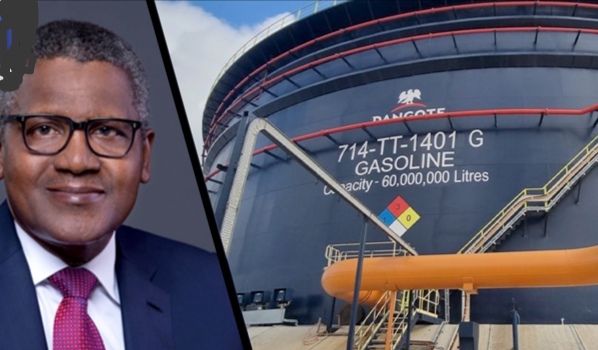
Dangote Petroleum Refinery has again raised its ex-depot, or gantry, price for Premium Motor Spirit, commonly known as petrol, from N1,265 to N1,350 per litre.
The new price took effect on Saturday, September 12, 2026, marking the fourth increase announced by the refinery in less than a month.
The latest N85 adjustment comes amid sustained volatility in the international oil market, with crude prices rising significantly in recent weeks.
The refinery had initially increased its petrol gantry price from N1,165 to N1,185 per litre on August 21. Five days later, the price moved to N1,200 before another increase to N1,265 on August 29.
With the latest adjustment, the refinery’s petrol price has risen by N185 per litre in 22 days, representing an increase of approximately 15.9 per cent.
The new prices were communicated to customers in a circular issued late Friday by the Group Commercial Operations Department of Dangote Petroleum Refinery and Petrochemicals.
The circular read, “Dear Valued Customer, please find below the revised DPRP PMS gantry and coastal prices, which are effective from 12th September 2026:
“Coastal (MT): The old price of ₦1,669,545 has been revised to ₦1,783,530. Gantry (LTR): The old price of ₦1,265 per litre has been revised to ₦1,350 per litre.
“You are advised to return all ATCs for repricing, and a new volume contract will be issued for immediate resumption of loading.
“Should you require any further clarification, please do not hesitate to contact us.”
The coastal price was also increased, moving from N1,669,545 to N1,783,530 per metric tonne.
Petroleumprice.ng separately confirmed the new gantry price of N1,350 per litre.
The refinery also instructed customers to return their existing Authority to Collect documents for repricing, after which new volume contracts would be issued to facilitate the immediate continuation of loading.
The latest development comes as global crude oil prices remain elevated. Brent crude recently traded above $104 per barrel after earlier crossing the $107 mark, amid continued tensions involving the United States and Iran and disruptions to oil supplies through the Strait of Hormuz.
The strategic waterway has experienced a sharp decline in oil flows in recent weeks, while attacks on tankers and tighter shipping conditions have heightened concerns about global supply.
The developments have kept international oil benchmarks elevated and increased pressure on the cost of refined petroleum products.
As of the time of filing this report, officials of Dangote Petroleum Refinery had not responded to inquiries seeking additional explanations for the latest price increase.

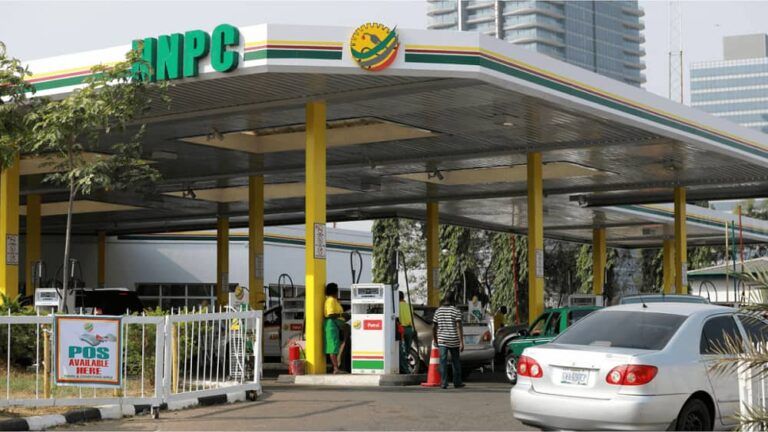
Motorists and commuters across Nigeria are facing mounting financial pressure as rising petrol prices continue to drive up transportation costs, with pump prices exceeding ₦1,400 per litre at some Nigerian National Petroleum Company Limited retail outlets despite the Federal Government’s announced discount initiative.
Investigations across several states showed that petrol sold for between ₦1,400 and ₦1,470 per litre at some NNPC filling stations, although motorists who used the company’s mobile application reportedly enjoyed lower prices at selected outlets.
The persistent increase in fuel costs has forced commercial drivers and tricycle operators to adjust their fares, leaving passengers struggling to cope with the rising cost of daily commuting.
While some transport operators said the high cost of petrol, vehicle maintenance and other operational expenses made fare reductions impractical, several commuters complained that the promised relief from the discount scheme had yet to reflect in their transportation costs.
Others expressed frustration over difficulties accessing the discount, particularly the requirement to register on the NNPC mobile application and purchase fuel at participating stations.
In Ilorin, Kwara State, petrol was selling for ₦1,405 per litre at NNPC retail outlets visited by the newspaper.
A commercial driver, Kalejaye Yusuf, said the rising cost of petrol had significantly reduced the earnings of transport operators.
He explained that drivers were caught between recovering their fuel expenses and keeping fares affordable for passengers already burdened by the rising cost of living.
According to him, increasing fares could further discourage passengers who were struggling to meet their daily expenses.
A government worker, Nana Ismail, said maintaining her car had become increasingly expensive, forcing her to leave it at home occasionally and rely on commercial motorcycles.
A journalist, Azeez Arisekola, questioned the requirement for customers to download and register on the NNPC application before benefiting from the discount.
“I don’t understand this price discount at all. How do they expect consumers to complete certain steps before accessing the reduced price?” he asked.
Arisekola said the arrangement could prevent some motorists from benefiting, particularly those unfamiliar with the application or unable to navigate its registration process.
In Gombe State, petrol sold for ₦1,425 per litre at NNPC filling stations.
A motorist, Zainab Mohammad, said she had not experienced any meaningful reduction in pump prices at the stations she patronised.
“I have not noticed any reduction. I still bought at the rate of N1,410 yesterday,” she said.
A trader, Suraj, said expensive petrol had increased the cost of transporting goods, forcing businesses to contend with higher operating expenses.
He noted that traders might eventually increase the prices of their goods to recover the additional transportation costs, worsening the financial difficulties facing consumers.
A commercial motorcycle operator, Mohammed Sati, disclosed that journeys that previously cost ₦500 now attracted fares ranging from ₦800 to ₦1,000.
He said operators had to purchase fuel before looking for passengers, meaning that high petrol prices continued to eat into their earnings even when patronage was low.
In Lagos State, the President of the Joint Drivers Welfare Association of Nigeria, Abiodun Akintade, alleged that the announced petrol discount was not being implemented at some NNPC filling stations.
He specifically mentioned outlets in Ijanikin and Iyana-Iba, where petrol was reportedly selling for ₦1,355 per litre, the same price charged before the discount initiative was announced.
Akintade said he had visited an NNPC station opposite a police station in Ijanikin and discovered that the pump price remained unchanged.
He added that the situation was similar at the Iyana-Iba outlet.
In Kano State, petrol sold for ₦1,420 per litre at NNPC stations visited by the newspaper, while commercial transport operators said price fluctuations had made it difficult to predict their daily operating expenses.
Three tricycle operators, Abdulkareem Umar, Haruna Yusuf and Tijjani Gwarzo, said recent changes in petrol prices had left them uncertain about the actual benefits of the discount scheme.
Abdulkareem said he purchased petrol at ₦1,440 per litre from Aliko Oil on Saturday, noting that the difference between prices at NNPC stations and other outlets was only about ₦10 to ₦20 per litre.
Passengers also said they had yet to benefit from any reduction in fares.
A student, Musa Abdullahi, said his transport fare from Kabuga to his school in Tarauni remained ₦500.
Similarly, a civil servant, Bala Umar, who lives in Gwammaja, said he continued to spend ₦600 daily commuting to the Audu Bako Secretariat.
Another resident, Isma’il Mustapha, said he had not noticed any reduction in transportation costs.
In Jigawa State, petrol sold for ₦1,405 per litre at NNPC stations in Dutse, Gumel and Hadejia.
Station attendants said they had not received instructions to implement the announced price reduction.
An attendant at an NNPC station in Dutse, who spoke on condition of anonymity, said, “We sell at N1,405. There is no discount here. We have not received any circular to reduce the price.”
A market woman, Zuwaira Ibrahim, said her fare from Shuwarin to Dutse New Central Market had increased from ₦500 to ₦700, while the cost of travelling from Dutse to Hadejia had risen from ₦3,000 to ₦4,000.
A Federal University, Dutse student, Aisha Sani, also lamented the increase in fares for short-distance journeys.
“Keke now collects N300 for a short distance that was N200. Where is the discount?” she asked.
A commercial driver on the Dutse-Kano route, Magaji Garba, said operators could not reduce fares while petrol prices remained high.
A tricycle rider, Ibrahim Danladi, disclosed that his daily earnings had dropped from ₦8,000 before October 1 to approximately ₦4,000.
In Minna, Niger State, petrol prices at the NNPC mega station around City Gate fluctuated between ₦1,450 and ₦1,505 per litre.
Mustapha Abdullahi, a motorist who travels to Abuja from Abdulsalami Garage in Minna, said interstate transport fares had risen sharply.
He said a journey to Abuja that cost ₦3,500 last year increased to ₦7,000 in March and now costs ₦11,000.
Abdullahi also blamed the poor condition of the Minna-Abuja highway, saying it damaged vehicles and increased maintenance expenses for transport operators.
A tricycle operator, Sadiq Ndanusa, who operates between Kpakungu and Mekunkele in Minna, said journeys that previously cost between ₦300 and ₦600 had become difficult to undertake for less than ₦800.
He attributed the decline in his earnings to high fuel prices and frequent vehicle repairs, adding that he was considering abandoning the business.
In Jos, Plateau State, petrol sold for ₦1,410 per litre at NNPC stations visited by the newspaper.
Motorists and commuters said the discount initiative had not translated into lower transportation costs on their regular routes.
A motorist, James Pam, said he had continued buying petrol at NNPC stations without receiving any discount.
A market woman, Saratu Musa, who travels daily from Terminus to Farin Gada, said her fare had increased from ₦300 to between ₦400 and ₦500, depending on the driver.
A bus driver operating on the Terminus-Bukuru route, Sani Abdullahi, said the increase in petrol prices from ₦1,370 to ₦1,410 per litre had further reduced his earnings.
“How can I reduce fares? Fuel is N1,410 today at NNPC. Last week it was N1,370. After buying fuel and giving money to the owner of the bus, what will remain?” he asked.
A tricycle operator, Emeka Okoro, said his daily profit had fallen from ₦6,000 to ₦3,000. He added that he sometimes purchased petrol from informal sellers at ₦1,500 per litre when demand was high.
In Kogi State, petrol sold for ₦1,410 per litre at an NNPC station in Felele, along the Lokoja-Abuja Expressway.
A motorist, Mike Abu, said he had not noticed any change in petrol prices at NNPC stations or other outlets, including MRS filling stations.
He said he now drove to his office, parked his vehicle and relied on commercial motorcycles when travelling for official assignments.
Another resident, Samson Eleijoh, said the high cost of transportation had restricted his movement.
He disclosed that he had not visited his parents in four months because of the expense of travelling from Ganaja village to Felele.
In Kaduna State, petrol sold for ₦1,379 per litre at some NNPC retail outlets, while customers who used the company’s mobile application and paid digitally reportedly paid ₦1,339, representing a difference of ₦40 per litre.
Ezekiel Akpan expressed concern that the discount had not delivered the level of relief consumers expected, while Shuaibu Usman said high fuel prices continued to increase his daily expenses.
James Daniel argued that consumers needed a more substantial and sustainable price reduction to ease the financial burden on vehicle owners.
The station manager at an NNPC outlet in Unguwan Sarki, Yusuf Usman, said the discount did not establish a uniform pump price nationwide.
In Sokoto and Kebbi states, motorists reported buying petrol for ₦1,430 per litre at the NNPC stations visited. Some called on the Federal Government and the company to review the implementation of the scheme to ensure that ordinary Nigerians, especially commercial drivers, benefited from the relief.
In Borno State, petrol sold for ₦1,470 per litre at NNPC stations for customers who did not use the company’s application, while those who used the app reportedly paid ₦1,350.
A motorist, Francis Chubiyo, confirmed the price difference.
“Yes, when you buy with the app, you get it at N1,350, but when you buy directly, it is N1,470 at NNPC stations,” he said.
Despite the lower price available to application users, residents said transport fares had remained unchanged.
Meanwhile, NNPC’s Chief Corporate Communications Officer, Andy Odeh, said petrol prices would continue to differ across the country because of variations in transportation, logistics and location-related costs.
“The NNPC has already said that there won’t be a uniform petrol price across the nation. It won’t be like the price will be the same everywhere,” he said.
Odeh explained that the discount was not available at every NNPC retail outlet, advising customers to use the company’s mobile application to identify participating stations.
“Some NNPC retail outlets may also not be in the scheme. If you download the app, you will see and know which NNPC retail outlet is in the scheme,” he added.
He said motorists were required to download and register on the application to qualify for the ₦66-per-litre discount.
According to him, the platform also enabled the company to monitor the number of beneficiaries and determine the total value of discounts granted.
(PUNCH)

By Our Reporter
2027: INEC drops Pantami from final list of Gombe governorship candidates
The name of former Minister of Communications and Digital Economy, Prof. Isa Ali Ibrahim Pantami, is absent from the final list of candidates cleared by the Independent National Electoral Commission (INEC) for the February 6, 2027, governorship election in Gombe State.
INEC released the list containing 16 candidates, including Bala Bello Tinka of the African Democratic Congress (ADC), Jamilu Isyaku Gwamna of the All Progressives Congress (APC) and Babayo Ardo Kumo of the Nigerian Democratic Congress (NDC).
Other candidates on the list are Zubairu Mu’azu Halilu of the Labour Party, Lamela L. Silas of the Allied Peoples Movement (APM), Ibrahim Jalo Abubakar of the Peoples Redemption Party (PRP) and Adamu Mohammed Ma’aji of the Social Democratic Party (SDP), among others.
Pantami’s exclusion is notable because his name featured on INEC’s provisional list published on August 29.
The former minister had emerged as the Peoples Democratic Party (PDP) governorship candidate after defecting from the APC on May 19.
However, his initial emergence as the party’s candidate was challenged in court, with a Federal High Court nullifying the primary election and ordering a fresh exercise.
READ ALSO:Again, Pantami emerges PDP guber candidate in Gombe rerun primary
Pantami subsequently won the court-ordered rerun primary conducted on September 29, polling 2,054 votes to defeat Khamisu Ahmed Mailantarki Mailantarki and Usman Aliyu Garry.
Earlier, a Federal High Court sitting in Gombe had, on September 24, nullified his initial emergence from the May 26 primary election.
His candidacy also faced uncertainty following the Supreme Court’s September 24 judgment restoring Sections 77(5), (6), (7) and 84(2) of the Electoral Act 2026.
The provisions became central to questions surrounding the eligibility of political parties and their candidates ahead of the 2027 elections.
The Supreme Court had barred political parties from fielding candidates whose names were not included in the membership registers submitted to INEC within the stipulated period.
Pantami’s absence from the final list raises questions about the status of his governorship ambition following the legal disputes surrounding his emergence as the PDP candidate.
By Our Reporter
The Nigerian National Petroleum Company Limited (NNPC Ltd.) has commenced a nationwide promotional campaign offering customers a ₦66 discount on fuel purchases made through its NNPC Fuel App.
The promotion, which began on October 1, will run until October 7 at NNPC filling stations across the country.
NNPC announced the initiative in a post on its X handle on Friday, saying customers had already started taking advantage of the offer at various stations.
“The ₦66 Discount Promo is ongoing & the excitement is already happening across our stations nationwide!
“All over Nigeria, our customers are getting in on the action & there’s still time for you to benefit!
The promo runs from 1–7 October on the NNPC Fuel App,” the post read.
The company said activities had commenced at several of its stations nationwide, with highlights from the first day of the promotion shared with the public.
NNPC urged motorists and other customers to continue using the Fuel App for their transactions throughout the seven-day campaign in order to benefit from the discount.
“Keep fueling, keep transacting and keep your eyes on our pages,” the post read.
The national oil company also said it would continue to release pictures and updates from participating stations as the promotion progresses.
Customers have been advised to take advantage of the offer before the promotional period ends on October 7.
The ₦66 discount applies to eligible transactions made through the NNPC Fuel App during the promotion.
-
 General News2 weeks ago
Rivers 2027: We are not part of Rainbow Coalition – APC Legacy Group slams Wike, Fubara meeting
-
General News1 month ago
JOHESU demands: MHWUN puts FG on notice over fresh action
-
 Politics1 month ago
2027: ASAF backs APC governors, rejects rainbow coalition
-

 Politics2 months ago
You have demonstrated diligence, loyalty, statesmanship in leadership, Ekechi salutes Shetimma at 60
-

 Politics2 months ago
2027: Advertising experts raise concerns over irregular regulation of sector
-
FCT News2 months ago
2027: Hasana-Moneme pledges skills, empowerment, credit access for FCT women
-
General News3 months ago
2027: Dame Princess Esom-Nwafor Orizu confirmed as APC flagbearer for Nnewi North /South /Ekwusigo Federal Constituency as INEC releases names of candidates
-
Uncategorized3 months ago
Rescue of Oyo schoolchilden: Tinubu commends security agencies, says action breakthrough in fight against criminality