
General News
Another Court, But Will Corruption Be Afraid?


By Lemmy Ughegbe, Ph.D
Nigeria has never suffered from a shortage of institutions created to fight corruption. We have the Economic and Financial Crimes Commission. We have the Independent Corrupt Practices and Other Related Offences Commission. We have the Code of Conduct Bureau. We have the Code of Conduct Tribunal. We have the police. We have courts. We have laws prohibiting practically every conceivable manifestation of public corruption.
Yet corruption has proved remarkably unimpressed.
Now comes another proposition. The leadership of the Code of Conduct Tribunal is pushing for the Tribunal to be transformed into a full fledged National Anti Corruption Court, with seven judicial divisions and 37 judges dedicated to corruption cases.
The attraction is immediately obvious.
The CCT says it inherited about 1,037 unresolved cases, some of which had remained unattended for between five and ten years. Under the proposed arrangement, corruption trials would proceed through a summary procedure designed to conclude cases within six weeks of arraignment.
Six weeks? In a country where politically exposed defendants can spend years travelling through adjournments, preliminary objections, interlocutory appeals and changes of counsel before the substance of allegations against them is determined, six weeks sounds almost revolutionary.
The frustration behind the proposal is therefore understandable.
Justice delayed is not merely justice denied to defendants or victims. In corruption cases, delay can become a defence strategy.
Witnesses disappear. Memories fade. Investigators are transferred. Governments change. Political alliances shift. Public attention moves elsewhere.
Eventually, a scandal that once dominated newspaper headlines becomes another dusty case file.
So, there is merit in asking whether Nigeria needs a judicial structure specifically designed to prevent corruption trials from becoming marathons.
But before creating another institution, we should ask a more uncomfortable question.
Is the absence of a specialised court really the principal reason Nigeria struggles to punish corruption?
That question matters because Nigeria has a familiar response to institutional failure.
We create another institution.
When an agency is ineffective, we establish a committee. When the committee disappoints, we create a task force. When the task force falters, we propose a commission. And when existing courts appear too slow, we contemplate another court.
Institutional multiplication can sometimes disguise institutional weakness.
A National Anti Corruption Court may accelerate trials. But it cannot investigate a case for the EFCC or ICPC. It cannot manufacture evidence that investigators failed to obtain. It cannot rescue a badly drafted charge. It cannot prevent witnesses from being compromised. It cannot replace diligent prosecution. And it cannot guarantee that politically powerful defendants will be treated exactly like ordinary citizens.
Those are the harder parts of the corruption problem.
A judge can decide only the case placed before the court. If investigators bring weak evidence and prosecutors present defective cases, giving the judge six weeks instead of six years will merely produce a faster failure.
That is why the conversation must extend beyond speed.
Nigeria needs competent investigation, professional prosecution and judicial efficiency operating together.
There is another question. What happens after judgment?
A specialised anti corruption court would still exist within Nigeria’s constitutional judicial architecture. Defendants must retain their rights to fair hearing and appeal. Any reform that pursues speed by sacrificing due process would simply exchange one problem for another.
Corruption trials should be swift. They must also be fair. The objective cannot be conviction at all costs. It must be credible justice delivered without unnecessary delay.
There is nevertheless something deeply troubling about a system in which corruption cases can remain unresolved for five or ten years. If the figure of 1,037 inherited cases reported by the CCT tells us anything, it is that the status quo cannot simply be defended.
No serious justice system should regard a decade as a reasonable period for determining whether a public officer violated the law.
But perhaps the more useful lesson is that deadlines should not begin and end with judges. Investigating agencies should have performance standards. Prosecutors should face consequences for habitual incompetence. Courts should control frivolous adjournments.
Defence lawyers should be entitled to deploy every legitimate protection available to their clients, but the administration of justice should not permit procedure to become an instrument for ensuring that substance is never reached.
And where corruption is established, sanctions must be sufficiently certain to deter the next offender.
That last point may be more important than the name on the courthouse.
People are not principally deterred by the number of anti corruption agencies or courts a country possesses. They are deterred by the probability that wrongdoing will be discovered, prosecuted and punished.
Certainty matters.
If a public officer believes there is a substantial chance that stolen money can purchase influence, frustrate investigation, finance endless litigation or eventually disappear into a negotiated political settlement, another court building will not frighten him.
But if he knows that suspicious transactions will be detected, investigators will follow the money, prosecutors will present competent evidence, trials will proceed without needless delay and punishment will follow conviction, behaviour begins to change.
That is deterrence.
There is therefore a case for considering the CCT proposal seriously. Specialisation can improve expertise. Dedicated judges can reduce competing caseloads. Strict case management can prevent unnecessary delay.
But Nigeria should resist the temptation to believe that institutional redesign is itself reform.
The National Assembly must interrogate the proposal carefully. What jurisdiction will the new court possess? How will it relate to existing Federal and State High Courts? What constitutional amendments may be required? How will its judges be appointed? What safeguards will protect their independence? How will appeals work? And, crucially, what prevents the same culture of delay migrating into the new institution?
These questions are not arguments against reform. They are the conditions for making reform meaningful.
Nigeria’s anti corruption struggle has produced enough agencies, slogans, arrests, arraignments and televised declarations of war against corruption.
What it desperately needs is consequence.
If a National Anti Corruption Court can help deliver competent, independent and timely justice, then it deserves serious consideration.
But if we simply change the signboard, appoint 37 judges, create seven divisions and reproduce the weaknesses already haunting our justice system, corruption will adapt quickly. It always has.
The real measure of this proposal will therefore not be how quickly Nigeria creates another court. It will be whether those who steal from Nigeria finally begin to believe that the law will catch them.
Until then, we may have another court. But will corruption be afraid?
Lemmy Ughegbe, Ph.D, FIMC, CMC
Email: lemmyughegbeofficial@gmail.com
WhatsApp ONLY: +2348069716645

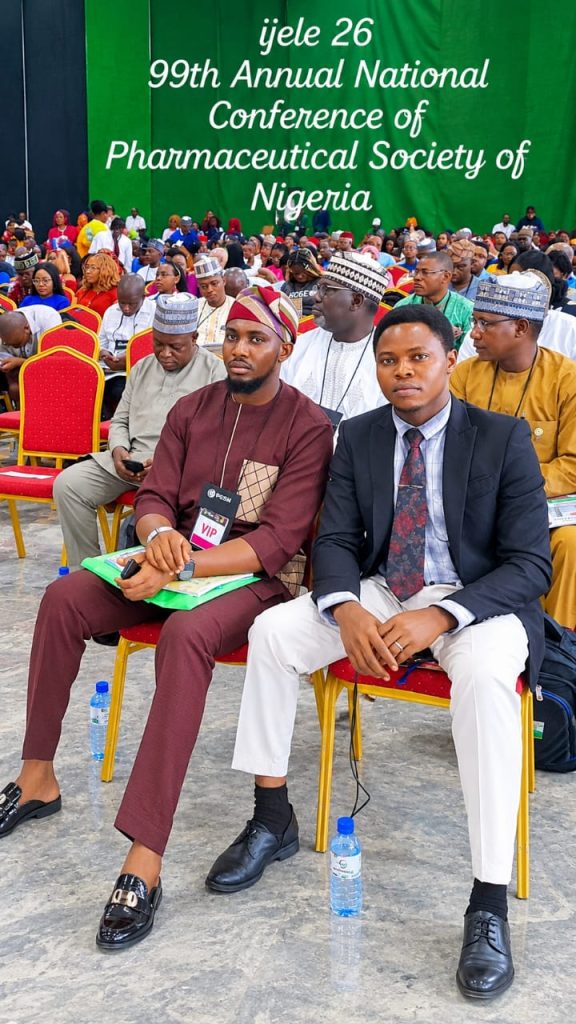
… Decry marginalization, career stagnation/educational regulatory framework
By Uzo Ugwunze
Pharmacy Technicians in Nigeria have called for stronger collaboration with the Pharmaceutical Society of Nigeria (PSN) to close professional borders, combat quackery and eliminate fake drugs across the country.
The National President of the Reformed Forum of Pharmacy Technicians in Nigeria (RFPTN), Pharm. Tech. Shagba Humphrey T., made the call while delivering an address at the ongoing 99th PSN Annual National Conference, IJELÉ ’26, in Awka, Anambra State, describing it as the first-ever official appearance and address of Pharmacy Technicians at the PSN conference.
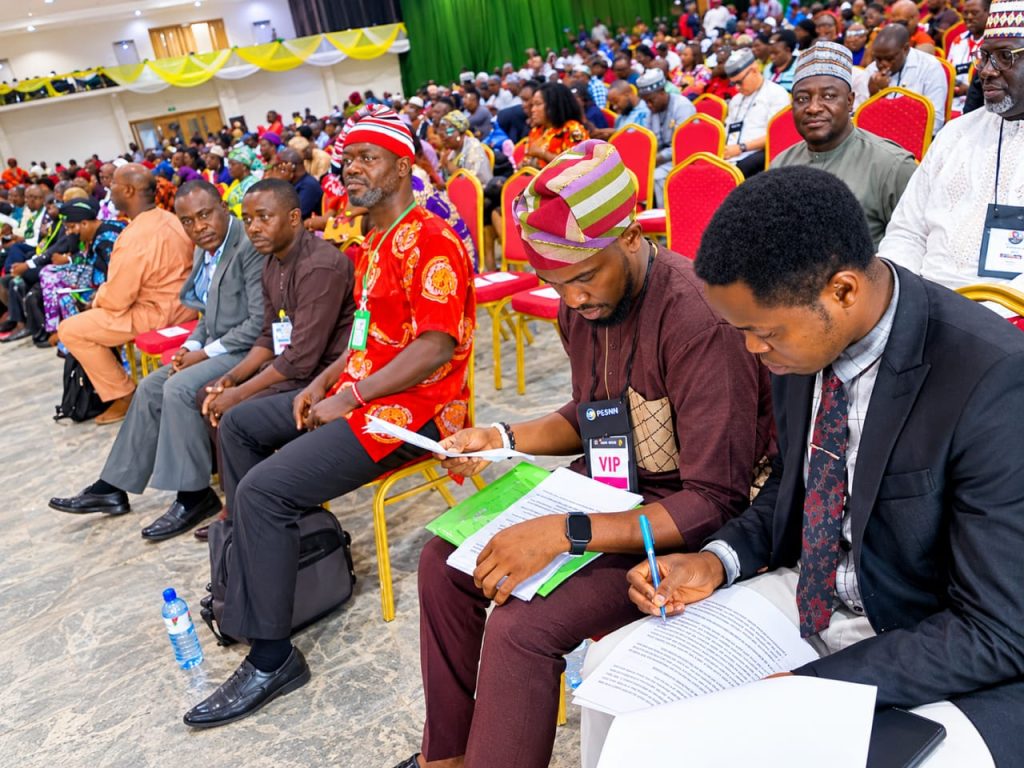
Shagba commended the PSN President, Pharm. Ibrahim Tanko Ayuba, for his visionary and inclusive leadership, noting that the partnership between both bodies has grown through sustained engagement, from the hosting of former PSN President, Pharm. Cyril Usifoh, at RFPTN’s first national conference to the invitation of the RFPTN leadership to PSN events in Abuja and Lagos.
However, he decried the decades-long career stagnation facing Pharmacy Technicians, who he said spend 30 to 35 years in service and retire with the same National Diploma they started with, unlike other health cadres who enjoy progression from ND to HND, PGD and Masters, and called for clear academic pathways under the Pharmacy Council of Nigeria (PCN) to restore dignity and productivity.
Shagba lamented that pharmacy practice in Nigeria has become dangerously porous, with doctors, lawyers, bankers, nurses and even SSCE holders operating Patent and Proprietary Medicine Vendors (PPMVs) and community outlets, while trained and PCN-certified Pharmacy Technicians are restricted, stressing that all pharmaceutical service points should be manned exclusively by pharmacists and certified technicians.
He said Pharmacy Technicians are ready to serve as the primary operational link in digital supply chain integrity, cold chain management and anti-counterfeiting, as well as frontline providers in hundreds of rural communities where they already deliver pharmaceutical care.
The RFPTN president listed the forum’s demands to include setting Pharmacy Technician qualification as the minimum legal baseline for dispensing medicines, integration of certified technicians into PCN inspection and enforcement teams for grassroots anti-quackery, deployment in Primary Health Care centres under task-shifting policies, and institutional synergy under the conference theme “One Health, One Pharmacy: Bridging Knowledge, Practice and Policy for National Impact.”
He concluded that Nigeria cannot achieve Universal Health Coverage, eliminate drug quackery or secure its pharmaceutical supply chain while leaving its primary mid-level technical workforce marginalized, pledging the commitment of Pharmacy Technicians to remain competent, ethical and disciplined pillars of pharmaceutical care.
Earlier in his welcome address, President of the Pharmaceutical Society of Nigeria (PSN), Pharm. Ibrahim Tanko Ayuba,
speaking under the theme, “One Health, One Pharmacy: Bridging Knowledge, Practice and Policy for National Impact,” said the conference reaffirms the profession’s commitment to responsive, evidence-based healthcare, noting that human, animal and environmental health are interconnected and require coordinated action across professions and sectors.
He emphasized the need to advance pharmacy practice through structured postgraduate training, clinical collaboration and recognition of the Consultant Pharmacist cadre, citing partnerships with WASPEN and the International Pharmacy Practice Residency Programme as vital steps to improving patient care and health system performance.
Ayuba also called for full implementation of the National Drug Distribution Guidelines and completion of Coordinated Wholesale Centres to fight counterfeit and substandard medicines, while urging stronger partnership with government, academia and industry ahead of the Society’s centenary in 2027 to build a more resilient, equitable and responsive health system.
Faith and Religion
CGM National Leader warns against unbiblical practices, political interference in churches
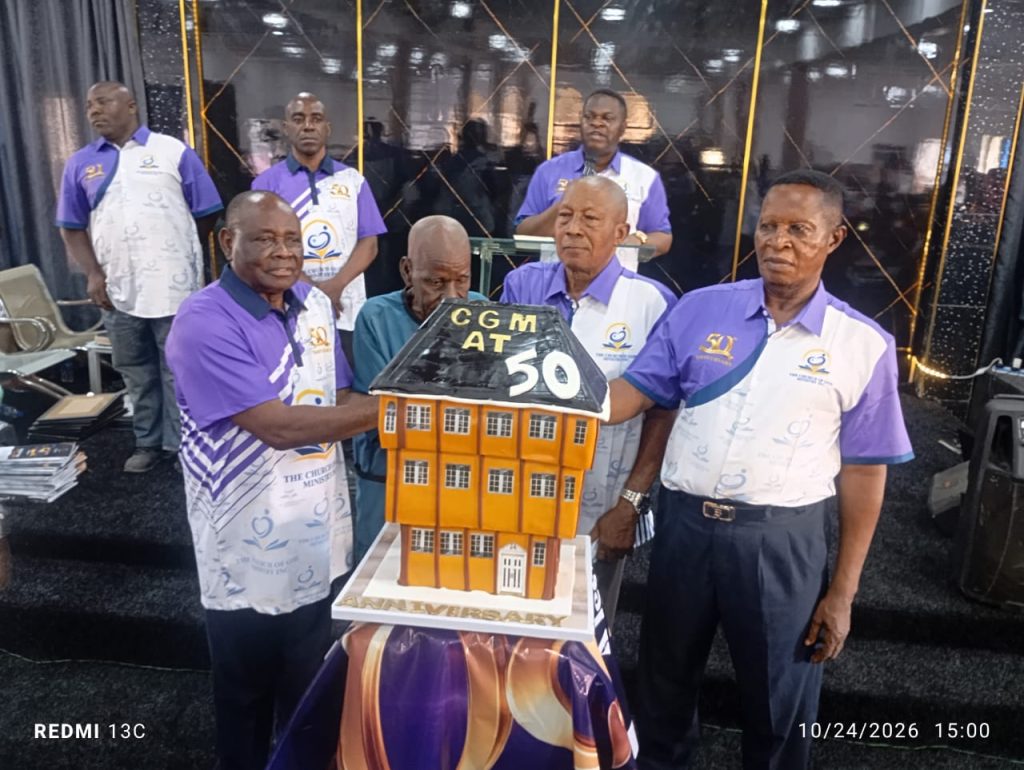
..as Church of God Ministries marks 50th anniversary
By Uzo Ugwunze
The National Leader of The Church of God Ministry Incorporated CGM and Chairman National Church Council, Evangelist Prof Uzochukwu Solomon Nwanonyuo, has urged Christian leaders and believers across Nigeria to remain steadfast in their faith and uphold the teachings and doctrines of the Holy Scriptures.
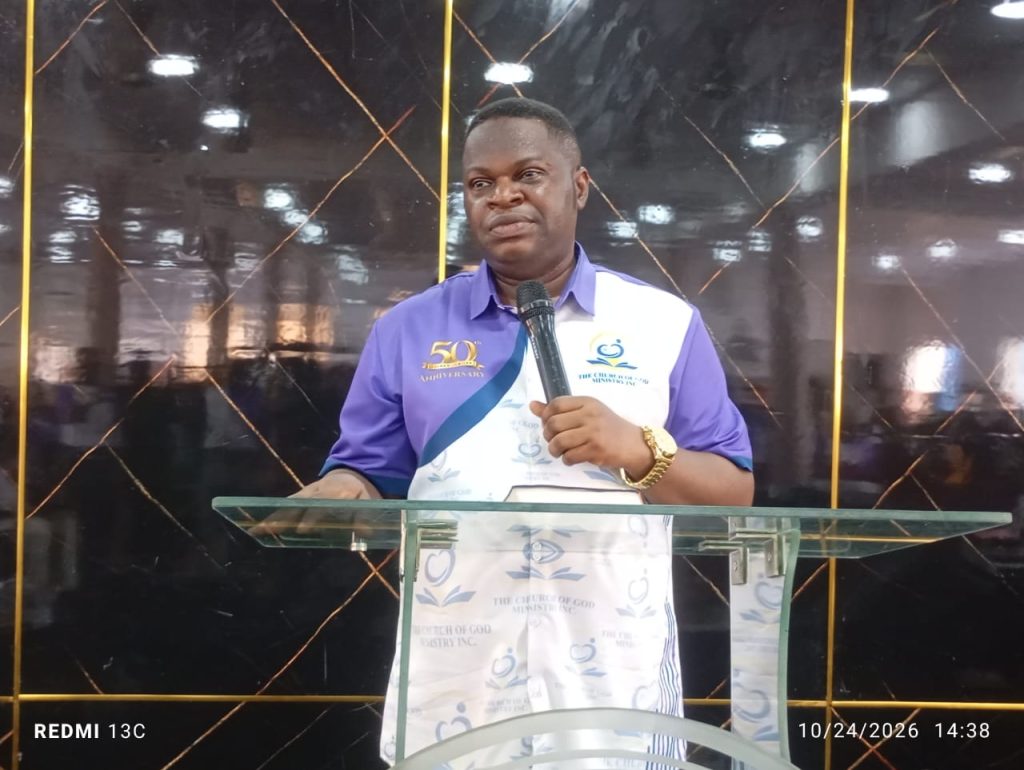
Prof. Nwanonyuo expressed concern over what he described as the growing influence of unbiblical practices in some churches, warning that certain activities had deviated from the fundamental principles of Christianity.
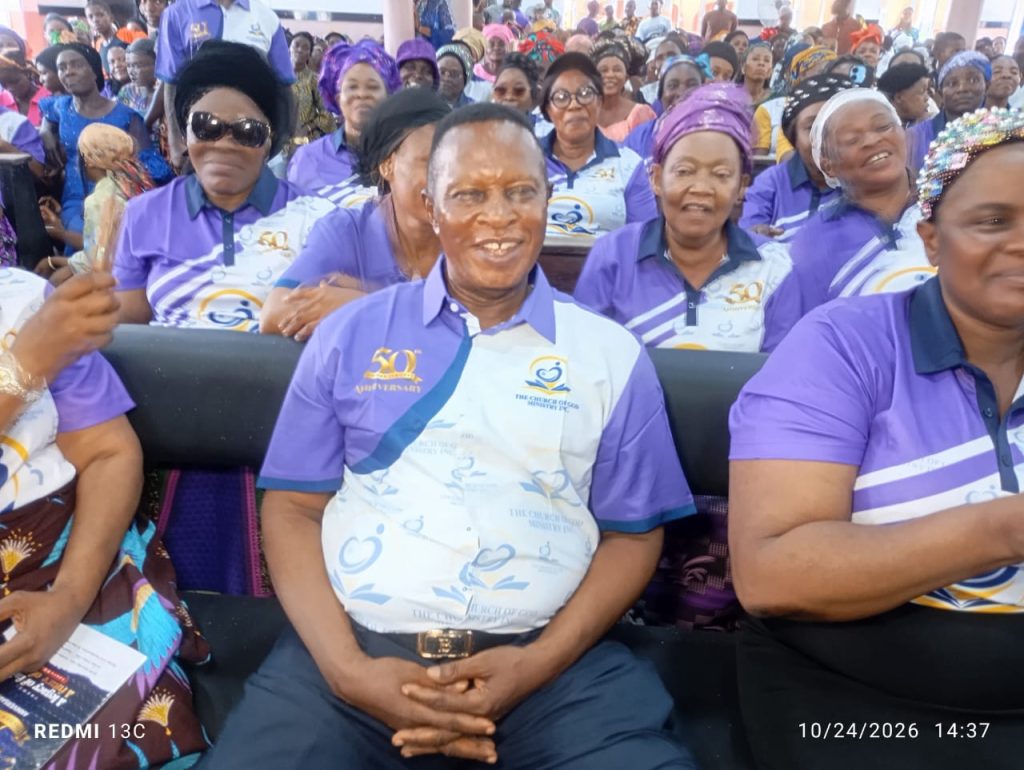
The prelate gave the advice while addressing newsmen shortly after The Church of God Ministry Inc. marked its Golden Jubilee anniversary with a grand celebration held from Friday, October 23 to Sunday October 25, 2026, at its National Headquarters, 7A New Cemetery Road, Onitsha, Anambra State, under the theme “A Legacy of Faith, A Future of Hope.”
Nwanonyuo lamented that some religious institutions were increasingly accommodating practices he characterised as occultic and satanic, thereby undermining the spiritual integrity of the Church and exposing worshippers to influences contrary to the teachings of Jesus Christ.
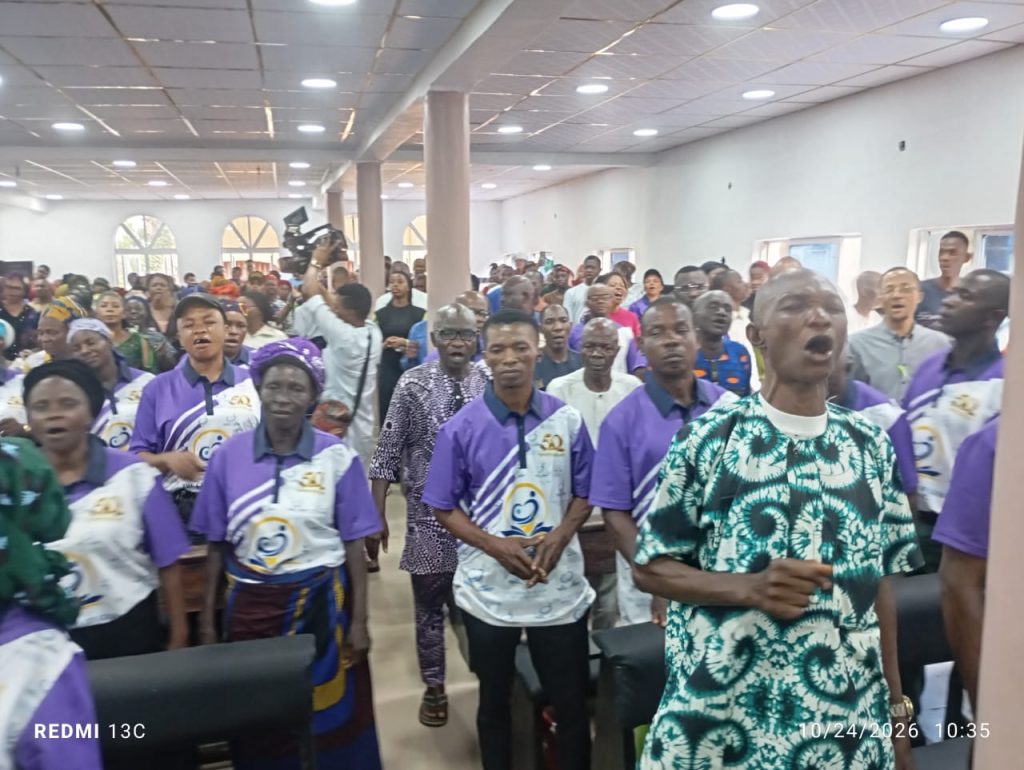
The cleric called on church leaders to protect the Christian faith from practices that compromise biblical truth, as well as undue interference from political interests, social pressures and other external influences. He maintained that the Church must remain committed to its spiritual responsibilities and the teachings of Christ.
Addressing the role of ministers, bishops and other Christian leaders in politics, Prof Nwanonyuo cautioned against turning religious leaders into instruments for advancing partisan interests. He urged the clergy to maintain political neutrality and avoid using their positions to influence members’ voting decisions.
According to him, church leaders are representatives of Christ and must demonstrate holiness, righteousness and integrity in their conduct. He stressed that religious leaders should not publicly dictate political choices to their congregations or compromise their spiritual responsibilities for political favour.
He further maintained that voting should remain a matter of individual conscience, explaining that citizens should assess the performance of political officeholders and decide whether to retain or replace them through the ballot box.
The cleric also called for a clear distinction between the Church and partisan politics, citing the biblical teaching of Jesus Christ: “Render therefore unto Caesar the things which are Caesar’s; and unto God the things that are God’s.”
He explained that those who choose to participate actively in politics should do so in that capacity, while those entrusted with the leadership of the Church must discharge their responsibilities with the decorum and integrity expected of Christian ministers.
Prof Nwanonyuo reaffirmed the need for the Church to preserve its independence, uphold the truth of the Christian faith and remain faithful to the teachings of Scripture. He said such commitment was essential to fulfilling the mission of Jesus Christ and preparing humanity for His second coming.
Speaking on the 2027 general elections, Prof. Uzochukwu Nwanonyuo, National Leader of The Church of God Ministry urged politicians and citizens to embrace peace and unity ahead of the 2027 general elections.
He called on INEC to ensure free, fair and credible polls, and warned politicians and voters against do-or-die politics, violence and intimidation during the electoral process.
Nwanonyuo advised winners to be magnanimous, voters to follow their conscience, and all stakeholders to prioritize national peace and democratic stability.
Earlier in his welcome address, the National Leader and Chairman of the National Church Council (NCC), Evangelist Prof. Uzochukwu Solomon Nwanonyuo, said the 50-year journey is a testimony of God’s faithfulness, preservation and grace. He welcomed the Board of Trustees, founding fathers, ministers, elders, guests and members, noting that the church’s existence is sustained by God as the Author and Finisher of its faith.
Prof. Nwanonyuo traced the church’s history to 1976 when early believers, led by Pastor Fabian Dozie Obiadi and others, broke away from Sabbath white-garment churches over practices they described as occultic and ungodly. The movement, initially called Evangelical Church of God and later registered as The Church of God Ministry Incorporated, started in Onitsha and spread across Anambra, Imo, Abia, Enugu, Delta, Rivers, Lagos, Niger, FCT Abuja and other states.
He recalled the church’s trying period in 2002 when schism led to the exit of some members to form another church, but said the church survived the loss of members and properties and continued to grow.
On achievements, the NCC Chairman said his administration, which came on board in 2020 and was re-elected for a second term, has implemented major reforms including modernisation of the headquarters into a two-storey edifice, commencement of the campground project and expansion of evangelism and church planting.
He paid tribute to departed pioneers and financial contributors including families of Late Elder Louis Okoye, Elder Christopher Chukwudum, and ministers who died in active service, stressing that their sacrifices laid the foundation for the ministry.
Looking to the future, Prof. Nwanonyuo said the church’s priorities for the next 50 years include spiritual vitality, doctrinal integrity, Sabbath observance, youth mentorship, evangelism, accountable leadership and humanitarian service, urging all members to preserve the legacy of faith for future generations.
Speaking on advice for young ministers, the Senior Pastor and BOT Chairman of The Church of God Ministry, Pastor Fabian Dozie Obiadi, urged young ministers to remain prayerful, committed and disciplined in their calling, noting that God will help them succeed if they stay faithful.
On the role of the church in national transformation, Pastor Obiadi said despite the numerous challenges facing Nigeria, the church can still transform the nation through prayers, stressing that committed intercession can bring positive change.
The founding father emphasized that prayer remains the church’s greatest tool for national rebirth, expressing confidence that God can turn around the country’s fortunes if the church remains steadfast in its spiritual responsibility.
Contributing, another founding father, Elder Barr. Anthony Anonyuo thanked the almighty God for the expansion, success and sustainance of The Church of God Ministry Inc. despite challenges in a changing world.
Elder Barr Anonyuo who was part of the numerous awardees also thanked God for keeping him alive to witness the golden age of the ministry after 50 years of labor in God’s vineyard praying God to continue to bless the church and more especially the present Leadership which God has raised to bring about revival in the endtime church.

By Mohammed Sanusi
Thousands of African Democratic Congress (ADC) supporters on Tuesday stormed the party’s campaign office in Sokoto State, which had been sealed by the state government, and forcefully reopened it.
The government had sealed the office on Monday, ahead of the party’s presidential campaign rally flag-off in Sokoto on Wednesday, November 4. It said the action was taken to protect lives and property following a recent disturbance involving party supporters and some miscreants.
The government also raised concerns over the ownership documents of the property, claiming that they were irregular and that official records showed it belonged to the defunct Savannah Bank.
The state Commissioner for Lands and Housing, Barrister Nasiru Dantsoho, who announced the sealing of the building on Monday, said the government had reviewed the available documents relating to the property and discovered that it was originally owned by the defunct Savannah Bank, with no official change of ownership reflected in government records.
-

 General News4 weeks ago
Rivers 2027: We are not part of Rainbow Coalition – APC Legacy Group slams Wike, Fubara meeting
-
General News1 month ago
JOHESU demands: MHWUN puts FG on notice over fresh action
-

 Politics2 months ago
2027: ASAF backs APC governors, rejects rainbow coalition
-

 Politics2 months ago
You have demonstrated diligence, loyalty, statesmanship in leadership, Ekechi salutes Shetimma at 60
-

 Politics3 months ago
2027: Advertising experts raise concerns over irregular regulation of sector
-
FCT News3 months ago
2027: Hasana-Moneme pledges skills, empowerment, credit access for FCT women
-
General News3 months ago
2027: Dame Princess Esom-Nwafor Orizu confirmed as APC flagbearer for Nnewi North /South /Ekwusigo Federal Constituency as INEC releases names of candidates
-
Uncategorized4 months ago
Rescue of Oyo schoolchilden: Tinubu commends security agencies, says action breakthrough in fight against criminality