
General News
Police arrest fake Okada rider over alleged kidnap, robbery of 35 women in Bauchi

Abu Umar
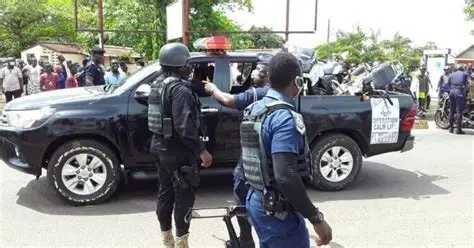
Detectives of the Bauchi State Police Command have arrested a 53-year-old man accused of posing as a commercial motorcycle rider to kidnap and rob 35 women in Bauchi metropolis.
The suspect, identified as Gambo Hassan, alias “Anahaka”, of Igbo Quarters, Bauchi, was arrested on Thursday, September 11, 2026, at about 8:45pm by operatives of ‘B’ Division, GRA, during a routine patrol along Adamu Jumba Road.
This was disclosed on Saturday by the Police Public Relations Officer, SP Nafiu Habib.
According to SP Nafiu, Hassan specialized in night operations, posing as an Okada rider to pick unsuspecting passengers, mostly women, before robbing, kidnapping, and in some cases, sexually assaulting them.
“Preliminary investigation revealed that the suspect disguised himself as a commercial motorcycle rider during evening hours to target, kidnap, rob and, at times, rape unsuspecting passengers, particularly women,” the statement said.
At the time of his arrest, the suspect was wearing a black face mask and a face cap, and was riding a Bajaj motorcycle with registration number BAU 150G. A sharp knife was also recovered from him.
During interrogation, Hassan reportedly made a voluntary confession and led detectives to 15 women initially identified as victims. The figure rose to 35 after further investigation.
Following the confession, police executed a search warrant at his residence. Items recovered and suspected to be proceeds of crime include 15 assorted mobile phones, 3 power banks, 6 ladies’ wristwatches, 6 native caps, 5 bundles of women’s wrappers, 3 hijabs, and cash totaling ₦425,435. Kenyan and Turkish currency notes were also found.
The suspect and all exhibits have been transferred to the State Criminal Investigation Department, SCID, Bauchi for further investigation and prosecution.
The Commissioner of Police, CP Sani-Omolori Aliyu, commended the ‘B’ Division team for their vigilance and professionalism.
He reaffirmed the Command’s commitment to tackling crime and urged residents, especially victims, to come forward with useful information to aid investigation.

General News
El-Rufai’s associates earmarked $600,000 to compromise EFCC probe, DSS witness alleges in court
By Our Reporter
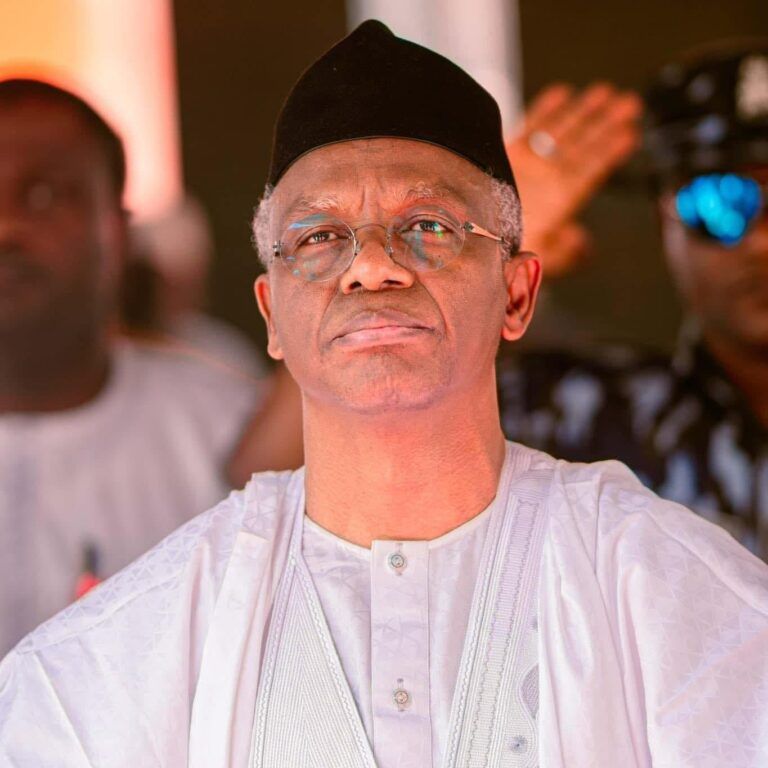
Segun Kayode, a forensic investigator with the Department of State Services (DSS), has alleged that Nasir el-Rufai, former Kaduna state governor, and some of his associates earmarked $600,000 to pay officials of the Economic and Financial Crimes Commission (EFCC) and intermediaries.
Kayode, the first prosecution witness in the ongoing trial, made the allegation on Tuesday while testifying before the Kaduna state high court sitting in Kawo and presided over by Justice Darius Khobo.
The witness told the court that $500,000 and $100,000 were allegedly set aside for the payments, adding that forensic audio recordings captured conversations involving el-Rufai and some of his suspected associates.
According to Kayode, the recorded conversations centred on alleged efforts to frustrate an EFCC investigation into a company identified as Singularity.
He said a senior advocate of Nigeria (SAN), another individual and Bashir el-Rufai, were among those allegedly mentioned in the conversations.
Kayode told the court that the SAN and the other individual were allegedly directed to meet one Ahmadu Sule to obtain a template previously used to liquidate another company, with the intention of applying a similar process to Singularity.
The investigator further alleged that the discussions included plans to liquidate the company in Nigeria and Mauritius, where it was reportedly under investigation by the Nigerian Financial Intelligence Unit.
He also alleged that the recordings contained discussions about preventing the EFCC from investigating a company he said was listed on the New York Stock Exchange.
The allegations formed part of the prosecution’s evidence against the former governor and have yet to be established by the court.
Proceedings lasted nearly eight hours, from 12:26pm to 8:18pm, with about two hours devoted to playing the recorded conversations.
After Kayode submitted a hard copy of his findings to the court clerk, the defence objected, saying the document should have been served earlier to allow the legal team to study its contents.
The judge ruled that the defence could obtain a certified true copy of the document admitted as Exhibit One for examination.
The court adjourned the case until November 30 and December 1, 2026, for the continuation of cross-examination, following agreement by the prosecution and defence.
El-Rufai is facing trial over alleged money laundering and conversion of public property.
The DSS is also prosecuting the former governor before the federal high court in Abuja over allegations of wiretapping.
He has been in the custody of the Independent Corrupt Practices and Other Related Offences Commission (ICPC) since February 19, after being released by the EFCC.
On April 13, the ICPC arraigned the former governor at the Kaduna high court on an amended nine-count charge bordering on alleged fraud and abuse of office.
In May, the federal high court in Abuja granted bail to el-Rufai in the case pertaining to alleged access to a telephone conversation involving Nuhu Ribadu, national security adviser (NSA).
Joyce Abdulmalik, the presiding judge, granted el-Rufai bail in the sum of N100 million with one surety in like sum.
In July, the el-Rufai family said the bail conditions being handed to the former governor are not “viable”.
By Our Reporter with agency report
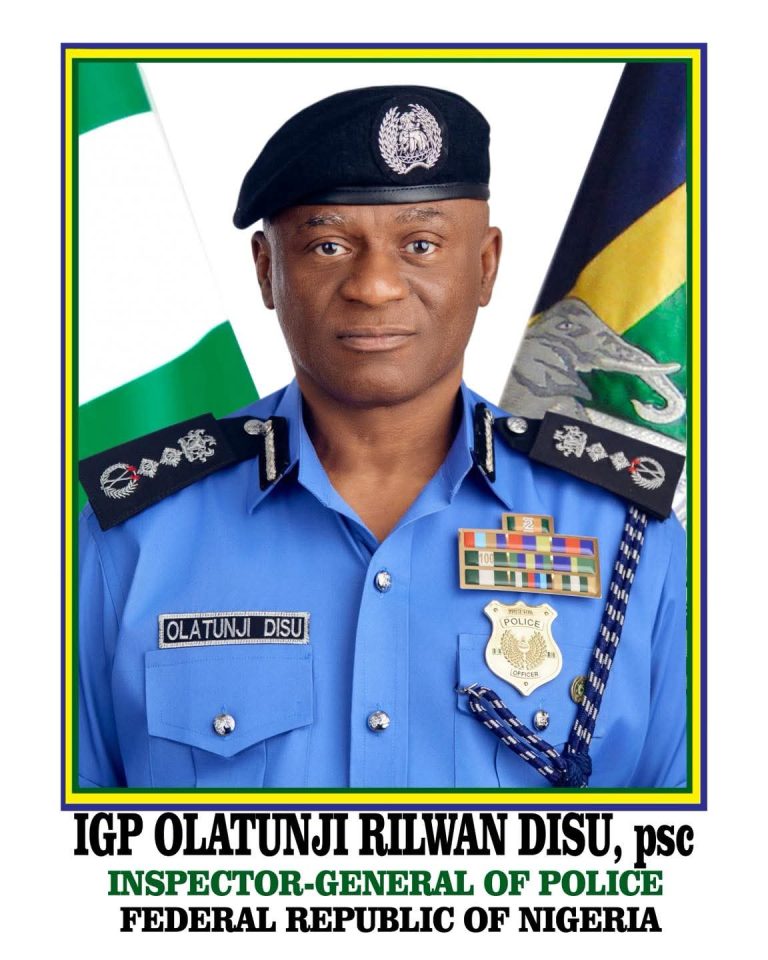
The Inspector General of Police, Olatunji Disu, has said the conduct of police personnel before, during and after the 2027 general election would make Nigerians happy and proud of the force.
He assured Nigerians that police would ensure professionalism during the forthcoming poll.
Disu stated this while fielding questions from newsmen after the Launch of a book, “The Origin of Women in Nigeria Police Force”, written by 96-year-old Dame Stella Okuyiga, DCP (rted), one of the first 20 pioneer female Officers to join the NPF.
Responding to questions about the police stance on the 2027 election, the IGP said the Force had organized a meeting with police commissioners across the country to ensure professionalism during the polls.
“I want to let you know that we just finished a conference of all commissioners of police and other senior officers. We have had two or three elections recently, and you can see the police did very well, and we did too.
“We have now brought all these experiences together, where we did well and where we did not do well, so that we can perform better in this big election that everybody is looking up to.
“I give you my word. Nigeria Police will do so well, and we will make Nigeria Police so proud, and we will make Nigerians proud.”
On the book written by Okuyiga, Disu said the author was among the first women to join the Nigerian police in 1955, adding that the force is pleased with her achievements.
Disu stated, “Mama is 96 years old, and she has taken her time to put all her experience, institutional knowledge that she has down in the book for us to be able to study it for the generations coming, for women police in the next generation to have something to look up to.
“We in the police, we are starting up the history of not leaving our own, not forgetting our own.
“We are going to ensure that we get copies of this book for all police training institutions, for all police officers to go through to see what it was like to be police officers.”
Speaking, the Nonagenarian (author) and retired DCP expressed happiness that the publication was not just a book, but a part of her that would live on.
She said: “This book launch today is an important day in my life because the book itself is there. But I still live on my life. I still live on because this book will be in libraries all over the world, and they’ll be reading it.
“So I’m so happy that with all that is happening today, I will continue to live forever.”
Rivers State Governor, Siminalayi Fubara, represented by the Secretary to the State Government, Dr Dagogo Wokama, launched the book wth N20 million.
PUNCH
General News
2027: In revised list, APC names Wike, Soludo, Adeleke, others in new Presidential Campaign Council
***Council to be inaugurated today
*** Inclusion of non APC members, President’s efforts in actualising his re-election bid, says Wike
By Eze Nnadi
The ruling All Progressives Congress (APC), on Tuesday, released a revised list of its 2027 Presidential Election Campaign Council, with few stakeholders from outside the party.
The new list, which included non APC members like former governor of Rivers State, currently the Minister of the Federal Capital Territory (FCT), Nyesom Wike, governors of Anambra and Osun states, Chukwuma Soludo and Ademola Adeleke respectively, also have former governors of Lagos state, Babatunde Raji Fashola and Akinwumi Ambode, as well as as Minister of Aviation, Festus Keyamo, among its members.
The revised list which was made available on Tuesday, after it was earlier withdrawal last month, still retained President Bola Tinubu as head of the campaign council, with Vice-President Kashim Shettima and APC National Chairman, Prof. Nentawe Yilwatda, serving as vice-chairmen.
Senate President Godswill Akpabio, Speaker of the House of Representatives Tajudeen Abbas and Kwara State Governor AbdulRahman AbdulRazaq are also listed as vice-chairmen.
Former Zamfara State Governor, Senator Abdulaziz Yari retained his position as Director-General, with Yobe State Governor, Mai Mala Buni, Senate Leader Opeyemi Bamidele, Deputy Senate President Barau Jibrin and Deputy Speaker Benjamin Kalu remained as deputy directors-general. Senator Adams Oshiomhole is listed as Deputy Director-General, Mobilisation.
Similarly, Imo State Governor Hope Uzodimma was named as the campaign council secretary with the National Secretary of the APC, Senator Ajibola Basiru as deputy secretary and Hadiza Bala Usman as assistant secretary.
Other officials include Femi Gbajabiamila, who will oversee administration; Ibrahim Kabir Masari, in charge of logistics and operations; former Speaker Aminu Masari, Deputy Director-General, Parliament Mobilisation; and David Umahi, who will oversee infrastructure mobilisation and sensitisation.
The council also listed zonal campaign coordinators and co-coordinators across the six geopolitical zones.
They include Governor Bassey Otu and Victor Giadom for the South-South; Enugu State Governor Peter Mbah and Ijeoma Arodiogbu for the South-East; Lagos State Governor Babajide Sanwo-Olu and Prince Oladiran Iyantan for the South-West; Muazu Bawa Rijau and Niger State Governor Umar Bago for the North-Central; Kaduna State Governor Uba Sani and Garba Datti Muhammad for the North-West; and former Borno State Governor Ali Modu Sheriff and Idris Suhaibu for the North-East.
At the state level, the list names governors and other political figures as campaign coordinators. They include Ahmadu Fintiri for Adamawa, Umo Eno for Akwa Ibom, Chukwuma Soludo for Anambra, Babagana Zulum for Borno, Sheriff Oborevwori for Delta, Hope Uzodimma for Imo, Abba Kabir Yusuf for Kano, Dapo Abiodun for Ogun, Ademola Adeleke for Osun, Nyesom Wike for Rivers and the Federal Capital Territory, and Dauda Lawal for Zamfara.
Former APC national chairmen Adebisi Akande and Abdullahi Adamu; as well as former Ogun State Governor Ibikunle Amosun; former Osun State Governor Iyiola Omisore; Senator Ibrahim Dankwambo; Senator George Akume; former Ogun State Governor Segun Osoba; and Wale Edun. Obafemi George are also listed as advisers
The Directorate of Election Planning, Coordination, Monitoring and Mobilisation, established ahead of the 2027 general election, has Faleke as Deputy Director-General, with Stella Okotete and Engr. Abdullahi Garba Ramat serving as Secretary I and Secretary II, respectively. Audu Maikori is also listed as a secretary.
Other members of the directorate include Soares Omotola, Bashir Dabo, Sheriff Mohammed Usman, Jibrin Bancir, Ayoola Peter Olajolo, Abubakar Sadiq Sada and Princess Folasade Ogunbiyi.
In the Directorate of General Logistics and Operations, Masari has been appointed Deputy Director-General, while Adeniyi Tinubu and Barr. Yakub Bashir Bello will serve as deputies. Prof. Kabiru Isa was named secretary.
Members of the logistics and operations directorate include Ekene Nwokoro Ogbonaya, Prof. Vincent Weli, Ambassador Olusola Iji, Amina Bello, Ahmed Zibiri, Annabel Isenyo, Terrence Kuanum, Prof. Latif Babatunde Ayeleru, Amarachi Ejike, Dr Aminu Ibrahim Tsanyawa and Prof. Shuaibu Abdullahi.
Others are Senator Bello Tukur, Senator Adegbonmire Adeniyi Ayodele, Taiwo Adebowale, Sunusi Muhammad Abdullahi, Wasiu Olaomo Ayeola, Chief Isaac Ijwo, Garba Gololo Mohammed, Biodun Ogunbi, Ayuba Ganiyu Adele, High Chief Edem Duke, Yusuf Capt. Buba, Oden Ewa, Prince Ademuviwa Adex, Makinde Peter Abiola, Chief Solomon Ogba, Senator Lawal Hassan Dan Iya, Ambassador Kelvin Peter, Maggadas Mohammed Muazu and Victor Agwu.
The revised campaign council will be insugursted today (Wednesday, 14 October, 2026, according to a statement by the Party’s National Publicity Secretary, Felix Morka,
Morka said the inauguration will take place at the Banquet Hall of the Presidential Villa, Abuja, marking a major step forward in the Party’s preparations for the presidential election.
Reacting to the new list, Minister of the Federal Capital Territory, FCT, Nyesom Wike, said Tinubu’s decision to accommodate individuals outside the ruling party showed that the president’s appreciation of efforts by some non APC members in actualising his re-election bid
Wike, who is the national leader of the Peoples Democratic Party (PDP), said president Tinubu’s re – election campaign should not be restricted to APC members but also include supporters willing to contribute to his victory.
The minister who spoke during his monthly media parley on Tuesday in Abuja, emphasised that the president recognised that some individuals who were not members of the APC had contributions to make towards his re-election and decided to accommodate them.
“So my thinking is that the president said, look, there are those who are not members of our political parties, but have something to offer for his re-election, and it will be proper to accommodate them so that we are able to offer whatever they may call it,” he said.
Wike explained that the arrangement reflected cooperation between APC members and supporters of Tinubu, despite their different political affiliations.
“Some don’t want to see the word coalition, but if you see that word PBAT slash APC, were the members of the party, and supporters of Mr President working together to achieve one purpose
“You can see Professor Soludo, Governor of Anambra State, who is the coordinator for Anambra State. You can see Governor Adeleke, who is not a member of APC, but the coordinator for Mr President, and then my humble self, who is not a member of APC, but a strong coordinator for the president in Rivers and the FCT.
“It tells you that it’s not necessarily just APC. Like we are saying that the re-election of Mr President should not just be about the APC,” he said.
Wike added that the arrangement demonstrated that Tinubu had supporters across political divides who wanted him to remain in office.
Wike, who defended his nutured Rainbow Coalition backing President Bola Tinubu’s re-election, dismissed concerns that the initiative could create divisions within the All Progressives Congress.
He said the coalition was designed to strengthen Tinubu’s electoral chances by bringing together APC members and supporters of the President from other political parties, rather than undermining the ruling party as claimed by some APC governors
“If you see that word, PBT/APC, it means those who are supporting the president who are not members of the party, together with the party, are working together to achieve that purpose,” Wike said.
He cited Borno State Governor Babagana Zulum and Osun State Governor Ademola Adeleke as examples of political figures associated with the coalition’s state-level coordination, alongside himself.
“The major thing is Mr President. Whatever we are going to do, whoever has any idea or anything to contribute is to the success of Mr President. That is the whole thing,” he clarified.
-
General News3 weeks ago
JOHESU demands: MHWUN puts FG on notice over fresh action
-
 Politics4 weeks ago
2027: ASAF backs APC governors, rejects rainbow coalition
-
 General News6 days ago
Rivers 2027: We are not part of Rainbow Coalition – APC Legacy Group slams Wike, Fubara meeting
-

 Politics1 month ago
You have demonstrated diligence, loyalty, statesmanship in leadership, Ekechi salutes Shetimma at 60
-

 Politics2 months ago
2027: Advertising experts raise concerns over irregular regulation of sector
-
FCT News2 months ago
2027: Hasana-Moneme pledges skills, empowerment, credit access for FCT women
-
General News2 months ago
2027: Dame Princess Esom-Nwafor Orizu confirmed as APC flagbearer for Nnewi North /South /Ekwusigo Federal Constituency as INEC releases names of candidates
-
Uncategorized3 months ago
Rescue of Oyo schoolchilden: Tinubu commends security agencies, says action breakthrough in fight against criminality