
General News
Tinubu urges govs to emulate Uba Sani on free mass transit scheme


Abu Umar
President Bola Ahmed Tinubu has commended the Kaduna State Government’s Free Compressed Natural Gas Mass Transit Scheme, describing it as an example of a people-focused intervention.
The president also noted that such interventions are required from subnational governments, to reduce transportation costs and ease the pressure on households.
In a post on his official X account, President Tinubu made “special mention” of Kaduna State’s intervention, noting that it demonstrates how the transition to cheaper domestic energy can translate into tangible relief for ordinary citizens.
According to the president, the Kaduna State initiative ‘’is more of what we need to see at the subnational level.’’’
The presidential commendation came against the backdrop of renewed efforts by the Federal Government and the 36 states to accelerate the National Affordable CNG Transit Programme, to achieve measurable reductions in transportation costs across the country.
It will be recalled that the President met with the Governors in August 27, where a coordinated action to ensure that Nigerians begin to experience substantial relief in their daily commuting expenses from October 1, was resolved.
An implementation committee was subsequently constituted under the auspices of the Nigeria Governors’ Forum, with the Governor of Kwara State and Chairman of the Forum, AbdulRahman AbdulRazaq, appointed to lead it.
The committee has been working with the Presidential Initiative on CNG and Electric Vehicles, state governments and other critical stakeholders, to identify priority transportation corridors, determine appropriate interventions and establish the operational framework required for effective implementation.
The urgency of the initiative has been heightened by disruptions in global energy supplies, which have exerted fresh pressures on petrol and diesel prices, driving transportation costs upwards around the world.
The Federal Government noted that Nigeria cannot insulate itself from upheavals in international energy markets, arguing that the country’s abundant gas resources offer a credible pathway towards reducing its vulnerability.
The President has always reiterated that a return to the costly petrol subsidy regime, would once again expose the Nigerian economy to fluctuations in international oil prices and consume resources required for development.
The Federal Government however intends to support states that have embraced CNG transportation and help them expand interventions capable of delivering immediate and measurable benefits to citizens.
Embracing the support, Kaduna State Government pioneered a scheme that is built around a fleet of 100 CNG-powered buses, which has recorded approximately 3.2 million passenger trips.
According to reports, this support has saved commuters more than ₦3.5 billion during its first year of operation, establishing it as one of government’s most consequential response to fuel subsidy removal.
Responding to the President’s commendation, Governor Uba Sani expressed Kaduna State’s profound appreciation for the recognition and reaffirmed his administration’s determination to sustain policies that protect vulnerable households, widen access to essential services and place citizens at the centre of governance.
“We deeply appreciate President Bola Ahmed Tinubu for this recognition and for his administration’s continued support to subnational governments in delivering meaningful interventions to our people.
“Kaduna State continues to set national benchmarks in critical areas; from tackling the challenge of out-of-school children and expanding vocational training and skills development to pioneering CNG mass transit.
“Kaduna remains the only subnational government providing FREE CNG mass transit rides to its citizens. With about 3.2 million passenger trips and over ₦3.5 billion saved by commuters in the first year alone, the scheme has become one of our most impactful interventions in cushioning the effects of fuel subsidy removal.
“Our commitment remains clear: to put people first, reduce the burden on vulnerable households and ensure that the dividends of governance reach ordinary citizens,” Governor Uba Sani stated.
The Kaduna Free CNG Mass Transit Scheme reflects the wider philosophy of the Governor Uba Sani administration, which is that public policy must be judged not merely by the scale of government expenditure or the ambition of official pronouncements.


The Country Manager, Segilola Resources Operating Ltd., Austin Menegbo, on Tuesday in Abuja called for a comprehensive approach to tackling illegal mining in Nigeria.
Menegbo in his remarks at the opening of the 11th Nigeria Mining Week said combining law enforcement with formalisation, safety training, access to finance and alternative livelihoods was critical in combating illegal mining.
He said that illegal mining required coordinated responses to its economic, security, environmental and safety dimensions.
“Illegal mining cannot be treated as a single problem with a single solution. It is, at once, an enforcement challenge, an economic challenge, a safety challenge, an environmental challenge and in some locations, a security challenge,” he said.
According to him, enforcement remains necessary, particularly against criminal networks and individuals financing or benefiting from illegal mining operations.
He, however, said enforcement alone would not adequately address the problem without providing accessible pathways for miners to operate legally and responsibly.
“We also need accessible pathways into compliance,” he said.
According to him, technical and safety training, geological and market support, cooperative structures, responsible access to finance and alternative livelihoods are measures needed to address illegal mining.
He said alternative livelihoods were particularly important in locations where mining could not be conducted safely or legally.
The country manager also called for stronger coordination among government ministries, departments and agencies to address overlapping regulatory requirements and conflicting directives that could create uncertainty for mining operators.
He said clearer approval processes, transparent service timelines and effective mechanisms for resolving inter-agency challenges would improve the operating environment for legitimate mining businesses.
“A more coordinated system would not mean weaker regulation. It would mean regulation that is clearer, faster and more effective,” he said.
He also advocated sustained dialogue among government, industry operators, investors, host communities, service providers and civil society to identify emerging challenges and improve policy implementation.
He said communities and civil society should have meaningful roles in discussions on mining governance, adding that regular engagement could help resolve problems before they escalated into crises.
Speaking at the event, Dele Ayankale, National President of the Miners Association of Nigeria (MAN), said insecurity was one of the major barriers requiring urgent and decisive action.
“We are having a lot of insecurity issues around our mining corridors. This is one of the major barriers we need to address,” he said.
Ayankale acknowledged the efforts of the government in addressing the situation while also calling for appropriate regulation of the mining sector.
He decried that despite the inclusion of the solid minerals in the Federal list, state governments still regulate mining operators and increasing financial burden on them
He decried the continued involvement of state governments in regulating mining operations despite mineral resources being under the Federal Government’s jurisdiction.
Addressing the challenges, he said, would improve the investment climate, enhance returns and enable the sector to contribute more significantly to Nigeria’s economic diversification.
He said the gathering of local and international stakeholders would promote the exchange of ideas, technology and investment needed to accelerate the industry’s development.
“The coming together of different stakeholders, not only within Nigeria but from outside, will bring a convergence of ideas, technologies and investment that will make the industry grow very well in Nigeria,” he said.
The News Agency of Nigeria (NAN) reports that the two-day event themed ‘Unlocking Investment and Growth through Partnerships’ is organised by MAN, in partnership with PricewaterhouseCoopers (PwC) Nigeria and the Nigeria Extractive Industries Transparency Initiative (NEITI).(NAN).

The National Agency for Food and Drug Administration and Control (NAFDAC) has seized counterfeit alcoholic beverages worth more than ₦2 billion during a raid at Trade Fair Market, Lagos.
The agency disclosed this in a statement on its X handle on Tuesday, following an operation by its Investigation and Enforcement Directorate.
NAFDAC said the raid followed credible intelligence that exposed illegal activities within the market complex.
It said operatives uncovered more than 20 illegal stores concealed within makeshift parking spaces on the premises.
Suspects were found blending and counterfeiting popular alcoholic beverage brands, revalidating expired and unsafe drinks for resale, and stockpiling banned imported products.
NAFDAC disclosed that two suspects were arrested during the operation, while operatives evacuated the seized products from the complex.
The agency warned against activities that could endanger public health through the circulation of counterfeit, expired or unsafe alcoholic beverages.
It urged members of the public to remain vigilant and report suspected illegal manufacturing, product revalidation or sales activities.
NAFDAC provided its official complaints line, 0800-1-NAFDAC (0800-1-623322), for reporting suspicious activities. (NAN).
By Our Reporter
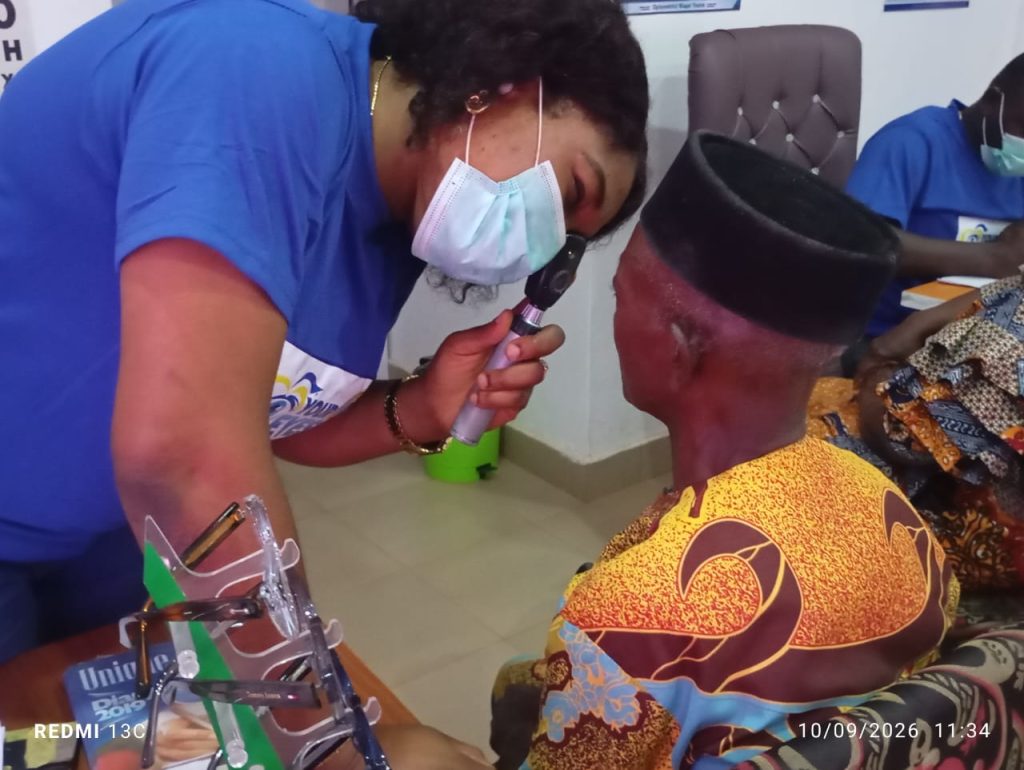
A civil society organisation has called for the adoption of the Girls Act model as a strategy to reduce HIV infections among young girls, warning that the disease remains prevalent, particularly among adolescent girls and young women.
The call was made on Tuesday during activities to commemorate the International Day of the Girl Child in Abuja. It follows concerns that women and adolescent girls bear a disproportionate burden of HIV infections compared with men and boys, particularly in sub-Saharan Africa.
The advocacy group noted that HIV could be better controlled if girls living with HIV were supported to remain on treatment, while those who were HIV-negative learned skills to prevent new infections and make informed decisions.
According to the Advocacy Lead at AIDS Healthcare Foundation (AHF), Steve Aborisade, although significant progress has been recorded in the global fight against HIV/AIDS, more work is needed to support young girls and vulnerable women.
Quoting the Joint United Nations Programme on HIV/AIDS (UNAIDS), Aborisade said women account for more than 50 per cent of people living with HIV globally and roughly 60 per cent in sub-Saharan Africa.
“Adolescent girls and young women aged 15 to 24 years are up to two to three times more likely to acquire HIV than young males of the same age.
“Biologically, women face a roughly two-fold higher acquisition risk per unprotected heterosexual act due to a larger mucosal surface area and longer exposure to seminal fluids.”
The UNAIDS data further indicated that many people living with HIV do not know their status and that concerted efforts are still needed to improve young people’s knowledge of HIV transmission and prevention.
“Adolescents aged 10 to 19 years face distinct physiological, psychological, legal and social factors that make them disproportionately vulnerable to low uptake of HIV testing,” the data indicated.
AHF, however, said patriarchy weighs heavily on women and girls and, combined with poverty and limited information, narrows their choices long before they can decide the terms of their own lives.
“A girl who cannot afford menstrual products, who has dropped out of school, or who depends on others for money, has fewer options, including options about sex. HIV and other sexually transmitted infections (STIs) thrive in exactly those conditions,” AHF said.
AHF said the Girls Act model, championed “for girls, by girls,” seeks to prevent HIV and STI transmission, support girls living with HIV to remain on treatment, reduce unplanned pregnancies and keep girls in school.
“As of 2026, the programme counted more than 4,500 girls in active engagement,” it said.
According to AHF, Girls Act works across four connected areas: health, education and livelihoods, leadership, and results.
On health, the organisation said girls living with HIV were supported to remain on treatment, while those who were HIV-negative learned skills to prevent infection and make informed decisions.
It said the provision of free menstrual health products, extended to surrounding communities, addressed a basic need that often costs girls their dignity and school attendance.
The organisation added that the programme also teaches girls how to make and care for reusable pads, ensuring that access does not depend solely on supply.
On education and livelihoods, AHF said the programme recognised that not every girl was in school and did not abandon those who were out of school.
It said girls who wanted to return to school were supported to do so, while those who had dropped out were trained in life skills and helped to establish businesses.
On leadership, the organisation said Girls Act created opportunities for girls to aspire and lead through mentorship, advocacy and access to resources.
“Girls are turning up empowered, able to negotiate safe sex and exercise bodily autonomy.
“Negotiating safe sex is the difference between exposure and protection, and bodily autonomy is not a slogan but a public health asset.”
AHF called on federal and state governments to adopt and fund the Girls Act model, integrating it into national and state plans for HIV, education and youth development.
“This means dedicated budget lines for menstrual health, so no girl misses school for want of a sanitary pad; skills training and start-up support that reach out-of-school girls where they live; support for girls to return to, and stay in, school; leadership platforms for girls in schools and communities; and clear pathways linking young people to HIV testing, treatment and care,” the advocacy group said.
The group also called on stakeholders in the HIV response to recognise their critical roles in addressing the challenges facing girls and young women.
“Some will say the country has more pressing priorities. They should weigh the cost of inaction: new infections among young people, lifelong treatment, interrupted schooling and lost productivity.
“Prevention that also builds livelihoods and leadership is among the smartest investments a government can make.
“Our girls have shown what is possible when someone invests in them. They have earned the right to be treated as a key population in the national response, not as an afterthought.”
-
General News3 weeks ago
JOHESU demands: MHWUN puts FG on notice over fresh action
-

 Politics4 weeks ago
2027: ASAF backs APC governors, rejects rainbow coalition
-

 Politics1 month ago
You have demonstrated diligence, loyalty, statesmanship in leadership, Ekechi salutes Shetimma at 60
-
 General News5 days ago
Rivers 2027: We are not part of Rainbow Coalition – APC Legacy Group slams Wike, Fubara meeting
-

 Politics2 months ago
2027: Advertising experts raise concerns over irregular regulation of sector
-
FCT News2 months ago
2027: Hasana-Moneme pledges skills, empowerment, credit access for FCT women
-
General News2 months ago
2027: Dame Princess Esom-Nwafor Orizu confirmed as APC flagbearer for Nnewi North /South /Ekwusigo Federal Constituency as INEC releases names of candidates
-
Uncategorized3 months ago
Rescue of Oyo schoolchilden: Tinubu commends security agencies, says action breakthrough in fight against criminality