
General News
Hajj: Saudi reforms operations gives September 26 deadline for 2027 Pilgrims upload


By Sam Otuonye
In a bold policy shift to upgrade the experience, streamline operations and services to Pilgrims visiting the holy land of Mecca, for their sacred duty, the Saudi Authority has introduced new measures to make the experience worthwhile, even as it has given September 26, 2026, as deadline for intending pilgrims to upload their data.
The development was made known by the Chairman, National Hajj Commission of Nigeria (NAHCON), Ambassador Ismail Abba Yusuf, in a media interaction on Monday, September 21, 2026, at the Hajj House’s Conference Hall, Abuja.
Ambassador Yusuf, who explained that the essence of the parley was to review the new norms occasioned by the reform, and get the Muslim community acquainted with them, stated that the reform touched several areas of the Hajj operations including digitalization, business model, medical, transportation, accommodation, and the scrapping of the grade D package, as well as a new operational calendar.
“The core objective is to transition from a decade-old state-managed public system into a highly commercial, digitized, and strictly regulated private market. This strategic evolution balances an ambitious goal of hosting 30 million pilgrims by 2030 with highly rigid, uncompromising safety and
operational protocol. The most prominent component of the reforms are privatization and market
disruption of the B2B system.
“Saudi Arabia is systematically moving away from dealing with government-run national governance, welfare laws, such that we have in Nigeria. Instead, it is forcing international Hajj delegations to migrate to a business model. In the case of Nigeria this year, there was an attempt
for us to move 98% of the pilgrims to a tour operator model. For us, this drastic reform.”
Ambassador Yusuf emphasized the need for pilgrims to upscale their digital literacy and professionalism in order to align with the logistics, medical disaster management, and digital operations the reform has introduced.
“Moving forward, the Saudi government is cancelling the grade D package because they believe that anybody who comes to perform Hajj should have the best experience. So that is an issue.
Then, of course, they are thinking about face-to-face training. Anybody who is a Hajj administrator should also be professional. No room for ad-hoc people
handling Hajj administration anymore.
“There are going to be specialised training on logistics, on medical services, disaster management and crowd control. All that are going to be included in their welfare. All that are going to be included in the packages for training. And we expect that unless you get certification for that, you are not going to be accepted as a Hajj manager.
Meaning that you will not get an official visa to perform any function as a Hajj manager. However, you can go on Hajj as an ordinary citizen.
“Of course, there is a complete digitisation and centralisation. The central cornerstone of the ecosystem is the Nusuk application and the Masar
platform. All visa applications, hotel booking, flight confirmations, entry permits, including access to the
holy sites must be secured and paid for exclusively through digital portal. And of course, it means that you need to embrace digital infrastructure to be able to do that. Otherwise, it will be difficult
for your children to access all the holy sites.”
Ambassador Yusuf stated that the
commonly affordable grade D which accommodates 80 to 90% of poor Nigerian pilgrims who, out of
commitment to their religion, save over time to be able to perform the sacred duty has been scrapped in order to give every participant a rewarding experience.
On the Nigeria’s response to the reforms,
recognizing that an abrupt overhaul would collapse the long-established Hajj administrative system in Nigeria, Ambassador Yusuf said NAHCON responded with structured diplomatic resistance and negotiated concessions.
He said the National Hajj Commission of Nigeria successfully argued that an immediate 98 percent shift
to privatization would trigger financial shock and leave the country, the ordinary Nigerian women, prized out of Hajj hence, on August 18, 2026, NAHCON secured a major diplomatic concession, getting Saudi approval for a phased transition over a three-year period, commencing with 30 percent
withdrawal from the 2027 Hajj.
He said that they made an appeal for Saudi to increase their quota, because of the increased number of applicants this year 2026, but was turned down, insisting that the 50,000 was sacrosanct.
“We however promised that next year (2027) we will consider adjustment in our quota, depending on how we perform this year, performance in terms of quota utilization, if we are able to finish using
our quarter.”
On the institutional and government response to the Saudi reform, NAHCON chairman said, “The Nigerian government has shown its full institutional way behind compliance, that
Nigeria should comply. The government emphasizes that Nigeria must remain a law-abiding partner to maintain its
diplomatic credibility and prestige. So, NAHCON is complying as much as it can.”
37 Miners death: Tunji-Ojo sets up 10-Man Panel, gives two weeks to uncover truth

*** Commends officers for strengthening private security sector_
By: Obum Stella
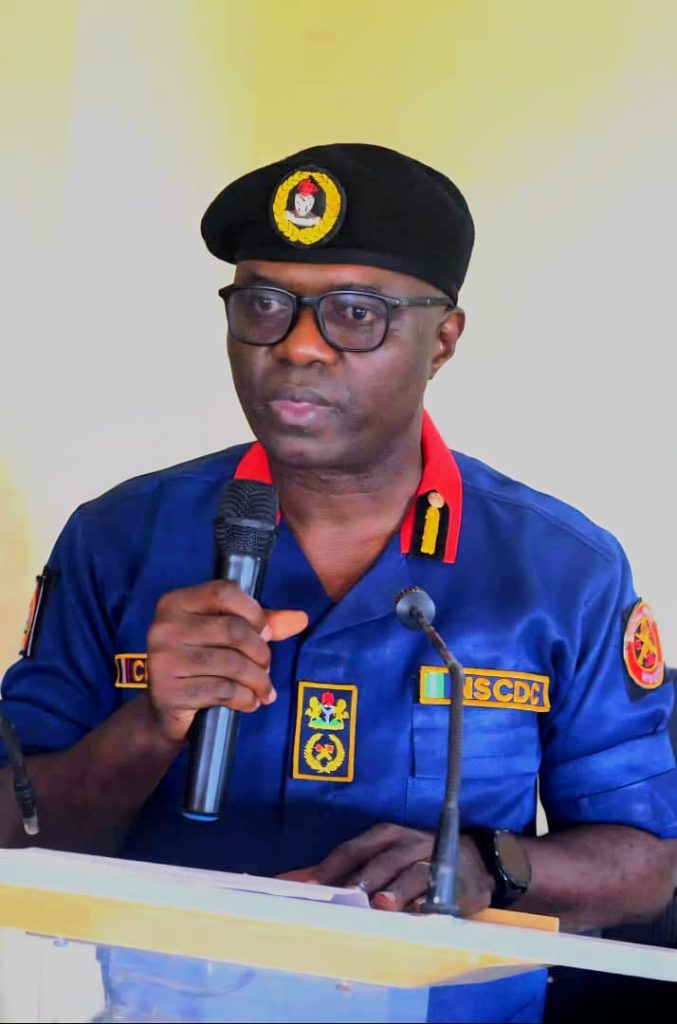
In appreciation for their contributions to providing adequate and maximum security, and fostering good working relationship between the private security companies and the Nigeria Security and Civil Defence Corps (NSCDC), in the Delta State in particular and Nigeria in general, the Association of Licensed Private Security Practitioners of Nigeria (ALPSPN), Delta State Chapter, has honoured the Delta State Commandant of NSCDC, Commandant Chinedu Fabian Igbo, and the Head of Department, Private Guard Companies, Deputy Commandant Emmanuel E. Peters.
The distinguished officers were honoured by the State Chairman of ALPSPN, Prof. Odikaesieme Emmanus, during the association’s Private Guard Companies Quarterly Stakeholders’ meeting, where souvenirs were presented to them in recognition of their exemplary leadership and commitment to enhancing the capacity of private security practitioners.
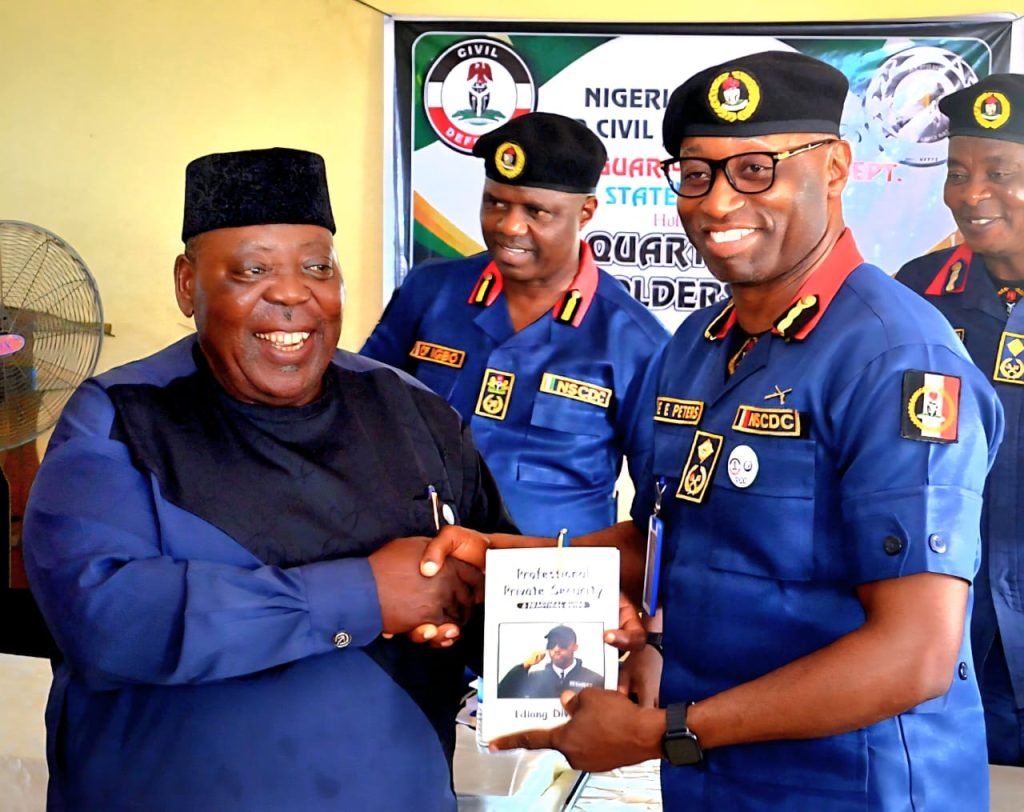
The two top officers were also recognized for their outstanding contributions to the development of the private security sector in Delta State.
The recognition, according to the association, was in appreciation of the officers’ significant roles in upscaling, strengthening and improving the operational capacity of private security companies across the state.
Prof. Emmanus commended Commandant Igbo and Deputy Commandant Peters for their dedication to promoting professionalism, effective regulation and improved collaboration between the NSCDC and private security operators.
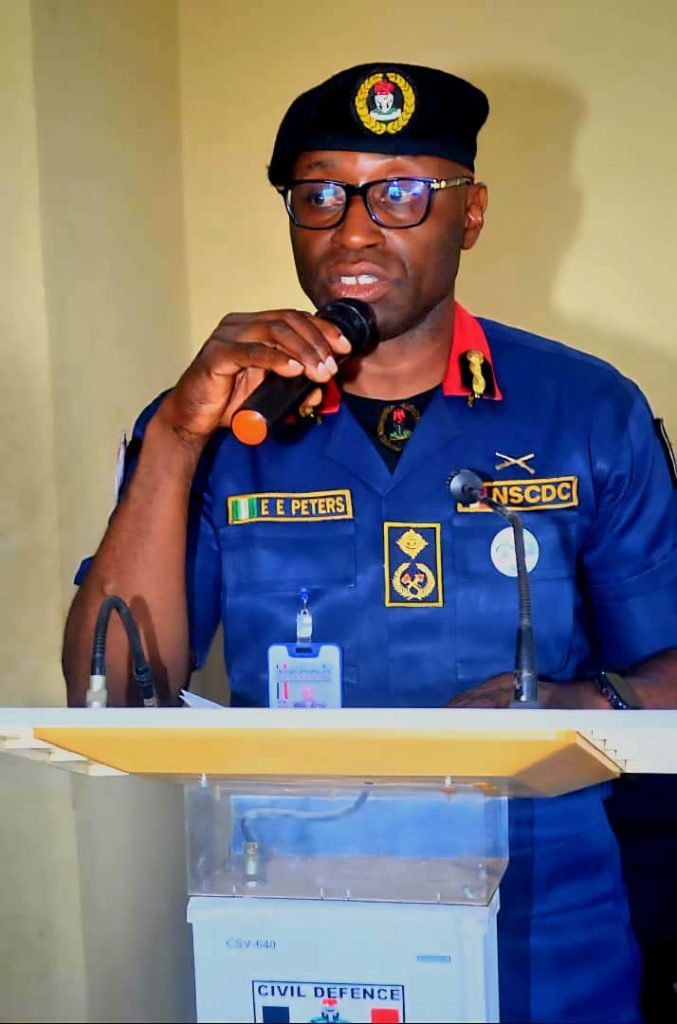
He noted that their contributions had continued to create a more conducive environment for private security practitioners to operate effectively while maintaining the required standards of professionalism and discipline.
The ALPSPN chairman further emphasised the importance of sustained cooperation between the NSCDC and private security companies, noting that such partnership was essential to strengthening security and protecting lives and property in Delta State.
The quarterly stakeholders’ meeting also provided an opportunity for industry players to engage on issues affecting the private security sector and explore ways of improving service delivery, operational efficiency and professional standards.
The association reaffirmed its commitment to working closely with the NSCDC and other relevant stakeholders to promote a more effective, responsible and professional private security industry in Delta State.

By Our Reporter
The feud between the Nigeria Labour Congress (NLC) and Trade Union Congress (TUC) over the N70,000 monthly transport allowance to public sector workers has deepened.
Recently, Joe Ajaero, NLC president; and Festus Osifo, TUC president; have been at loggerheads over the proposed palliative from the federal government.
During an interview on Channels Television on Monday, Ajaero and Osifo renewed hostilities.
Last Tuesday, the federal government announced the allowance in a memorandum of understanding (MoU) issued after a meeting between government representatives and NLC leaders in Abuja.
Twenty-four hours later, the TUC rejected the six-month transport allowance for public sector workers, calling for an increase in salaries instead.
In a riposte, Ajaero said the TUC should have negotiated its own terms with the federal government rather than reject the outcome of the NLC’s negotiations.
Osifo, however, said discussions on the allowance began before Ajaero’s meeting with the federal government, adding that the government had engaged the TUC over its position on workers’ welfare.
‘ABSENTEE PRESIDENT WHO LIVES IN US’
Speaking on Channels Television’s breakfast programme, Ajaero countered the TUC president.
The NLC president said the transport allowance was a product of NLC negotiation with the federal government after the union issued an ultimatum.
Ajaero said after the ultimatum, the federal government called for a meeting that led to a series of agreements, in which the transport allowance was included.
“When he (Festus) said I did not negotiate N70,000 transport allowance, I did not know what he meant,” Ajaero said.
“We (NLC) gave the government an ultimatum and the government asked for four days to meet with us. At the resumed sitting after four days, some agreements were reached.
“After every collective bargaining, the product is the agreement. It was in that agreement that the issue of N70,000 was reached.”
Speaking further, the NLC president said Osifo should be asked about the whereabouts of the 90 compressed natural gas (CNG) buses donated to the TUC by the federal government.
Ajaero described Osifo as an “absentee president”, while alleging that the TUC leader resides abroad and shuttles between Nigeria and the United States for meetings.
“He is an absentee president of the TUC. He does not live in Nigeria. He comes in from the US to attend meetings and rush back. He serves in the board of PENCOM,” Ajaero said.
“You cannot be living abroad and be holding a position in a central level organisation. I challenge him and the Nigeria Immigration Service to prove if he has been in this country for four to five months this year.”
After Ajaero completed his interview session during the programme, Osifo appeared for his right of reply.
‘A DISASTER TO THE LABOUR MOVEMENT’
Speaking during the interview, Osifo said he “really pities” the labour movement after listening to the NLC president, adding that the union once had great leaders.
“I can boldly say that Joe Ajaero is a disaster to the trade union movement in Nigeria,” Osifo said.
Osifo added that the NLC cannot negotiate on behalf of members of the TUC, since the trade union has a recognised body.
Commenting on the claim that he does not live in Nigeria, the TUC president said it is a shame that the NLC president made that comment.
Osifo said before handing over as president of the Petroleum and Natural Gas Senior Staff Association of Nigeria (PENGASSAN) in August, he was shuttling from one shop floor to another to negotiate salary increment for members.
The TUC president said he is currently in the United Kingdom for training on advanced leadership and management.
Osifo claimed that workers are being shortchanged because of Ajaero’s lack of negotiation skills.
“Ajaero has never led any union in Nigeria that is why he does not understand the principles of negotiation,” Osifo added.
“What I will recommend for him is training and retraining.”
By Our Reporter
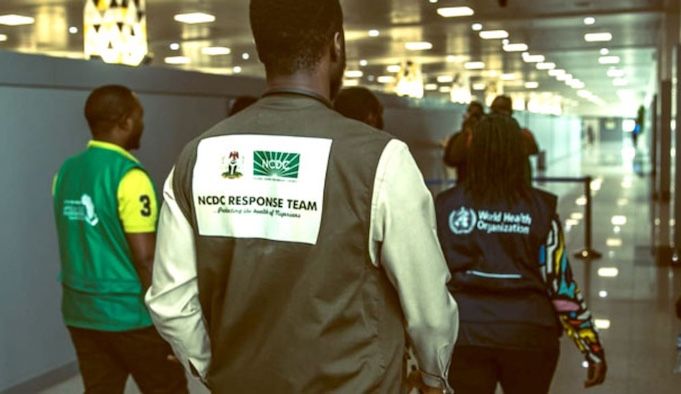
The Nigeria Centre for Disease Control and Prevention (NCDC) says it expects to complete monitoring of the 62 contacts traced to an imported Ebola case by November 13.
The agency stated this in its Ebola disease situation report published on Thursday.
“Contacts are expected to complete follow-up by November. Expected completion dates range from 31 Oct to 13 Nov 2026,” the report reads.
NCDC said contact tracing and monitoring would continue.
It added that additional contact tracers had been mapped and trained to strengthen surveillance.
The agency relayed that it would “engage and assess additional contacts for possible evacuation to the quarantine facility”.
“Continue follow-up of contacts in quarantine, continue contact tracing and monitoring,” NCDC said.
The agency shared that the scope and strategy for identifying contacts had been reviewed and expanded.
It said the case definitions for Ebola disease had also been reviewed to improve the identification and management of suspected infections.
The report further listed plans to review guidelines on contact tracing, self-quarantine, self-care kits and the Ebola call protocol.
The NCDC said it would also develop an Ebola disease dashboard on the surveillance outbreak response management and analysis system (SORMAS), to improve contact management.
The agency said the National Incident Management System (IMS) had been activated.
It said the implementation of prioritised response activities continues across thematic areas, while the Incident Action Plan had been finalised.
The agency added that a high-level stakeholder meeting had been held with partner agencies to strengthen coordination, resource mobilisation and accountability in the response.
In October, the federal government said it had recorded a confirmed case of Ebola disease in the Federal Capital Territory (FCT).
Ali Pate, coordinating minister of health and social welfare, identified 44 close contacts for tracing to prevent further transmission.
According to the minister, the patient, a woman who recently arrived in Nigeria on an international flight from Uganda, was admitted to a private hospital in the FCT, where she received care for several days before the diagnosis was confirmed.
Nigeria’s index Ebola case was later evacuated to Switzerland for further treatment.
On October 31, the NCDC announced that two suspected cases of Ebola disease have been identified in the north-east.
The NCDC said the individuals have been isolated while contact identification and listing is ongoing.
It added that laboratory testing is also being conducted.
On Sunday, the NCDC said there are currently no laboratory-confirmed Ebola cases in Adamawa.
-

 General News4 weeks ago
Rivers 2027: We are not part of Rainbow Coalition – APC Legacy Group slams Wike, Fubara meeting
-
General News1 month ago
JOHESU demands: MHWUN puts FG on notice over fresh action
-

 Politics2 months ago
2027: ASAF backs APC governors, rejects rainbow coalition
-

 Politics2 months ago
You have demonstrated diligence, loyalty, statesmanship in leadership, Ekechi salutes Shetimma at 60
-

 Politics3 months ago
2027: Advertising experts raise concerns over irregular regulation of sector
-
FCT News3 months ago
2027: Hasana-Moneme pledges skills, empowerment, credit access for FCT women
-
General News3 months ago
2027: Dame Princess Esom-Nwafor Orizu confirmed as APC flagbearer for Nnewi North /South /Ekwusigo Federal Constituency as INEC releases names of candidates
-
Uncategorized4 months ago
Rescue of Oyo schoolchilden: Tinubu commends security agencies, says action breakthrough in fight against criminality