
Politics
Election Guidelines: Supreme Court Okays INEC appeal, dismisses SDP, Youth Parties’ case

Nkem Okereh
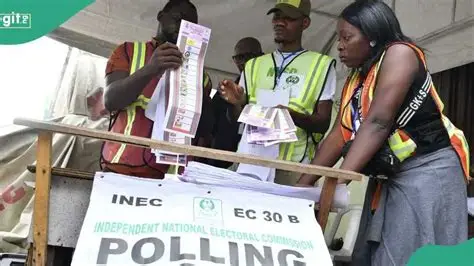
The Supreme Court, Thursday, upheld the appeal filed by the Independent National Electoral Commission, INEC, against the Court of Appeal judgment voiding part of the provisions of the Electoral Act 2026 dealing with political party primaries and membership registers.
INEC filed an appeal against part of the Court of Appeal judgment which voided part of the Electoral Act, in a suit a political party, Zenith Labour Party commenced at the High Court.
After hearing the appeal filed by INEC, through its Counsel, Dr Alex Izinyon, SAN, Justice Adamu Jauro entered
Judgement in favour of the electoral umpire and set aside the Court of Appeal judgement which was in favour of Zenith Labour Party.
The apex court upheld the judgment of the trial court and also awarded cost of N2million against the respondent (ZLP).
The apex court held that Sections 77(5) and 84 of the Electoral Act are not in conflict with the 1999 Constitution.
Also, the court in two other judgement dismissed two seperate appeals, filed by
Social Democratic Party and Youth Party also filed seperate appeals against INEC.
SDP and YP were the appellants in that case. The two political parties filed appeals to challenge the decisions of the Court of Appeal in their case.
In SDP v INEC, the appeal was heard on its merit and was accordingly dismissed by the court.
In Youth Party’s appeal, the preliminary objection filed by INEC was upheld and the appeal was struck out for being incompetent.
The court described the appeal as invalid and incompetent having been filed out of time by one day.
The Federal High Court, Abuja Division, presided over by Justice Mohammed Umar, dismissed the party’s action in a judgment delivered on May 5, 2026.
Dissatisfied, the ZLP appealed to the Abuja Division of the Court of Appeal in Appeal No. CA/ABJ/CV/750/2026.
The Court of Appeal, in its judgment delivered on July 16, 2026, allowed the appeal in part and voided provisions of the Electoral Act relating to party primaries and membership registers.
The appellate court’s decision prompted INEC to approach the Supreme Court, according to the commission’s brief of argument filed in the appeal.
The appeal, marked SC/CR/495/2026, arose from a suit filed by the Zenith Labour Party at the Federal High Court, Abuja, challenging provisions of the Electoral Act which the party contended were inconsistent with the 1999 Constitution.
A seven-man panel of the apex court, presided over by Justice Adamu Jauro, last week, reserved judgment after hearing arguments from the parties.
In its appeal, INEC’s urged the court to dismissed the appeal filed by YP and SDP.
The original suit, marked FHC/ABJ/509/2026, was filed by the ZLP against the disputed provisions of the Electoral Act 2026.
The provisions at the centre of the dispute include Sections 77(5), 77(6), 77(7) and 84(2) of the Electoral Act 2026.
Sections 77(5), 77(6) and 77(7) concern the statutory requirements relating to political parties’ membership registers, while Section 84(2) prescribes direct primaries or consensus as methods for the nomination of candidates by political parties.
The ZLP had argued at the trial court that the provisions conflicted with the 1999 Constitution and amounted to unconstitutional interference in the internal affairs of political parties.
The party’s case is anchored, among others, on Sections 221 and 222 of the Constitution, which provide for the constitutional framework governing political parties.
After the Federal High Court dismissed the suit, the ZLP appealed, leading to the Court of Appeal’s July 16 judgment.
INEC, dissatisfied with that judgment, subsequently lodged the present appeal before the Supreme Court.

By Prosper Okoye
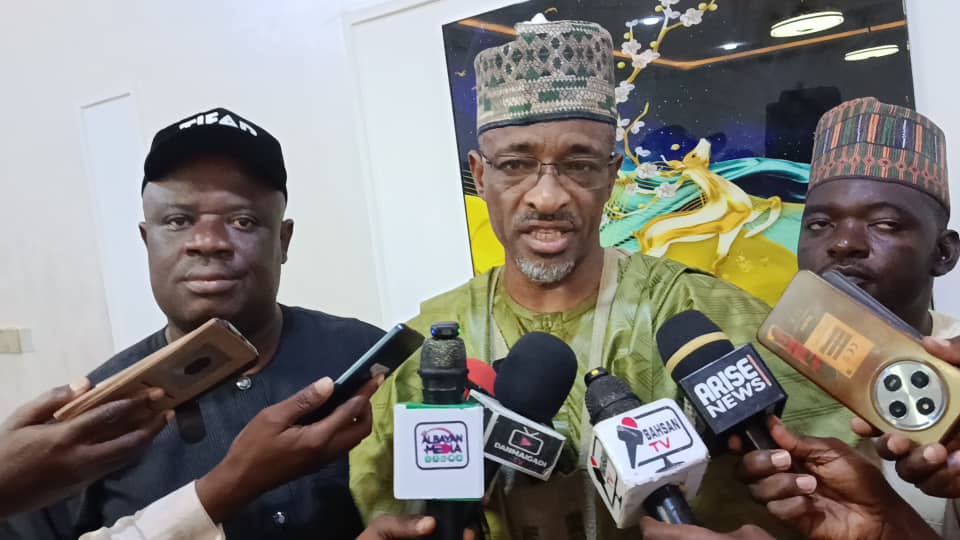
Hassan Umar Dangaladima has won the All Progressives Congress (APC) primary for Kaura Namoda and Birnin Magaji federal constituency in Zamfara State, securing 9,416 votes in an exercise preceded by security concerns and attacks on party members.
His opponent, Aminu Sani Jaji, polled 661 votes, according to the result announced by the party’s electoral committee.
The declaration was made by Mustapha Muhammed, acting chairman of the APC electoral committee from the party’s national headquarters, who served as the returning officer.
Muhammed said Umar met the party’s constitutional requirements and electoral guidelines, formally declaring him the winner of the primary.
The election took place against a backdrop of security concerns following attacks by suspected political thugs that reportedly left several APC members injured and vehicles damaged.
Security agencies subsequently intervened to restore order, allowing the voting exercise to continue.
Speaking to journalists after his victory, Umar thanked party members and constituents for their support, while acknowledging the role of security personnel and electoral officials in conducting the exercise.
He also called for reconciliation among party stakeholders, extending an olive branch to Jaji and urging supporters of both camps to unite ahead of the 2027 general elections.
Umar said unity within the party would be crucial to its prospects in the next general election.
By Our Reporter
The Independent National Electoral Commission (INEC) has removed artificial intelligence-generated photographs uploaded to the national voters’ register and flagged officials implicated in the practice across 10 states for disciplinary action.
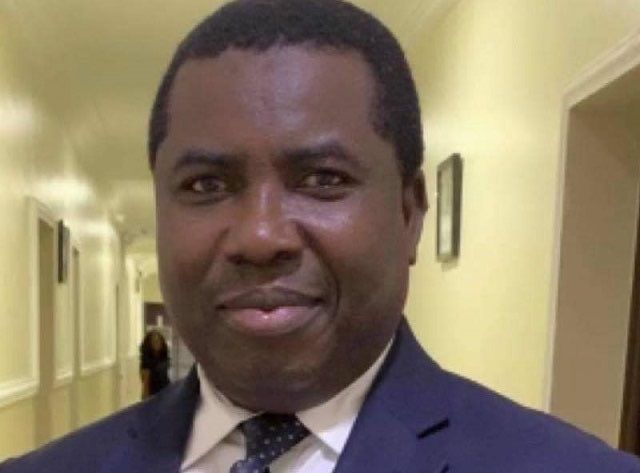
INEC National Commissioner, Mohammed Haruna, disclosed this on Wednesday during a webinar organised by the PUNCH Media Foundation, titled ‘AI, Misinformation and Nigeria’s 2027 Elections: Safeguarding the Truth, Protecting the Vote’.
Haruna, who is also Chairman of the commission’s Information and Voter Education Committee, described the development as a major challenge, noting that the commission had already taken down AI-generated photographs identified on the voters’ register.
He, however, acknowledged that INEC faced limitations in preventing members of the public from manipulating or enhancing their photographs before uploading them during voter registration.
The commissioner said the commission had also identified cases involving its own personnel and was taking steps to address the violations.
“We have already seen one of the challenges, which is that a lot of AI-generated photographs were posted onto the voters’ register, which, as we have said, we have had to take down,” he said.
Haruna explained that while it might be difficult for the commission to prevent members of the public from manipulating their photographs before submission, it had greater control over violations involving its officials.
“But the ones involving our own staff, where it is our own staff that did so, that one is within our control. We are in the process of addressing it. They have been flagged,” he said.
He disclosed that the commission had obtained the names of the officials involved across about 10 states, adding that they would face disciplinary action.
“We have their names across about 10 states, and obviously, they are going to face disciplinary action,” he added.
On INEC’s preparedness to regulate the use of artificial intelligence in the electoral process ahead of the 2027 general elections, Haruna said the commission had developed an AI policy but was working to finalise it.
He noted that the rapid evolution of artificial intelligence had created regulatory challenges for countries across the world, including advanced democracies.
According to him, the evolving nature of the technology has made it difficult for governments to establish comprehensive and specific regulatory frameworks.
“As you know very well, it is new territory out there. Even the most advanced countries don’t have what you might call concrete, specific policies about AI because these things are evolving,” he said.
Haruna, however, said INEC had developed ideas on how it intended to deploy and regulate the technology, assuring that the policy would soon be finalised and made available to the media.
“But we have at least some ideas of what we want to do and how we want to use that. We have that policy. Very soon, we will concretise it, and we will be able to share it with the media,” he said.
General News
Yunusa Tanko dumps Peter Obi, Obidient Movement, appointed SDP presidential campaign coordinator
Yunusa Tanko
By Our Reporter
The Social Democratic Party (SDP) has appointed Yunusa Tanko, former coordinator of the Obidient Movement, as national coordinator of its presidential campaign council for the 2027 elections.
The SDP unveiled Tanko as its national presidential coordinator on Wednesday during the inauguration of the party’s campaign council in Abuja.
Mark Adebayo, chief media and communication advisor of the Adebayo/Bugaje presidential campaign council, also confirmed Tanko’s appointment to TheCable.
Speaking at the event, Tanko pledged to work with Adewale Adebayo, the SDP presidential candidate, and Usman Bugaje, his running mate, to secure victory in the 2027 elections.
“The SDP is a left-wing political party. For those of you who do not know, we represent the interests of the downtrodden. The SDP represents those people that you neglect on the streets. So, that makes this particular party people-oriented,” he said.
Tanko said he resigned as political adviser (north) to Peter Obi, presidential candidate of the Nigeria Democratic Congress (NDC), on October 30.
He said his resignation followed his appointment to the leadership of the National Consultative Front (NCFront) after the death of Ghali Na’Abba, the group’s former co-chairman and ex-speaker of the House of Representatives.
Tanko said he had reached out to Obi and Seriake Dickson, national leader of the NDC, whom he commended for their support when he served as coordinator of the Obidient Movement.
He pledged to work with the NCFront leadership and Adebayo, saying his relationship with Adebayo dates back to 2023, and added that they share a commitment to building a better Nigeria.
“In advancing our political mission to a new Nigeria that works for all, I pledge to remain consistent and committed to our unwavering belief in good governance, justice, equity, national loyalty and dedication and unwavering commitment to new Nigeria from where it is to a better and prosperous Nigeria,” he said.
Obi appointed Tanko as national coordinator of the Obidient Movement in September 2024, following a consensus to zone the position to the north.
Tanko served as Obi’s presidential campaign spokesman during the 2023 elections when the former Anambra governor contested under the Labour Party (LP) platform.
Tanko was the Northern People’s Congress (NPC) presidential candidate in 2019 and the party’s national chairman in 2023.
-

 General News1 month ago
Rivers 2027: We are not part of Rainbow Coalition – APC Legacy Group slams Wike, Fubara meeting
-

 Politics2 months ago
2027: ASAF backs APC governors, rejects rainbow coalition
-
General News2 months ago
JOHESU demands: MHWUN puts FG on notice over fresh action
-

 Politics2 months ago
You have demonstrated diligence, loyalty, statesmanship in leadership, Ekechi salutes Shetimma at 60
-

 Politics3 months ago
2027: Advertising experts raise concerns over irregular regulation of sector
-
FCT News3 months ago
2027: Hasana-Moneme pledges skills, empowerment, credit access for FCT women
-
General News3 months ago
2027: Dame Princess Esom-Nwafor Orizu confirmed as APC flagbearer for Nnewi North /South /Ekwusigo Federal Constituency as INEC releases names of candidates
-
Uncategorized4 months ago
Rescue of Oyo schoolchilden: Tinubu commends security agencies, says action breakthrough in fight against criminality