
Cover page
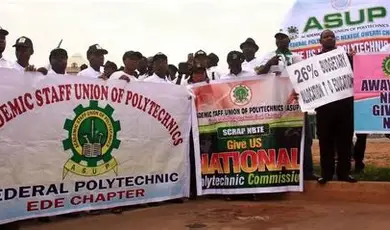
Workers’ union announces three-day warning strike

***Directs full compliance across country
By Sam Otuonye
As earlier threatened, the public sector unions yesterday, directed all public servants to commence a three-day warning strike to protest the alleged insensitivity of government on the continued hardship and high cost of living that have plagued the workers and Nigerians in general.
Recall the workers, under the aegis of the Joint National Public Service Negotiating Council, (JNPSNC), had on Tuesday, threatened to embark on a warning strike, if the president, Bola Tinubu, fails to address the high cost of living, increase workers’ wages, and other measures, during his 66th independence anniversary address to Nigerians yesterday.
The union in a circular it issued on Thursday, directed all federal, state and local government employees, including staff of ministries, departments and agencies, MDAs nationwide, to begin a three-day warning strike from midnight Friday over the failure of the government to address their demands.
The circular further directed union officials in the federal, state and local government services to ensure total compliance with the industrial action.
The workers’ union regretted what it described as the worsening economic and mental hardship being experienced by workers and other Nigerians.
The union included members of the JNPSNC include the Nigerian Civil Service Union (NCSU); Medical and Health Workers Union (M&HWU); Association of Senior Civil Servants of Nigeria (ASCSN); and National Association of Nigerian Nurses and Midwives (NANNM), Amalgamated Union of Public Corporations, Civil Service Technical and Recreational Employees (AUPCTRE); Nigeria Union of Public Service, Reportorial, Secretarial, Data Processors and Allied Workers (NUPSRAW); National Union of Printing, Publishing and Paper Products Workers (NUPPPPROW); and National Union of Agriculture and Allied Employees (NUAEE), as well as the employees of federal and state government MDAs,
The circular, signed by the union’s secretary, Gbenga Olowoyo, said the strike followed the failure of the Federal Government to address demands contained in a letter dated September 21, 2026, to President Bola Tinubu by the national leadership of the JNPSNC.
The council added that the workers have decided to embark on the strike action to press home its concerns over the hardship confronting workers and vulnerable Nigerians.
The union expressed it’s disappointment with President Tinubu, for ignoring the plight of Nigerian workers and other vulnerable citizens in his independence anniversary address, adding that he has looked the other way, and failed to address their demand for a reduction of petrol pump price of petrol to N500, from the current N1,450 to N2,000 per litre
They also alleged that the president failed to announce immediate measures to ameliorate the socioeconomic hardship caused by government policies.
The directive to proceed on the warning strike is contained in a circular by JNPSNC’s National Secretary (Trade Union side), Olowoyo Gbenga, dated October 1, 2026, to the national presidents and general secretaries, state chairmen and secretaries of affiliate unions to the JNPSNC, titled “Declaration of three (3)
The circular, titled “Declaration of three – day warning strike,” reads in parts, “Please, recall the position of the National leadership of Joint National Public Service Negotiating Council that if Mr President of the Federal Republic of Nigeria, Bola Ahmed Tinubu refuses to address our requests as contained in the letter to his exalted office (dated 21st September, 2026), the three day warning strike earlier scheduled shall commence immediately.
“Consequent upon the above, the strike shall start with effect from midnight of Friday 2nd October, 2026 to Sunday October 4th, 2026.“In the same vein, all Public Servants in the services of Federal, State and Local Governments are to join the warning strike because an injury to one is an injury to all, most especially all workers, their dependants, vulnerable and hapless Nigerians are groaning terribly under the present economic hardship.
“The economic and mental hardships are becoming unbearable and frustrating.
“The time to act and mobilise workers for the three days warning strike is now!!! Please, disseminate the information!!! Surely, there is victory for us!!!”

***Patient recently arrived Nigeria from Uganda
***NCDC traces 44 contacts
By Sam Otuonye
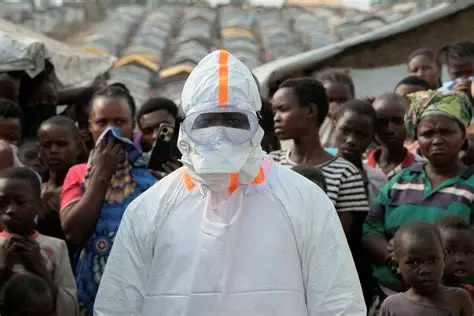
Residents of the Federal Capital Territory (FCT) were thrown into panic on Tuesday as the federal government confirmed the outbreak of Ebola case in Abuja.
The Ministry of Health and Social Welfare, in a statement, quoted the Coordinating Minister, Prof. Muhammad Ali Pate, as disclosing the outbreak of the disease in a statement signed by the ministry’s Assistant Director of Information and Public Relations, Ado Bako, following the reported laboratory confirmation on Tuesday, October 20, 2026.
The statement identified patient as a woman who recently arrived in Nigeria on an international flight from Uganda.
The woman was reportedly admitted to a private hospital in the FCT, where she received treatment for several days before the diagnosis was confirmed. She is said to be in isolation and receiving medical care.
This is as the government has commenced contact-tracing after the patient was said to have so far been in close contact with about 44 persons, who have reportedly been tracked and identified.
Pate said the Federal Ministry of Health and Social Welfare, the Nigeria Centre for Disease Control and Prevention (NCDC), the FCT Health Services Secretariat and other relevant authorities were working together to contain the reported infection.
He said contact-tracing had commenced, with public health teams identifying and monitoring people who might have been exposed to the virus.
According to the statement , those being monitored include healthcare workers, patients, caregivers and people who may have come into contact with the patient during her travels.
The statement also said surveillance had been intensified, adding that the hospital where the patient was treated was been supported to strengthen infection prevention and control measures.
The minister urged those who have been contacted during the tracing exercise, including relevant airline passengers, to provide the necessary information and comply with public health advice.
He also called on public and private healthcare facilities nationwide to remain vigilant and promptly report suspected cases to public health authorities.
“Healthcare workers are advised to maintain a high index of suspicion, identify and isolate suspected cases without delay, and observe strict infection prevention and control measures
“Symptoms to watch for include fever, severe weakness, headache, vomiting and diarrhoea, particularly among people who may have been exposed to the virus,” the statement noted
The government urged Nigerians to remain calm and vigilant, practise regular hand hygiene and avoid contact with the body fluids of anyone suspected of having Ebola.
The statement further advised anyone who suspected exposure to contact public health authorities immediately, even if they had no symptoms, while it urged anyone who developed symptoms to avoid close contact with others and call public health authorities for guidance before visiting a healthcare facility.
He said the Federal Government, FCT authorities and their partners were working to protect healthcare workers, patients and the wider public, adding that investigations were ongoing.
The statement further disclosed that the NCDC’s toll-free call centre was available 24 hours a day, seven days a week, to provide information and receive reports of suspected cases. Members of the public were advised to call 6232 for assistance.
*** Politicians infiltrate INEC officials, influence recruitment of ad-hoc staff, Mike Igini alleges
*** They undermine voters’ power through rigging, vote-buying – Okoye
*** “INEC must pay attention to integrity of people deployed to manage elections”
By Tony Chuddy
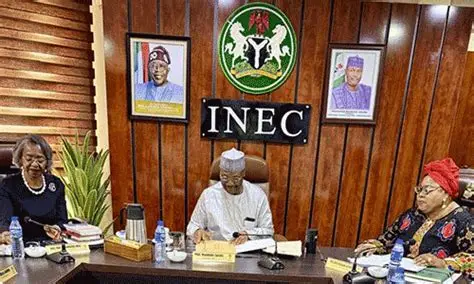
Ahead of the 2027 general election, political actors and elite have been charged to desist from interfering in election activities and give Nigerian electorate the free hand to choose their leaders.
The charge was given by former commissioners of the Independent National Electoral Commission (INEC),
Mr Mike Igini and Barr. Festus Okoye, who slammed the country’s political class for allegedly undermining the nation’s democracy through their continued infiltration into the election management team.
This is even as the former INEC commissioners, who spoke from their experiences, charged INEC to pay close attention to the integrity of the staff they recruit and deploy as ad-hoc staff, both at the universities and public sector to manage elections.
Former Akwa Ibom State Resident Electoral Commissioner, Mike Igini, regretted that politicians have made the job of INEC very difficult by infiltrating agencies responsible for supplying election staff, raising concerns about the commission’s ability to conduct credible elections in 2027.
Igini, who had played roles in election management for about 10 years before he left the commission, raised the alarm when he spoke during an interview with ARISE NEWS on Tuesday,
The former Akwa Ibom REC said political interference in the recruitment process could expose INEC to problems caused by other institutions, while the failure to enforce electoral laws remained his greatest concern ahead of the next general election.
He cited what he described as the illegal involvement of politicians in the recruitment of ad hoc staff, the use of technology as major challenges which the commission must address as it sets to deliver a credible 2027 election
“What happens is that politicians infiltrate those agencies. They infiltrate those agencies and create liability for the INEC itself as an institution. The laws are no longer enforced. That is my greatest worry about this election.
“The most important staff that Nigeria should focus on will be the presiding officers.”
He said the presiding officers play a central role at polling units, where votes are cast and recorded. “At the polling unit, the presiding officer, at the ward, war collection officer, Nigeria can go to section 25 to see,.
“The state has failed to protect the vote of Nigerian people. How can you pay 26.7 billion? Yet those people cannot be held accountable?”
He warned that the country cannot resolve its economic problems without first addressing its political system, noting, “If we cannot fix the politics, we cannot fix our economy.”
He emphasised the need to for the commission to remain open and transparent to build public confidence in the electoral process, noting that secrecy is a response to calls for transparency.
“The call for openness and transparency can never be answered by secrecy.”
Igini also rejected the INEC argument that political parties and candidates as well as journalists cannot not publish their own election results.
He described the polling unit as being central to the electoral process and stressed the importance of protecting the results recorded there, warning that weaknesses in the process could allow people to announce results without proper authority.
“The argument that candidates, their political party or journalists cannot publicise their result is wholly incorrect.
“And so, at the heart of this election is the polling unit. That’s the key
“So somebody can come and impersonate tomorrow and just announce electoral results. This story happened in 2023. We’ve not sorted it out till date.
The attempt to intimidate media, houses, intimidate Niger citizens, that they cannot report, is a violation of section 39.” he warned
The former INEC commissioner noted that Nigeria must protect elections as a means of ensuring the peaceful transfer of power.
“We have to be very careful, because the greatest promise of democracy is periodic election for peaceful transfer of power.” he warned
Similarly, former National Commissioner for Information and Voter Education at the Independent National Electoral Commission (INEC), Festus Okoye, accused Nigeria’s political elite of seeking to undermine voters’ power through vote-buying.
Okoye, who spoke on Channels Television’s The Morning Brief on Tuesday, said the political elite appeared unwilling to allow Nigerians to freely choose their leaders, lamenting that they wanted to take away the people’s power to determine election outcomes.
“I think that political elite in this country really do not believe in free, fair, and transparent election. They just want to buy the votes of the people. They want to replace the people as the sovereign, and it is very unfortunate.
“But more importantly, I think the media, civil society groups and organisations, and the Nigerian people generally must focus attention on the activities of the political elite before, during and after election.”
Okoye noted that ad hoc staff, including members of the National Youth Service Corps (NYSC) and other Nigerians recruited for elections, play a more prominent role in conducting elections at polling units than INEC’s regular staff.
He said a credible election should allow voters to cast their ballots without intimidation, coercion or duress.
*** FG refutes W’Bank’s 124% interest payment on revenue
By Sam Otuonye
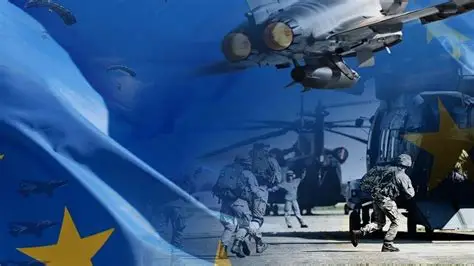
Nigeria’s defence ministry has revealed that the European Union (EU) has pledged a €20 million defence support to the country’s Armed Forces, under the European Peace Facility (EPF)
The pledge comes as Nigeria seeks to strengthen its military operations against terrorists and other security threats across the country
The EU proposed assistance, according to a statement issued at the weekend, was discussed when the Minister of Defence, General Christopher Musa (Rtd), met with the EU Ambassador to Nigeria and the Economic Community of West African States (ECOWAS), Gautier Mignot, at Ship House in Abuja.
The statement, which was issued by Special Assistant to the Minister of Defence on Media, Leah Katung-Babatunde, noted that the meeting focused on key bilateral defence agreements and a review of security cooperation between Nigeria and the EU.
According to the statement, Mignot commended Musa’s efforts to improve the country’s security situation and invited him to a meeting of defence ministers scheduled to hold in Brussels later in the year.
It added that discussions also centred on arrangements for the EU’s €20 million assistance package to the Nigerian military under the EPF.
The ambassador, she said, disclosed that an EU technical delegation would visit Nigeria in November to agree on the details of the proposed support.
Musa thanked the EU for its continued support for Nigeria and reaffirmed President Bola Tinubu’s commitment to protecting lives and promoting national development.
The minister said relative peace was gradually returning to some troubled parts of the country through the efforts of the armed forces and other security agencies.
He, however, identified kidnapping along major highways and attacks on isolated communities as persistent security challenges.
Musa also disclosed that Nigeria was expecting the delivery of 10 attack helicopters, unmanned aerial vehicles (UAVs) and other military equipment to strengthen security operations.
On regional security, the minister identified the shrinking of the Lake Chad Basin, which supports more than 50 million people, as a factor contributing to instability in the region.
He said denying terrorists access to holding areas on islands in Lake Chad remained a key operational priority for the Multinational Joint Task Force (MNJTF), which coordinates regional efforts against insurgency.
On the disarmament, demobilisation and reintegration (DDR) programme, Musa said the initiative would prioritise victims of the conflict, including military personnel affected by the fighting.
This is as the Federal Government has disputed claims that its interest payments reached 124% of revenue in the first half of 2026, arguing that the figure presents an incomplete picture of its fiscal position because it excludes some government revenue and combines debt obligations across different tiers of government.
The Federal Ministry of Finance, in a press statement issued on Sunday, October 18, said the ratio cited in recent analysis based on the World Bank’s October 2026 Nigeria Development Update was misleading because it compared federal interest payments with an incomplete revenue base.
The ministry said the interest figure includes debt serviced by the Federal Government on behalf of other tiers of government, including external loans to states, while the revenue figure excludes independent revenue earned by government agencies and enterprises but not yet remitted to the Treasury.
FG also argued that federal revenue typically increases in the second half of the year because of the statutory timing of certain tax payments, making a half year comparison an unreliable measure of the government’s overall debt sustainability.
“The reported revenue is also incomplete. It excludes independent revenue already earned by government agencies and enterprises but not yet remitted to the Treasury. In addition, more revenue is typically earned in the second half of the year than in the first due to the statutory timing of certain tax payments.
“This is why the ratio stood at 156% in H1 2025, while the full-year 2025 debt-service-to-revenue ratio was below 60%, down from 97% before the reforms.
“This is a clear sign of the progress delivered by the current administration’s reforms,” the Ministry stated.
The ministry said federal revenue increased by 72% year on year to N6.2 trillion in the first half of 2026, compared with N3.6 trillion in the same period of 2025.
Interest payments, meanwhile, rose by 38% to N7.7 trillion from N5.6 trillion over the same period.
The difference between interest payments and revenue consequently narrowed to N1.5 trillion from N2 trillion a year earlier, according to the ministry.
It said the figures showed that revenue was growing almost twice as fast as interest costs, contributing to a 32 percentage point decline in the interest to revenue ratio.
In its 2026 Nigeria Development Update (NDU) titled ‘Beyond the Federal Purse: How Higher Revenues Reshaped State Priorities,’ the World Bank said Nigeria’s interest payments rose to N7.7 trillion in the first half of 2026, from N5.6 trillion in the corresponding period of 2025.
According to the bank, the interest payment gulped 124.19 percent of the federal government revenue.
The bank said interest payments increased to 3.1 percent of gross domestic product (GDP) from 2.5 percent a year earlier.
However, the Finance Ministry argued that debt sustainability should be assessed using full year figures rather than a six month snapshot.
It cited the World Bank’s projection that Nigeria’s total debt service, covering both interest and principal repayments, would amount to 46% of revenue in 2026.
The ministry described this as a more appropriate benchmark for assessing the government’s debt servicing position, distinguishing it from the 124% ratio based on interest payments and revenue in the first half of the year.
The ministry also cited the decline in the full year debt service to revenue ratio to below 60% in 2025, compared with 156% in the first half of that year and 97% before the current administration’s reforms.
It attributed the improvement to the government’s fiscal reforms and the stronger revenue performance recorded since their implementation.
The concern with the World Bank’s claims came as the government says Nigeria is beginning to change how it is perceived internationally, pointing to its tax overhaul and broader economic reforms as evidence that the country is moving towards sustainable growth and shared prosperity.
Minister of Finance and Coordinating Minister of the Economy, Taiwo Oyedele, said this as he explained his “Nigeria rising” narrative at the 2026 IMF-World Bank Meetings in Thailand.
According to him, the Nigeria Rising narrative was designed to communicate the changes taking place in the country and challenge perceptions that do not reflect the government’s assessment of its economic progress.
Speaking at the closing press briefing of the Meetingss in Bangkok, Thailand, Oyedele said he observed growing interest in Nigeria among international stakeholders during the meetings, which he attributed to the country’s ongoing reform programme.
-

 General News2 weeks ago
Rivers 2027: We are not part of Rainbow Coalition – APC Legacy Group slams Wike, Fubara meeting
-
General News1 month ago
JOHESU demands: MHWUN puts FG on notice over fresh action
-

 Politics1 month ago
2027: ASAF backs APC governors, rejects rainbow coalition
-

 Politics2 months ago
You have demonstrated diligence, loyalty, statesmanship in leadership, Ekechi salutes Shetimma at 60
-

 Politics2 months ago
2027: Advertising experts raise concerns over irregular regulation of sector
-
FCT News2 months ago
2027: Hasana-Moneme pledges skills, empowerment, credit access for FCT women
-
General News3 months ago
2027: Dame Princess Esom-Nwafor Orizu confirmed as APC flagbearer for Nnewi North /South /Ekwusigo Federal Constituency as INEC releases names of candidates
-
Uncategorized3 months ago
Rescue of Oyo schoolchilden: Tinubu commends security agencies, says action breakthrough in fight against criminality