
General News
Regional commissions not rivals to governors-Minister


The Minister of State for Regional Development, Uba Ahmadu, says regional development commissions are not competitors of state and local governments but partners in bridging development gaps.
Ahmadu gave the assurance in an interview with the News Agency of Nigeria (NAN) on Sunday in Abuja, amid concerns over possible duplication of projects and responsibilities.
“The commissions are not coming in as competitors of state governments or local governments, no,” he said,
The Minister stressed that their establishment was intended to complement existing development efforts.
According to him, the ministry engages state governors to conduct needs assessments and identify priority projects, with local government needs addressed through state governments.
He said the Federal Ministry of Regional Development was established in October 2024, by President Bola Tinubu to coordinate development commissions and formulate policies for regional development.
Ahmadu explained that the ministry emerged from the need to address the peculiar challenges confronting Nigeria’s different regions through coordinated interventions tailored to their respective development priorities.
He traced the origins of the Niger Delta Development Commission (NDDC) to genuine agitations over environmental degradation, damaged farmlands and polluted waters resulting from oil exploration activities.
He also cited the North East Development Commission (NEDC), established to address the consequences of Boko Haram insurgency, including displacement and damage to education, healthcare, roads and other infrastructure.
The minister said the government subsequently established additional development commissions to address the specific needs of Nigeria’s six geopolitical zones, with the ministry coordinating their activities.
He clarified that the NDDC remained a special commission established to tackle the Niger Delta’s peculiar challenges and was separate from the six regional development commissions.
According to him, although the commissions have different mandates and priorities, their common objective is to promote development and improve the living conditions of people across the country.
Ahmadu said the South East Development Commission would prioritise industrialisation, economic development, infrastructure and deep gully erosion, challenges he described as peculiar to the region.
He added that the North East required interventions addressing the lingering consequences of insurgency, while other regions would pursue development priorities reflecting their respective circumstances.
The minister said the ministry had developed a policy document after consultations across the country, giving Nigerians opportunities to contribute ideas and identify regional development needs.
He said the document had been presented to the National Economic Council, chaired by Vice-President Kashim Shettima, and was awaiting approval by the Federal Executive Council.
Ahmadu said the policy would guide the ministry’s activities and provide a framework for coordinating the commissions while ensuring that regional interventions reflected local needs.
“No governor is an enemy of development,” he said, adding that the commissions were established to assist state governments rather than take over their constitutional responsibilities.
He said the government’s ultimate objective was to take development to the grassroots, describing the approach as part of President Tinubu’s social contract with Nigerians.(NAN).

By Our Reporter
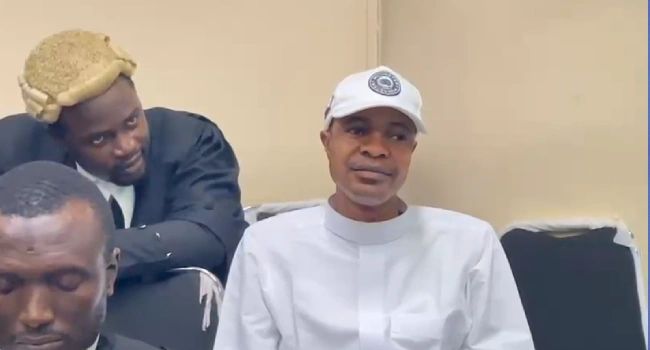
A federal high court in Abuja has struck out the eight-count criminal charge filed against Adeniyi Adeyemi, director-general of the fictitious Presidential Foreign Investment Promotion Council (PFIPC).
Mohammed Umar, presiding judge, struck out the charge on Monday following an application by the federal government to terminate the trial, pending Adeyemi’s fresh arraignment before the high court of the Federal Capital Territory (FCT).
Rotimi Oyedepo, director of public prosecutions of the federation (DPPF), told the court that the attorney-general of the federation had reviewed the case file and identified issues with the charge initially filed by the inspector-general of police (IGP).
Oyedepo, a senior advocate of Nigeria, said the review found that the alleged forged documents involved in Adeyemi’s operations of the purported agency fell within the jurisdiction of the Federal Capital Territory high court and not the federal high court.
He added that a fresh charge had been filed before the FCT high court and that the government intended to arraign Adeyemi afresh without delay.
The prosecution subsequently prayed the court to strike out the existing charge.
Ibrahim Angulu, Adeyemi’s lawyer, did not oppose the application.
Umar consequently struck out the charge.
Adeyemi has been in police custody since he was arrested in Osun state on July 14.
Prior to his arrest, a federal high court in Abuja ordered his arrest after he failed to honour the court’s summons.
Adeyemi was the mastermind of the fictitious PFIPC that operated like a government agency, receiving an allocation in the 2026 budget, occupying an office at the federal secretariat and also recruiting staff, without any legal standing or presidential declaration.
He had alleged that Femi Gbajabiamila, chief of staff, collected N400 million through a proxy for the appointment letter into the fictitious agency.
Following public outcry, President Bola Tinubu ordered the Independent Corrupt Practices and Other Related Offences Commission (ICPC) to investigate the PFIPC scandal.
General News
Makinde’s Chief of Staff, Segun Ogunwuyi, joins avalanche of appointtes leaving Oyo govt service

By Our Reporter
The exodus of political appointees from the administration of Oyo Governor Seyi Makinde has continued, with the resignation of the Chief of Staff, Hon. Segun Ebenezer Ogunwuyi.
Ogunwuyi, a former member of the Oyo State House of Assembly and the House of Representatives, announced his resignation in a letter dated October 12, 2026, effective that day.
In the letter addressed to the governor, he described his service to the state as a great honour, expressing pride in the achievements recorded by the administration.
“I respectfully write to resign my appointment as Chief of Staff to the Governor of Oyo State, with effect from today, 12th October, 2026,” he stated.
Reflecting on his time in government, Ogunwuyi said he was grateful for the opportunity to contribute to the development of the state.
“Serving the Government and the good people of Oyo State has been a great honour. It has been deeply fulfilling to be part of the exceptional team that has worked relentlessly to deliver the remarkable achievements of this administration,” he said.
He added that he remained proud of the administration’s collective efforts to promote the growth and prosperity of Oyo State.
“I remain immensely proud of what we have collectively accomplished in advancing the growth, development and prosperity of our dear State,” the former chief of staff stated.
Ogunwuyi also expressed confidence in the state’s continued progress, while thanking Makinde for the opportunity to serve.
“As I take this decision, I do so with profound gratitude for the opportunity to serve, with confidence in the continued progress of Oyo State,” he said.
He concluded the letter by assuring the governor of his highest esteem and reaffirming his loyalty to Oyo State and Nigeria.
Ogunwuyi’s resignation comes amid the departure of several political appointees from Makinde’s administration in the last two months, raising fresh attention to the changing political dynamics within the government.
His exit is particularly significant given his position as the governor’s chief of staff, a key role in coordinating government activities and facilitating the implementation of the administration’s policies.
His resignation has fuelled speculation about a possible political realignment towards the All Progressives Congress (APC), amid internal wrangling within the governor’s political camp, sources familiar with the developments have said.
A source familiar with the political developments in Oyo State told our correspondent that Ogunwuyi’s resignation could be linked to internal wrangling within the governor’s political camp, amid speculation that he might be considering a move to the APC.
“There have been internal disagreements within the political camp, and Ogunwuyi’s resignation has further fuelled speculation about possible realignments ahead of the 2027 elections.”
“There are suggestions that he could be considering joining the APC, but we cannot say that definitively at this stage,” the source said.
Although Ogunwuyi did not disclose his reasons for leaving the government in his resignation letter, sources familiar with the situation suggested that internal political disagreements could be connected to the latest departure.
There was, however, no official confirmation that he had decided to join the APC.

The World Health Organization (WHO) says the Ebola outbreak in the Democratic Republic of the Congo has recorded 8,787 cases and 4,242 confirmed deaths.
The UN health agency disclosed the figures in a report published on Saturday, highlighting the growing humanitarian and psychological consequences of the outbreak.
As of October 7, the outbreak had recorded 8,787 cases, 4,242 confirmed deaths, 2,292 recoveries, and nearly 11,300 people receiving mental health and psychosocial support
The WHO report also reveals that 193 community workers and 64 psychologists have received specialised training in Ituri Province.
The agency warned that survivors continued to confront psychological distress, stigma and economic hardship even after recovering from the disease.
It said the outbreak had placed enormous pressure on families, healthcare workers and communities already affected by insecurity and displacement.
WHO consequently stressed the importance of integrating mental healthcare into emergency disease-response operations.
The organisation said psychological support was being provided to patients, survivors, affected families and frontline health workers.
It disclosed that nearly 11,300 people had received mental health and psychosocial support services through treatment and transit centres.
At the Bunia clinic alone, 318 Ebola survivors had benefited from psychological support.
WHO said 193 community workers in Ituri Province had been trained in psychological first aid.
Another 64 psychologists received additional training to strengthen support for patients and affected communities.
The agency explained that Ebola survivors frequently experienced anxiety, social isolation and rejection after leaving treatment centres.
Some also struggled with loss of income, damaged relationships and uncertainty about their future.
WHO said psychosocial teams were supporting community reintegration through counselling, family engagement and follow-up visits.
The organisation stressed that mental health services were essential to improving treatment outcomes and rebuilding confidence among survivors.
It also warned that healthcare workers responding to the outbreak faced significant psychological pressure because of infection risks and demanding working conditions.
WHO reaffirmed its commitment to supporting Congolese authorities in strengthening disease control, treatment and psychosocial services.
The agency said addressing the outbreak required sustained attention to both physical recovery and the psychological well-being of affected communities. (NAN).
-
General News3 weeks ago
JOHESU demands: MHWUN puts FG on notice over fresh action
-

 Politics4 weeks ago
2027: ASAF backs APC governors, rejects rainbow coalition
-

 Politics1 month ago
You have demonstrated diligence, loyalty, statesmanship in leadership, Ekechi salutes Shetimma at 60
-
 General News3 days ago
Rivers 2027: We are not part of Rainbow Coalition – APC Legacy Group slams Wike, Fubara meeting
-

 Politics2 months ago
2027: Advertising experts raise concerns over irregular regulation of sector
-
FCT News2 months ago
2027: Hasana-Moneme pledges skills, empowerment, credit access for FCT women
-
General News2 months ago
2027: Dame Princess Esom-Nwafor Orizu confirmed as APC flagbearer for Nnewi North /South /Ekwusigo Federal Constituency as INEC releases names of candidates
-
Uncategorized3 months ago
Rescue of Oyo schoolchilden: Tinubu commends security agencies, says action breakthrough in fight against criminality