
General News
Mining coy urges comprehensive approach to tackling illegal mining


The Country Manager, Segilola Resources Operating Ltd., Austin Menegbo, on Tuesday in Abuja called for a comprehensive approach to tackling illegal mining in Nigeria.
Menegbo in his remarks at the opening of the 11th Nigeria Mining Week said combining law enforcement with formalisation, safety training, access to finance and alternative livelihoods was critical in combating illegal mining.
He said that illegal mining required coordinated responses to its economic, security, environmental and safety dimensions.
“Illegal mining cannot be treated as a single problem with a single solution. It is, at once, an enforcement challenge, an economic challenge, a safety challenge, an environmental challenge and in some locations, a security challenge,” he said.
According to him, enforcement remains necessary, particularly against criminal networks and individuals financing or benefiting from illegal mining operations.
He, however, said enforcement alone would not adequately address the problem without providing accessible pathways for miners to operate legally and responsibly.
“We also need accessible pathways into compliance,” he said.
According to him, technical and safety training, geological and market support, cooperative structures, responsible access to finance and alternative livelihoods are measures needed to address illegal mining.
He said alternative livelihoods were particularly important in locations where mining could not be conducted safely or legally.
The country manager also called for stronger coordination among government ministries, departments and agencies to address overlapping regulatory requirements and conflicting directives that could create uncertainty for mining operators.
He said clearer approval processes, transparent service timelines and effective mechanisms for resolving inter-agency challenges would improve the operating environment for legitimate mining businesses.
“A more coordinated system would not mean weaker regulation. It would mean regulation that is clearer, faster and more effective,” he said.
He also advocated sustained dialogue among government, industry operators, investors, host communities, service providers and civil society to identify emerging challenges and improve policy implementation.
He said communities and civil society should have meaningful roles in discussions on mining governance, adding that regular engagement could help resolve problems before they escalated into crises.
Speaking at the event, Dele Ayankale, National President of the Miners Association of Nigeria (MAN), said insecurity was one of the major barriers requiring urgent and decisive action.
“We are having a lot of insecurity issues around our mining corridors. This is one of the major barriers we need to address,” he said.
Ayankale acknowledged the efforts of the government in addressing the situation while also calling for appropriate regulation of the mining sector.
He decried that despite the inclusion of the solid minerals in the Federal list, state governments still regulate mining operators and increasing financial burden on them
He decried the continued involvement of state governments in regulating mining operations despite mineral resources being under the Federal Government’s jurisdiction.
Addressing the challenges, he said, would improve the investment climate, enhance returns and enable the sector to contribute more significantly to Nigeria’s economic diversification.
He said the gathering of local and international stakeholders would promote the exchange of ideas, technology and investment needed to accelerate the industry’s development.
“The coming together of different stakeholders, not only within Nigeria but from outside, will bring a convergence of ideas, technologies and investment that will make the industry grow very well in Nigeria,” he said.
The News Agency of Nigeria (NAN) reports that the two-day event themed ‘Unlocking Investment and Growth through Partnerships’ is organised by MAN, in partnership with PricewaterhouseCoopers (PwC) Nigeria and the Nigeria Extractive Industries Transparency Initiative (NEITI).(NAN).


*** School lists names of abducted students in Niger
By Our Reporter
The teacher of an Islamiya school whose students were abducted from his farm at the weekend, Malam Aminu Bako, has confirmed that the bandits had contacted village leaders to demand more than N100 million for their release.
Malam Bako has also released the names of the abducted children and called for urgent military action to secure their release.
He, however, lamented that the school and families of victims had yet to receive any practical support for the rescue of the 15 students since the incident occurred, apart from the efforts of local vigilantes.
Bako told journalists that the acting chairman of Rafi Local Government Area and the Divisional Police Officer were the only government officials who had visited since the incident.
According to him, following the visit by the two officials, the locals were left to rely on vigilantes, who were trying to track down the abductors.
Malam Bako said the latest information gathered through the vigilantes’ intelligence indicated that the children were still within Niger State, being held in an isolated building guarded by heavily armed bandits.
He maintained that only military action could secure their release.
“We heard that they were still within Niger State, locked in a building, probably without food. We are worried; we want the authorities to come to our aid to rescue them,” he said.
The Islamiya teacher further disclosed that he had been under intense pressure from the parents since the abduction, as they were naturally worried about the safety of their children.
“We are also worried that nobody has visited us from the state government, at least to give us hope that something is being done to ensure their release,” he added.
He said that the bandits contacted village leaders on the previous evening, demanding more than N100 million as ransom.
READ ALSO: Gunmen abduct 14 Islamic school students in Niger state
A parent, Malam Adamu, also confirmed that the bandits had made the demand because they initially believed the abducted students were from government schools rather than an Islamiya school.
He said, “They told whoever spoke with them yesterday that the students were from government schools, so they should pay over N100 million, but they were told that the students were from Islamiya schools.”
Malam Adamu appealed to the Niger State Government to intervene and provide security support.
“This is not the time to leave us to only the vigilantes,” he said.
On the government’s efforts to secure the release of the abducted students, the Commissioner for Homeland Security, Justin Maurice Magaji, could not be reached as he and other officials were attending a State Executive Council meeting.
The police public relations officer (PPRO), SP Wasiu Abiodun, confirmed to LEADERSHIP that suspected bandits had invaded Tungan-Bako village in Rafi Local Government Area and abducted some people working on a farm.
He said the police report indicated that about 14 of the abducted victims were students of an Islamiya school who were assisting their instructor in harvesting maize on the farm.
He assured that joint security operations to rescue the victims were ongoing, although villagers maintained that only local vigilantes were on the ground.
Meanwhile, the Islamiya teacher provided the following names of the students abducted while harvesting maize on his farm: Hassana Isah, Aliya Ahmad, Hajara Musa, Hauwa’u Abubakar, Halima Yahaya, Asma’u Jamilu, Radiya Salisu, Aminatu Salisu, Aisha Bello, Rahinatu Sani, Aminatu Alhassan, Nafisa Ayuba, Bilkisu Adamu, Salaha Abdullahi, Hajara Salisu
By Usman Addo
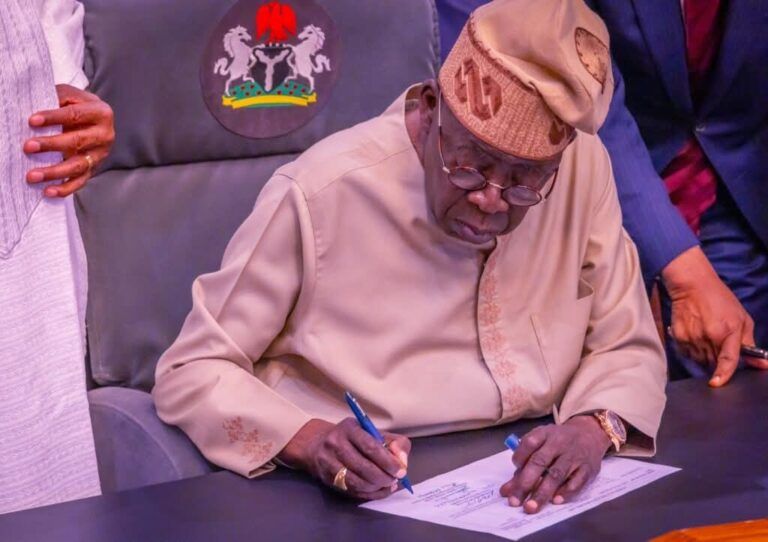
President Bola Tinubu has asked the National Assembly to approve fresh external borrowing of about $7.7 billion to part-finance the 2026 budget deficit, with the Senate President Godswill Akpabio saying the request “effectively supersedes an earlier borrowing proposal of $20.3 billion”.
Tinubu’s request, contained in a letter dated October 26, 2026, was read by Akpabio during Wednesday’s plenary.
The president is seeking approval for external borrowing of N10.79 trillion, equivalent to approximately $7.7 billion at the budget exchange rate of N1,409 to the dollar.
In the letter, Tinubu said the request was made pursuant to Sections 21(1) and 27(1) of the Debt Management Office Establishment Act, 2003.
Section 21(1) provides that no external loan shall be approved or obtained by the minister of finance unless its terms and conditions are presented to the national assembly and approved through a resolution.
Section 27(1) also empowers the national assembly to approve, by resolution, standard terms and conditions for negotiating and accepting external loans and issuing guarantees.
Tinubu said the 2026 Appropriation Act approved N29.2 trillion in new borrowing to finance a budget deficit of approximately N31.4 trillion.
The borrowing requirement comprises N18.4 trillion in domestic loans and N10.79 trillion in external financing, with the latest request covering the external component.
Reacting to the letter, Akpabio said it effectively superseded the earlier request for $20.3 billion because the new proposal is more explicit about how the government intends to raise the funds.
“I believe this letter effectively supersedes the earlier request for 20.3 billion US dollars because the present request is more explicit. It also recognises that the borrowing will not necessarily come from one source,” he said.
Akpabio said the government would have to explore available funding options and secure the most favourable terms.
“The government will have to explore the available options and secure the best possible terms under a willing-seller, willing-buyer arrangement,” he said.
The senate president referred the request to the committee on local and foreign debts to report back as soon as practicable.
According to the letter, the federal government plans to raise the $7.7 billion through one or a combination of funding options.
The proposed sources include concessional and commercial loans from multilateral and bilateral institutions, International Monetary Fund (IMF) facilities, bridge financing, direct borrowing from international financial institutions and eurobond issuance.
Tinubu said the options would be pursued simultaneously, taking into account their respective costs, benefits, and the time required to access the funds.
However, he said greater emphasis would be placed on eurobond issuance because it is generally faster to conclude and could raise larger amounts at relatively competitive costs.
“The final terms and conditions, including interest rates and tenures, will be determined at the time of pricing, depending on prevailing market conditions,” the president said.
He added that the federal ministry of finance and the Debt Management Office (DMO) would ensure that Nigeria secured the best possible terms.
Tinubu said the external borrowing would finance priority programmes and projects contained in the 2026 Appropriation Act.
The projects, he said, cover defence and security, transportation, agriculture, power, education and healthcare.
The president also said the borrowing is expected to support the country’s external reserves because the funds would be received by the Central Bank of Nigeria (CBN) on behalf of the federal government.
“This, in turn, is expected to support the stability of the naira,” he said.
Tinubu asked the national assembly to authorise the federal government to implement the N10.79 trillion external borrowing and approve the use of one or more of the identified funding sources, with greater emphasis on eurobond issuance.
He also urged the legislators to empower the minister of finance and coordinating minister of the economy to work with the DMO to implement the resolution.
He expressed the expectation that the senate would issue the necessary resolution in a timely manner
By Chidera Orji
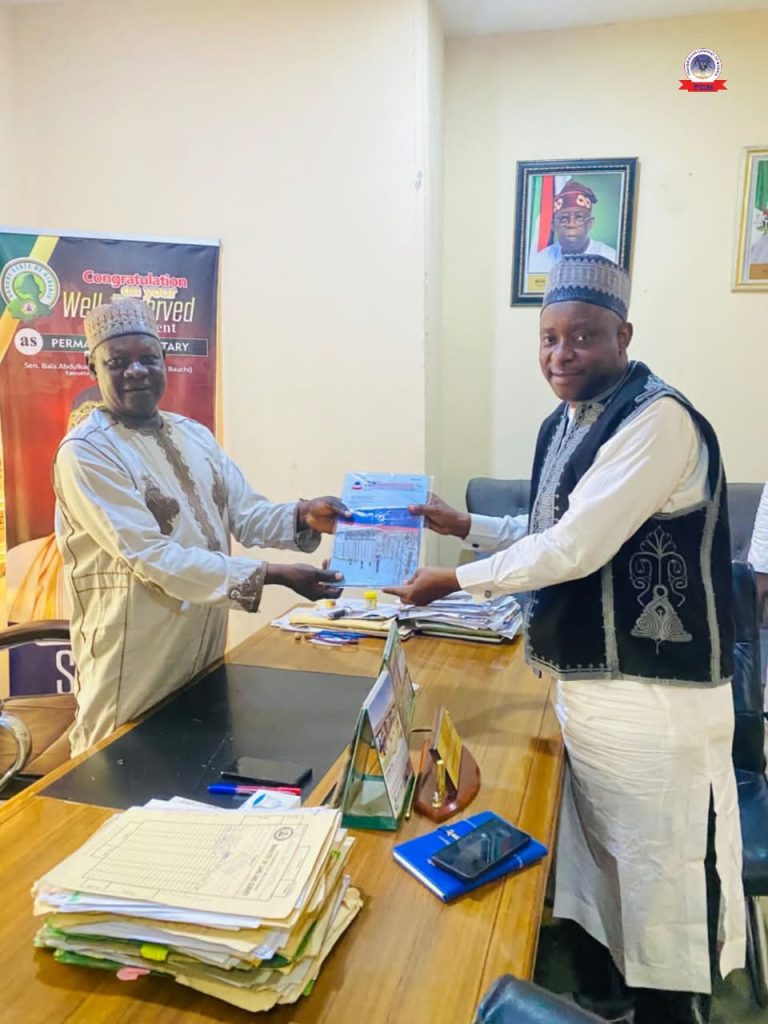
The Transmission Company of Nigeria (TCN), Bauchi Region, has appealed to the Bauchi State Government to expedite land allocation for two proposed transmission substations in Alkaleri and Toro Local Government Areas (LGAs) of the state. The projects are expected to expand transmission capacity and improve bulk power supply across the state.
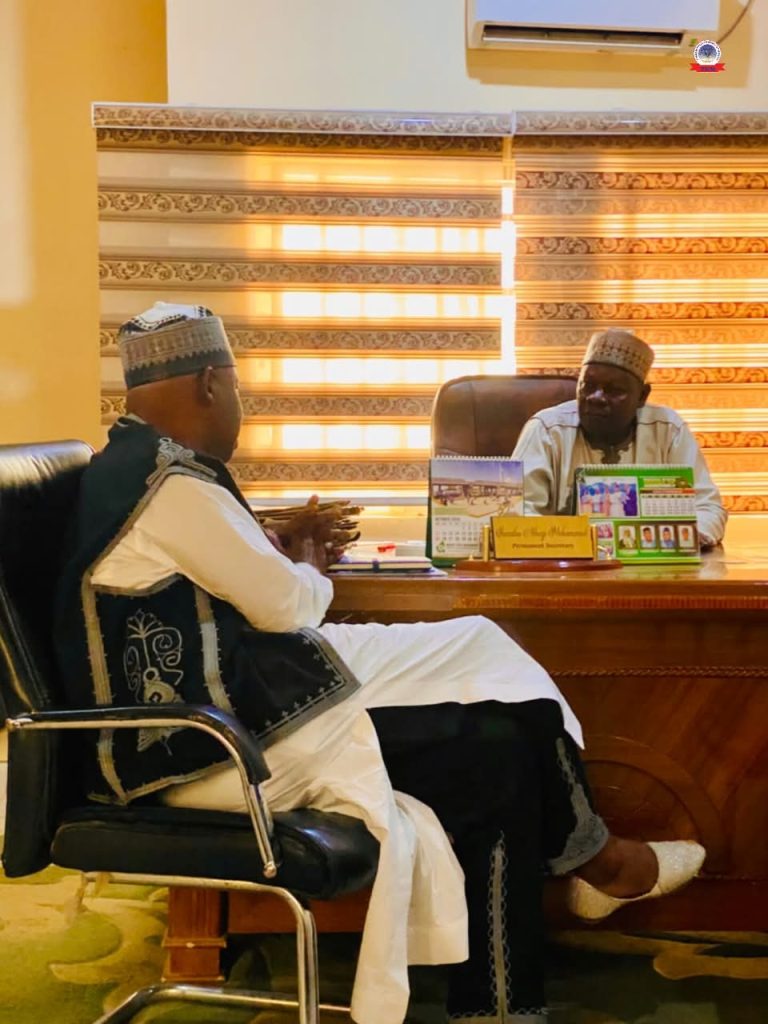
The Ag. General Manager (Transmission), Bauchi Region, Engr. Muhammed Bello Ahmed, made the appeal during a courtesy visit to the State Ministry of Land and Survey on Monday, November 2, 2026, emphasising the need for timely land allocation to facilitate project implementation.
He commended the state government for engaging host communities on the proposed projects and protecting critical transmission infrastructure through the enforcement of Right-of-Way (RoW) regulations, particularly the removal of illegal structures beneath high-voltage transmission lines.
In his response, the Permanent Secretary of the Ministry, Shuaibu Alhaji Mohammed, assured TCN of the state government’s support for the substation projects. He reaffirmed the Ministry’s commitment to facilitating the land allocation process and pledged to strengthen security around critical transmission facilities.
-

 General News4 weeks ago
Rivers 2027: We are not part of Rainbow Coalition – APC Legacy Group slams Wike, Fubara meeting
-
General News1 month ago
JOHESU demands: MHWUN puts FG on notice over fresh action
-

 Politics2 months ago
2027: ASAF backs APC governors, rejects rainbow coalition
-

 Politics2 months ago
You have demonstrated diligence, loyalty, statesmanship in leadership, Ekechi salutes Shetimma at 60
-

 Politics3 months ago
2027: Advertising experts raise concerns over irregular regulation of sector
-
FCT News3 months ago
2027: Hasana-Moneme pledges skills, empowerment, credit access for FCT women
-
General News3 months ago
2027: Dame Princess Esom-Nwafor Orizu confirmed as APC flagbearer for Nnewi North /South /Ekwusigo Federal Constituency as INEC releases names of candidates
-
Uncategorized4 months ago
Rescue of Oyo schoolchilden: Tinubu commends security agencies, says action breakthrough in fight against criminality