
Politics
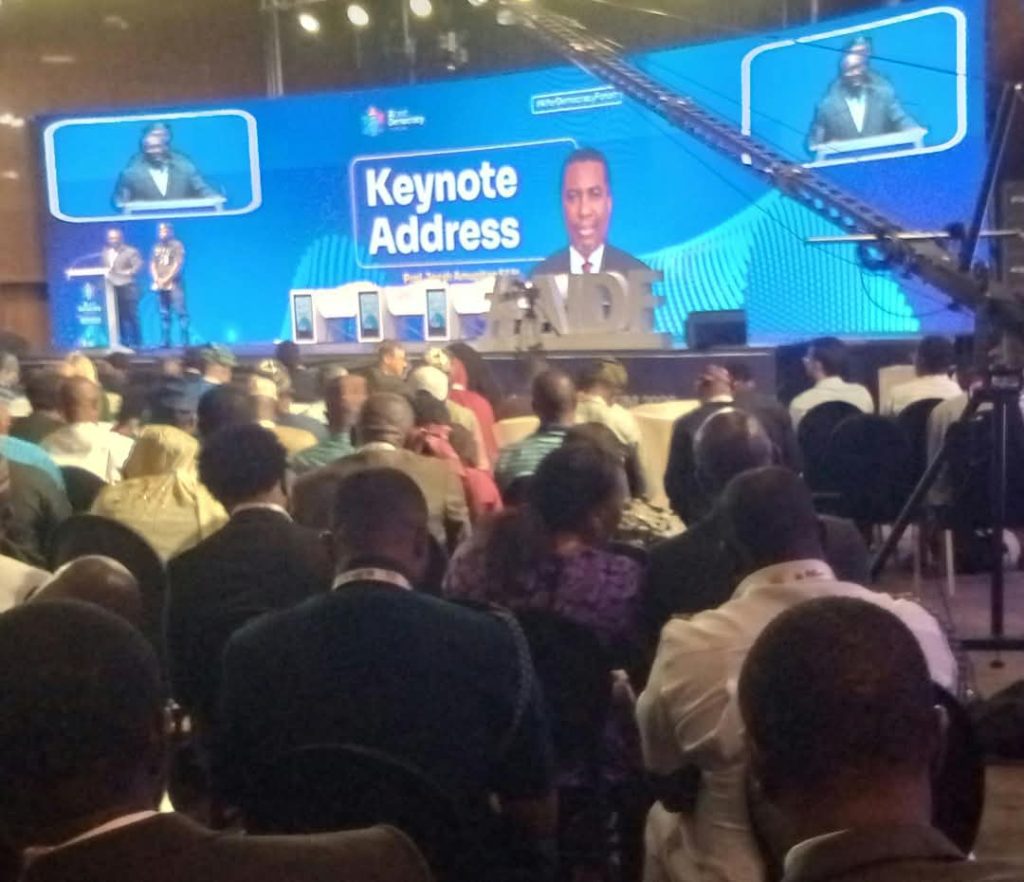
AI won’t decide 2027 elections outcome – INEC Chairman declares

…As Yiaga Africa insists on accurate data for political stability
By Sam Otuonye
Amid the emergence of Artificial Intelligence (AI) and its innovative and automative competences, the Chairman of the Independent National Electoral Commission (INEC), Prof. Joash Amupitan, has declared that algorithms will not decide the outcome of the 2027 general elections.
Amupitan insisted that the will of the Nigerian people, expressed through the ballot, remains the sole determinant of who governs the country.
He made the declaration while speaking at the AI and Democracy Forum 2026 in Abuja, themed “Will Algorithms Determine the 2027 Vote?: Safeguarding the 2027 General Elections in the Age of Artificial Intelligence,” organized by Yiaga Africa in partnership with INEC, Google, Microsoft, European Union, UK Int’l Development, and among others.
He said technology, however sophisticated, must remain an instrument for serving human agency, institutional efficiency, and administrative transparency.
The INEC Chairman declared that “AI must remain servant, not master, of Nigerian democracy.
“Algorithms will not, and must never, decide the 2027 vote,” he asserted.
“The choice of who leads Nigeria belongs exclusively to the Nigerian people. Algorithms may predict patterns; they may optimise routes, and they may even suggest preferences. But they do not have a conscience, they do not have a country, and they do not have a vote.”
Amupitan also noted that the greatest threat to elections today is not just hacking of the process but hacking of voters’ mind through generative AI.
With exactly 92 days to the 2027 General Elections, the INEC Chairman acknowledged that AI will undeniably shape the information environment, influence electoral logistics, and alter the tactics of both democratic actors and anti-democratic disruptors.
“While algorithms will not decide the vote, AI will undeniably shape the information environment in which citizens form their choices, influence the speed and security of electoral logistics, and alter the tactics of both democratic actors and anti-democratic disruptors,” he said.
Prof. Amupitan described the 2027 General Election as the largest democratic exercise on the African continent and one of the most complex administrative undertakings in the world, with over 103 million registered voters, 176,846 polling units across 774 Local Government Areas, and multi-tiered balloting spanning presidential, national assembly, governorship, and state assembly elections.
He noted that INEC has already executed ten of the fourteen major operational milestones stipulated by the Electoral Act 2026, procured additional BVAS units, digitised candidate nominations through the INEC Candidates Nomination Portal (ICNP), processing over 15,000 nominations across 22 political parties, and introduced online voter registration for the first time in Nigeria.
The INEC Chairman outlined opportunities for AI to optimise election administration, including predictive logistics and route optimisation, automated result audit assistance, biometric database hygiene, multilingual voter engagement through Natural Language Processing, and AI-driven cybersecurity defence.
He, however, affirmed the Commission’s commitment to the Human Oversight Principle, stressing that no critical electoral decision, result collation, voter accreditation, or candidate qualification will ever be fully automated or delegated to an autonomous system.
“Human accountability, statutory oversight, and judicial review will remain paramount at every stage of the electoral chain,” he said.
In his opening remark, the Executive Director, Yiaga Africa, Samson Itodo, insisted that data integrity is paramount to achieving credible elections, emphasizing on aggregating and sharing of accurate data. He stressed that accurate data is a significant tool for political stability.
According to Itodo, methodological integrity, verification for transparency, and other portable tools are critical and inspire trust and confidence in the process.
The event witnessed a wide turnout of both local and international personalities within the electoral ecosystem, including the Chairperson of the ECOWAS Network of Electoral Commissions and Chairman of Senegal’s Electoral Commission, Abdoulaye Sylla; members of the diplomatic corps; National Commissioners and Resident Electoral Commissioners; heads of sister election management bodies across Africa; international development partners; political party leaders; civil society organisations; media executives; security agencies; technology companies; and members of the academic community.

By Prosper Okoye
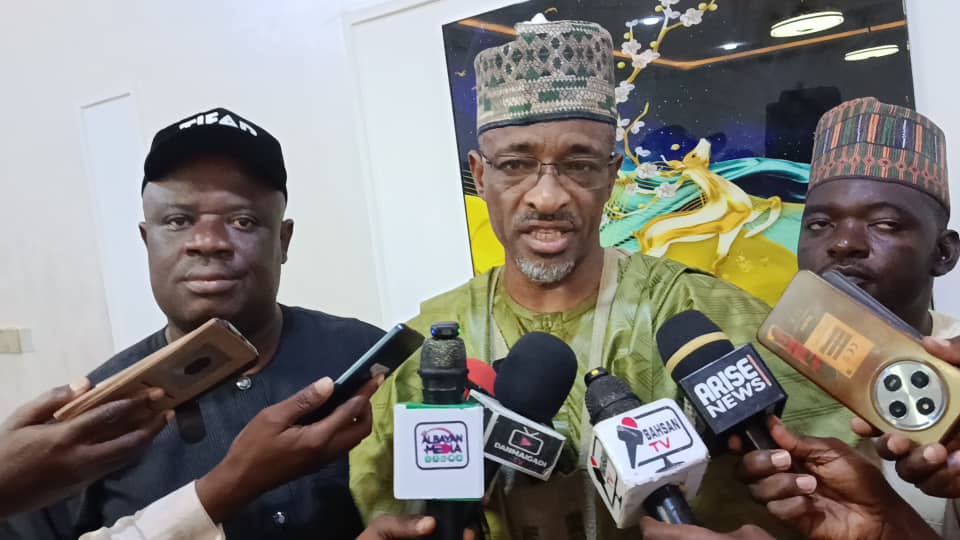
Hassan Umar Dangaladima has won the All Progressives Congress (APC) primary for Kaura Namoda and Birnin Magaji federal constituency in Zamfara State, securing 9,416 votes in an exercise preceded by security concerns and attacks on party members.
His opponent, Aminu Sani Jaji, polled 661 votes, according to the result announced by the party’s electoral committee.
The declaration was made by Mustapha Muhammed, acting chairman of the APC electoral committee from the party’s national headquarters, who served as the returning officer.
Muhammed said Umar met the party’s constitutional requirements and electoral guidelines, formally declaring him the winner of the primary.
The election took place against a backdrop of security concerns following attacks by suspected political thugs that reportedly left several APC members injured and vehicles damaged.
Security agencies subsequently intervened to restore order, allowing the voting exercise to continue.
Speaking to journalists after his victory, Umar thanked party members and constituents for their support, while acknowledging the role of security personnel and electoral officials in conducting the exercise.
He also called for reconciliation among party stakeholders, extending an olive branch to Jaji and urging supporters of both camps to unite ahead of the 2027 general elections.
Umar said unity within the party would be crucial to its prospects in the next general election.
By Our Reporter
The Independent National Electoral Commission (INEC) has removed artificial intelligence-generated photographs uploaded to the national voters’ register and flagged officials implicated in the practice across 10 states for disciplinary action.
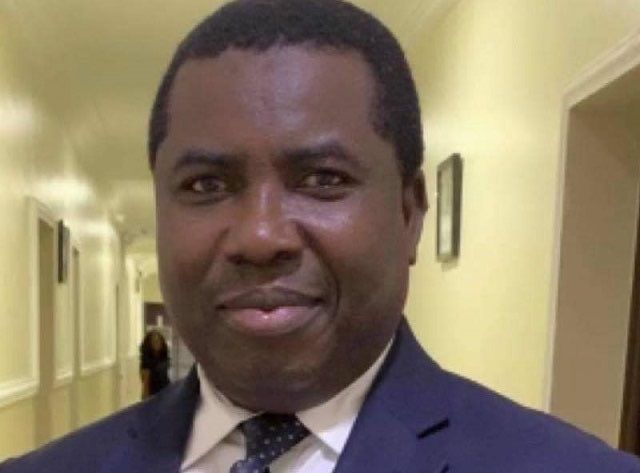
INEC National Commissioner, Mohammed Haruna, disclosed this on Wednesday during a webinar organised by the PUNCH Media Foundation, titled ‘AI, Misinformation and Nigeria’s 2027 Elections: Safeguarding the Truth, Protecting the Vote’.
Haruna, who is also Chairman of the commission’s Information and Voter Education Committee, described the development as a major challenge, noting that the commission had already taken down AI-generated photographs identified on the voters’ register.
He, however, acknowledged that INEC faced limitations in preventing members of the public from manipulating or enhancing their photographs before uploading them during voter registration.
The commissioner said the commission had also identified cases involving its own personnel and was taking steps to address the violations.
“We have already seen one of the challenges, which is that a lot of AI-generated photographs were posted onto the voters’ register, which, as we have said, we have had to take down,” he said.
Haruna explained that while it might be difficult for the commission to prevent members of the public from manipulating their photographs before submission, it had greater control over violations involving its officials.
“But the ones involving our own staff, where it is our own staff that did so, that one is within our control. We are in the process of addressing it. They have been flagged,” he said.
He disclosed that the commission had obtained the names of the officials involved across about 10 states, adding that they would face disciplinary action.
“We have their names across about 10 states, and obviously, they are going to face disciplinary action,” he added.
On INEC’s preparedness to regulate the use of artificial intelligence in the electoral process ahead of the 2027 general elections, Haruna said the commission had developed an AI policy but was working to finalise it.
He noted that the rapid evolution of artificial intelligence had created regulatory challenges for countries across the world, including advanced democracies.
According to him, the evolving nature of the technology has made it difficult for governments to establish comprehensive and specific regulatory frameworks.
“As you know very well, it is new territory out there. Even the most advanced countries don’t have what you might call concrete, specific policies about AI because these things are evolving,” he said.
Haruna, however, said INEC had developed ideas on how it intended to deploy and regulate the technology, assuring that the policy would soon be finalised and made available to the media.
“But we have at least some ideas of what we want to do and how we want to use that. We have that policy. Very soon, we will concretise it, and we will be able to share it with the media,” he said.
General News
Yunusa Tanko dumps Peter Obi, Obidient Movement, appointed SDP presidential campaign coordinator
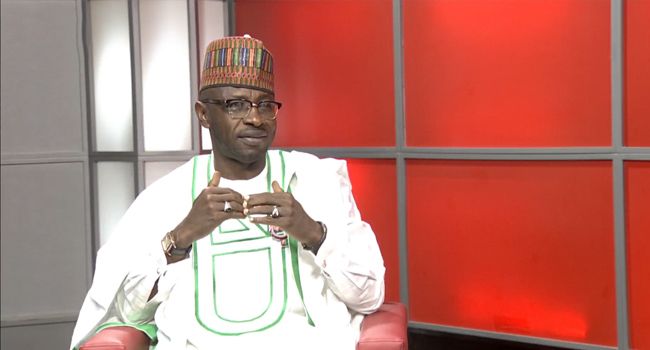
Yunusa Tanko
By Our Reporter
The Social Democratic Party (SDP) has appointed Yunusa Tanko, former coordinator of the Obidient Movement, as national coordinator of its presidential campaign council for the 2027 elections.
The SDP unveiled Tanko as its national presidential coordinator on Wednesday during the inauguration of the party’s campaign council in Abuja.
Mark Adebayo, chief media and communication advisor of the Adebayo/Bugaje presidential campaign council, also confirmed Tanko’s appointment to TheCable.
Speaking at the event, Tanko pledged to work with Adewale Adebayo, the SDP presidential candidate, and Usman Bugaje, his running mate, to secure victory in the 2027 elections.
“The SDP is a left-wing political party. For those of you who do not know, we represent the interests of the downtrodden. The SDP represents those people that you neglect on the streets. So, that makes this particular party people-oriented,” he said.
Tanko said he resigned as political adviser (north) to Peter Obi, presidential candidate of the Nigeria Democratic Congress (NDC), on October 30.
He said his resignation followed his appointment to the leadership of the National Consultative Front (NCFront) after the death of Ghali Na’Abba, the group’s former co-chairman and ex-speaker of the House of Representatives.
Tanko said he had reached out to Obi and Seriake Dickson, national leader of the NDC, whom he commended for their support when he served as coordinator of the Obidient Movement.
He pledged to work with the NCFront leadership and Adebayo, saying his relationship with Adebayo dates back to 2023, and added that they share a commitment to building a better Nigeria.
“In advancing our political mission to a new Nigeria that works for all, I pledge to remain consistent and committed to our unwavering belief in good governance, justice, equity, national loyalty and dedication and unwavering commitment to new Nigeria from where it is to a better and prosperous Nigeria,” he said.
Obi appointed Tanko as national coordinator of the Obidient Movement in September 2024, following a consensus to zone the position to the north.
Tanko served as Obi’s presidential campaign spokesman during the 2023 elections when the former Anambra governor contested under the Labour Party (LP) platform.
Tanko was the Northern People’s Congress (NPC) presidential candidate in 2019 and the party’s national chairman in 2023.
-

 General News1 month ago
Rivers 2027: We are not part of Rainbow Coalition – APC Legacy Group slams Wike, Fubara meeting
-

 Politics2 months ago
2027: ASAF backs APC governors, rejects rainbow coalition
-
General News2 months ago
JOHESU demands: MHWUN puts FG on notice over fresh action
-

 Politics2 months ago
You have demonstrated diligence, loyalty, statesmanship in leadership, Ekechi salutes Shetimma at 60
-

 Politics3 months ago
2027: Advertising experts raise concerns over irregular regulation of sector
-
FCT News3 months ago
2027: Hasana-Moneme pledges skills, empowerment, credit access for FCT women
-
General News3 months ago
2027: Dame Princess Esom-Nwafor Orizu confirmed as APC flagbearer for Nnewi North /South /Ekwusigo Federal Constituency as INEC releases names of candidates
-
Uncategorized4 months ago
Rescue of Oyo schoolchilden: Tinubu commends security agencies, says action breakthrough in fight against criminality