
Cover page
11th Assembly: No vacancies for Senate President, Deputy, other seats, Senate declares

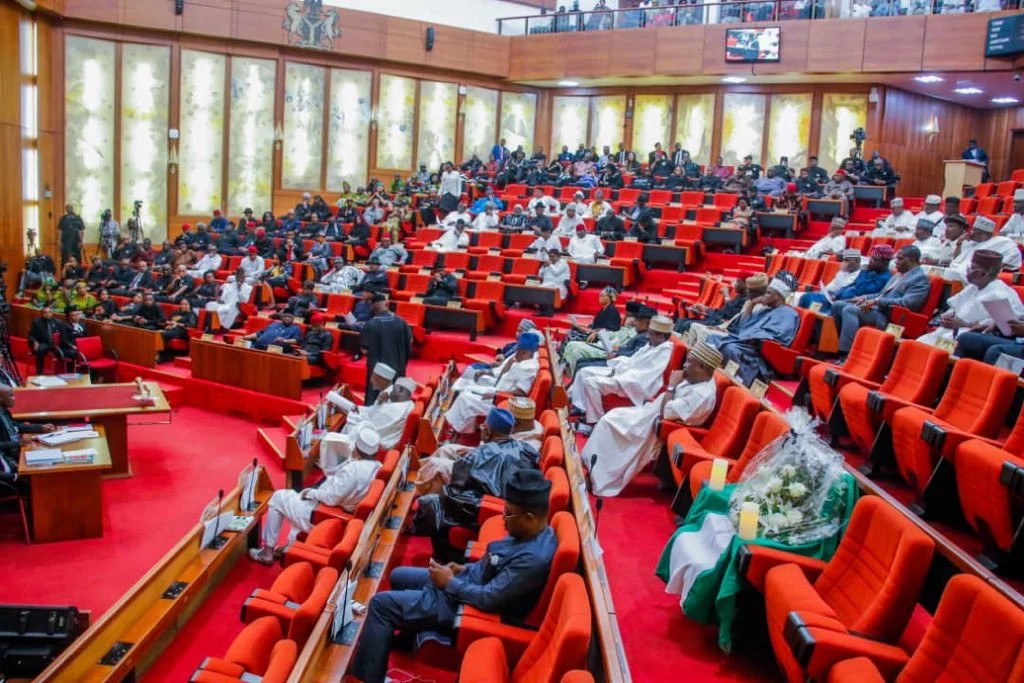
*** Says offices exclusively reserved for Akpabio, Barau, others
By Tony Chuddy
With barely eight months to the inauguration of yet to be determined membership of the 11th Assembly, Principal Officers of the current 10th Assembly have issued a stern warning to those eyeing their positions to steer clear, insisting that there would be no vacancy in the offices.
Recall that Senate President, Goodwill Akpabio, had during the inauguration of the All Progressives Congress (APC), Presidential Campaign Council, at the Presidential Villa in Abuja on Wednesday, urged governors and others eyeing his office to first concentrate and complete their terms at states, rather than abdicating their roles to pursue offices he said does not exist for them at the National Assembly.
There are unconfirmed reports that former Zamfara State Governor and current Director General of the APC Presidential Campaign Council, Senator Abdulaziz Yaris and Imo State governor, Hope Uzodimma are eyeing the 11th Senate presidency, if they win their elections in 2027.
The Senate declared during plenary that seats currently occupied by Principal Officers including Senate President Godswill Akpabio, Deputy Senate President, Jibrin Barau and Senate Leader, Opeyemi Bamidele will not be vacant for contest by returning or newly elected lawmakers in the 11th Senate.
Expressing his support for Senator Akpabio to retain his seat in 2027, Senate Chief Whip, Senator Tahir Mohammed Monguno (Borno North) who raised the debate, said, “there is no vacancy for Senate President seat in the 11th Senate, including that of the Deputy Senate President.
Monguno said he was optimistic that most of the incumbent senators would return to the chamber and that Akpabio would continue as Senate President.
“Insha Allah, by the grace of God, the majority of us are going to make it back to the Senate, and this seat is hereby declared: there is no vacancy,” Monguno said.
This was followed by Senator Cyril Fasuyi (Ekiti North) who seconded the declaration, saying “there is no contest for the office of the Senate President. It is exclusively reserved for Senator Godswill Obot Akpabio”.
Fasuyi later said other Principal Officers would have their seats retained in the next Senate.
“I hereby support the motion ably moved by Senator Monguno that the seat of the Senate President in the 11th Assembly is not open to any contest. It is already occupied by Senator Godswill Obot Akpabio,” Fasuyi said.
Senator Monguno extended the declaration to the office of the Deputy Senate President and other principal officers of the Senate.
After the declarations, Akpabio asked senators whether the position reflected the chamber’s general view.
When he called on those in support to say “aye,” the response was audible across the chamber.
However, no audible response was recorded when he asked for opposing voices.
“I think that settles it,” Akpabio echoed.


*** FG refutes W’Bank’s 124% interest payment on revenue
By Sam Otuonye
Nigeria’s defence ministry has revealed that the European Union (EU) has pledged a €20 million defence support to the country’s Armed Forces, under the European Peace Facility (EPF)
The pledge comes as Nigeria seeks to strengthen its military operations against terrorists and other security threats across the country
The EU proposed assistance, according to a statement issued at the weekend, was discussed when the Minister of Defence, General Christopher Musa (Rtd), met with the EU Ambassador to Nigeria and the Economic Community of West African States (ECOWAS), Gautier Mignot, at Ship House in Abuja.
The statement, which was issued by Special Assistant to the Minister of Defence on Media, Leah Katung-Babatunde, noted that the meeting focused on key bilateral defence agreements and a review of security cooperation between Nigeria and the EU.
According to the statement, Mignot commended Musa’s efforts to improve the country’s security situation and invited him to a meeting of defence ministers scheduled to hold in Brussels later in the year.
It added that discussions also centred on arrangements for the EU’s €20 million assistance package to the Nigerian military under the EPF.
The ambassador, she said, disclosed that an EU technical delegation would visit Nigeria in November to agree on the details of the proposed support.
Musa thanked the EU for its continued support for Nigeria and reaffirmed President Bola Tinubu’s commitment to protecting lives and promoting national development.
The minister said relative peace was gradually returning to some troubled parts of the country through the efforts of the armed forces and other security agencies.
He, however, identified kidnapping along major highways and attacks on isolated communities as persistent security challenges.
Musa also disclosed that Nigeria was expecting the delivery of 10 attack helicopters, unmanned aerial vehicles (UAVs) and other military equipment to strengthen security operations.
On regional security, the minister identified the shrinking of the Lake Chad Basin, which supports more than 50 million people, as a factor contributing to instability in the region.
He said denying terrorists access to holding areas on islands in Lake Chad remained a key operational priority for the Multinational Joint Task Force (MNJTF), which coordinates regional efforts against insurgency.
On the disarmament, demobilisation and reintegration (DDR) programme, Musa said the initiative would prioritise victims of the conflict, including military personnel affected by the fighting.
This is as the Federal Government has disputed claims that its interest payments reached 124% of revenue in the first half of 2026, arguing that the figure presents an incomplete picture of its fiscal position because it excludes some government revenue and combines debt obligations across different tiers of government.
The Federal Ministry of Finance, in a press statement issued on Sunday, October 18, said the ratio cited in recent analysis based on the World Bank’s October 2026 Nigeria Development Update was misleading because it compared federal interest payments with an incomplete revenue base.
The ministry said the interest figure includes debt serviced by the Federal Government on behalf of other tiers of government, including external loans to states, while the revenue figure excludes independent revenue earned by government agencies and enterprises but not yet remitted to the Treasury.
FG also argued that federal revenue typically increases in the second half of the year because of the statutory timing of certain tax payments, making a half year comparison an unreliable measure of the government’s overall debt sustainability.
“The reported revenue is also incomplete. It excludes independent revenue already earned by government agencies and enterprises but not yet remitted to the Treasury. In addition, more revenue is typically earned in the second half of the year than in the first due to the statutory timing of certain tax payments.
“This is why the ratio stood at 156% in H1 2025, while the full-year 2025 debt-service-to-revenue ratio was below 60%, down from 97% before the reforms.
“This is a clear sign of the progress delivered by the current administration’s reforms,” the Ministry stated.
The ministry said federal revenue increased by 72% year on year to N6.2 trillion in the first half of 2026, compared with N3.6 trillion in the same period of 2025.
Interest payments, meanwhile, rose by 38% to N7.7 trillion from N5.6 trillion over the same period.
The difference between interest payments and revenue consequently narrowed to N1.5 trillion from N2 trillion a year earlier, according to the ministry.
It said the figures showed that revenue was growing almost twice as fast as interest costs, contributing to a 32 percentage point decline in the interest to revenue ratio.
In its 2026 Nigeria Development Update (NDU) titled ‘Beyond the Federal Purse: How Higher Revenues Reshaped State Priorities,’ the World Bank said Nigeria’s interest payments rose to N7.7 trillion in the first half of 2026, from N5.6 trillion in the corresponding period of 2025.
According to the bank, the interest payment gulped 124.19 percent of the federal government revenue.
The bank said interest payments increased to 3.1 percent of gross domestic product (GDP) from 2.5 percent a year earlier.
However, the Finance Ministry argued that debt sustainability should be assessed using full year figures rather than a six month snapshot.
It cited the World Bank’s projection that Nigeria’s total debt service, covering both interest and principal repayments, would amount to 46% of revenue in 2026.
The ministry described this as a more appropriate benchmark for assessing the government’s debt servicing position, distinguishing it from the 124% ratio based on interest payments and revenue in the first half of the year.
The ministry also cited the decline in the full year debt service to revenue ratio to below 60% in 2025, compared with 156% in the first half of that year and 97% before the current administration’s reforms.
It attributed the improvement to the government’s fiscal reforms and the stronger revenue performance recorded since their implementation.
The concern with the World Bank’s claims came as the government says Nigeria is beginning to change how it is perceived internationally, pointing to its tax overhaul and broader economic reforms as evidence that the country is moving towards sustainable growth and shared prosperity.
Minister of Finance and Coordinating Minister of the Economy, Taiwo Oyedele, said this as he explained his “Nigeria rising” narrative at the 2026 IMF-World Bank Meetings in Thailand.
According to him, the Nigeria Rising narrative was designed to communicate the changes taking place in the country and challenge perceptions that do not reflect the government’s assessment of its economic progress.
Speaking at the closing press briefing of the Meetingss in Bangkok, Thailand, Oyedele said he observed growing interest in Nigeria among international stakeholders during the meetings, which he attributed to the country’s ongoing reform programme.
***We will not withdraw for ADC, NDC’s Kwankwaso insists, attacks ADC
***We woke up late, says SDP
***G-100 intensifies consultations, assures it will announce candidate soon
By Tony Chuddy
Ahead of the 2027 general election, strong indication has emerged that the various opposition political parties have been further thrown into confusion, with attacks against each other, even talk about coming together to present a single presidential candidate has persisted
Recent developments have drawn the two major opposition political parties against each, with the Africa Democratic Congress (ADC), firing the first salvo against the Nigeria Democratic Congress (NDC).
ADC had last week, accused the NDC of working for the ruling All Progressives Congress (APC), against its presidential candidate, Abubakar Atiku.
ADC’s attack followed a call from the NDC vice presidential candidate, Rabiu Kwankwaso on Atiku to test his presidential ambition, and support the NDC candidate, Peter Obi, citing the agreed zoning of the presidency to the South.
The ADC Presidential Campaign Council, in a statement by its Director of Media and Publicity, Kola Ologbondiya accused NDC vice presidential candidate of undermining the opposition to advance President Bola Tinubu’s re-election chances in 2027.
The ADC-PCC, said Kwankwaso had been attacking opposition leaders instead of criticising the Tinubu-led All Progressives Congress (APC) government.
But Kwankwaso while responding to the ADC allegations through a statement on Sunday, dismissed the speculations that the party may withdraw from the presidential race in favour of the African Democratic Congress (ADC) ahead of 2027 presidential election. He insisted that the NDC ticket remains in the contest and is confident of victory.
Kwankwaso, who accused the ADC Presidential Campaign Council (ADC-PCC) of focusing on attacks against him, the NDC presidential candidate, Peter Obi, and the party instead of marketing its own candidate to Nigerians, warned that attempts to portray the NDC as working for the ruling All Progressives Congress (APC) or planning to step down for the ADC were baseless and aimed at misleading voters.
“We will not withdraw our candidature for the ADC or any other party. We remain confident in our capacity, competence and readiness to lead Nigeria,” he said.
He accused the ADC campaign team of being highly “mischievous’” against the NDC and warned supporters against any last-minute claims suggesting that the NDC had endorsed or withdrawn in favour of another presidential candidate.
He advised the ADC campaign council to focus on addressing allegations reportedly made against its candidate by Vice President Kashim Shettima instead of targeting the NDC leadership.
According to him, the NDC presidential ticket, which he described as the “OK ticket”, is not working for the APC or any of its candidates and has no reason to step down for any political party.
“The OK ticket is neither working for nor acting on behalf of the APC or any of its candidates. We see no possibility or reason to withdraw from the presidential race in favour of the ADC candidate or any other,” he said.
The former Kano state governor, who described the NDC as the most formidable opposition party in the country, urged its supporters to remain committed to securing victory for the party in the forthcoming election.
He added the NDC ticket is committed to addressing challenges in security, education, agriculture, infrastructure, healthcare and the economy, while promoting national unity, adding that “Nigeria will be OK,”
This is even as the conveners of the G-100 political pressure group, have assured that the various opposition political parties have been rallied together to produce a single candidate to challenge President Bola Tinubu and the All Progressives Congress (APC), in the 2027 election.
Salihu Lukman, a former national vice chairman North West of the ruling APC, gave the assurance, when he appeared on a Channels Television programme, Hard Copy at the weekend.
The former Director General of the APC Progressives Governors Forum (PGF),
said opposition parties working in alliance with the group will announce a single presidential candidate for the 2027 general election, possibly only days before the poll.
It would be recalled that the G-100 had recently renewed its consultations toward the opposition single candidate project in the 2027 election , with meetings with over the opposition political parties.
“I can tell you categorically, and my confidence about that comes from what I see in the leadership of the parties: they are committed and they are working, taking all the steps necessary.
“So it could be two months, some weeks to the election, or a few days to the election; they will come out and tell Nigerians this is the direction, and everybody will queue”, he said.
Lukmam disclosed further that, the consultation has gone beyond the six parties currently involved, saying that they are also working to expand it by reaching out to other parties.
The G-100 convener said the parties and their candidates have since taken over the process from the group.
“When the parties owned the process we had started and took it beyond, took it out of our hands and began to engage each other based on the need to develop the kind of confidence they need to trust one another,” he said.
Speaking in the same vein, the National Chairman of People’s Redemption Party (PRP), Dati Baba Ahmed , said opposition parties were working towards forming a coalition to challenge Tinubu in the 2027 presidential election.
The former presidential adviser described the effort as serious, saying the parties were prepared to pool resources and set aside their differences to build a common front.
“What we have seen is an incredible willingness for politicians to come together and say, let’s put aside some of our differences and see if we can actually create a momentum strong enough to remove this Tinubu,” he said.
Baba-Ahmed said the coalition would produce a candidate to challenge the president and urged Nigerians opposed to Tinubu’s re-election bid to support whoever emerged as its flag-bearer.
“There will be a candidate that will be produced by this coalition. Vote for whoever he is,” he urged supporters, while calling on the Independent National Electoral Commission (INEC) to ensure that the outcome of the 2027 general election reflect to will of the voters.
***Nigeria’s inflation rate dropped to 14.63 percent in September, NBS
By Sam Otuonye
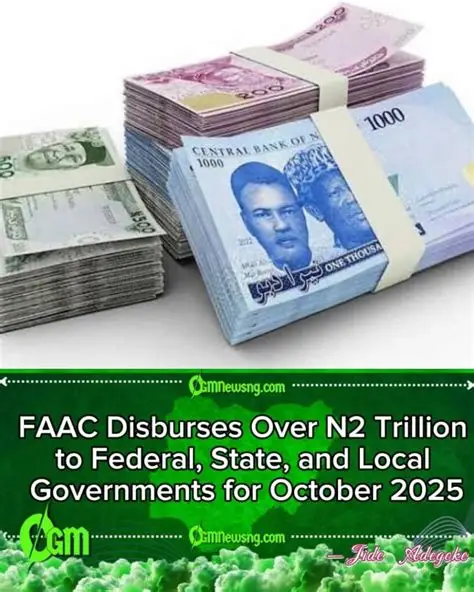
Despite reported decline in September revenue generation, the positive impact of the removal of petrol subsidy has continued to reflect on the monthly take home of the three tiers of government, as the federal government, 36 states and the 774 local government councils, on Wednesday, shared N2.428tn as Federation Account revenue for September
The shared Federation Account Allocation Committee (FAAC), allocation is however, about N17.972 billion less the N2.58 trillion that was shared for August 2026 revenue
This is even as the National Buresu of Statistics (NBS) has reported a 4.63 percent drop in the country’s inflation rate
In a statement on Thursday, the spokesperson for the Office of the Accountant-General of the Federation, Bawa Mokwa said the revenue was shared at the October 2026 Federation Account Allocation Committee, FAAC, meeting held in Abuja.
The N2.428 trillion total distributable revenue comprised N1.672 trillion in distributable statutory revenue and N756.587 billion in distributable Value Added Tax (VAT) revenue.
The statement indicated that total gross revenue of N3.913 trillion was available in September 2026. Total deductions for the cost of collection amounted to N131.758 billion, while transfers, refunds and savings totalled N1.352 trillion.
According to the communiqué, gross statutory revenue of N3.096 trillion was received in September 2026. This was higher than the N2.850 trillion received in the preceding month by N246.384 billion.
Gross revenue of N816.872 billion was generated from Value Added Tax (VAT) in September 2026. This was lower than the N834.843 billion recorded in August 2026 by N17.972 billion.
The communiqué stated that, from the N2.428 trillion total distributable revenue, the Federal Government received N832.242 billion, while the state governments received N799.872 billion.
The local government councils received N560.660 billion, while N236.049 billion, representing 13 per cent of mineral revenue, was shared among the benefiting states as derivation revenue.
Of the N1.672 trillion in distributable statutory revenue, the communiqué stated that the Federal Government received N756.583 billion, while the state governments received N383.749 billion.
The local government councils received N295.855 billion, while N236.049 billion, representing 13 per cent of mineral revenue, was shared among the benefiting states as derivation revenue.
From the N756.587 billion in distributable Value Added Tax (VAT) revenue, the Federal Government received N75.659 billion, the state governments received N416.123 billion, and the local government councils received N264.805 billion.
In September 2026, Petroleum Profit Tax (PPT), Hydrocarbon Tax (HT), petroleum royalties, import duty, CET levies and excise duty recorded significant increases, while Companies Income Tax (CIT), Capital Gains Tax (CGT), Stamp Duties Tax (SDT), Value Added Tax (VAT), mineral royalties, gas-flaring penalties, rental gas-flaring fees and miscellaneous oil revenue recorded considerable decreases.
The National Bureau of Statistics (NBS) saif Nigeria’s headline inflation rate has dropped to 14.63 percent in September 2026, down from the 15.39 percent in August.
NBS announced the decline in its consumer price index (CPI) report on Thursday.
The report showed that headline inflation declined by 6.35 percentage points from 20.98 percent recorded in September 2025.
“In September 2026, the Headline inflation rate stood at 14.63%, down from 15.39% in August 2026 and stood at 20.98% in the same month of the preceding year (September 2025),” NBS said.
“On a month-on-month basis, the Headline inflation rate in September 2026 was 0.06%, which was 0.65% lower than the rate recorded in August 2026 (0.71%).
“This means that in September 2026, the rate of increase in the average price level was lower than the rate of increase in the average price level in August 2026.”
-

 General News1 week ago
Rivers 2027: We are not part of Rainbow Coalition – APC Legacy Group slams Wike, Fubara meeting
-
General News4 weeks ago
JOHESU demands: MHWUN puts FG on notice over fresh action
-

 Politics1 month ago
2027: ASAF backs APC governors, rejects rainbow coalition
-

 Politics1 month ago
You have demonstrated diligence, loyalty, statesmanship in leadership, Ekechi salutes Shetimma at 60
-

 Politics2 months ago
2027: Advertising experts raise concerns over irregular regulation of sector
-
FCT News2 months ago
2027: Hasana-Moneme pledges skills, empowerment, credit access for FCT women
-
General News3 months ago
2027: Dame Princess Esom-Nwafor Orizu confirmed as APC flagbearer for Nnewi North /South /Ekwusigo Federal Constituency as INEC releases names of candidates
-
Uncategorized3 months ago
Rescue of Oyo schoolchilden: Tinubu commends security agencies, says action breakthrough in fight against criminality