
General News
Minimum wage: NLC gives FG October 17 deadline

By Our Reporter
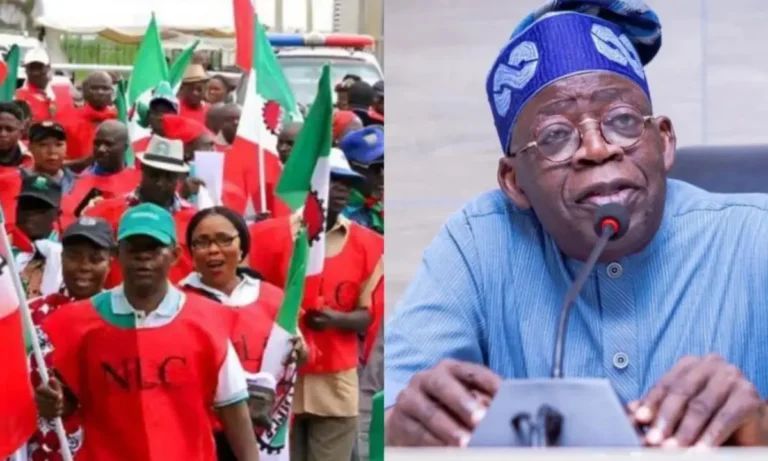
The Federal Government and the Nigeria Labour Congress (NLC) have disagreed over when to commence negotiations for a new national minimum wage, with organised labour insisting that preparations must begin immediately to meet its proposed implementation timeline.
The dispute followed an exchange of correspondence between the Minister of Labour and Employment, Dr Muhammad Dingyadi, and NLC President, Joe Ajaero, over the interpretation of the National Minimum Wage Act and the review of the current N70,000 minimum wage signed into law in July 2024.
In a letter dated October 13, 2026, Ajaero challenged the government’s position that starting a fresh review at this time would be premature, arguing that the timetable envisaged under the original National Minimum Wage Act, 2019, remained relevant despite the subsequent amendment.
The NLC president urged the government to initiate the process by inviting nominations and inaugurating the National Minimum Wage Tripartite Committee, comprising representatives of the government, organised labour and employers.
“The time is now. The appropriate time is now,” Ajaero wrote in the letter shared on Thursday, warning that further delays would aggravate the economic difficulties confronting Nigerian workers.
His position came a day after Dingyadi, in a letter dated October 12, acknowledged receipt of a communique issued following a joint meeting of the NLC’s Central Working Committee and National Executive Council.
The minister maintained that the current minimum wage would become due for review on June 1, 2027, arguing that opening another review process barely two years after the implementation of the N70,000 wage could be premature and disruptive to industrial relations.
The disagreement comes amid growing concerns by organised labour over rising living costs and the declining purchasing power of workers.
In a statement issued on October 1 to mark Nigeria’s Independence Day, the NLC called for an immediate reduction in petrol prices, a nationwide wage award and the commencement of negotiations for a new national minimum wage.
The statement, signed by Ajaero and titled “Our Hope Depends on the Choices We Make and the Actions We Take”, highlighted rising transportation, food, rent and education costs as factors undermining workers’ earnings.
The union also called for the implementation of tax relief measures agreed upon with the Federal Government in October 2023, insisting that workers should not continue to shoulder the burden of rising living costs without additional support.
Among its demands, the NLC urged the government to reduce petrol prices to the levels prevailing when the current minimum wage was signed into law in 2024, begin negotiations for a new wage before the end of October and implement outstanding agreements with health and public sector workers.
It warned that failure to address the demands within the stipulated period would force it to take further action as directed by its relevant organs.
Against this background, Dingyadi’s October 12 letter rejecting an immediate review prompted Ajaero to restate the union’s position the following day.
The NLC president argued that the original 2019 legislation, signed on April 18 of that year, had envisaged a review by April 2024.
According to him, the 2024 amendment did not invalidate the original timetable, making April 17, 2027, the date by which a new minimum wage should take effect under the timeline proposed by the union.
Ajaero further argued that negotiations should begin at least six months before the relevant deadline to allow adequate time for preparatory work and prevent the accumulation of wage arrears.
Based on this calculation, the NLC maintained that the process should commence by October 17, 2026.
The union stressed that its demand was not for the immediate implementation of a new minimum wage but for the commencement of the administrative and negotiation procedures necessary to reach an agreement.
Dingyadi, however, maintained that the National Minimum Wage Act, 2019, as amended by the National Minimum Wage (Amendment) Act, 2024, provides for a review of the minimum wage every three years.
The two positions have exposed a disagreement over the applicable review timetable, with labour pushing for negotiations to begin immediately while the Federal Government maintains that the next review is not yet due.


The Nigerian National Petroleum Company Limited, NNPCL, has increased its premium motor spirit, PMS, pump price following the announcement of a discounted fuel price.
Checks on Friday showed that NNPCL increased its petrol price to N1,405 per litre from N1,370 per litre.
Several fuel pump attendants, who spoke to an online medium Daily Post, on condition of anonymity, said the latest price increase was announced on Thursday but implemented on Friday.
This means that NNPCL’s petrol price increased by N35 per litre, although the state-owned oil company has not explained the reason for the adjustment.
The latest development means that petrol prices at the company’s filling stations have risen again despite the controversy surrounding the announced fuel discount.
On Thursday, the Minister of Finance, Taiwo Oyedele, announced a proposed fixed petrol gantry price of N1,375 per litre ahead of the January 16, 2027, presidential election.
By our reporter
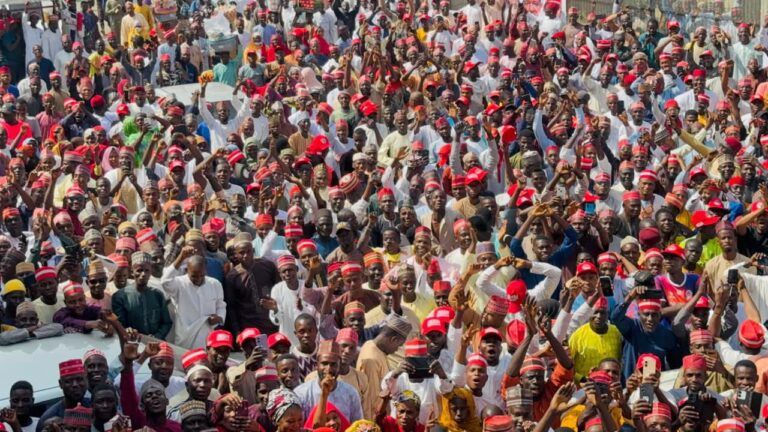
Hundreds of supporters of the Kwankwasiyya Movement on Friday staged a protest at the Kano State office of the Independent National Electoral Commission, demanding the reinstatement of the National Democratic Congress governorship candidate and an investigation into alleged irregularities in the substitution of some candidates.
The protesters, led by the NDC deputy governorship candidate, Mustapha Kwankwaso, submitted a formal petition to the commission on behalf of the governorship candidate, Comrade Aminu Gwarzo.
The movement alleged that an INEC official colluded with unauthorised individuals to facilitate the replacement of some of its candidates.
Receiving the protesters, Kano State Resident Electoral Commissioner, Abdu Zango, acknowledged their complaints and assured them that the petition would be forwarded to the commission’s national headquarters for consideration.
Zango explained that INEC had provided reasons for the omission of some candidates and given affected political parties until October 24, 2026, to challenge the decision.
“Basically, what they came to do is to present a complaint about the omission of their candidates. INEC has made the point very clear, the reason for the omission and the fact that there is a window of appeal that has been provided up to the 24th of October,” he said.
The REC praised the protesters for presenting their grievances peacefully, describing the approach as preferable to resorting to violence.
“We received all the complaints and assured the delegation that their petition will receive the necessary attention and we are going to forward it to our national headquarters for consideration.
“I also commended them because that is the most orderly way of presenting such complaints rather than resorting to violence,” Zango stated.
He reiterated INEC’s commitment to neutrality in the electoral process and urged eligible voters in Kano State to collect their Permanent Voter Cards.
According to him, the commission would soon extend PVC collection to Registration Areas to make the exercise more convenient for residents.
Speaking with journalists after submitting the petition, the spokesperson of the Kwankwasiyya Movement, Dr Habib Mohammed, said the protest was intended to secure the reinstatement of the NDC candidates and draw attention to alleged misconduct by an INEC official.
Mohammed accused the official of working with unauthorised individuals to conceal a decision that allegedly resulted in the substitution of some candidates.
“We are also petitioning against a staff here, whom we believe colluded with some unauthorized people to hide a decision which led to substitution of some of our candidates,” he said.
He further alleged that several letters containing suspected forged signatures had been submitted to the commission, leading to the replacement of some candidates affiliated with the movement.
The spokesperson called on INEC to investigate the allegations and establish the circumstances surrounding the purported substitutions.
He warned that the movement might consider further action if the commission failed to address its concerns adequately.
Mohammed, however, acknowledged the REC’s assurance that the petition would be forwarded to INEC’s national headquarters for appropriate consideration.
By Our Reporter
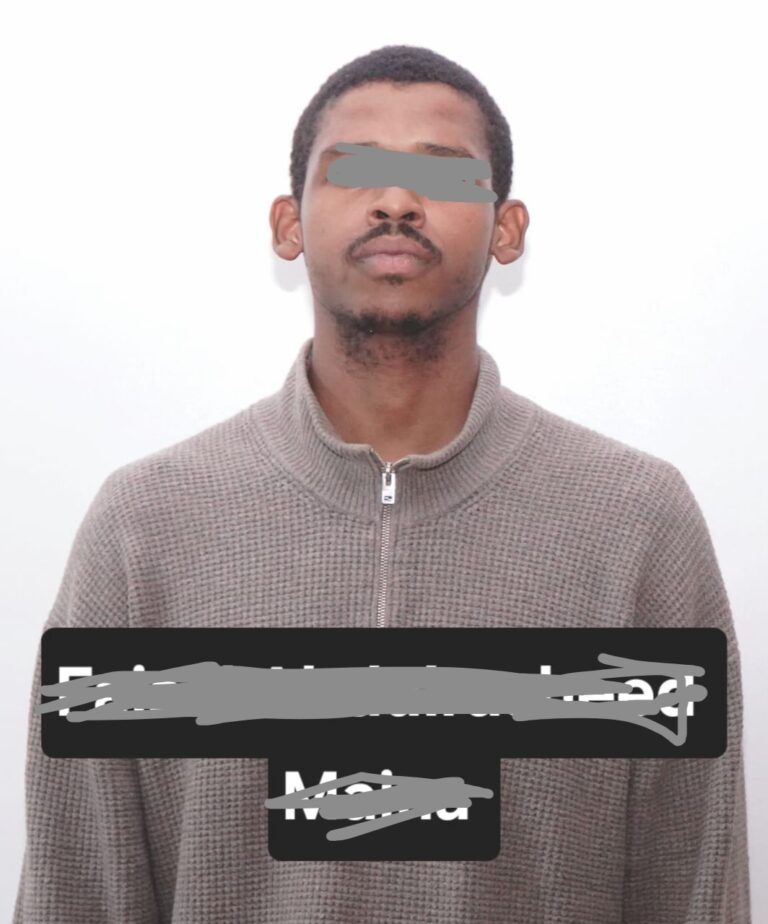
The Department of State Services has arrested Faisal Abdulrasheed Maina, son of former Pension Reform Task Team chairman Abdulrasheed Maina, and transferred him to the Economic and Financial Crimes Commission for further action.
Security sources said Faisal, who had reportedly been at large since 2020, was apprehended by DSS operatives in the Karsana area of Abuja following intelligence indicating that he had returned to Nigeria.
“His arrest followed credible intelligence which indicated that Faisal had secretly returned to the country”, a source revealed.
Faisal was previously prosecuted by the EFCC on a three-count charge bordering on money laundering and conspiracy. He reportedly breached his bail conditions and left the country while the case was pending.
His trial subsequently continued in his absence, leading to his conviction and sentencing to 14 years’ imprisonment by Justice Okon Abang in 2021.
The court had directed that Faisal be arrested wherever he was found within Nigeria and remanded in a correctional facility to serve his sentence. It also ordered the Federal Government to take lawful steps to secure his extradition if he was found outside the country.
The transfer to the EFCC is expected to facilitate the implementation of the court’s judgment and the enforcement of the sentence imposed on him.
“The handover of Faisal to the EFCC is expected to facilitate the enforcement of the Court’s judgment and ensure that he serves his sentence in accordance with the law, ” a source declared
-
General News3 weeks ago
JOHESU demands: MHWUN puts FG on notice over fresh action
-
 General News1 week ago
Rivers 2027: We are not part of Rainbow Coalition – APC Legacy Group slams Wike, Fubara meeting
-
 Politics4 weeks ago
2027: ASAF backs APC governors, rejects rainbow coalition
-

 Politics1 month ago
You have demonstrated diligence, loyalty, statesmanship in leadership, Ekechi salutes Shetimma at 60
-

 Politics2 months ago
2027: Advertising experts raise concerns over irregular regulation of sector
-
FCT News2 months ago
2027: Hasana-Moneme pledges skills, empowerment, credit access for FCT women
-
General News2 months ago
2027: Dame Princess Esom-Nwafor Orizu confirmed as APC flagbearer for Nnewi North /South /Ekwusigo Federal Constituency as INEC releases names of candidates
-
Uncategorized3 months ago
Rescue of Oyo schoolchilden: Tinubu commends security agencies, says action breakthrough in fight against criminality