
General News
UNILORIN VC tasks 11,213 graduands on national development, says Degrees must provide solutions

Our Reporter
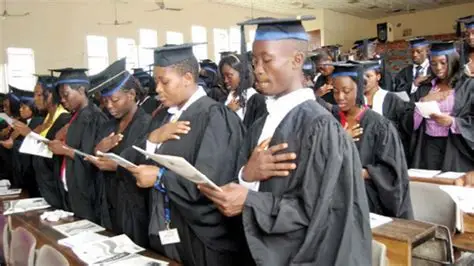
The Vice-Chancellor of the University of Ilorin (UNILORIN), Prof. Wahab Olasupo Egbewole, SAN, has charged the institution’s 11,213 first-degree graduands to translate their academic achievements into practical solutions to Nigeria’s challenges, insisting that their education must yield tangible benefits for society.
Egbewole gave the charge on Wednesday during the university’s 41st convocation ceremony, urging the graduates to justify the sacrifices of their parents, the institution’s investment in their education and their personal efforts by becoming agents of positive change.
Speaking on the theme, “Let This Investment Count,” the Vice-Chancellor challenged the graduands to deploy their knowledge, skills and values towards addressing unemployment, insecurity, inadequate healthcare, food insecurity and moral decline.
“Your certificate is not the end of your journey. It is the beginning of a greater responsibility. The world is waiting for you, and Nigeria needs you,” he said.
He urged the graduates not to join those who merely complain about the country’s problems but to become solution providers capable of creating value, generating employment and contributing meaningfully to national development.
“Do not go into the world merely to join the growing queue of complaints. Go out there to create value and make desired positive change,” Egbewole said.
The Vice-Chancellor identified parental sacrifices, institutional support and personal commitment as the three major investments behind the graduates’ academic achievements, stressing that they must ensure none of them was wasted.
He noted that many parents and guardians had sacrificed personal comforts, postponed ambitions and committed substantial resources to their children’s education.
“The money that could have been used to build a house went towards your accommodation. The money that could have bought a car paid for your textbooks, learning materials and internet data,” he said.
He urged the graduates to honour their parents by supporting them when they were able and demonstrating through their conduct and achievements that the sacrifices made for their education had been worthwhile.
Egbewole also reminded the graduands that they would serve as ambassadors of UNILORIN, warning that their professional competence, integrity and behaviour would shape public perception of the institution.
“Today, we have entrusted that reputation to you. When you leave this campus, you will carry the name of UNILORIN wherever you go,” he said.
The Vice-Chancellor disclosed that 365 of the 11,213 first-degree graduands earned First Class Honours, while 4,367 obtained Second Class Honours, Upper Division, and 5,102 graduated with Second Class Honours, Lower Division.
Another 1,006 graduands obtained Third Class Honours, while 373 fell into other degree classification categories recorded by the university.
The institution also produced graduates in critical professional fields, including 19 in Medicine and Surgery, 89 in Nursing Science, 73 in Pharmacy, 41 in Optometry, 89 in Physiotherapy and 32 in Veterinary Medicine.
In the postgraduate category, Egbewole announced that 4,939 graduands had completed various higher-degree and diploma programmes, including postgraduate diplomas, master’s degrees, professional master’s degrees, Master of Philosophy and Doctor of Philosophy qualifications.
Additionally, 3,511 graduands were expected to graduate through the Centre for Affiliated Institutions.
He described the figures as evidence of the university’s contribution to human capital development, noting that the graduates represented stories of resilience, determination, sacrifice and achievement.
Highlighting the institution’s accomplishments, Egbewole disclosed that three UNILORIN undergraduates secured a combined N150 million under the Federal Government Students Venture Grant competition, receiving N50 million each to support their respective project proposals.
The beneficiaries were Abdullahi Usman Babatunde and Abdulrazaq Abdulrasaq Alatare, both of the Department of Information Technology, and Shehu Abdulrahman Mogoban of the Department of Optometry and Vision Science.
He said the achievement demonstrated the capacity of the university’s students to develop innovative ideas and translate them into practical solutions with economic and social value.
The Vice-Chancellor also announced that Oluwagbemiga Ojobaro, a 600-level Veterinary Medicine student, won the 2025 World Veterinary Association/MSD Animal Health Student Scholarship on March 9, 2026.
The competition attracted more than 1,000 veterinary students worldwide, with the scholarship carrying a cash award of $5,000.
Another 600-level Veterinary Medicine student, Ogundipe Olamide Grace, received a £2,950 summer studentship grant from Applied Microbiology International in the United Kingdom.
In another demonstration of student innovation, six undergraduates from the Department of Telecommunications donated weather-forecasting equipment valued at approximately N500,000 to UNILORIN 89.3 FM.
The Quadrifilar Helix Antenna system is expected to improve the station’s capacity to provide timely and accurate weather information to listeners.
The Department of Microbiology also received scientific equipment valued at €59,846.02 for the XSTAR Project Nigeria. The equipment includes a Luminex MAGPIX system, an ultrasonic bath, microplate shakers and other advanced laboratory instruments expected to strengthen research and scientific collaboration.
Egbewole said the achievements reflected the university’s continued investment in human capital, research, innovation and infrastructure, adding that its facilities and research initiatives were designed to benefit present and future generations.
Meanwhile, the Pro-Chancellor and Chairman of the University’s Governing Council, Surveyor Abiodun Jacob Aluko, called on the Federal Government to increase funding for research in Nigerian universities, describing it as indispensable to national development.
Aluko, who spoke at the same convocation ceremony, said research funding should prioritise practical solutions to the country’s social, economic and technological challenges.
“No nation can develop beyond the level of research conducted in its universities,” he said.
He urged the Federal Government to strengthen support for demand-driven research, noting that universities needed adequate resources to develop innovations that could address societal needs.
The council chairman also celebrated UNILORIN’s improved international rankings, describing them as evidence of deliberate efforts to strengthen research output, academic visibility, citations and teaching quality.
According to him, the university rose from 37th position in Nigeria in the previous year to fifth position in the 2026–2027 U.S. News and World Report Best Global Universities Rankings.
He added that the institution ranked first in Nigeria and 18th in Africa in Aquaculture under the 2026 SCImago Institutions Rankings.
“This giant leap is not by luck. It is the result of deliberate focus on research output, academic visibility, citations, and the quality of our staff and students,” Aluko said.
He traced the university’s growth from its beginnings about five decades ago, when it had 200 students and a handful of staff operating from a temporary site, to its present status as one of Nigeria’s sought-after universities, with more than 50,000 students.
Aluko said the institution’s golden jubilee, celebrated in November 2025, provided an opportunity to reflect on its core values of integrity, discipline and excellence, as well as its record of uninterrupted academic calendars spanning more than two decades.
He commended Egbewole, the management team, Senate, staff and students for sustaining academic stability, improving internally generated revenue, enhancing staff welfare and promoting a stronger academic culture.
The Pro-Chancellor also praised the university’s Faculty of Law and congratulated its graduating students and their parents, noting that the institution continued to produce graduates who distinguished themselves in their chosen professions.
He disclosed that several UNILORIN academics and non-academic staff members had been appointed to leadership positions in other institutions, including vice-chancellors, registrars, bursars and provosts.
“UNILORIN is a leadership factory. When you train people in excellence and integrity, the world comes looking for them,” he said.
Aluko further commended President Bola Ahmed Tinubu’s administration for its interventions in the education sector through the Tertiary Education Trust Fund (TETFund) and the Nigerian Education Loan Fund (NELFUND).
He said TETFund’s support for infrastructure and research had contributed to the development of tertiary institutions, while NELFUND had provided financial relief to thousands of students.
He also praised the Federal Government’s staff welfare and housing loan schemes and its improved engagement with university-based unions, including the Academic Staff Union of Universities (ASUU), the Senior Staff Association of Nigerian Universities (SSANU), the Non-Academic Staff Union (NASU) and the National Association of Academic Technologists (NAAT).
According to him, the relative industrial harmony in the education sector had helped universities sustain their academic calendars without disruption from strikes.
He, however, stressed the need to consolidate the gains through increased investment in university research.
Aluko also appreciated Kwara State Governor AbdulRahman AbdulRazaq for his support and cordial relationship with the university, particularly for hosting delegates to the 37th Conference of the Committee of Vice-Chancellors of Nigerian Universities.
He urged the graduands to uphold the university’s values and represent the institution positively wherever they found themselves.
In his concluding remarks, Egbewole reminded the graduates that their degrees came with responsibilities to their families, the university and the wider society.
“We have given you knowledge. We have encouraged you to embrace character. We have entrusted you with the discipline and values for which UNILORIN is known. Now, go out into the world and provide solutions,” he said.
He congratulated the graduands on behalf of the Governing Council, Senate and Management, while appreciating parents, guardians, staff and other stakeholders for their contributions to the university’s progress.
The Vice-Chancellor ended his address with a message that captured the central responsibility facing the new graduates: “Let this investment count!”

By Prosper Okoye
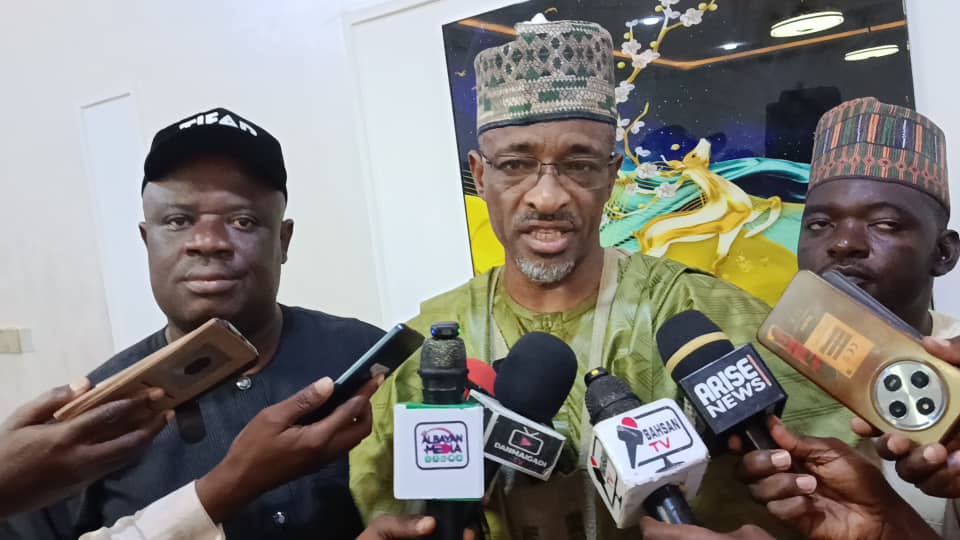
Hassan Umar Dangaladima has won the All Progressives Congress (APC) primary for Kaura Namoda and Birnin Magaji federal constituency in Zamfara State, securing 9,416 votes in an exercise preceded by security concerns and attacks on party members.
His opponent, Aminu Sani Jaji, polled 661 votes, according to the result announced by the party’s electoral committee.
The declaration was made by Mustapha Muhammed, acting chairman of the APC electoral committee from the party’s national headquarters, who served as the returning officer.
Muhammed said Umar met the party’s constitutional requirements and electoral guidelines, formally declaring him the winner of the primary.
The election took place against a backdrop of security concerns following attacks by suspected political thugs that reportedly left several APC members injured and vehicles damaged.
Security agencies subsequently intervened to restore order, allowing the voting exercise to continue.
Speaking to journalists after his victory, Umar thanked party members and constituents for their support, while acknowledging the role of security personnel and electoral officials in conducting the exercise.
He also called for reconciliation among party stakeholders, extending an olive branch to Jaji and urging supporters of both camps to unite ahead of the 2027 general elections.
Umar said unity within the party would be crucial to its prospects in the next general election.
General News
Geosciences Society explores benefits of GeoAI in remote sensing, climate challenges in Africa

By Chidera Orji
Participants at the 2026 IEEE Geoscience and Remote Sensing Society (GRSS) West Africa Summer School have stressed the need for government to embark on critical studies on how geospatial artificial intelligence (GeoAI), remote sensing and Earth observation can help address environmental and climate challenges in Africa.
They made the call at the end of a conference which took place at the Nigerian Institute for Oceanography and Marine Research (NIOMR) Lagos, from 31st October to 4th November, 2026.
The conference dubbed “Summer School”, drew participants from the NNPCL, NGC, Ministry of Environment, Housing, Computer Scientists, Engineers, among others.
They explored opportunities for learning, collaboration, innovation, and professional development, especially on the transformative potential of geospatial technologies, and remote sensing in addressing some of the most pressing environmental and climate challenges facing the West African region.
The gathering brought together industry professionals, researchers, and students with a shared commitment to advancing science and technology for humanity.
The key sponsors of the workshop was the IEEE Geoscience and Remote Sensing Society, drawing distinguished academics including Prof. Lizhe Wang, Prof. Saurabh Prasad, Dr. Anabella Ferral, Dr. Andongma Tende, Ms. Temitope Ajayi, Mr. Ifeanyi Ezealaji, Dr. Victor Okorondu, Dr. Samuel Dekolo, and Dr. Richmon Akwasi Nsiah who provided the knowledge to broaden the expertise, experiences, and insight of the participants.
The host institution, the Nigerian Institute for Oceanography and Marine Research (NIOMR), as well as industry partners, Geospatial Research Limited and Huawei Technologies Nigeria, provided support and facilities which made the training a huge success.
The General Chair of the event, Engr. Oto-Obong John Effiong, and Chair of the IEEE Nigeria Section, Prof. Ifeyinwa Achumba, spelt out the ground rules, encouraging participants to remain focused through the discussions.
Delivering the keynote address, Engr. Abdulhafis Gbolahan, FNSE, Permanent Secretary of the Lagos State Ministry of Housing, spoke vividly on how urban development and increasing heat exposure affect housing and environmental conditions in Lagos State, while Dr. Adongma Wanduku who the first technical lecture, “Fundamentals of Remote Sensing and Earth Observation”, introduced the paerticipants to the use of remotely sensed data in environmental monitoring, climate action, weather forecasting and disease control, and explained how these data can inform decisions.
Also, Mrs. Temitope Ajayi of the University of Basilicata, Italy, took the participants on an excursion on how her background in electronics and computer science in Nigeria and her participation in an academic programme sparked her interest in remote sensing.
Dr. Saurabh Prasad delivered a lecture “From Observation to Understanding: AI and Earth Observation”, explaining how artificial intelligence (AI) can help process and interpret remotely sensed data and turn observations into information that supports environmental decision-making.
Engr. Peter Magbo, Chair of the Local Organising Committee, briefed participants on travel and accommodation for the in-person sessions, while Engr. Sandra Nwokoye encouraged the participants to stay curious and apply what they learned to practical problems.
Ifeanyi Peter Ezealaji, one of the key resource persons, led a hands-on session on how QGIS, a geographic information system (GIS) used to analyse and visualise spatial data.
At the end of the academic sessions, participants practised acquiring and importing geospatial data into QGIS, merging datasets, cleaning records and removing unwanted data, clipping datasets to defined geographical boundaries, working with coordinate reference systems, as well as organising and processing spatial data for further analysis.
Equally lined up as part of the practical training, the participants embarked on a guided tour to the Nigerian Institute for Oceanography and Marine Research to secure hands-on knowledge on how its research and monitoring support the study and management of marine environments.
By Our Reporter
The Independent National Electoral Commission (INEC) has removed artificial intelligence-generated photographs uploaded to the national voters’ register and flagged officials implicated in the practice across 10 states for disciplinary action.
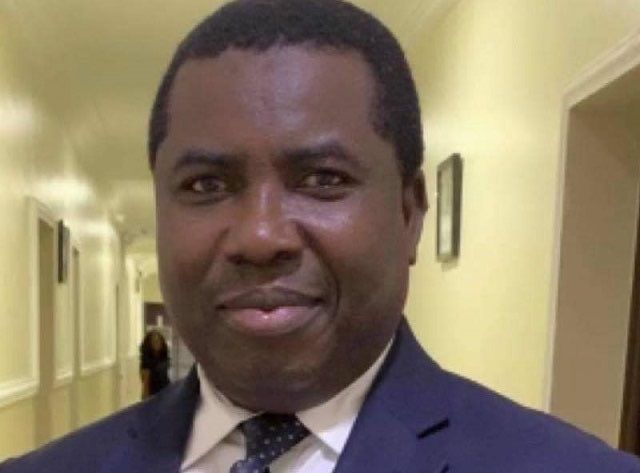
INEC National Commissioner, Mohammed Haruna, disclosed this on Wednesday during a webinar organised by the PUNCH Media Foundation, titled ‘AI, Misinformation and Nigeria’s 2027 Elections: Safeguarding the Truth, Protecting the Vote’.

Haruna, who is also Chairman of the commission’s Information and Voter Education Committee, described the development as a major challenge, noting that the commission had already taken down AI-generated photographs identified on the voters’ register.
He, however, acknowledged that INEC faced limitations in preventing members of the public from manipulating or enhancing their photographs before uploading them during voter registration.
The commissioner said the commission had also identified cases involving its own personnel and was taking steps to address the violations.
“We have already seen one of the challenges, which is that a lot of AI-generated photographs were posted onto the voters’ register, which, as we have said, we have had to take down,” he said.
Haruna explained that while it might be difficult for the commission to prevent members of the public from manipulating their photographs before submission, it had greater control over violations involving its officials.
“But the ones involving our own staff, where it is our own staff that did so, that one is within our control. We are in the process of addressing it. They have been flagged,” he said.
He disclosed that the commission had obtained the names of the officials involved across about 10 states, adding that they would face disciplinary action.
“We have their names across about 10 states, and obviously, they are going to face disciplinary action,” he added.
On INEC’s preparedness to regulate the use of artificial intelligence in the electoral process ahead of the 2027 general elections, Haruna said the commission had developed an AI policy but was working to finalise it.
He noted that the rapid evolution of artificial intelligence had created regulatory challenges for countries across the world, including advanced democracies.
According to him, the evolving nature of the technology has made it difficult for governments to establish comprehensive and specific regulatory frameworks.
“As you know very well, it is new territory out there. Even the most advanced countries don’t have what you might call concrete, specific policies about AI because these things are evolving,” he said.
Haruna, however, said INEC had developed ideas on how it intended to deploy and regulate the technology, assuring that the policy would soon be finalised and made available to the media.
“But we have at least some ideas of what we want to do and how we want to use that. We have that policy. Very soon, we will concretise it, and we will be able to share it with the media,” he said.
-

 General News1 month ago
Rivers 2027: We are not part of Rainbow Coalition – APC Legacy Group slams Wike, Fubara meeting
-

 Politics2 months ago
2027: ASAF backs APC governors, rejects rainbow coalition
-
General News2 months ago
JOHESU demands: MHWUN puts FG on notice over fresh action
-

 Politics2 months ago
You have demonstrated diligence, loyalty, statesmanship in leadership, Ekechi salutes Shetimma at 60
-

 Politics3 months ago
2027: Advertising experts raise concerns over irregular regulation of sector
-
FCT News3 months ago
2027: Hasana-Moneme pledges skills, empowerment, credit access for FCT women
-
General News3 months ago
2027: Dame Princess Esom-Nwafor Orizu confirmed as APC flagbearer for Nnewi North /South /Ekwusigo Federal Constituency as INEC releases names of candidates
-
Uncategorized4 months ago
Rescue of Oyo schoolchilden: Tinubu commends security agencies, says action breakthrough in fight against criminality