
Cover page
NCDC confirms two new Ebola cases, establishes 53 contacts

- Center spends N100k on each contract person in isolation centre, seeks states’ support
- Healthcare facilities urged to maintain high level of suspicion
By Chidera Orji
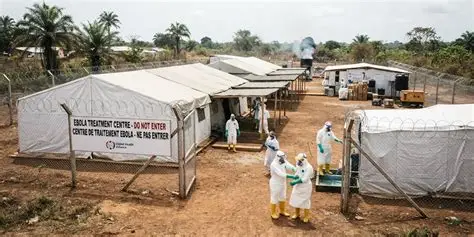
The dreaded Ebola disease has continued to spread in Abuja, the Federal Capital Territory (FCT), as the Nigerian Centre for Disease Control and Prevention has confirmed additional two cases, increasing the total index case to three, barely one week after the first case was identified.
This is even as the center said it is currently monitoring 53 contacts, with an additional nine identified after an initial 43 people who were linked to the health facility where the first patient was treated, as investigations expand to an emergency room she visited earlier.
The Director-General of the NCDC, Dr Jide Idris, who disclosed this at a press briefing on Sunday, provided an update on the contact-tracing exercise, explaining that health officials were also identifying secondary contacts to establish the extent of possible exposure and prevent further transmission of the disease.
Recall that the World Health Organisation (WTO), had earlier identified the first index case as a woman who recently travelled from Uganda, noting that she developed symptoms on October 7 and sought medical attention on October 11 before her infection was confirmed.
The NCDC Director General, who disclosed that the agency had identified nine additional primary contacts, said they include three household members of the patient and people who attended to her at an emergency room before she arrived at the facility where Ebola was subsequently confirmed.
“We have established two additional suspected cases and 53 primary contact links. We have an isolation centre and a quarantine centre,” he said.
He explained that the NCDC has about 12 public and private laboratories equipped to test for Ebola, stressing that laboratory capacity has been strengthened to contain any potential spread.
According to him, the agency is sustaining heightened surveillance across the country and improving its lab systems to ensure all suspected cases are quickly investigated and tested.
The NCDC boss called on health facilities, both public and private, to reinforce their screening, triage and infection prevention protocols, and to ensure that health workers are provided with adequate personal protective equipment.
He added that public health teams have been deployed to identify and follow up on individuals who may have been exposed to the confirmed case, with monitoring to last for 21 days from their last possible exposure.
He said, “As of now, we have 53 primary contacts. Of these, 44 are people from that health facility where the patient was treated.”
He noted that contact-tracing was not limited to people who had direct interactions with the patient, adding that investigators were also seeking to identify people who might have subsequently been exposed through those already listed.
“For each person, we are going to ask questions. We have to establish who they have been in contact with. If we can identify those people, they will also be monitored,” he said.
He further disclosed that the agency had begun tracing people who attended to her during the earlier visit, adding that three people who provided care to the patient at the emergency room were among the additional contacts identified, adding that the investigation also covers healthcare personnel involved in collecting samples from the patient, highlighting the importance of infection prevention and control procedures during the management of suspected cases.
Idris said the agency was working to strengthen infection prevention and control measures in health facilities, while acknowledging the need to improve preparedness and expertise at the state and local levels.
“When our infection prevention and control teams visit a facility, they assess the systems in place and identify areas that need to be corrected.
“Capabilities and competencies at the subnational level are not as high as they should be. We are responsible for building those capabilities. That is why training is one of our most important priorities,” Idris said.
The agency said contacts without symptoms would be monitored, including through temperature checks, while anyone developing symptoms would require immediate assessment and appropriate intervention.
Meanwhile, the federal government has urged public and private healthcare facilities to maintain a high level of suspicion, promptly isolate suspected cases, observe infection prevention protocols and report suspected infections to public health authorities.
The NCDC further disclosed that it has approved an emergency payment of N100,000 per person weekly to support families of people placed in isolation or quarantine as part of efforts to contain the Ebola outbreak in the Federal Capital Territory.
The NCDC Director-General, Dr Jide Idris, explained that the financial support was an emergency measure to ensure that people identified as contacts could comply with monitoring arrangements without facing additional financial hardship.
“We are paying for their accommodation; we are paying for their feeding. Some of them are asking for a stipend to maintain their families
“We introduced the payment after some contacts raised concerns about feeding, accommodation and how to take care of their families while under monitoring. The support is to ease their financial burden and encourage them to cooperate with health officials.
“This was not planned for, but it is an emergency. We will continue to review it as we go along,” Idris said.
Idris also called on state governments to prepare financially and logistically for public health emergencies.
He stressed that the responsibility for containing outbreaks should not rest on the FCT alone.

*** Seeks Reps’ approval to issue N269.45bn promissory notes
*** Loan request, campaign slush fund – Atiku, urges NASS to reject request
By Sam Otuonye
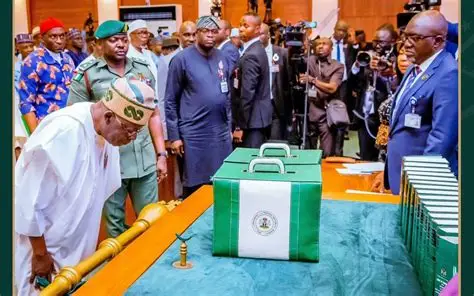
President Bola Tinubu has again asked the Senate to approve a supplementary external borrowing plan of $20.52 billion and €1.05 billion for 2026–2027 to finance critical infrastructure and development projects across Nigeria.
The request was contained in a letter addressed to Senate President Godswill Akpabio and read during plenary on Tuesday.
Tinubu said the proposed funds would support key sectors, including power, transportation, healthcare, agriculture, education, water supply, security and employment generation, while strengthening public financial management reforms.
But in a swift reaction to the news loan request, African Democratic Congress, ADC, presidential candidate, Atiku Abubakar, on Tuesday said President Bola Tinubu’s request for approval to borrow $20.52 billion and €1.045 billion vindicates his warning of a plot to borrow money to fund the 2027 election.
Tinubu explained that the news borrowing was intended to address Nigeria’s infrastructure deficit and bridge the funding gap for projects considered important to the country’s socioeconomic development.
He disclosed that the proposed projects and programmes were selected following technical and economic evaluations, with consideration given to their expected contributions to national development.
According to the President, most of the projects would be implemented across Nigeria’s 36 states and the Federal Capital Territory.
He argued that substantial investment remained necessary to address longstanding infrastructure challenges and support economic growth.
“In light of the need for significant infrastructure investment in the country and the vast financial resources needed to address this gap, it has become essential to pursue prudent external borrowings to close the financing shortfall,” Tinubu said.
He urged the Senate to give the request urgent consideration, saying approval would allow the government to meet its obligations to Nigerians through timely fund disbursement and effective project implementation.
Akpabio said the borrowing plan had featured in the Federal Government’s previously approved borrowing programme.
“The borrowing plan is attached, but of course, this was even earlier approved in our budget, and also the external borrowing plan was approved as far back as 2025 to 2027,” the Senate President said.
He subsequently referred the request to the Senate Committee on Local and Foreign Debts for further legislative consideration, in collaboration with the Committees on Appropriations and Finance.
The committees are expected to review the proposal as part of the Senate’s consideration of the government’s external financing plans.
In another letter on Tuesday, President Bola Tinubu asked the National Assembly to approve the establishment and expansion of the federal government’s Promissory Note Programme to settle outstanding verified liabilities amounting to ₦269.44 billion.
The request was conveyed in a letter dated August 18, 2026, signed by the Secretary to the Government of the Federation (SGF), Senator George Akume and addressed to the Speaker of the House of Representatives, Tajudeen Abbas.
In the letter, received by the Office of the Speaker on October 2, 2026, as announced by Abbas during Tuesday plenary, the President sought legislative approval for the issuance of promissory notes worth ₦269,446,402,822.56 to settle outstanding contractual, project-related and other verified financial commitments owed by the Federal Government.
Akume said the request followed a comprehensive review of outstanding obligations by relevant ministries, departments and agencies, adding that the President had approved the proposed expansion of the programme to provide a mechanism for settling the liabilities.
According to the letter, the programme is intended to establish a structured, transparent and fiscally responsible framework for settling outstanding obligations while ensuring that only duly verified and validated claims are admitted for settlement.
The SGF explained that “the implementation would comply with applicable laws, existing financial regulations and established procedures for public debt management”.
He said the initiative would also help mitigate the continued accumulation of interest, penalties and other financial costs associated with outstanding liabilities, while providing relief to affected creditors and strengthening confidence in the Federal Government’s commitment to honouring legitimate obligations.
Akume noted that “the Promissory Note Programme had previously been used to settle inherited local debts and contractual obligations, with the earlier arrangement receiving Federal Executive Council approval before being subjected to National Assembly approval”.
The President is now seeking legislative authorisation for the establishment and expansion of the programme, the issuance of promissory notes up to the proposed amount, and the inclusion of identified categories of liabilities and beneficiaries, subject to final verification, reconciliation and certification by relevant government agencies.
The request also seeks authorisation for the Minister of Finance and Coordinating Minister of the Economy, working with the Debt Management Office and other relevant agencies, to take the necessary steps to implement the programme.
Akume said the arrangement would facilitate the orderly settlement of outstanding obligations without imposing an immediate and disproportionate cash-flow burden on the Federal Government, as repayment obligations would be spread over an appropriate period in line with prudent debt management principles.
He urged the National Assembly to “give the request urgent consideration, warning that the magnitude and age of some outstanding liabilities could lead to further accumulation of interest and associated costs if approval was delayed”.
The SGF added that the detailed schedule of liabilities, including the relevant categories, beneficiaries, amounts and supporting documentation, had been forwarded to the National Assembly for its information and consideration.
He expressed confidence that the House of Representatives would accord the request expedited consideration in the national interest, saying approval would support fiscal sustainability, enable the government to honour legitimate obligations and promote confidence in the Nigerian economy.
Meanwhile, the proposed borrowing comes amid an increase in Nigeria’s public debt stock.
Nigeria’s total public debt rose to N166.79 trillion as of June 30, 2026, from N159.35 trillion at the end of March, according to data from the Debt Management Office (DMO).
Domestic debt accounted for N91.59 trillion, representing 54.91% of the total debt portfolio.
The country’s debt stock has also increased significantly since Tinubu assumed office in 2023. DMO data showed that Nigeria’s total public debt stood at N87.38 trillion as of June 30, 2023.
External and domestic debt have both grown since then. Nigeria’s external debt rose from $42.49 billion in December 2023 to $51.86 billion by December 2025, while domestic debt increased from N59.1 trillion to N89.4 trillion over the same period.
Former Vice President Atiku Abubakar said the President Tinubu’s failure to identify the specific projects the loans would fund raises serious concerns that borrowed public money could be channelled through the Lagos–Calabar Coastal Highway, now rerouted inland, to political campaigners and favoured contractors.
In a statement issued by Phrank Shaibu, Director of Strategic Communication of the ADC Presidential Campaign Council, Atiku described the intended loan as a slush fund.
He said: “On October 12, I warned Nigerians that President Tinubu was reportedly preparing to borrow up to $20 billion in connection with the Lagos–Calabar Coastal Highway. I asked him to confirm or deny the plan and publish the accounts. He did neither. Today, he has asked the Senate to approve $20.52 billion and €1.045 billion in external loans. My warning has been vindicated.
“The President has listed broad sectors but has not provided a project by project account of what this enormous borrowing will fund. Nigerians have not been given clear project details, costs, locations or contractors to scrutinise.
“That silence is especially troubling given the highway’s inland rerouting. Nigerians have every right to ask whether it is becoming a pipeline for borrowed money to reach Tinubu’s campaigners and favoured contractors.
“Barely 12 weeks before an election, how can the President ask lawmakers to saddle Nigerians with more than $20 billion and €1 billion in debt without identifying the projects and their costs? Is this a development plan for Nigerians or a campaign financing scheme dressed up as infrastructure?
“You cannot continue taking frivolous loans on the eve of your departure from office. Let it be on record that one of the first responsibilities I will undertake as President is to scrutinise and investigate every kobo borrowed, especially loans taken in the final year of your tenure. Nigerians will ask questions, and we will find the answers by every lawful means.
“I put local and international lenders on notice: any loan granted to this winding down administration must meet all constitutional, statutory and due process requirements. Upon assumption of office, I will scrutinise every such loan. Any borrowing found to have been obtained without proper authorisation or process will be challenged and will not be allowed to stand.
“The National Assembly must not approve a single dollar until the President publishes every project, contract, cost, contractor, loan term and repayment obligation. No public money should be borrowed in the dark, and no lawmaker should sign a blank cheque against Nigeria’s future.”
***Operators demand more conversion centers, dispensing stations
From Ladan Yusuf Paiko (Minna)
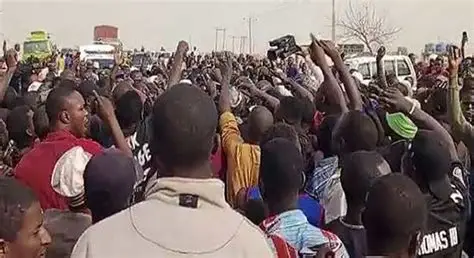
As Nigerians continue to groan over the increase in petrol price, motorists who have converted their vehicles to use the federal government’s introduced Compressed Natural Gas (CNG), in Minna the Niger state capital, on Sunday , staged a protest, over the non availability of both conversation centers and CNG stations in the state.
Recall that the federal government had recently urged the federating states to cue into its plan to reduce the suffering of Nigerians over the current high price of petrol and cost of living, by embracing the newly introduced Presidential Initiative on CNG (PI CNG).
The federal government, therefore, tasked the states to purchase more CNG and electric-powered buses as well as encourage the establishment of additional CNG conversion and dispensing centers across the states.
DISCLOSURE News correspondents across the states report that the federal government October 1 mandate for the reduction of transport fares through the measures have not yielded any results as the states are yet to cue into its demands for the introduction of more CNG and Electric buses and conversation centers.
Protesting over the non availability of the CNG stations, motorists besieged the Nigerian National Petroleum Corporation Limited (NNPCL) mega station at Minna, the state capital in protest over the non availability of the Compressed Natural Gas (CNG).
The protesters, who complained bitterly of spending days at the few available station before they could get the CNG, lamented that the non availability of the product has defeated the aim of converting their vehicles to CNG, which they did as a cost-saving measure.
They expressed frustration over their experiences at the the NNPC Mega Station along the Western Bypass axis the reported only station that dispenses the product on in the state, adding the station has also been without CNG for several days.
It was however gathered that the station had the CNG product, but could not dispense because the component of the machine had developed a fault, leaving several motorists with CNG engines in the entire state capital with no alternative but to rely on the more expensive PMS.
This complained that the persistent shortage has imposed additional financial burdens on vehicle owners, who now face increased transportation costs while struggling to keep their vehicles running.
Some of the protesting motorists, who spoke to our correspondent at NNPCL station, complained that they have been put out of business for several days following the non availability of the CNG product in the state, adding that their frequent visits to the station had yielded no answers.
“It is so discouraging, that for three months now, the CNG station at NNPC Minna has not functioned. Imagine that since January some people did conversion, they have not recovered their money.
“The CNG broke down, nobody has spoken to us. We have come here several times demanding answers from the management and nobody is talking.
“So for now, we want to bring the attention of Nigerians and those in authority to the situation in Minna. CNG is the heartbeat of the President. He commissioned a committee to look into these scheme and these people are taking us for granted
“The frustrating aspect of all this is that I just installed CNG, spending over a million naira, without a single gas in Minna; hoping that it is going to be fixed today, it is going to be fixed tomorrow and up to this moment, there is nothing.
“Nobody is saying anything, the station is just lying fallow. In short, I have to disconnect some of the cylinders Installed in my car because there is no gas, what kind of government are we in? It is frustrating”.
The protesters however called on the Niger state government to wade into the issue and save the suffering motorists and Niger state residents by urging the management of NNPCL to urgently address the situation and restore CNG supply to motorists in the state.
*** Meeting with FG ends in deadlock, adjourned to October 27
***NEC approves 90-day plan to ease crisis
By Sam Otuonye
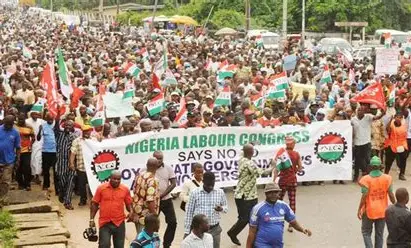
The Nigeria Labour Congress and the Trade Union Congress have directed its state chapters and other affiliate bodies to mobilise their members for an impending indefinite nationwide strike, following what it described as the federal government’s non commitment to addressing their demands amidst the lingering hardship that has trailed the government’s economic policies for the past three years.
The Nigeria Labour Congress (NLC) had issued a two-week strike ultimatum on October 9, 2026, which expired today, Friday, October 23, 2026.
Among the demands, was a reduction of the pump prices of petrol to 2024 levels to cushion the energy and cost-of-living crises.
The unions also demanded for an immediately commencement of renegotiation of the national minimum wage, as well as full implementation of pending agreements with public-sector and health-sector workers, alongside tax relief and wage.
The ultimatum however led the federal government to fix a meeting with labour for Thursday, 22 October.
But Labour in a statement issued at the end of the meeting, warned of possible nationwide industrial action following unsuccessful talks with the Federal Government over workers’ demands.
The Unions in a joint statement signed by the NLC General Secretary, Benson Upah, and the TUC Secretary-General, Nuhu Toro, alleged that the government delegation lacked the mandate required to negotiate substantively on the issues..
The organised labour, however, said their next steps would depend on the outcome of another meeting scheduled for Tuesday, October 27, adding that their affiliates and state councils had been directed to prepare for possible action if the government failed to make meaningful progress.
The statement said the Minister of Labour requested an adjournment until October 27 to allow the government to prepare adequately and ensure that relevant ministers and heads of departments and agencies attended the next session.
It added that organised labour would remained open to dialogue but would not accept prolonged delays in addressing workers’ concerns.
“No concrete commitments were secured, and the outstanding issues remain unresolved,” the unions said, expressing disappointment with the outcome of the meeting.
“We will report back to our organs, and if no meaningful progress is made on Tuesday, the relevant organs of the NLC will decide the next line of action,” the statement added.
Labour also urged its affiliates, state councils and civil society allies to remain vigilant and begin preparations for possible nationwide action pending the outcome of the next meeting.
The unions, however, appealed to workers and members of the public to remain calm, expressing hope that the government would address their concerns at the rescheduled talks..
It added that Labour would attend the next meeting in the hope of securing progress, but warned that with any decision on industrial action would be taken by their respective organs if the talks fail to produce meaningful results.
Meanwhile the National Economic Council (NEC) has approved a 90-day economic action plan designed to reduce the cost of living, improve access to affordable food and attract investments across the country.
The approval followed an initiative by the Federal Ministry of Finance at it’s 161st meeting chaired virtually by Vice President Kashim Shettima on Thursday
According to a statement issued by Stanley Nkwocha, Senior Special Assistant to the Vice President on Media and Communications, the plan focuses on five priority areas: food affordability, tax harmonisation, completion of critical infrastructure projects, removal of investment bottlenecks and regulated household support.
The council also approved the establishment of a national dashboard to monitor projects nationwide and promote transparency and accountability, particularly in tracking the utilisation of funds generated from the removal of the petrol subsidy.
Speaking during the meeting, Shettima urged state governors and relevant government agencies to ensure that the benefits of President Bola Tinubu’s economic reforms translate into tangible improvements in the lives of Nigerians.
“The first dividend of prosperity should be the confidence to plan a life. Our task is to make such confidence less dependent on fortune,” the vice president said.
“Our separate mandates must not become competing excuses. Each governor carries knowledge that no federal document can supply,” he said.
On transportation, the vice president said the success of the National Compressed Natural Gas Bus Initiative should be determined by its impact on commuters’ expenses rather than the number of vehicles deployed.
“The cost of reaching a livelihood should never consume the livelihood itself. The passenger’s experience must guide our ambition, because the value of public transport resides in the journeys it makes possible. We should assess success through affordability and access, rather than fleet size alone,” he said.
-
 General News3 weeks ago
Rivers 2027: We are not part of Rainbow Coalition – APC Legacy Group slams Wike, Fubara meeting
-
General News1 month ago
JOHESU demands: MHWUN puts FG on notice over fresh action
-
 Politics1 month ago
2027: ASAF backs APC governors, rejects rainbow coalition
-

 Politics2 months ago
You have demonstrated diligence, loyalty, statesmanship in leadership, Ekechi salutes Shetimma at 60
-

 Politics3 months ago
2027: Advertising experts raise concerns over irregular regulation of sector
-
FCT News2 months ago
2027: Hasana-Moneme pledges skills, empowerment, credit access for FCT women
-
General News3 months ago
2027: Dame Princess Esom-Nwafor Orizu confirmed as APC flagbearer for Nnewi North /South /Ekwusigo Federal Constituency as INEC releases names of candidates
-
Uncategorized4 months ago
Rescue of Oyo schoolchilden: Tinubu commends security agencies, says action breakthrough in fight against criminality