
Health and Life-Style
NCDC identifies 2 more suspected Ebola cases in North-East

By Our Reporter
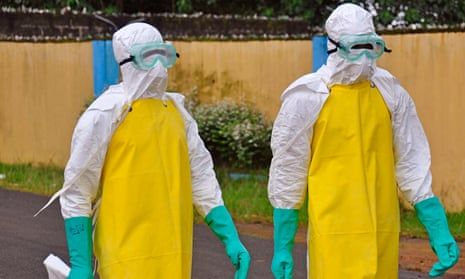
The Nigeria Centre for Disease Control and Prevention (NCDC) has reported two suspected cases of Ebola disease in the north-east, with the affected individuals already isolated as health authorities intensify efforts to establish their infection status.
The agency disclosed this in an update on Saturday, October 31, 2026, noting that contact identification and listing were ongoing, while laboratory tests were being conducted on the suspected cases.
However, the NCDC cautioned against treating the suspected infections as confirmed cases, stressing that only laboratory results could establish whether the individuals had contracted the virus.
“Being classified as suspected cases does not mean they are confirmed Ebola cases; confirmation is subject to laboratory results,” NCDC said.
The agency urged Nigerians to observe proper hand hygiene, maintain improved sanitation and adhere to public health guidelines to minimise the risk of possible transmission.
It also assured the public that additional information would be made available as verified details emerge.
The development comes less than two weeks after Nigeria recorded its first Ebola case in more than a decade, following the confirmation of the Bundibugyo strain in a 42-year-old Swiss woman in Abuja on October 20.
The woman had travelled from Uganda to Nigeria before testing positive for the virus and was subsequently isolated and placed under medical care by Nigerian health workers.
On Monday, the Federal Government evacuated her to Switzerland aboard a medical aircraft. Her husband, who was identified as a close contact, was also flown to the European country.
The Coordinating Minister of Health and Social Welfare, Ali Pate, had earlier disclosed that the patient was clinically much improved, stable, conscious and able to communicate, with her laboratory results reportedly approaching baseline levels.
The latest suspected cases have further drawn attention to the need for heightened disease surveillance and strict adherence to preventive health measures.


By Chidera Orji
The Nigeria Centre for Disease Control and Prevention (NCDC) has reported two additional suspected cases of Ebola
virus disease, bringing 53 primary contacts under identification and monitoring efforts.
The Director-General of the NCDC, Jide Idris, disclosed this at a press briefing in Abuja on Sunday, October 25, 2026.
The latest development comes amid ongoing surveillance efforts by the public health agency to identify suspected infections and trace individuals who may have been exposed to the virus.
However, details about the two suspected cases, including the locations where they were identified and the health status of the individuals involved, were not immediately available.
The NCDC is expected to provide further information as investigations and public health assessments continue.
General News
FG cautions 15 states over Ebola preparedness, orders hospitals to set up isolation beds
By Our Reporter
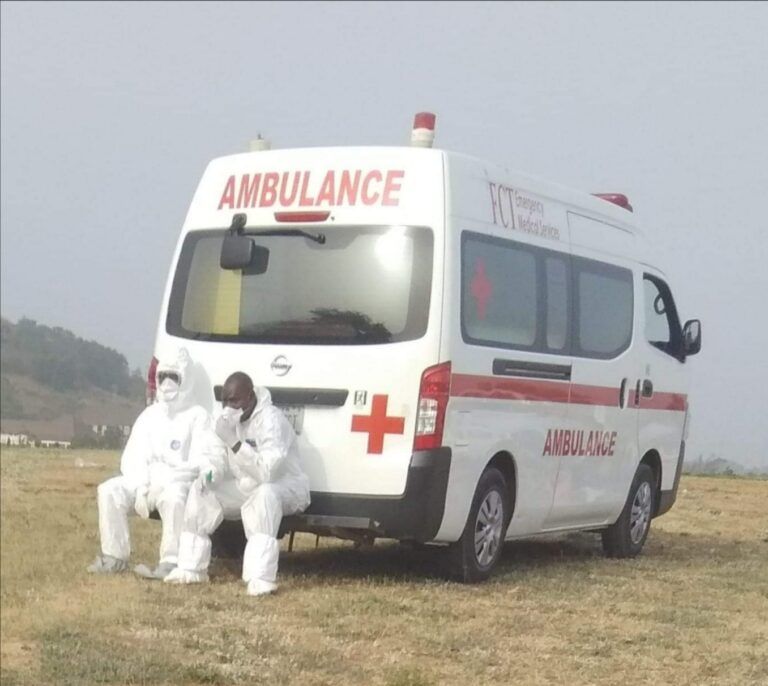
The Federal Government has urged 15 states to urgently strengthen their preparedness for Ebola, warning that delays in updating response plans could undermine efforts to contain the disease following the confirmation of an imported case in the Federal Capital Territory (FCT).
The government has also directed hospitals across the country to provide adequate isolation beds, reinforce infection prevention measures and prepare health workers to manage suspected cases.
The Coordinating Minister of Health and Social Welfare, Prof. Muhammad Pate, disclosed this during a briefing in Abuja on the government’s response to the outbreak, stressing the need for coordinated action by federal and state authorities.
According to him, 21 states have updated their Ebola response plans, while the remaining 15 have been directed to accelerate preparations and establish appropriate mechanisms for responding to a possible spread of the virus.
“We have notified all our hospitals to make room for bed capacity, isolation, and prepare their health workers in terms of infection prevention in these cases, because health workers are on the front lines,” Pate said.
He explained that the Federal Government was coordinating the response through the Nigeria Centre for Disease Control and Prevention (NCDC), with support from the World Health Organisation (WHO) and the Africa Centres for Disease Control and Prevention.
Pate said the authorities were taking measures to prevent the infection from spreading beyond the confirmed case, adding that surveillance, contact tracing and the readiness of healthcare facilities remained central to the containment strategy.
“We don’t want it to go beyond it, and there is no need to panic, but we have to be vigilant,” he said.
The minister disclosed that the government had activated its incident management system, with the NCDC working alongside FCT authorities and other relevant agencies to monitor the situation and coordinate emergency operations.
He added that the government was engaging state governments to ensure that hospitals outside Abuja were also prepared to identify, isolate and manage suspected infections.
Pate said most states had developed response plans with guidance from the NCDC, but some were yet to complete the process.
“Most of the states have already response plans, which were developed with the guidance of the NCDC. Those that have not finished their response plans, we’ve asked them to quickly finish their response plans,” he said.
As part of efforts to improve coordination, the minister announced plans to meet state commissioners of health on Friday. Commissioners of information would also be invited to strengthen public communication and ensure a coordinated response.
He urged private hospitals to improve disease surveillance, promptly report suspected Ebola cases and work closely with public health authorities.
The minister said private healthcare providers had an important role to play because the woman whose infection was confirmed had visited a private medical facility before the diagnosis.
“The private sector is important because, as you saw, this case went to a private facility. In 2014, it was a private facility,” he said.
Pate warned healthcare practitioners against managing suspected cases without notifying the relevant authorities. He also urged them to remain alert to symptoms that could indicate Ebola, particularly among patients with relevant travel histories or possible exposure to the virus.
The minister disclosed that additional funding had been made available to the NCDC to strengthen response activities, while international health organisations were providing technical support.
The government has also enlisted Prof. Christian Happi, a genomics expert at Redeemer’s University, Ede, to support investigations into the virus.
According to Pate, genomic sequencing would be conducted to improve understanding of the virus and provide scientific evidence to guide containment measures.
The outbreak is linked to the Bundibugyo strain of the Ebola virus, which has also been reported in the Democratic Republic of the Congo and other countries in the region. The strain differs from the Zaire ebolavirus responsible for the major West African outbreak between 2014 and 2016.
Pate advised Nigerians experiencing symptoms such as fever, headaches and muscle aches, especially those with relevant travel histories or possible exposure, to isolate themselves and promptly contact public health authorities.
The minister reiterated the need for states to strengthen their emergency response systems while briefing the National Economic Council (NEC) at its 161st meeting, held virtually and chaired by Vice President Kashim Shettima.
According to a statement issued on Thursday by Stanley Nkwocha, Senior Special Assistant to the Vice President on Media and Communications, Pate briefed the council on the reported Ebola situation in the FCT.
The minister reassured council members that Nigeria had the institutions and expertise required to contain the outbreak, while highlighting coordination, screening at points of entry, laboratory testing, logistics and the availability of personal protective equipment as essential elements of the response.
“Pate identified coordination and governance, detection at points of entry, laboratory testing capacity, logistics for essential kits and personal protective equipment, and effective strategic communication as critical components of the response.
“The minister acknowledged the efforts of 21 state governments that had updated their response plans and urged the remaining 15 states to expedite the establishment of appropriate preparedness and response mechanisms,” the statement read.
Pate said Nigeria had previously managed an Ebola outbreak successfully and possessed the public health institutions needed to respond to the current situation.
“The Federal Government has competent authorities to deal with this. We have done it in 2014, and we have good public health institutions. Nigerians should be reassured.
“We must be vigilant, but not panic. People should respect public health information from trusted sources and not spread misinformation and false rumours,” Pate added.
The minister promised regular updates on the outbreak and said he expected to receive a report on the case

By Our Reporter
Ali Pate, coordinating minister of health and social welfare, says Nigerians should remain vigilant, shun panic, and stop spreading misinformation about Ebola virus disease.
Speaking on Wednesday after meeting with Femi Gbajabiamila, chief of staff to the president in Abuja, Pate said citizens should rely on verified public health information from trusted sources rather than circulating false rumours.
The minister said the federal government is collaborating with Uganda to manage the situation.
“All I can tell you is that we are collaborating with our sister African nation of Uganda,” Pate said.
“What is important is that we have found this one case. We are doing contact tracing, and we are putting containment measures to ensure that it doesn’t go into our population.”
He urged Nigerians to remain calm and communicate responsibly, adding that the situation should be taken seriously without causing fear.
“Nigerians should be reassured. We must be vigilant, but not panic, and people should respect public health information from trusted sources, and not spread misinformation and false rumours,” Pate said.
The minister said Nigeria has the public health institutions and expertise needed to respond to the situation.
Pate added that the Nigeria Centre for Disease Control and Prevention (NCDC) had activated its incident management system (IMS), with response teams working round the clock and the relevant task force coordinating containment efforts.
“They are working 24/7, and the task force is also active. So, we have things in place that give us confidence that Nigeria can weather this public health crisis,” he said.
He said the government would continue to monitor developments and provide updates as verified information became available.
“If the situation changes, we’ll come out and inform Nigerians,” he said.
Pate reiterated that the immediate priority was to contain the imported case and prevent its spread within the population.
The meeting between Pate and Gbajabiamila came nearly 24 hours after the federal government announced a confirmed case of Ebola disease in the Federal Capital Territory (FCT).
On Tuesday, Pate said 44 close contacts had been identified for tracing to prevent further transmission.
He added that the patient, a woman who recently arrived in Nigeria on an international flight from Uganda, had been admitted to a private hospital in the FCT, where she received care for several days before the diagnosis was confirmed.
-

 General News3 weeks ago
Rivers 2027: We are not part of Rainbow Coalition – APC Legacy Group slams Wike, Fubara meeting
-
General News1 month ago
JOHESU demands: MHWUN puts FG on notice over fresh action
-

 Politics1 month ago
2027: ASAF backs APC governors, rejects rainbow coalition
-

 Politics2 months ago
You have demonstrated diligence, loyalty, statesmanship in leadership, Ekechi salutes Shetimma at 60
-

 Politics3 months ago
2027: Advertising experts raise concerns over irregular regulation of sector
-
FCT News3 months ago
2027: Hasana-Moneme pledges skills, empowerment, credit access for FCT women
-
General News3 months ago
2027: Dame Princess Esom-Nwafor Orizu confirmed as APC flagbearer for Nnewi North /South /Ekwusigo Federal Constituency as INEC releases names of candidates
-
Uncategorized4 months ago
Rescue of Oyo schoolchilden: Tinubu commends security agencies, says action breakthrough in fight against criminality