
Back Page Columnist
Borrowing Billions, Delivering What?


By Lemmy Ughegbe, Ph.D
When a government asks citizens to endure hardship in the name of reform, every new borrowing proposal carries a responsibility beyond explaining why money is needed. It must show what the money will achieve, how the benefits will be measured and who will be held accountable if the promised transformation fails.
President Bola Tinubu’s request to the National Assembly to approve a supplementary external borrowing plan of $20.52 billion and €1.045 billion has therefore reopened an important national conversation.
The financing, covering 2026 and 2027, is meant to support infrastructure, agriculture, healthcare, education, water supply, security, job creation and financial management reforms. The President says the projects were selected after technical and economic evaluation and will accelerate growth and improve living conditions.
These are worthy objectives. Nigeria’s infrastructure deficit is substantial. The country cannot expand opportunity, improve public services or create sustainable jobs without investment. Roads, electricity, railways, hospitals, irrigation and schools require resources that annual revenues cannot always provide. Borrowing, properly structured and invested, is a legitimate instrument of development.
The question is whether this proposal can withstand the scrutiny its scale demands.
The request is not yet money borrowed or disbursed. It remains before the legislature, and public debate should not confuse a proposed plan with a completed transaction. But that is precisely where the National Assembly’s responsibility begins: before approval, before commitments are made and before Nigerians inherit another obligation that may outlast the administration that incurred it.
The plan covers an enormous range of sectors, but Nigerians need more than a list of broad priorities. They need to know which projects will be financed, where they are, what each will cost, who will implement them, when they will be completed and what measurable benefits they will deliver.
A loan for “infrastructure” may sound reassuring, but infrastructure is not a single project. A road that connects productive communities differs from one whose economic case is uncertain. A power investment that improves reliable supply differs from one that adds capacity without fixing transmission and distribution bottlenecks.
The same applies to health, education and agriculture. A borrowing proposal should identify the facilities, programmes and communities that will benefit, explain how success will be measured and allow the projected benefits to be weighed against the cost of financing. Otherwise, legislative scrutiny becomes an exercise in approving impressive totals while the details are settled elsewhere.
This concern is not abstract. BusinessDay has reported that the proposal lacks a detailed public breakdown of individual projects, including locations, costs, contractors and expected returns. It has also highlighted abandoned loan-funded projects worth an estimated $857 million.
These reports do not prove that every project in the new plan is poorly conceived. But they raise a question the government must answer: what lessons have been learnt from previous borrowing, and what safeguards will prevent more unfinished projects and wasted resources?
The Federal Government insists the proposal is investment, not an added burden. Finance Minister Taiwo Oyedele argues that productive assets strengthen the national balance sheet when their long-term value exceeds their financing costs. That is a legitimate argument, but it must be demonstrated project by project. A government cannot simply declare borrowing productive and expect citizens to accept the conclusion without evidence.
The debt figures reinforce the need for caution. According to the Debt Management Office, Nigeria’s public debt stood at ₦166.79 trillion at the end of June 2026. The new facilities, if approved and fully drawn, would add to that burden, though the eventual impact will depend on the amount actually borrowed, exchange rates and the terms secured.
Nigerians deserve a clear explanation of how these obligations fit within the debt sustainability framework, and how repayment will be managed without squeezing essential services.
The National Assembly now faces a test of its constitutional duty. The President has asked for urgent consideration, but urgency must not replace scrutiny. Lawmakers should examine the project list, financing terms, implementation arrangements, procurement safeguards and repayment implications. They should seek independent technical assessments where necessary and make the substance of their deliberations public.
This is not an argument against borrowing. It is an argument for borrowing with discipline, transparency and measurable purpose. Nigeria’s development needs are real. So is the duty to ensure that future generations are not left servicing loans whose benefits are hard to find.
Accountability also does not end when a loan is approved or a contractor is paid. Nigerians should be able to track disbursements, milestones, cost variations and completion dates. Where projects stall, explanations must be given and corrective action taken. Where officials or contractors are found culpable, consequences must follow.
Ultimately, a borrowing plan cannot be judged by the size of the sum secured, the number of projects announced or the elegance of the presentation. It must be judged by completed roads, electricity that reaches homes and businesses, hospitals that provide effective care, schools that educate children and jobs that let families live with dignity.
Nigeria does not lack development plans. What it lacks is a strong culture of delivery, transparent public finance and consequences for failure.
The government may be right that more financing is needed to close critical infrastructure gaps. But before the National Assembly approves another multibillion-dollar commitment, Nigerians deserve to see exactly what they are being asked to finance.
The question is not merely how much Nigeria can borrow. It is how much value it can deliver from every dollar and euro it borrows.
Dr Lemmy Ughegbe, FIMC, CMC
Email: lemmyughegbeofficial@gmail.com
WhatsApp ONLY: +2348069716645

By Lemmy Ughegbe, Ph.D
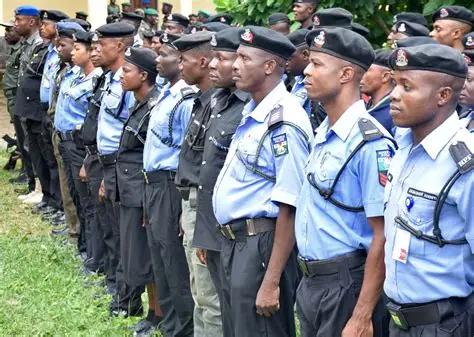
Nigeria may be approaching one of the most consequential changes to its security architecture since independence. After decades of arguments, constitutional hesitation and mounting insecurity, the proposal to establish state police has crossed a significant legislative threshold. At least 24 State Houses of Assembly have approved the constitutional amendment required to permit decentralised policing. For millions of Nigerians living under the shadow of kidnapping, banditry, terrorism and communal violence, the development offers renewed hope. But history counsels caution. The success of state police will depend less on the enthusiasm surrounding its creation than on the safeguards governing its exercise of power.
The Presidential Working Group on the National Policing Bill confirmed on 23 October that the required two thirds of state legislatures had endorsed the amendment. Meanwhile, the draft National Policing Bill, 2026, alongside 29 consequential amendment bills, has been submitted to the Federal Ministry of Justice for review. These developments represent progress, although the constitutional and legislative processes must still be completed before the proposed system becomes operational.
For years, Nigeria has maintained a policing structure that places responsibility for security largely within a centrally controlled force. Governors are routinely described as chief security officers of their states, yet their authority over police deployments remains limited. This contradiction has become increasingly difficult to defend as criminal violence spreads across communities separated by considerable distances from federal command structures.
The argument for state police is therefore compelling. Local officers familiar with community geography, languages, social relationships and emerging threats should, in principle, be better positioned to gather intelligence and respond promptly to danger. A decentralised structure could also reduce the operational burden on federal police, allowing greater concentration on crimes requiring national coordination.
However, recognising the weaknesses of centralised policing does not automatically establish that state police will succeed. Nigeria’s experience with public institutions suggests that changing the location of authority does not necessarily change the character of its exercise. An abusive institution does not become accountable merely because its headquarters moves closer to the people.
This is where the real debate must begin.
What prevents a governor from deploying state police against political opponents? Who protects an opposition candidate whose campaign activities displease the government? What safeguards exist for journalists investigating corruption, protesters challenging unpopular policies or citizens resisting unlawful directives from politically connected individuals?
These concerns are neither imaginary nor necessarily arguments against reform. Nigeria has witnessed instances where state controlled enforcement agencies and security arrangements have been accused of serving partisan interests. Creating a new armed institution without sufficiently independent supervision could multiply such dangers.
The proposed framework reportedly provides for State Police Service Commissions, national policing standards and arrangements for oversight and coordination. These are important foundations. Yet their effectiveness will depend upon how appointments are made, how disciplinary powers are exercised and whether oversight institutions can resist pressure from governors and other powerful officials.
A commission populated exclusively by political loyalists would offer little meaningful protection. Its membership should reflect professional competence, judicial experience, human rights expertise and credible community representation. Appointments must be transparent, tenure sufficiently protected and removal procedures designed to prevent arbitrary political interference.
Equally important is operational independence. Governors may legitimately determine broad security priorities within the law, but they should not possess unrestricted authority to order arrests, manipulate investigations or deploy officers against lawful political activities. The distinction between democratic supervision and partisan command must be unmistakable.
Funding presents another formidable challenge. Several states already struggle to meet salary obligations and finance essential services. Establishing police formations requires sustained expenditure on recruitment, training, accommodation, equipment, communications, forensic services and pensions. An underfunded state police service could become vulnerable to corruption, extortion and capture by wealthy local interests.
Nigeria must therefore resist the temptation to create 36 additional policing establishments without credible financial plans. States seeking to establish their own services should demonstrate minimum operational capacity and publish transparent budgets subject to independent audit.
Recruitment also demands scrutiny. Community knowledge is an advantage, but ethnic favouritism and political patronage could turn that advantage into a source of discrimination. Recruitment must be merit based, inclusive and subject to clear professional standards. Officers should serve the entire population of a state, not merely the ethnic, religious or political constituency of its governor.
There is also the question of jurisdiction. Criminal networks do not respect state boundaries. Kidnappers can abduct victims in one state, transport them through another and conceal them in a third. Without effective intelligence sharing, interoperable communication systems and clear rules governing joint operations, decentralisation could create dangerous gaps in enforcement.
The federal police must therefore remain capable of addressing crimes that transcend state boundaries, while mechanisms for cooperation should be mandatory rather than dependent upon the goodwill of individual governors.
Perhaps the most important safeguard concerns citizens’ rights. Every state police service should be subject to independent complaints mechanisms, judicial oversight and enforceable consequences for torture, unlawful detention, extrajudicial killings and other abuses. Officers must receive rigorous training in constitutional rights, lawful use of force and the treatment of vulnerable persons.
These protections should not be regarded as obstacles to effective policing. They are the foundations of public trust, without which intelligence gathering and community cooperation become considerably more difficult.
The National Assembly now carries an enormous responsibility. It must examine the implementing legislation with greater attention to institutional design than political celebration. Public hearings should accommodate civil society, legal practitioners, security professionals, traditional institutions and communities that have suffered both criminal violence and abuses of official power.
Nigeria needs state police because the existing system has struggled to provide adequate protection. But the reform must not reproduce the very failures it seeks to correct.
The constitutional breakthrough is important. What follows will determine whether it becomes a landmark in public safety or another missed opportunity.
The objective must be to bring protection closer to the people, not to place another instrument of coercion closer to those who govern them.
Lemmy Ughegbe, Ph.D, FIMC, CMC
Email: lemmyughegbeofficial@gmail.com
WhatsApp ONLY: +2348069716645

By Lemmy Ughegbe, Ph.D
Nigeria speaks passionately about fighting corruption. Yet it repeatedly struggles to prove its most celebrated corruption allegations in court.
We have built an elaborate anti-corruption architecture. We have enacted laws, created specialised investigative units and committed considerable public resources to prosecuting financial crimes. Still, when the most consequential cases reach judgment, the outcome often raises uncomfortable questions about the competence of those entrusted with enforcing the law.
The latest judgment in the long-running Malabu Oil saga brings those questions back into national focus.
On Thursday, 15 October 2026, the Federal High Court in Abuja discharged and acquitted businessman Aliyu Abubakar, Malabu Oil and Gas Limited and six other defendants of money laundering charges linked to Oil Prospecting Licence 245. Justice Inyang Ekwo held that the Economic and Financial Crimes Commission (EFCC) failed to prove its case beyond reasonable doubt.
The decision closes another chapter in one of Nigeria’s most controversial oil-related prosecutions. It also exposes investigative and prosecutorial weaknesses that deserve serious public scrutiny.
Malabu is no ordinary financial dispute. At its centre is OPL 245, an immensely valuable offshore block first awarded in 1998 and later entangled in disputes involving government officials, multinational oil companies and allegations of illicit payments. The 2011 settlement involving the Federal Government, Malabu, Shell and Eni was valued at about $1.3 billion. For years, the affair drew international attention and came to symbolise Nigeria’s struggle to enforce accountability in its petroleum sector.
Yet the real significance of this judgment lies less in the size of the transactions than in the court’s assessment of the prosecution.
Justice Ekwo faulted the EFCC for pressing charges despite a 2018 advice from the Office of the Attorney-General of the Federation against prosecution for insufficient evidence. The court also found that the investigation had not been concluded before the charges were filed. In related proceedings involving Abubakar, it noted deficiencies in forensic evidence, including reliance on photocopies rather than original documents.
These are not trivial procedural lapses. They strike at the foundations of criminal justice.
One principle must be stated plainly. An acquittal is not a licence to keep treating defendants as criminals in the court of public opinion. The presumption of innocence is a constitutional guarantee, not an inconvenience to be discarded whenever public anger runs high.
The defendants were entitled to insist that the prosecution prove every essential element of its case. It did not. The judgment must therefore be respected, however strongly anyone feels about the wider Malabu controversy.
But respecting an acquittal does not require silence about institutional performance.
If investigators pursue complex financial crime allegations without completing the necessary groundwork, what mechanism exists to catch such failures before defendants endure years of litigation? Who reviews the evidential foundation of major prosecutions? Who decides whether the prospect of conviction justifies the public expense? And when courts identify serious investigative failings, what consequences follow?
Nigeria must stop measuring anti-corruption success by the number of arrests, the prominence of suspects or the drama surrounding charges.
An arrest is not a conviction. An allegation is not evidence. A press conference is no substitute for a properly assembled prosecution brief.
The credibility of criminal justice rests on patient investigation, competent forensic analysis, admissible evidence and prosecutors able to present a coherent case that meets the demanding standard of proof beyond reasonable doubt.
There is also a constitutional question about the relationship between the EFCC and the Attorney-General.
Section 174 of the Constitution vests the Attorney General of Federation with wide powers over federal criminal proceedings, including the power to institute, take over or discontinue prosecutions, having regard to the public interest, the interests of justice and the need to prevent abuse of legal process. The EFCC, for its part, holds statutory investigative and prosecutorial powers.
Effective law enforcement requires both institutions to operate within their mandates, without bureaucratic rivalry or political interference.
Equally, the Attorney-General’s authority must never become a shield against legitimate investigation. Advice against prosecution may be entirely justified where evidence is weak, but it must itself serve the public interest. The right response is neither blind obedience nor reckless defiance. It is a transparent, legally defensible process guided by evidence, constitutional authority and professional judgment.
Repeated failures in high-profile cases carry a double danger.
They expose individuals to prolonged prosecution without adequate evidential basis. They also erode public confidence in the state’s capacity to pursue genuine wrongdoing. Both outcomes injure justice. The innocent deserve protection from wrongful prosecution, just as society deserves competent investigation where credible evidence exists.
The EFCC should treat this judgment as an occasion for serious institutional reflection, not merely another unfavourable ruling.
A thorough review of the investigation, evidential preparation and prosecution strategy is warranted. That review should separate genuine professional failings from reasonable decisions that simply did not persuade the court. Not every acquittal proves incompetence, just as not every prosecution is justified because the allegations sound grave. The distinction matters.
The National Assembly also has a legitimate oversight role. It should examine whether our anti-corruption agencies have the forensic capacity, technical expertise and internal safeguards that complex financial investigations demand.
Crimes involving multinational transactions, offshore structures and intricate banking records cannot be prosecuted on assumptions or shortcuts. They require specialised knowledge, international cooperation and painstaking preparation.
The Malabu judgment should prompt a more mature national conversation about what success in the anti-corruption fight truly means.
Nigeria does not need agencies that merely look formidable before television cameras. It needs institutions whose investigations are rigorous, whose prosecutions are fair and whose conduct inspires confidence even when verdicts disappoint the public.
The real scandal would be to learn nothing from the failures the court has identified.
The fight against corruption must itself be governed by competence, accountability and the rule of law. Otherwise, Nigeria risks becoming a country where allegations make headlines, prosecutions consume years, and justice is left to explain why the evidence was never good enough.
Lemmy Ughegbe, Ph.D, FIMC, CMC
Email: lemmyughegbeofficial@gmail.com
WhatsApp ONLY: +2348069716645

NIGERIA DOES NOT HAVE ONLY A TALENT PROBLEM.
WE HAVE A TALENT-USE PROBLEM
Why capable people underperform inside incapable systems
By Dr. Omolaraeni Olaosebikan
There is a peculiar thing that happens to some Nigerians when they leave Nigeria. The employee once described as difficult suddenly becomes a star performer. The young professional told to “calm down” for asking too many questions becomes valued for initiative. The doctor, engineer, researcher or technologist who struggled to make an impact inside one system begins to flourish inside another.
We usually call it brain drain. Perhaps we should also ask what the brain was draining from. Nigeria unquestionably has a skills problem, but we have spent so much time asking whether our people are sufficiently skilled that we have paid too little attention to an equally uncomfortable question: what happens to capable people after we put them inside our institutions?
The skills deficit is real. A 2025 report cited by the Lagos State Employment Trust Fund found that 65 per cent of Nigerian employers regard skills gaps as a major barrier to organisational transformation. Employers are also searching for capabilities in cybersecurity, artificial intelligence, data, systems thinking and customer service. Nigeria therefore cannot pretend that every struggling employee is simply a misunderstood genius. Our education-to-employment pipeline needs serious repair.
But that is only half the diagnosis. A country can suffer a shortage of particular skills and simultaneously waste a disturbing amount of the talent it already possesses. Those realities are not contradictory.
Consider the labour market itself. The National Bureau of Statistics reported that informal employment accounted for 93 per cent of employment in the second quarter of 2024, while time-related underemployment stood at 9.2 per cent. The official unemployment rate was 4.3 per cent. The figures remind us that the question is no longer simply whether Nigerians are working. It is what kind of work they are doing, under what conditions, and how productively their abilities are being used.
Employment is not the same thing as productivity. Possessing talent is not the same thing as creating an environment in which talent can perform.
Put a highly capable person inside a system where approvals take weeks, initiative threatens hierarchy, technology is inadequate, promotion bears little relationship to merit, mistakes are punished more severely than inertia, and the safest career strategy is to agree with the most senior person in the room. Eventually, something predictable happens: the employee adapts.
Curiosity becomes caution. Initiative becomes compliance. Ideas become things discussed privately after meetings rather than offered during them. The organisation then looks at the diminished version of the employee it helped to create and concludes: our people are simply not good enough.
The cost goes far beyond individual frustration. The World Bank’s Human Capital Index Plus now looks not only at health and education but also at how skills develop during working life. For Nigeria, its 2025 assessment places the education pillar at 64, below the lower-middle-income-country median of 88. It estimates that increasing effective schooling to 12 years could raise labour earnings by about 20 per cent over the long term.
The important point is that human capital does not stop developing on graduation day. The workplace can sharpen ability, stretch it and reward it. It can also slowly diminish it.
That should make employers reconsider the fashionable complaint that “young people don’t want to work.” Some do not. Every generation has its share of entitlement, indiscipline and mediocrity. But leadership becomes lazy when anecdotes become a diagnosis of an entire generation.
Before declaring that talent has disappeared, organisations should examine what they reward. Do we reward the person who solves the problem, or the person who never challenges the boss? Do we promote competence or proximity? Can an employee respectfully disagree without being branded arrogant? When somebody brings a new idea, is the first instinct “How could this work?” or “Who authorised you?”
These questions are becoming more urgent because Nigeria is not operating in a closed labour market. The World Bank says about 3.5 million people enter Nigeria’s labour force every year. Weak creation of quality jobs, limited entrepreneurial opportunities and rising emigration make the challenge even sharper.
Our demographic advantage will therefore not become an economic dividend merely because Nigeria has millions of young people. Population becomes productive capital only when ability meets opportunity, tools, accountability and competent leadership.
This is also where the japa conversation deserves greater honesty. Salary matters. Security matters. Infrastructure and quality of life matter. But people also migrate towards systems: systems in which equipment works, processes are clearer, expertise carries weight, professional effort can produce an outcome and performance has a reasonable chance of being recognised.
When trained people repeatedly conclude that their abilities can create greater value elsewhere, retention cannot be solved entirely with patriotic appeals. Sometimes the problem is not simply that another country pays more. It is that another system allows the person to do more.
The private sector should resist reading this as criticism meant only for government. Dysfunction has no exclusive address. A beautifully branded company can still have a culture where information is hoarded, managers are insecure, meetings replace decisions and talented employees spend more energy navigating personalities than solving problems.
None of this absolves the Nigerian professional of responsibility. Talent without discipline is potential wasted. Qualifications without continuous learning expire quickly. The future workplace will increasingly reward adaptability, digital fluency, critical thinking, communication and the ability to learn faster than a job description changes.
Accountability must therefore run in both directions. Employees must keep developing themselves. Organisations must stop demanding world-class performance while preserving systems that punish world-class behaviour.
Nigeria needs to broaden the question. Yes, how do we produce better talent?
But also: how do we stop wasting the talent we produce? Our schools must improve. Businesses must train. Young professionals must keep learning. Yet organisations must also build cultures in which merit can breathe, managers lead rather than merely supervise, technology enables rather than frustrates, and intelligent disagreement is not mistaken for insubordination.
Perhaps, then, the Nigerian who suddenly excels abroad has not acquired an entirely new brain at Heathrow, Toronto Pearson or JFK. Sometimes what has changed is the ecosystem around that brain: the tools, expectations, incentives, consequences, processes and permission to perform.
That does not mean every Nigerian system fails or every foreign one succeeds. It means that before we conclude that our greatest problem is a shortage of capable people, we should examine the machinery into which we place them. A nation cannot complain indefinitely about losing its best minds while refusing to interrogate the conditions under which those minds are expected to work.
The story we tell about talent determines where we look for the solution. Blame the people, and we keep searching for better people. Examine the system as well, and we begin building places where good people can become exceptional. Nigeria needs both better-prepared talent and institutions capable of using that talent well and this is why the narrative matters.
Dr. Omolaraeni Olaosebikan
Strategic Communications & Reputation Management Expert | Founder, The Narrative Matters®
-
 General News4 weeks ago
Rivers 2027: We are not part of Rainbow Coalition – APC Legacy Group slams Wike, Fubara meeting
-
General News1 month ago
JOHESU demands: MHWUN puts FG on notice over fresh action
-

 Politics2 months ago
2027: ASAF backs APC governors, rejects rainbow coalition
-

 Politics2 months ago
You have demonstrated diligence, loyalty, statesmanship in leadership, Ekechi salutes Shetimma at 60
-

 Politics3 months ago
2027: Advertising experts raise concerns over irregular regulation of sector
-
FCT News3 months ago
2027: Hasana-Moneme pledges skills, empowerment, credit access for FCT women
-
General News3 months ago
2027: Dame Princess Esom-Nwafor Orizu confirmed as APC flagbearer for Nnewi North /South /Ekwusigo Federal Constituency as INEC releases names of candidates
-
Uncategorized4 months ago
Rescue of Oyo schoolchilden: Tinubu commends security agencies, says action breakthrough in fight against criminality