
General News
DSS dismisses Atiku’s claims, says two operatives hurt while protecting Sokoto ADC guber candidate;

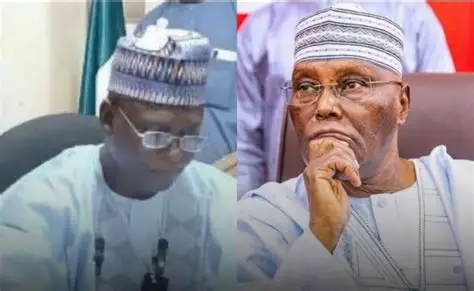
The Department of State Services (DSS) has punctured a claim by the African Democratic Congress (ADC) presidential candidate, Atiku Abubakar, that it is recruiting protesters to create disorder in Sokoto State and provide an excuse for imposing a curfew to stop the party’s campaign rally.
In a statement on its official X handle, the secret police said it was surprised that Atiku could make such claim days after two of its operatives suffered injuries and were hospitalised while protecting the ADC governorship candidate in the state, Mannir Daniya, from a mob attack.
According to the DSS, after safely evacuating the Sokoto ADC governorship candidate, the politician later called personally to appreciate the State Director of the Sokoto Command and even requested for reinforcement from the DSS.
The Service recalled that on 2nd March 2026, it arrested one Monday Udeme Steven in Rivers State, for threatening to attack the National Democratic Party (NDC) presidential candidate, Mr. Peter Obi.
The DSS stated that it successfully prosecuted Udeme in a Federal High Court sitting in Port Harcourt, and that he is currently serving a two-year sentence in prison.
The statement read in full:
“The attention of the DG Department of State Services (DSS) has been been drawn to allegation by elder statesman and ADC presidential candidate, Alhaji ATIKU ABUBAKAR that, DSS is organizing protests in Sokoto State.
“For the Records, DSS Operatives deployed to Sokoto ADC Governorship Candidate; Mannir Daniya, evacuated him to safety unhurt on 31st October 2026 when attacked in Sokoto. Two (2) DSS operatives were assaulted during the incident and are still being treated in the hospital. The governorship candidate called personally to appreciate the State Director of Sokoto Command and even requested for reinforcement from the DSS.
“Though these operations to protect all Political Parties is at variance with the elder statesman’s allegation and tend to demoralize our gallant operatives who are risking their lives in the line of duty, the DGDSS has still ordered an investigation into the allegation in deference to the elder statesman.
“The Service also use this medium to reference a similar allegation by AAC Presidential Candidate Omoyele SOWORE that, the Service was involved in an attack on him in Ekiti State. In this regard, we thank the Police for swift investigation and a preliminary Report on the cause of the incident; “altercation”, coupled with the arrest of eleven (11) suspects. We await the outcome of Police investigation and will not dissipate energy on the matter.
“The Service will continue to remain accountable under the present DG,” the statement concluded.

By Chinwo Aginta
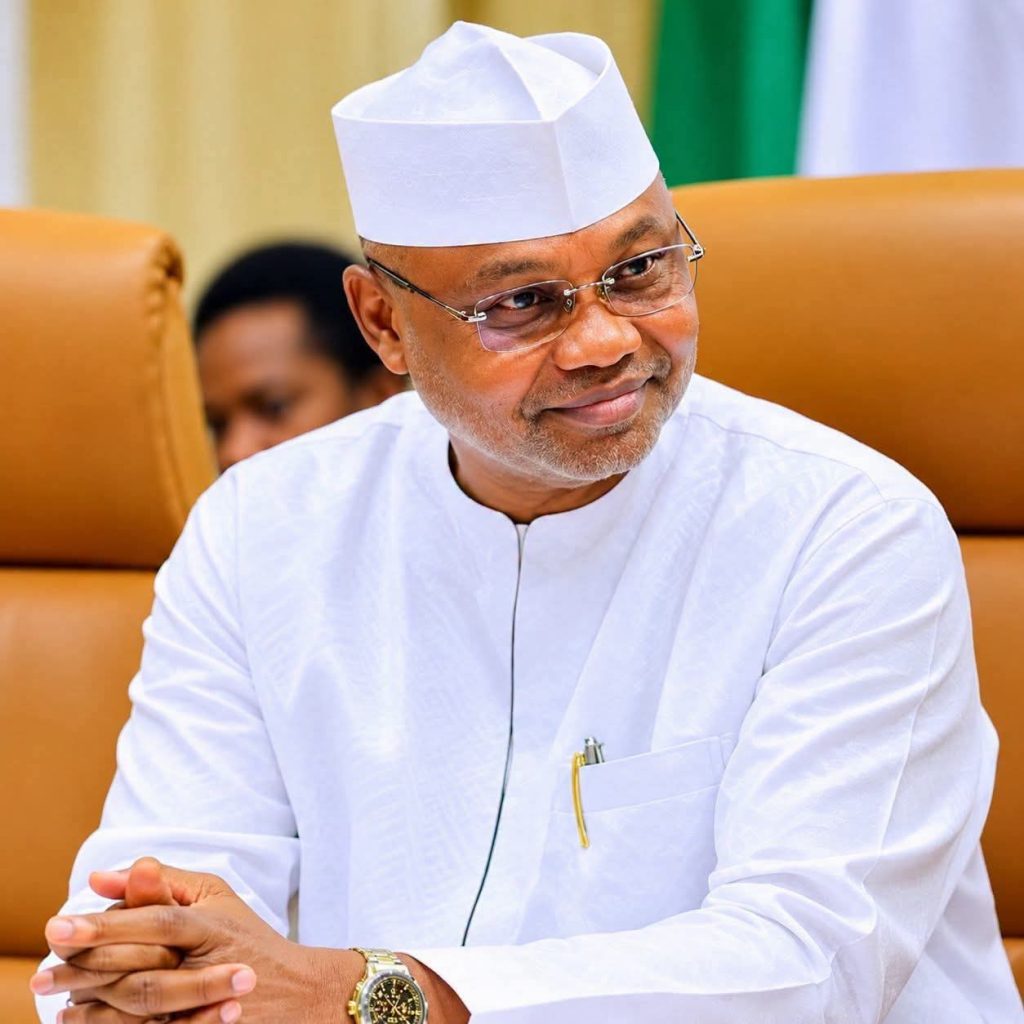
Senator Tijjani Yahaya Kaura has won the All Progressives Congress primary for Zamfara North, securing the party’s ticket for the 2027 general election after a court nullified its earlier nomination process over reported irregularities.
Kaura polled 16,758 votes in Monday’s re-run, well ahead of Sahabi Alhaji Yau, who received 1,465 votes, and Sani Abdullahi Shinkafi, who scored 1,447, according to results announced by the party’s senatorial primary election committee.
The fresh election followed a Court of Appeal decision in Sokoto upholding a Federal High Court ruling in Gusau that invalidated the previous primary and ordered the APC to conduct another exercise.
The committee’s announcement brings an end to the court-ordered contest over the party’s nomination in the senatorial district, with Kaura emerging ahead of the two other aspirants.
Announcing the results, committee member Sani Abdullahi said Kaura secured the highest number of valid votes and fulfilled the requirements for nomination under the APC constitution and electoral guidelines.
The committee said 19,608 delegates were accredited from a register of 23,257, while 19,292 valid votes were recorded.
The result sheet was signed by the committee’s chairman and secretary on November 2, formally returning Kaura as the APC candidate for Zamfara North.
Abu Umar
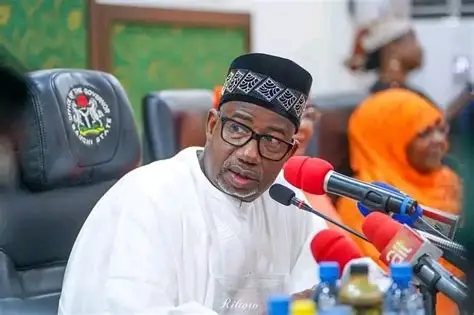
Governor Bala Mohammed of Bauchi State has on Tuesday vowed that his administration will not tolerate any breach of peace, political thuggery or disruption of stability ahead of the 2027 general elections.
Governor Mohammed stated this while addressing members of the State Executive Council in Bauchi.
He said his administration’s collaboration with security agencies has restored peace, allowing citizens to farm, go to school and live freely, and warned that such peace must not be compromised for politics.
“As we approach the election cycle, our security apparatus must remain hyper-vigilant. We will tolerate no breach of peace, no political thuggery and no disruption to the stability of our dear state,” he declared.
The Governor said the government will continue to support security agencies with accommodation, vehicles and logistics to maintain impartiality and effectiveness.
He also warned against last-minute abuse of due process as political temperature rises, insisting that adherence to public procurement laws and financial regulations must be watertight.
“We will leave behind an administration defined by transparency, not last-minute lapses in due process,” he said.
The Governor directed that no bureaucratic delays or lackadaisical attitudes should be entertained, stressing that time is of the essence to solidify his Bauchi Project agenda.
Our Reporter
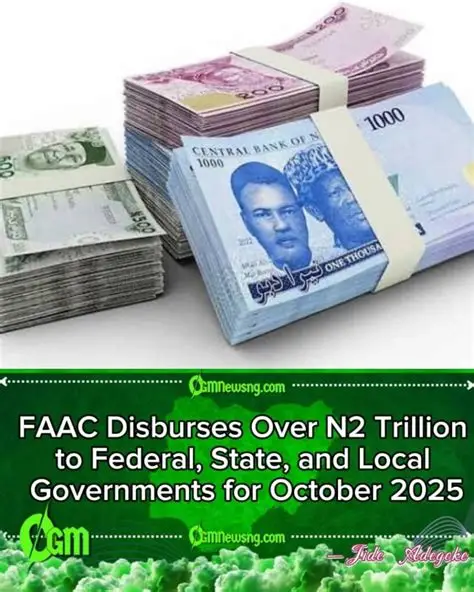
BudgIT has raised the alarm over the low budget implementation by state governments, revealing that despite pocketing a whopping ₦11.38 trillion from FAAC in 2025, they had spent a paltry 24.4 per cent of their combined ₦35.22 trillion 2026 budgets by the end of June.
The Country Director of BudgIT, Vahyala Kwaga, disclosed this on Tuesday in Abuja at the launch of the 11th edition of the organisation’s State of States Report, titled ‘From Allocation to Impact: Rethinking State Spending Priorities’.
Kwaga said the figures represent an increase of over 232 per cent from the ₦3.43 trillion they received in 2022.
He said the figures showed that state governments had received significantly more money in recent years, particularly following the removal of the petrol subsidy, which increased the revenue shared among the federal, state and local governments.
According to Kwaga, an analysis of 34 states showed that their combined revenue rose from about ₦4.99 trillion in 2022 to ₦15.53 trillion in 2025, while their share of money from the Federation Account increased from ₦3.43 trillion to ₦11.38 trillion within the same period.
Despite the increase in revenue, Kwaga expressed concern over the gap between budgetary allocations and actual expenditure, noting that although the 34 states had collectively budgeted ₦35.22 trillion for 2026, only ₦8.60 trillion had been spent by the end of June, leaving a large part of their planned spending yet to be carried out.
Kwaga said the figures raised questions about how state governments were using the additional money available to them and whether the increased revenue was leading to better roads, schools, hospitals, jobs and other basic services for residents.
“State governments now have access to resources at a scale that should create greater opportunities to address longstanding development deficits.
“But what have these additional resources meant for the people of our states? How much of this increased fiscal capacity is finding its way into better public services, stronger infrastructure and improved human development?” Kwaga queried
Speaking further, the BudgIT Country Director explained that the organisation had revised its methodology for assessing state fiscal performance to place greater emphasis on the quality of public spending and its impact on development, rather than relying largely on conventional indicators such as revenue growth, expenditure and debt sustainability.
He noted that the previous assessment framework examined states’ ability to meet operating expenses through Internally Generated Revenue, annual IGR growth, debt sustainability, debt servicing, personnel costs and the balance between capital and recurrent expenditure.
According to him, while those indicators provided useful information about the financial health of states, they were insufficient to determine whether government spending was producing tangible benefits for citizens, including better schools, functional healthcare facilities, improved livelihoods and essential services.
Kwaga said the revised methodology would pay closer attention to investments in critical sectors, including health, education, agriculture, water, sanitation and hygiene, as well as actual expenditure and the implementation of budgeted projects.
“This year, we are introducing a substantially revised methodology that expands the scope of our assessment beyond conventional measures of revenue growth, expenditure and debt sustainability. We are placing greater emphasis on the quality and developmental orientation of public spending, including how states allocate resources to critical sectors and whether those investments are translating into actual implementation.
“This tells us that the conversation cannot end with how much money states receive or how much they budget. We must also examine how effectively they deploy the resources available to them, what they prioritise and whether their spending is delivering the outcomes that citizens need.
“This is precisely why our revised methodology places greater emphasis on the quality and developmental orientation of public spending. We are looking more deliberately at state investments in critical sectors such as health, education, agriculture, and water, sanitation and hygiene. We are also examining actual expenditure and the implementation of budgeted projects, because what is appropriated on paper must ultimately translate into something tangible.” He said
The Country Director further urged Nigerians, civil society organisations, journalists and policymakers to use the report’s findings to strengthen public scrutiny of state finances, assess the performance of elected officials and demand greater accountability in the management of public resources.
He said the 11th edition represented an important shift in subnational fiscal accountability, stressing that the report should serve not merely as a ranking of states but as an opportunity for governments to identify areas of progress, address shortcomings and learn from one another.
-
 General News4 weeks ago
Rivers 2027: We are not part of Rainbow Coalition – APC Legacy Group slams Wike, Fubara meeting
-
General News1 month ago
JOHESU demands: MHWUN puts FG on notice over fresh action
-
 Politics2 months ago
2027: ASAF backs APC governors, rejects rainbow coalition
-

 Politics2 months ago
You have demonstrated diligence, loyalty, statesmanship in leadership, Ekechi salutes Shetimma at 60
-

 Politics3 months ago
2027: Advertising experts raise concerns over irregular regulation of sector
-
FCT News3 months ago
2027: Hasana-Moneme pledges skills, empowerment, credit access for FCT women
-
General News3 months ago
2027: Dame Princess Esom-Nwafor Orizu confirmed as APC flagbearer for Nnewi North /South /Ekwusigo Federal Constituency as INEC releases names of candidates
-
Uncategorized4 months ago
Rescue of Oyo schoolchilden: Tinubu commends security agencies, says action breakthrough in fight against criminality