
Cover page
Insecurity: CDS seeks inter service collaboration to combat terrorism

By Nkem Okereh and Suleiman Paiko (Minna)
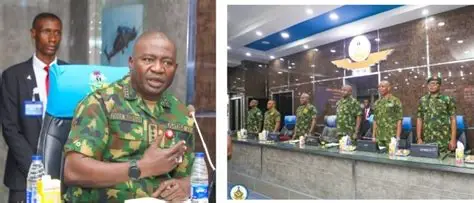
The Chief of Defence Staff, General Olufemi Oluyede, has sued for collaboration among the country’s security agencies, noting that a robust cooperation and strategic synergy among the security agencies remains critical in actualising the targets of decisive defeat of of terrorist activities and counter the evolving national security threats.
The CDS who gave the charge at the Nigeria Navy Annual Retreat in Abuja, emphasised the evolving dynamics of modern defense.
Gen. Oluyede, who also called for the support of civilians and host communities in the fight against terrorism, maintained that .
the collaboration must nit be restricted to inter-agency but includes the civilians and communities.
He said, “It is important for us to continue to emphasise jointness because no single service can do the job alone, it requires a collective effort.
“If you see anything, you should tell us because everything we’re doing relies on intelligence, and for that, we need community support.”
He added that the support provided by Nigerians would aid push the country forward on all fronts.
He noted specifically that joint operations remain the cornerstone of neutralising criminal networks, insurgency, and asymmetric threats across the country’s diverse terrains
This is even as he appreciated the nation’s security agencies for recent operational achievements, saying that significant successes recorded through coordinated intelligence-led missions between the Nigerian Army, Navy, and Air Force have decimated terrorist camps in the country
General Oloyede further explained that the joint efforts of security agencies have not successfully degraded terrorist capabilities, but have secured vital national infrastructure, and drastically curtailed economic sabotage, especially in areas like oil theft and maritime crime in the nation’s coastal corridors.
While reaffirming the military’s unwavering loyalty to constitutional authority and democratic values, pledging continued strategic adaptation to secure Nigeria’s territorial integrity, the CDS commended the resilience and professionalism of frontline personnel, urging officers to maintain high operational readiness as the armed forces transition into a more proactive, technology-driven defense posture.
Addressing Nigeria Navy Officers at the retreat, Chief of Naval Staff, Vice Admiral Idi Abass, emphasised that the comprehensive assessment provides an essential platform to align institutional goals with evolving national security challenges
He noted that the retreat also serves as a strategic blueprint to enhance operational readiness, fleet capabilities, and inter-agency cooperation as the nation approaches heightened security demands
Meanwhile the Niger state Police Command has confirmed the abduction of 14 students of an Islamiyya school and their teacher in Tungan-Bako village, Pandogari, Rafi Local Government Area of Niger State, by suspected terrorists
The incident occurred on Saturday, October 31, 2026, when the students were reportedly helping their teacher harvest maize on his farm.
Confirming the incident, which happened on Saturday, October 31,2026, the Niger State Police Command Public Relations Officer, SP Wasiu Abiodun, said in a statement that the actual number of abducted students was 14, as against earlier reports suggesting that the number was more
The police statement issued on Tuesday, said preliminary information indicated that the victims were students of an Islamiyya school who were assisting their Mallam with maize harvesting when the attackers struck.
SP Abiodun added that a joint security operation was underway to rescue the abducted victims, assuring that further developments would be communicated.
“On 31/10/2026 at about 12.30 pm, suspected bandits invaded Tungan-Bako village via Rafi LGA and abducted some persons working on the farm.
”Report further indicated that the abducted victims were about 14 students of an Islamiyya helping their Mallam to harvest maize on the farm, before the incident.
”However, joint security rescue efforts are ongoing. Further developments will be communicated,” the police statement read in part
This is as the Niger state government has assured of total support and collaboration with security agencies and other relevant stakeholders to tackle insecurity and release all abducted citizens of the state
The state Commissioner for Information and Orientation, Obed Nuhu Nana, said the Bago administration was deploying every available resource and working closely with security agencies and other relevant stakeholders to tackle insecurity, rescue abducted persons and prevent further attacks.
He further reaffirmed the determination of the current administration to end all forms of insecurity in the state and restore lasting peace and safety to affected communities.

By Nkem Okereh
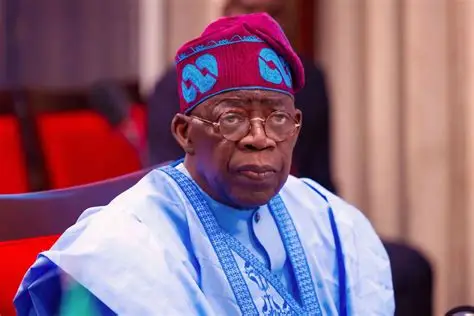
The National Assembly says it will soon transmit the bill seeking for the establishment of State Police to president Bola Tinubu for assent
NASS in a statement on Tuesday said it has completed the authentication of approvals for the bill from 28 state Houses of Assembly.
The Clerk to the National Assembly, Kamoru Ogunlana, confirmed in the statement that the number of state legislatures that had approved the proposed constitutional amendment exceeded the constitutionally required threshold of 24 states, as stipulated in Section 9 of the Constitution.
“The Office has also undertaken the necessary administrative verification of the reports and accompanying Votes and Proceedings to establish their authenticity and ensure that the records accurately reflect the decisions taken by the respective State Houses of Assembly.
“In view of the approvals secured from the required number of State Houses of Assembly, the necessary administrative processes are being undertaken to facilitate the transmission of the Bill to His Excellency, the President of the Federal Republic of Nigeria, for assent, in accordance with the Acts Authentication Act, CAP A2, (LEN) 2004,” the Clerk was quoted as stating in the statement
According to the statement,, the bill was transmitted to the 36 State Houses of Assembly on September 16, 2026, for consideration and approval, with a request that their decisions be communicated to the National Assembly within 30 days.
He however noted that although the deadline expired on October 15, with only 28 states responding to the request the office if the Clerk would continue to receive reports from state legislatures until the bill was transmitted for presidential assent.
“Following the receipt and verification of the reports, the Office confirms that 28 State Houses of Assembly have approved the Bill,” the statement read.
Ogunlana added that the Office of the Clerk had undertaken the necessary administrative verification of the reports and accompanying Votes and Proceedings to establish their authenticity and ensure that the documents accurately reflected the decisions of the respective state legislatures, whike nit in Ng that the authentication process is a key step towards transmitting the bill to the President for assent.
The Clerk also clarified that Section 9 of the Constitution did not expressly prescribe a third reading for a constitutional alteration bill, unlike the procedure applicable to ordinary bills.
“It is pertinent to clarify that Section 9 of the Constitution does not expressly prescribe a Third Reading for a Constitution Alteration Bill, unlike the prcedure applicable to ordinary Bills,” he stated.
He said the necessary administrative processes were being undertaken to facilitate the transmission of the bill to Tinubu in accordance with the Acts Authentication Act, Cap A2 (LFN) 2004.
The Clerk,, while commending the state legislatures for their cooperation in considering the proposed amendment, described to he exercise as an important step towards strengthening the country’s security architecture and deepening its federal system.
***Tinubu failed on steady electricity promise – Atiku
***It’s work in progress, Tinubu replies
By Sam Otuonye
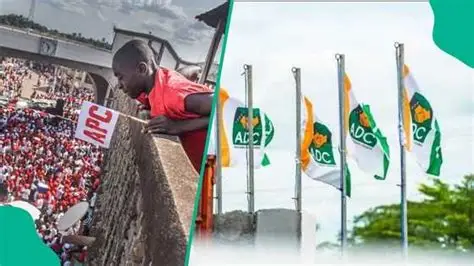
Ahead of the 2027 presidential election, the ruling All Progressives Congress (APC), and opposition Africa Democratic Congress (ADC), have dragged each other over President Bola Tinubu’s promise in 2023 to ensure 24 hours steady supply of electricity to all corners of the federation.
Tinubu had during his campaign in 2023, told Nigerians not to give him a second term, if fails to provide steady supply of electricity.
“Whichever way, by all means necessary, you will have electricity, and you will not pay for estimated bills anymore. A promise made will be a promise kept,” Tinubu had told Nigerians prior to the 2023 presidential election.
He added that Nigerians should not re-elect him if he failed to fulfil the promise without providing adequate reasons for the shortfall.
But barely three and half years into his APC- led administration, electricity has remained a major challenge, as several parts of the country have remained in darkness, amid high tariff
Former Vice President and presidential candidate of the opposition Africa Democratic Congress (ADC), Atiku Abubakar, has asked Nigerians to assess the president from his 3023 campaign promise on steady electricity supply, declaring that he has failed the nation.
Atiku accused Tinubu of failing to fulfil his electricity promise with a long recital of laws, committees, bonds and projects.
The former vice president in a statement issued by Phrank Shaibu, Director of Strategic Communication of the ADC Presidential Campaign Council, said: “The APC should spare Nigerians the spectacle of celebrating paperwork while homes and businesses remain in darkness. After three and a half years, families still struggle to keep their homes lit. Traders and small business owners spend scarce resources on alternative power, yet struggle to keep their businesses alive. Nigerians are billed for electricity they cannot rely on. President Tinubu promised steady power and an end to estimated billing. That promise has not been kept.
“Across Nigeria, consumers are placed in Bands A, B, C, D and E and charged different rates. In many areas, Band A customers pay about ₦209.50 per unit before VAT. Rates for the other bands vary by state and electricity provider. Yet across every band, the same hardship endures: the power fails, but the bill arrives. No family should have to weigh the cost of electricity against the cost of food. No business should be left to pay more while receiving less.
“The government now says it plans to end electricity subsidies from 2027, even as it insists there will be no immediate tariff increase. Nigerians are entitled to a clear answer: what will happen to their bills when the subsidy ends? I will work with state governments and regulators, within the law, to abolish the present band system and replace it with a fair, transparent and affordable framework that protects households and holds power companies accountable for the electricity they deliver. Steady power that Nigerians can afford will be a national priority.
“When President Tinubu campaigned in 2022, he made an unmistakable commitment. He said: ‘If I don’t give you constant electricity for four years, when I come back for a second term, don’t vote for me.’ Nigerians have lived through those four years. They do not need his campaign council to interpret his words for them. They need him to answer for them.
“His administration has not built a single new generation infrastructure of its own to increase Nigeria’s power capacity. Yet it has floated a multi trillion naira bond programme to settle legacy debts owed to generation companies, without showing Nigerians how this financial intervention has produced the steady electricity they were promised. Paying old debts is not the same as building new power infrastructure. Bonds cannot be presented as a substitute for power in people’s homes.
“Meanwhile, Nigerians face VAT on electricity, and the Nigeria Tax Act provides for a 5 per cent surcharge on certain fossil fuels, including petrol and diesel. The government says the surcharge has not been activated and would require a ministerial order. At a time when families already struggle to meet the cost of energy, Nigerians deserve to know why another potential charge has been placed before them.
“Dele Alake’s statement cannot light a home. Signing a law is not electricity. Raising a bond is not electricity. Approving a project is not power delivered. Nigerians cannot cook, study, work or sustain a business on announcements. President Tinubu invited Nigerians to judge him by his performance. They have done so. What they seek is simple: reliable electricity they can afford, and a government that keeps its word.”
But the APC Presidential Campaign Council has said that President Tinubu’s promise of 24 hours steady electricity supply accross the country is work in progress
Spokesperson of the APC Presidential Campaign Council, Dele Alake, admitted that President Bola Tinubu is yet to fully resolve Nigeria’s electricity challenges, but his administration remains committed to fulfilling its campaign promise of providing Nigerians with stable and reliable power supply.
Alake, acknowledged that fixing the country’s power sector remained unfinished work, three years after Tinubu assumed office.
Alake, who doubles as Minister of Solid Minerals Development, noted that the President had taken consistent steps to address the structural, institutional and financial challenges that have hindered the sector for more than five decades.
The APC Campaign Spokesperson in a statement on Sunday titled ‘Tinubu’s Electricity Pledge Must Be Considered in Full Context’, urged Nigerians to assess the President’s 2023 campaign promise alongside the administration’s interventions and the concluding qualification he made when he gave the pledge.
Alake said some recent commentaries had reproduced the President’s pledge without including the concluding qualification, arguing that a fair assessment should consider the full statement and the administration’s performance since 2023.
He cited Tinubu’s signing of the Electricity Act, 2023, on June 9, less than two weeks after assuming office, thereby allowing state governments to participate in electricity generation, transmission and distribution as a major stride to free electricity consumers from the frustration of service providers
He attributed the president’s intervention in the energy sector to the reason why several states, including Lagos, Enugu, Abia, Ekiti, Oyo, Kaduna and Niger states have begun taking advantage of the legislation by establishing their electricity regulatory agencies and attracting private investment into their power sectors.
Alake also said the administration inherited more than N6tn in accumulated legacy debts between 2015 and 2025 and had introduced measures to address the financial burden.
Alake further disclosed that the federal government established a N4tn bond programme to settle verified debts owed to 21 electricity generation companies and gas companies.
According to him, the first and second tranches of the programme have raised more than N1.2tn to settle part of the verified liabilities.
He added that the administration launched the Presidential Metering Initiative to address the country’s metering deficit, saying more than 1.5 million customers had received meters under the programme in the last three years.
The APC PCC spokesperson said the government had also adjusted electricity tariffs towards cost-reflective levels to improve liquidity in the market while introducing service bands and measures to protect low-income households.
On infrastructure, Alake said the administration was investing in substations and grid expansion while pursuing plans to modernise the Osogbo Grid Control Centre, which he said was built more than 60 years ago, and construct an East-West super grid.
He also highlighted the Rural Electrification Agency’s efforts to connect universities, hospitals and rural communities to solar power.
He explained that electricity infrastructure projects required long-lead equipment and could not be completed overnight.
The spokesperson also cited recent investments by power generation companies as evidence that the administration’s interventions were beginning to improve confidence in the electricity market.
He mentioned Geregu Power Plc’s announcement of investments in new power transformers to improve operations at its Geregu 1 Power Plant, adding that other companies were making similar investments.
Alake said the administration recognised the need to balance cost-reflective tariffs, which would improve operators’ financial viability, with affordable electricity for Nigerians.
He said the government would continue to explore measures to improve the commercial sustainability of the sector while protecting vulnerable households.
“Fixing the electricity market and power sector is ongoing work,” Alake said.
He assured ed that Tinubu had not abandoned his commitment to resolving the country’s electricity challenges, adding that the President would present his scorecard and explain outstanding issues to Nigerians as he seeks a second term

*** Says Rules must apply equally to all political parties
By Chidera Orji
Ahead of the 2027 general election, the ruling All Progressives Congress, APC, has urged the Independent National Electoral Commission, INEC, to strictly follow its published timetable for the 2027 general election, adding that the rules guiding the elections must apply equally to all political parties.
The party’s National Chairman, Prof Nentawe Yilwatda, made the call when he received a pre-election fact-finding mission of the Economic Community of West African States, ECOWAS, at the APC National Secretariat in Abuja.
Yilwatda, who received the delegation alongside members of the party’s National Working Committee, NWC, said the electoral process must remain fair, transparent and predictable.
He cautioned against any adjustment of electoral deadlines that could give one political party an advantage over others.
He urged INEC to adhere to its published timetable, stressing that all political parties should be treated equally and that electoral deadlines should not be altered in ways that could favour any party.
“We have inaugurated our campaign council, commenced campaign activities and uploaded our candidates to INEC’s portal. We have also presented candidates for all the positions we are contesting, unlike some opposition parties that have faced difficulties completing their submissions,” he said.
Yilwatda also highlighted the party’s membership and political structures, claiming that it had about 13 million registered members across the country’s local government areas.
He said the party had more than 261,000 executive members from the ward to the national level, adding that its membership cards were designed to allow verification through National Identification Numbers, NIN, and voter identification details.
On its elected representatives, he said the APC had 31 governors, 88 senators and 208 members of the House of Representatives.
The chairman, however, said the party’s size and political strength should not be used to undermine other parties or restrict their participation in the electoral process.
“Being the largest political party does not mean that we want to suppress anybody. We want a democratic environment in which every party can organise, campaign and seek the support of Nigerians without fear,” he said.
“We will not use our position to intimidate or suppress opposition parties. Every political party must have equal access to the media, campaign venues and other legitimate platforms to present its programmes to Nigerians,” he said.
-
 General News4 weeks ago
Rivers 2027: We are not part of Rainbow Coalition – APC Legacy Group slams Wike, Fubara meeting
-
General News1 month ago
JOHESU demands: MHWUN puts FG on notice over fresh action
-

 Politics2 months ago
2027: ASAF backs APC governors, rejects rainbow coalition
-

 Politics2 months ago
You have demonstrated diligence, loyalty, statesmanship in leadership, Ekechi salutes Shetimma at 60
-

 Politics3 months ago
2027: Advertising experts raise concerns over irregular regulation of sector
-
FCT News3 months ago
2027: Hasana-Moneme pledges skills, empowerment, credit access for FCT women
-
General News3 months ago
2027: Dame Princess Esom-Nwafor Orizu confirmed as APC flagbearer for Nnewi North /South /Ekwusigo Federal Constituency as INEC releases names of candidates
-
Uncategorized4 months ago
Rescue of Oyo schoolchilden: Tinubu commends security agencies, says action breakthrough in fight against criminality